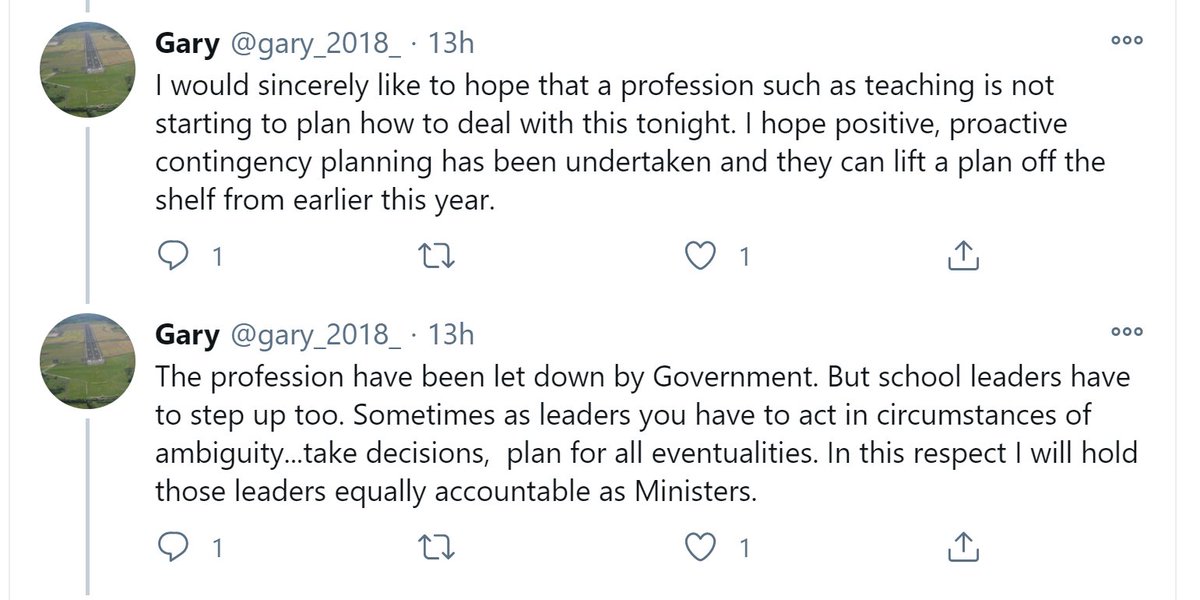
** Schools have been getting ready for this: a thread **
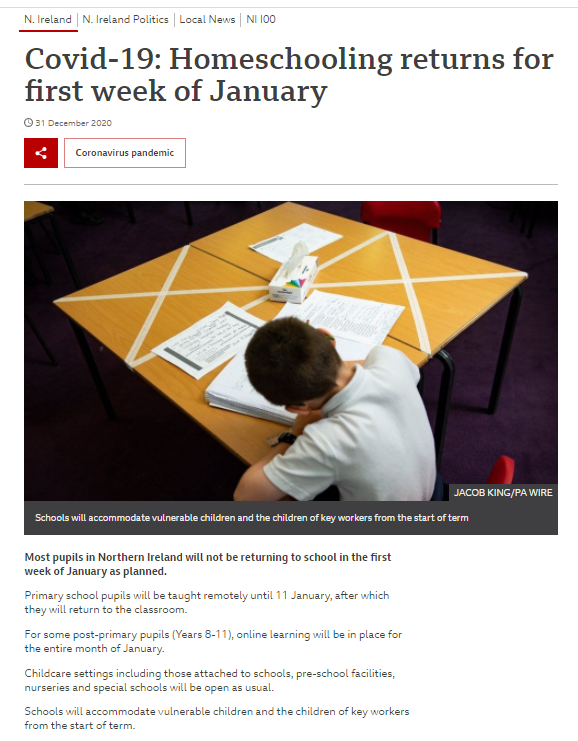
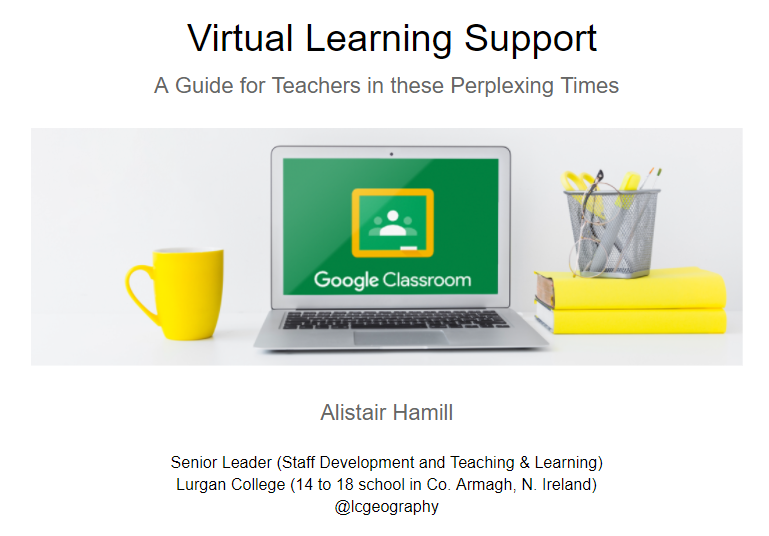
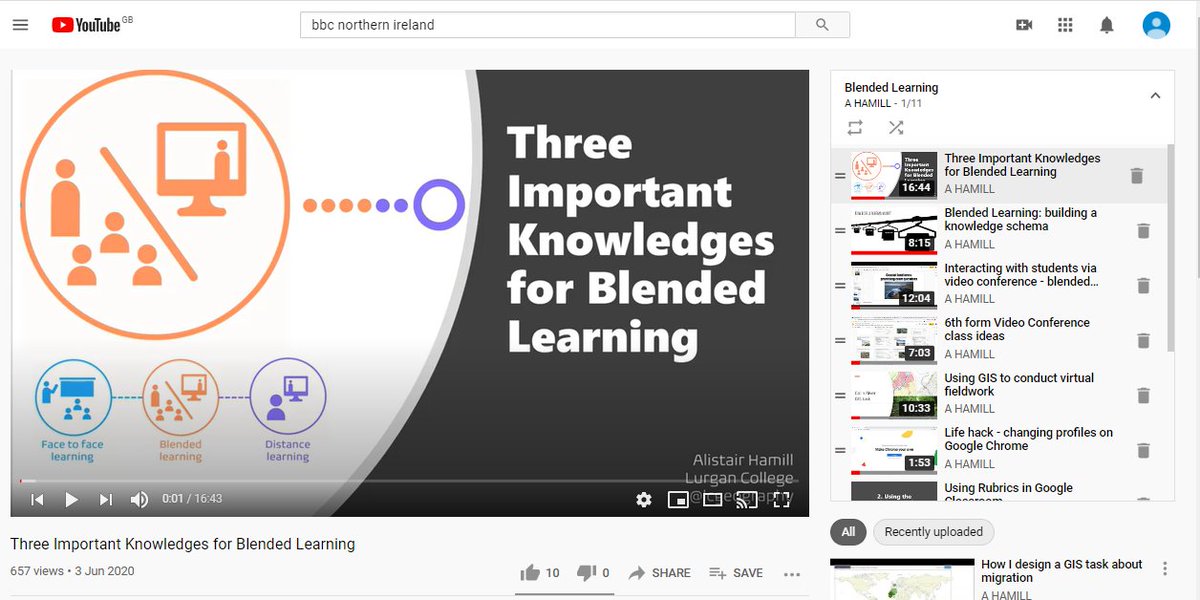
In many ways, I don't blame folks who tweet things like this. The media coverage of the schools situation in Covid-19 rarely talks about the quiet, day-in-day-out work that schools have been doing these past 9 months. 1/
https://t.co/S39EWuap3b
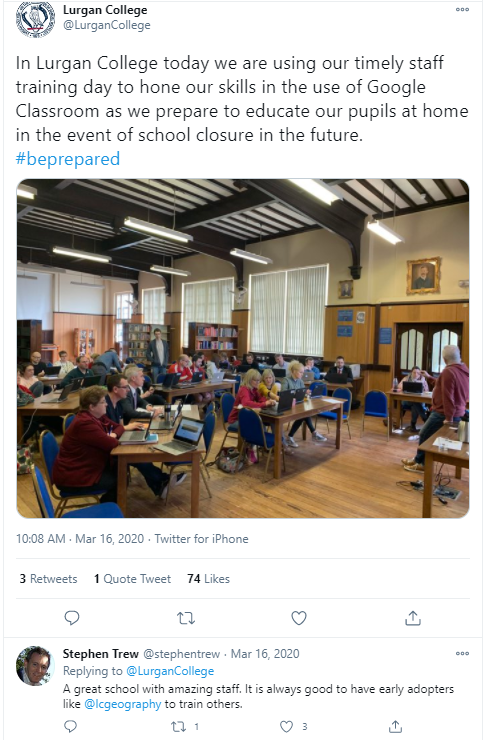
In Lurgan College today we are using our timely staff training day to hone our skills in the use of Google Classroom as we prepare to educate our pupils at home in the event of school closure in the future. #beprepared pic.twitter.com/E0LQkYqvBD
— Lurgan College (@LurganCollege) March 16, 2020
https://t.co/m1QsxlPaV4
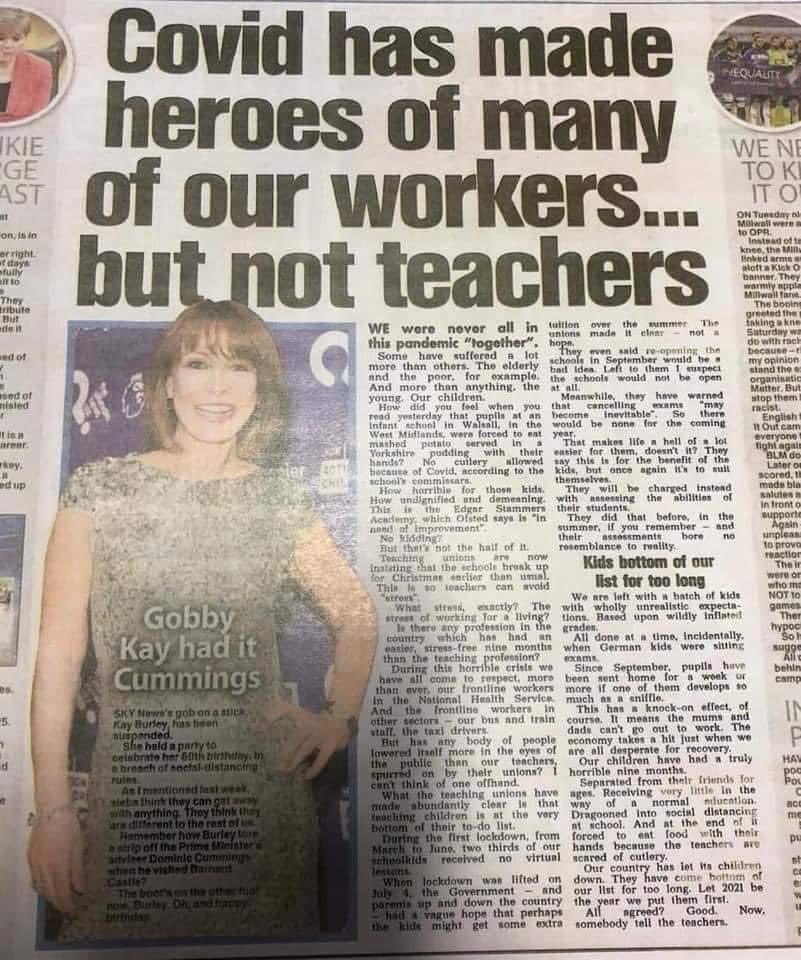
It is misleading and it took its toll on morale within the profession.
But the trope is spectacularly wrong.
8/
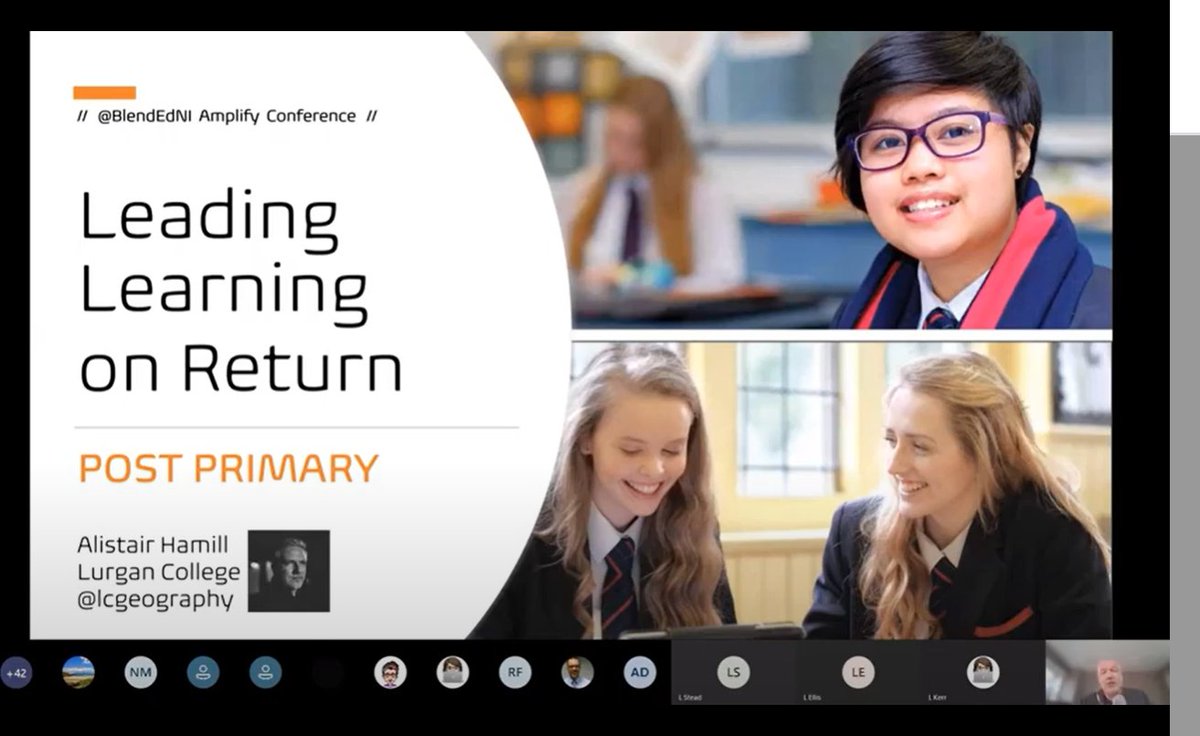
A group of teachers in NI just simply got on with teachers supporting teachers, setting up @BlendEd_NI
9/
https://t.co/TkzGdlxPm3

https://t.co/fXcDh2kKtf
https://t.co/mQhTTSWMJA
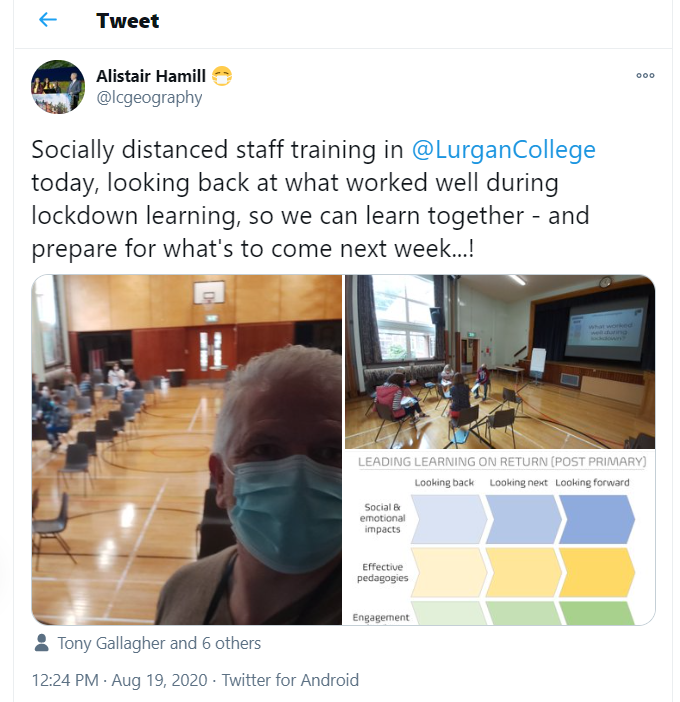
Socially distanced staff training in @LurganCollege today, looking back at what worked well during lockdown learning, so we can learn together - and prepare for what's to come next week...! pic.twitter.com/rYHt9e5IxV
— Alistair Hamill \U0001f637 (@lcgeography) August 19, 2020
https://t.co/KqYDsu85eW
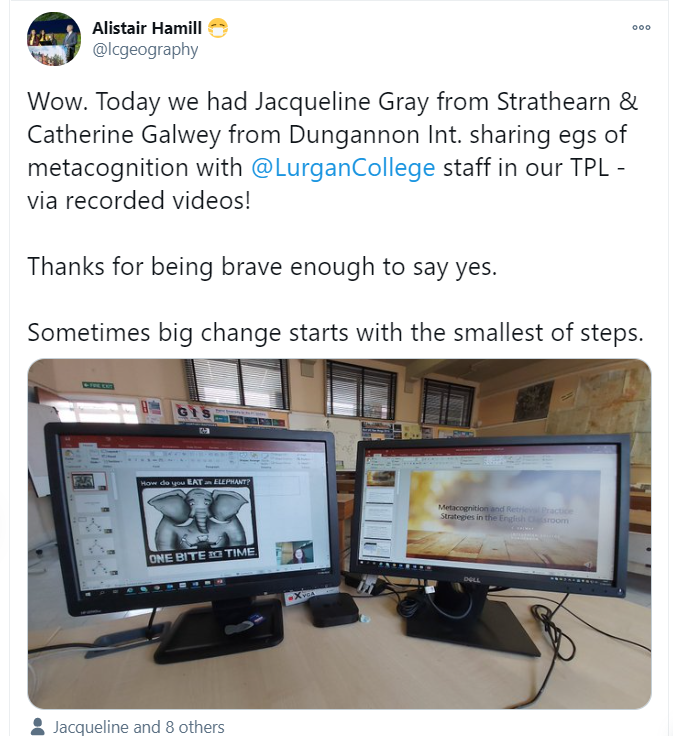
Wow. Today we had Jacqueline Gray from Strathearn & Catherine Galwey from Dungannon Int. sharing egs of metacognition with @LurganCollege staff in our TPL - via recorded videos!
— Alistair Hamill \U0001f637 (@lcgeography) August 21, 2020
Thanks for being brave enough to say yes.
Sometimes big change starts with the smallest of steps. pic.twitter.com/V3Lbat2jTd

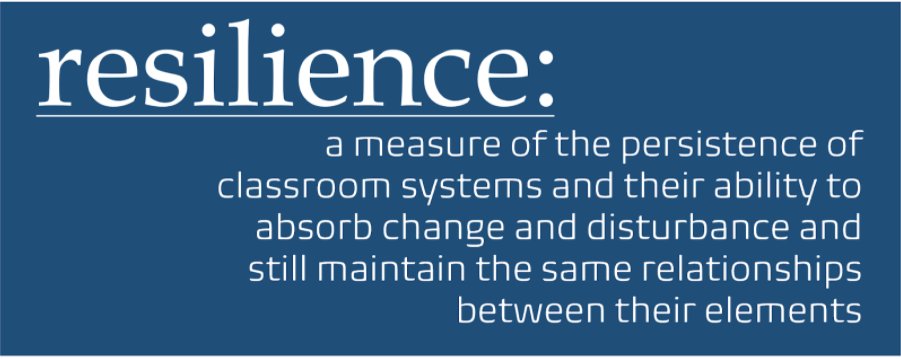
The inspiration came from me from a definition on resilience I hadn't heard before. And so the concept of resilient teaching was born. 16/
And it didn't take long for those strategies to be put to the test. 17/
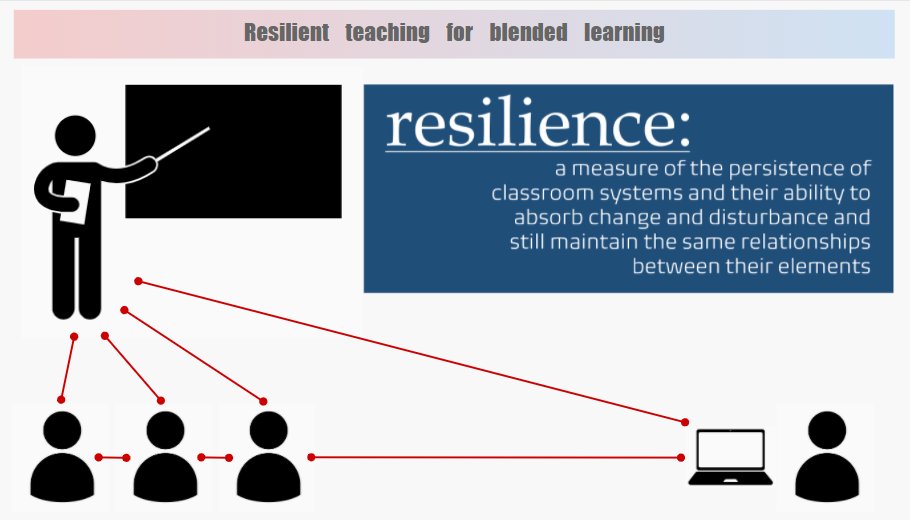
But we were ready for the wave. And it all kicked into place.
And it worked. 18/
https://t.co/1LuMquH2WJ
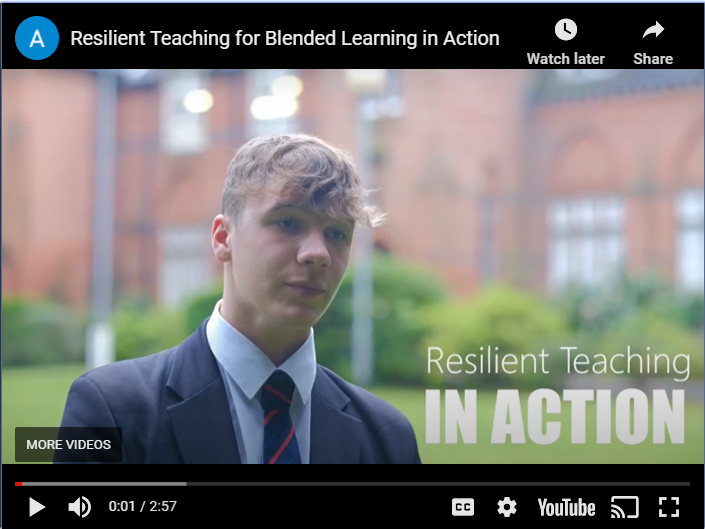
https://t.co/0BwFzIFJli
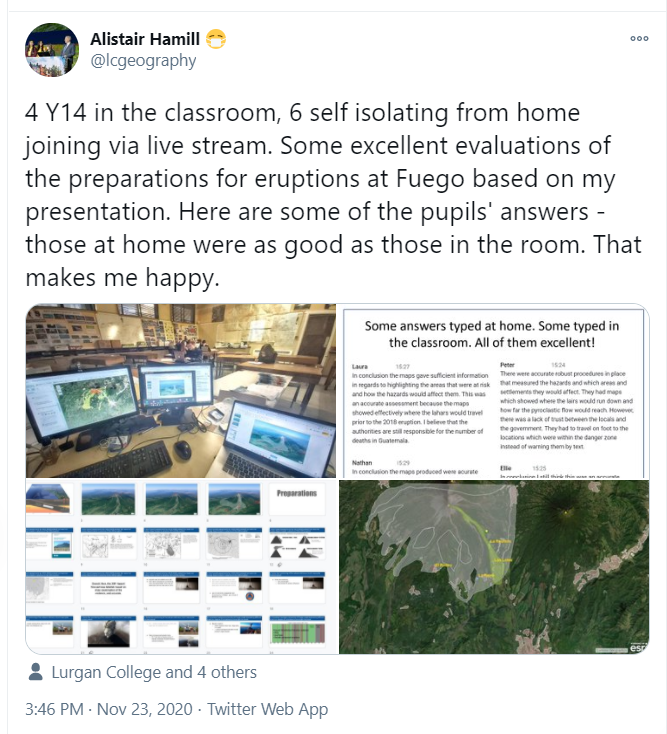
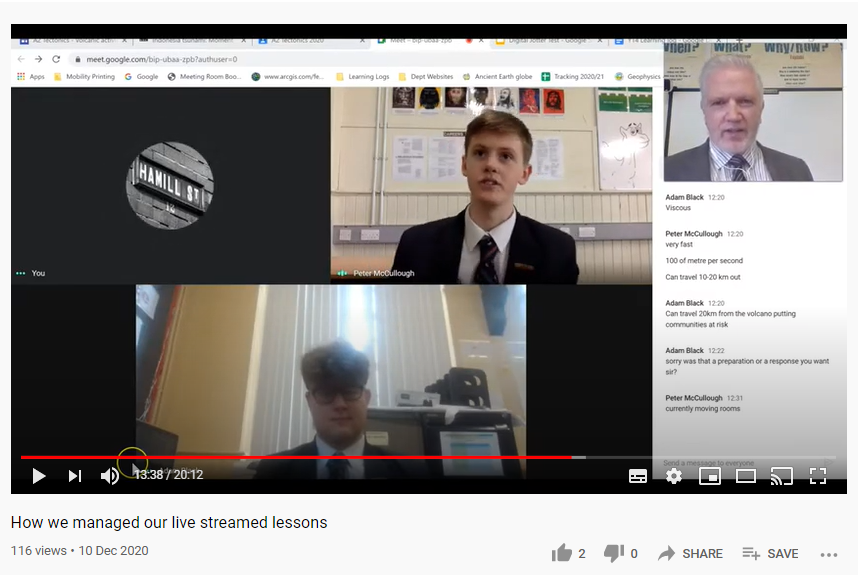
4 Y14 in the classroom, 6 self isolating from home joining via live stream. Some excellent evaluations of the preparations for eruptions at Fuego based on my presentation. Here are some of the pupils' answers - those at home were as good as those in the room. That makes me happy. pic.twitter.com/clImhFSame
— Alistair Hamill \U0001f637 (@lcgeography) November 23, 2020
https://t.co/hi6KHrpmzn
20/
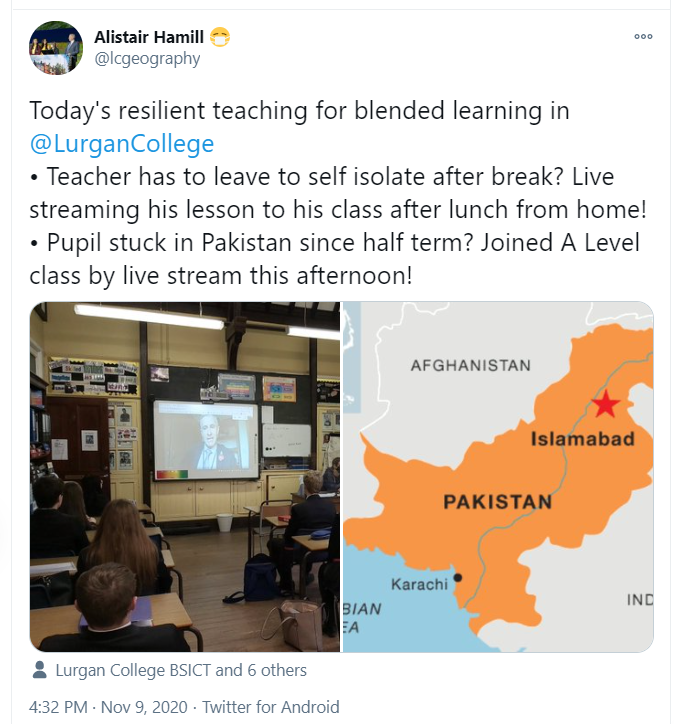
Today's resilient teaching for blended learning in @LurganCollege
— Alistair Hamill \U0001f637 (@lcgeography) November 9, 2020
\u2022 Teacher has to leave to self isolate after break? Live streaming his lesson to his class after lunch from home!
\u2022 Pupil stuck in Pakistan since half term? Joined A Level class by live stream this afternoon! pic.twitter.com/QC3cBGTh3m
https://t.co/eG0iqk59no
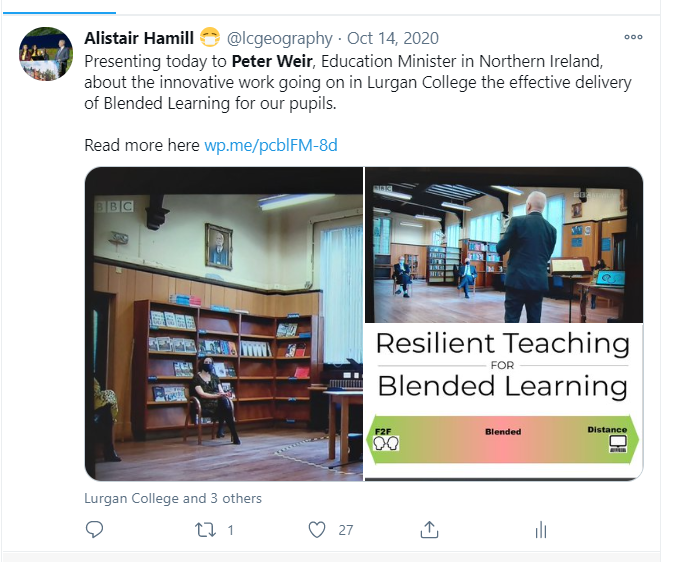
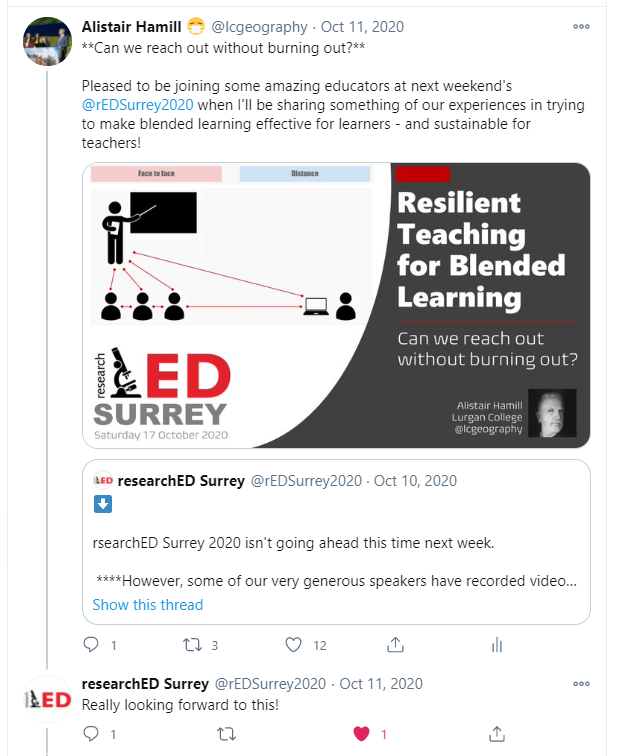
Presenting today to Peter Weir, Education Minister in Northern Ireland, about the innovative work going on in Lurgan College the effective delivery of Blended Learning for our pupils.
— Alistair Hamill \U0001f637 (@lcgeography) October 14, 2020
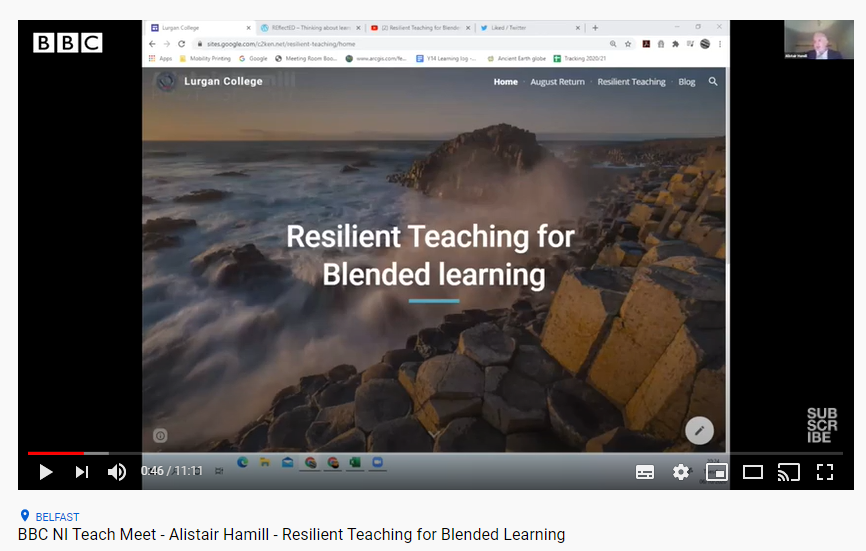
Read more here https://t.co/glZKNNxfzc pic.twitter.com/nW86dDzrOx
https://t.co/NEtGt38PQa
And, really, would you want it any other way?
25/
https://t.co/nMPIQ1st7r
More from Education


Our preprint on the impact of reopening schools on reproduction number in England is now available online: https://t.co/CpfUGzAJ2S. With @Jarvis_Stats @amyg225 @kerrylmwong @KevinvZandvoort @sbfnk + John Edmunds. NOT YET PEER REVIEWED. 1/

We used contact survey data collected by CoMix (https://t.co/ezbCIOgRa1) to quantify differences in contact patterns during November (Schools open) and January (Schools closed) 'Lockdown periods'. NOT YET PEER REVIEWED 2/
We combined this analysis with estimates of susceptibility and infectiousness of children relative to adults from literature. We also inferred relative susceptibility by fitting R estimates from CoMix to EpiForecasts estimates(https://t.co/6lUM2wK0bn). NOT YET PEER REVIEWED 3/

We estimated that reopening all schools would increase R by between 20% to 90% whereas reopening primary or secondary schools alone would increase R by 10% to 40%, depending on the infectiousness/susceptibility profile we used. NOT YET PEER REVIEWED 4/

Assuming a current R of 0.8 (in line with Govt. estimates: https://t.co/ZZhCe79zC4). Reopening all schools would increase R to between 1.0 and 1.5 and reopening either primary or secondary schools would increase R to between 0.9 and 1.2. NOT YET PEER REVIEWED 5/

We used contact survey data collected by CoMix (https://t.co/ezbCIOgRa1) to quantify differences in contact patterns during November (Schools open) and January (Schools closed) 'Lockdown periods'. NOT YET PEER REVIEWED 2/
We combined this analysis with estimates of susceptibility and infectiousness of children relative to adults from literature. We also inferred relative susceptibility by fitting R estimates from CoMix to EpiForecasts estimates(https://t.co/6lUM2wK0bn). NOT YET PEER REVIEWED 3/
We estimated that reopening all schools would increase R by between 20% to 90% whereas reopening primary or secondary schools alone would increase R by 10% to 40%, depending on the infectiousness/susceptibility profile we used. NOT YET PEER REVIEWED 4/
Assuming a current R of 0.8 (in line with Govt. estimates: https://t.co/ZZhCe79zC4). Reopening all schools would increase R to between 1.0 and 1.5 and reopening either primary or secondary schools would increase R to between 0.9 and 1.2. NOT YET PEER REVIEWED 5/