Happy #JobsDay. 8:30 ET @BLS_gov delivers the most-important signals abt how economy is changing.

Forecasts' center:
+432,000 jobs
6.8% unemployment, tick down from 6.9%

But lots of reason to expect weaker jobs growth.

+245K jobs gained last month (mid-Oct to mid-Nov).

Small +11K revisions of last 2 months.

This continues the deceleration of job growth we seen steadily for months.
We are down 9.8 million jobs since Feb and growth is decelerating, likely to turn negative over the current month.

For comparison, during the Great Recession, we lost fewer than 9 million jobs.
We lost 9.19 million jobs over the last 12 months.
We gained 245K last month (0.2 million). This is half the growth rate over the last 3 months and an eight of the growth rate over the last 6 months.

Deceleration is clear.
93K temporary Census worker layoffs are reflected in the +245K.

The private sector added 344K, this is much weaker than recent months' growth, less than half of last month.
Federal govt borrowed to provide support in the spring, causing a huge spike in fiscal stimulus in 2020Q2. This stepped down in Q3.

Fiscal policy is on track to be negative in Q4, contracting the economy.

This is insane.
https://t.co/8zJ48EafC7
The share of adults working or searching for working -- the labor force participation rate -- down 0.2 percentage points (pp) to 61.5%, suggesting people stopped looking for work.

Been basically stalled for months.
The unemployment rate also fell 0.2 pp, but improvement stalling.

Reflects unemployed stopping search not finding work, due to rising public health threat making many jobs riskier.

These folks are saving lives & health but market won't pay them for that work. Govt should.
The broadest official measure of labor under-utilization ("U6") has also basically stalled. It includes discouraged workers, those marginally attached to the labor market, and those working part time but who would prefer full time on top of the unemployed.
Average workweek in private sector unchanged at 34.8 hours in Nov.

In manufacturing, workweek decreased by 0.2 hour to 40.3 hours, & overtime decreased by 0.1 hour to 3.1 hours.
In sum,

1) the labor market is stalling with job losses comparable to the bottom of the Great Recession.

2) many jobs are increasingly dangerous & we should pull back from some econ activity to preserve health.
Vaccines will bring improvement but we should protect each other thru the next few months.

Instead, 12-13 million Americans out of work through no fault of their own are about to lose their insurance benefits on the day after Christmas.

https://t.co/bN8zddMhMB
Households expectations are worsening quickly. https://t.co/U9e6k17fzH
Small business expectations are worsening too.
https://t.co/xZ1HKAHb0f
The U.S. economy has, according to the latest official data, 6.4 million job openings.

Unless the federal govt acts, about twice that many people will be kicked off unemployment insurance on Dec 26.

Pre-haunting Ebenezer Scrooge would approve.
It is the best of times on Wall Street.

It is the worst of times on Main Street.
Last thing. @BLS_gov does amazing work to create timely, accurate info about America's working families, a huge public good.

They are there for us & we need to show up for them. If you are a labor economist or care about workers & employment, follow & join @Friends_of_BLS.
Last, last thing.

@snaidunl & I have a new report out today @rooseveltinst.
https://t.co/jHIK2xXWj4

More from Economy

The argument for deficits & debt raising interest rates in the US is not increased credit risk, it is that interest rates are a function of economic fundamentals, flows & policy. Deficits/debt change those.

I can't tell if I'm agreeing or disagreeing with @jc_econ.


Increasing government spending or reducing taxes increases demand (or reduces saving). This raises the price of loanable funds or the interest rate.

In a dynamic context, more demand means a stronger economy, the central bank raises interest rates sooner, and long rates rise.

(As an aside, we are not close to the United States needing to worry about credit risk and the risks are more overstated than understated in most other advanced economies too. But credit risk is not always & everywhere irrelevant, just look at the UK in 1976 or Canada in 1994.)

Interest rates have fallen over the last 20 yrs while debt has risen. This does not necessarily mean that debt rising causes interest rates to fall. It could also mean that other things have happened at he same time that pushed down interest rates more than debt pushed them up.

The suspects for these "other things" include slower productivity growth, slower popln growth, higher inequality, less investment, etc. All of which either increase the supply of saving or reduce the demand for investment, reducing the equilibrium interest rate.

You May Also Like

🌿𝑻𝒉𝒆 𝒔𝒕𝒐𝒓𝒚 𝒐𝒇 𝒂 𝑺𝒕𝒂𝒓 : 𝑫𝒉𝒓𝒖𝒗𝒂 & 𝑽𝒊𝒔𝒉𝒏𝒖

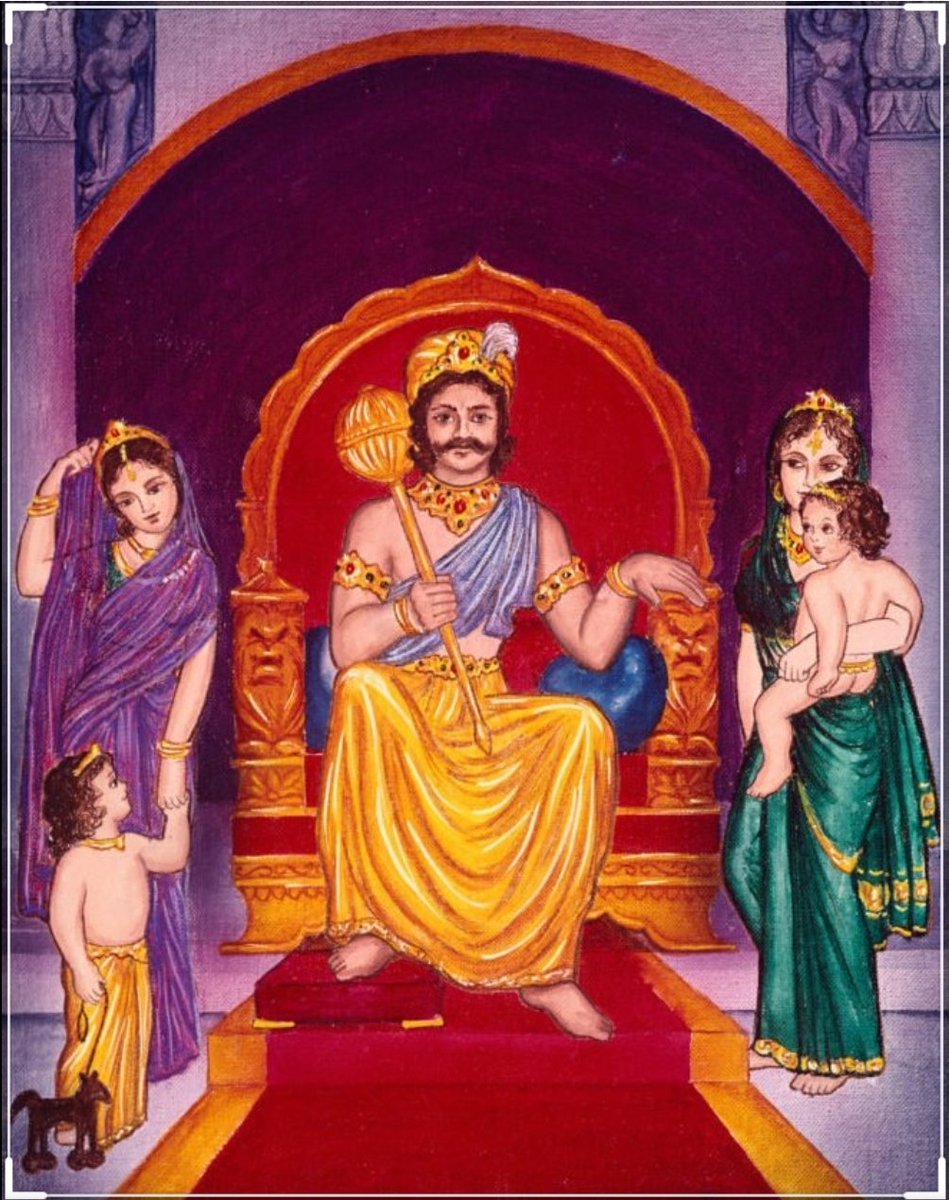
Once upon a time there was a Raja named Uttānapāda born of Svayambhuva Manu,1st man on earth.He had 2 beautiful wives - Suniti & Suruchi & two sons were born of them Dhruva & Uttama respectively.
#talesofkrishna https://t.co/E85MTPkF9W


Now Suniti was the daughter of a tribal chief while Suruchi was the daughter of a rich king. Hence Suruchi was always favored the most by Raja while Suniti was ignored. But while Suniti was gentle & kind hearted by nature Suruchi was venomous inside.
#KrishnaLeela


The story is of a time when ideally the eldest son of the king becomes the heir to the throne. Hence the sinhasan of the Raja belonged to Dhruva.This is why Suruchi who was the 2nd wife nourished poison in her heart for Dhruva as she knew her son will never get the throne.


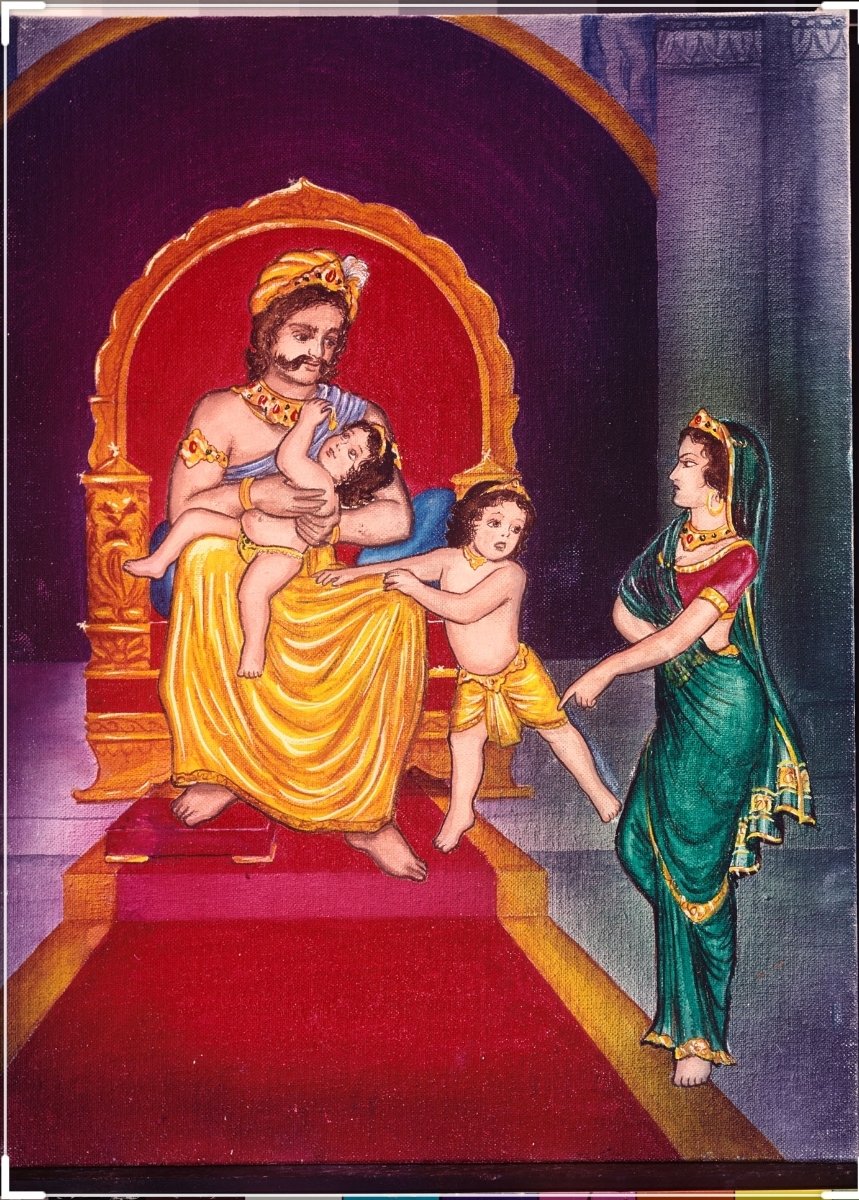
One day when Dhruva was just 5 years old he went on to sit on his father's lap. Suruchi, the jealous queen, got enraged and shoved him away from Raja as she never wanted Raja to shower Dhruva with his fatherly affection.


Dhruva protested questioning his step mother "why can't i sit on my own father's lap?" A furious Suruchi berated him saying "only God can allow him that privilege. Go ask him"
I'm going to do two history threads on Ethiopia, one on its ancient history, one on its modern story (1800 to today). 🇪🇹

I'll begin with the ancient history ... and it goes way back. Because modern humans - and before that, the ancestors of humans - almost certainly originated in Ethiopia. 🇪🇹 (sub-thread):


The first likely historical reference to Ethiopia is ancient Egyptian records of trade expeditions to the "Land of Punt" in search of gold, ebony, ivory, incense, and wild animals, starting in c 2500 BC 🇪🇹


Ethiopians themselves believe that the Queen of Sheba, who visited Israel's King Solomon in the Bible (c 950 BC), came from Ethiopia (not Yemen, as others believe). Here she is meeting Solomon in a stain-glassed window in Addis Ababa's Holy Trinity Church. 🇪🇹


References to the Queen of Sheba are everywhere in Ethiopia. The national airline's frequent flier miles are even called "ShebaMiles". 🇪🇹