President Biden and Democrats in Congress have long memories about how Republicans responded to big legislative initiatives in 2009.
1) Get used to the following term: “budget reconciliation.”
This is the special parliamentary process President Biden and Congressional Democrats plan to use to advance the next coronavirus relief package. It will likely take a few weeks just to move such a COVID-19 measure.
President Biden and Democrats in Congress have long memories about how Republicans responded to big legislative initiatives in 2009.
That’s where budget reconciliation kicks in.
Republicans are already complaining that Democrats aren’t working with them on the next COVID bill.
The easy response is draft a bipartisan bill which has universal buy-in from both sides.
Let’s consider the quintessence of the Senate: Unlimited debate and an unlimited amendment process. But budget reconciliation eliminates that option.
In 1974, Congress approved the Budget Act which established the contemporary budget process.
Average, everyday Americans are actually familiar with budget reconciliation even if they don’t realize it.
Under budget reconciliation, Senate debate is capped at 20 hours and amendments are limited. The House already limits debate and amendments
This is why Democrats probably can’t do other “policy” bill under budget reconciliation. Immigration policy, statehood for the District of Columbia and expanding the size of the Supreme Court are out
And both sides have used budget reconciliation to try to achieve their own policy goals – especially when they know they can’t overcome a Senate filibuster.
Expect the House and Senate to move their initial budget measures this week. This isn’t the coronavirus bill itself.
More from Chad Pergram
More from Economy

1/OK, let's take a little break from Coup Twitter, and think about an economic issue:
How can we build up the wealth of the middle class?
2/The typical American has surprisingly little wealth compared to the typical resident of many other developed countries.
This is a fact that is not widely known or appreciated.
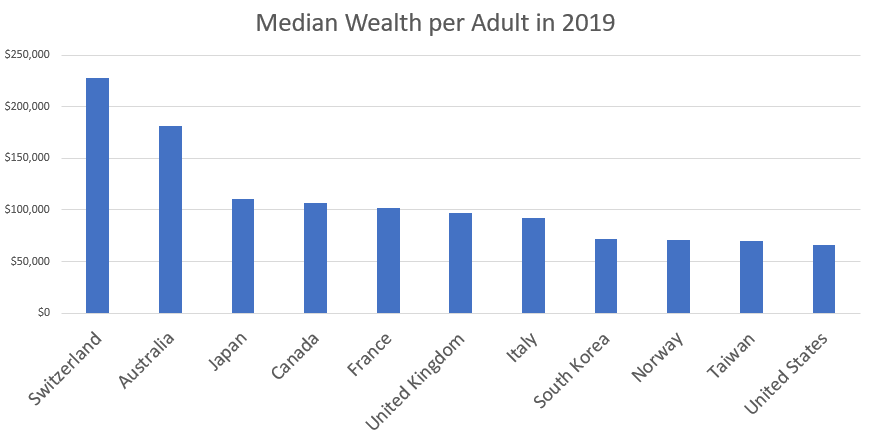
3/Now, some people argue that stuff like Social Security or social insurance programs should be included in wealth. But I chose to focus on private wealth because I think having assets you can sell whenever you want is important to
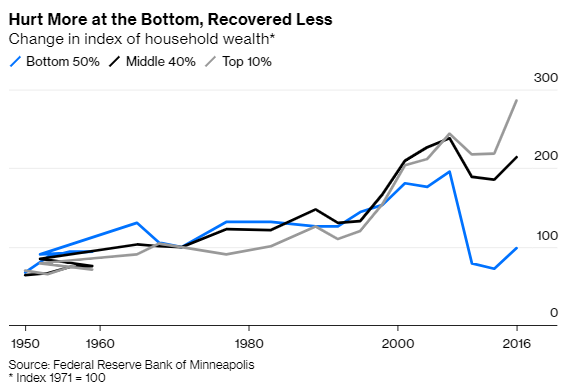
4/For many decades after World War 2, middle-class wealth in America was on a smooth upward trajectory.
Then the housing crash came, and all that changed. Suddenly the rich were still doing well but everyone else was seeing the end of their American Dream.
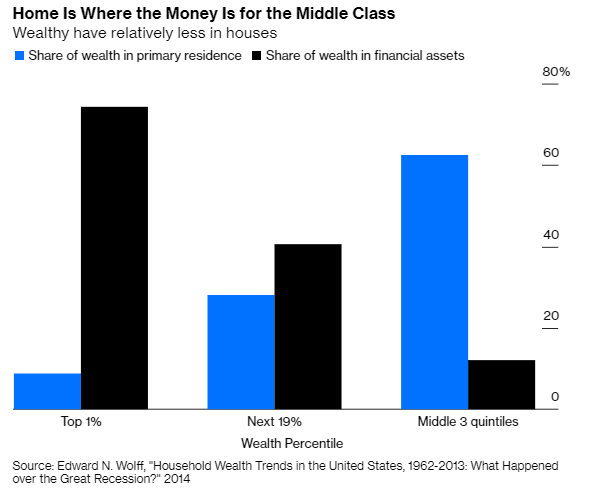
5/Why the divergence?
Because the American middle class has its wealth in houses -- specifically, in the houses they live in.
It's the rich who own stocks.
How can we build up the wealth of the middle class?
2/The typical American has surprisingly little wealth compared to the typical resident of many other developed countries.
This is a fact that is not widely known or appreciated.
3/Now, some people argue that stuff like Social Security or social insurance programs should be included in wealth. But I chose to focus on private wealth because I think having assets you can sell whenever you want is important to
Yes, these numbers don't include things like Social Security, just privately held wealth. They're not an attempt to capitalize every possible future income stream.
— Noahtogolpe \U0001f407 (@Noahpinion) January 10, 2021
4/For many decades after World War 2, middle-class wealth in America was on a smooth upward trajectory.
Then the housing crash came, and all that changed. Suddenly the rich were still doing well but everyone else was seeing the end of their American Dream.
5/Why the divergence?
Because the American middle class has its wealth in houses -- specifically, in the houses they live in.
It's the rich who own stocks.


Let's discuss how little you actually understand about economics and energy.
The first thing to understand is that energy is not globally fungible. Electricity decays as it leaves its point of origin; it’s expensive to transport. There is a huge excess (hydro) in many areas.
In other words, it can also be variable. It's estimated that in Sichuan there is twice as much electricity produced as is needed during the rainy season. Indeed, there is seasonality to how Bitcoin mining works. You can see here:
Bitcoin EXPORTS energy in this scenario. Fun fact, most industrial nations would steer this excess capacity towards refining aluminum by melting bauxite ore, which is very energy intensive.
You wouldn't argue that we are producing *too much* electricity from renewables, right?
"But what about the carbon footprint! ITS HUGE!"
Many previous estimates have quite faulty methods and don't take into account the actual energy sources. Is it fair to put a GHG equivalent on hydro or solar power? That would seem a bit disingenuous, no?
Well that's exactly what some have done.
The first thing to understand is that energy is not globally fungible. Electricity decays as it leaves its point of origin; it’s expensive to transport. There is a huge excess (hydro) in many areas.
Let's discuss the environmental cost of bitcoin. Because despite all the push for sustainable and green investment in the tech sector, there's a giant smoldering Chernobyl sitting at the heart of Silicon Valley which a lot of investors would prefer you remain quiet about. \U0001f9f5 (1/)
— Stephen Diehl (@smdiehl) January 17, 2021
In other words, it can also be variable. It's estimated that in Sichuan there is twice as much electricity produced as is needed during the rainy season. Indeed, there is seasonality to how Bitcoin mining works. You can see here:
Bitcoin EXPORTS energy in this scenario. Fun fact, most industrial nations would steer this excess capacity towards refining aluminum by melting bauxite ore, which is very energy intensive.
You wouldn't argue that we are producing *too much* electricity from renewables, right?
"But what about the carbon footprint! ITS HUGE!"
Many previous estimates have quite faulty methods and don't take into account the actual energy sources. Is it fair to put a GHG equivalent on hydro or solar power? That would seem a bit disingenuous, no?
Well that's exactly what some have done.