
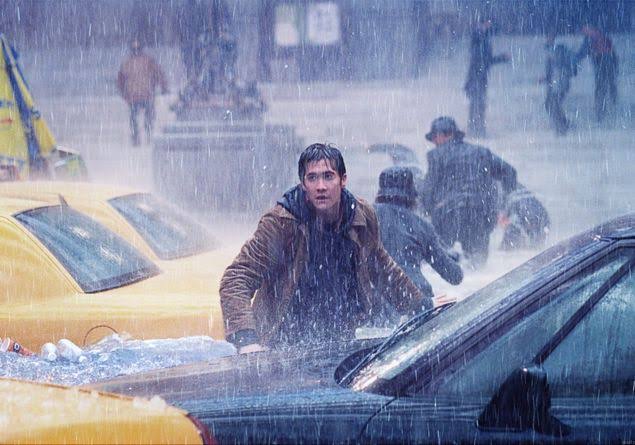
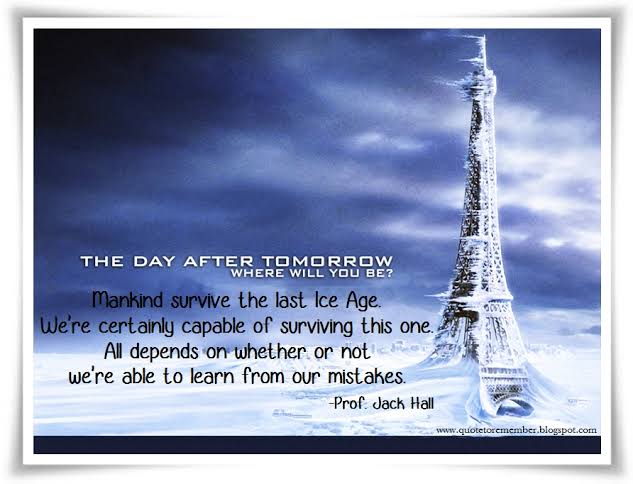
The Day After Tomorrow is a 2004 American climate fiction-disaster film co-written, directed, and produced by Roland Emmerich. The film was made in Toronto and Montreal and is the highest-grossing Hollywood film to be made in Canada (if adjusted for inflation).






More from Joy Karmaker










More from Culture


Best books I read in 2020
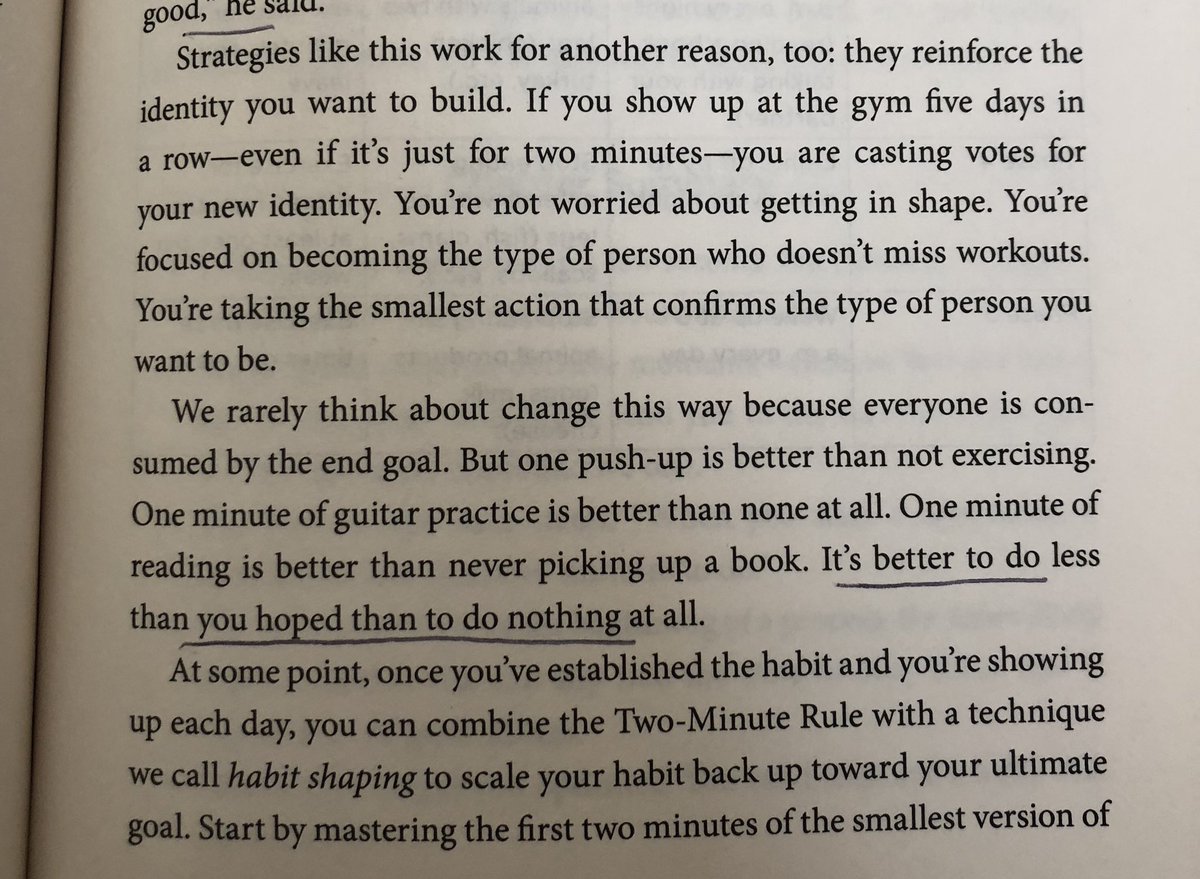
1. Atomic Habits by @JamesClear
“If you show up at the gym 5 days in a row—even for 2 minutes—you're casting votes for your new identity. You’re not worried about getting in shape. Youre focused on becoming the type of person who doesn’t miss workouts”
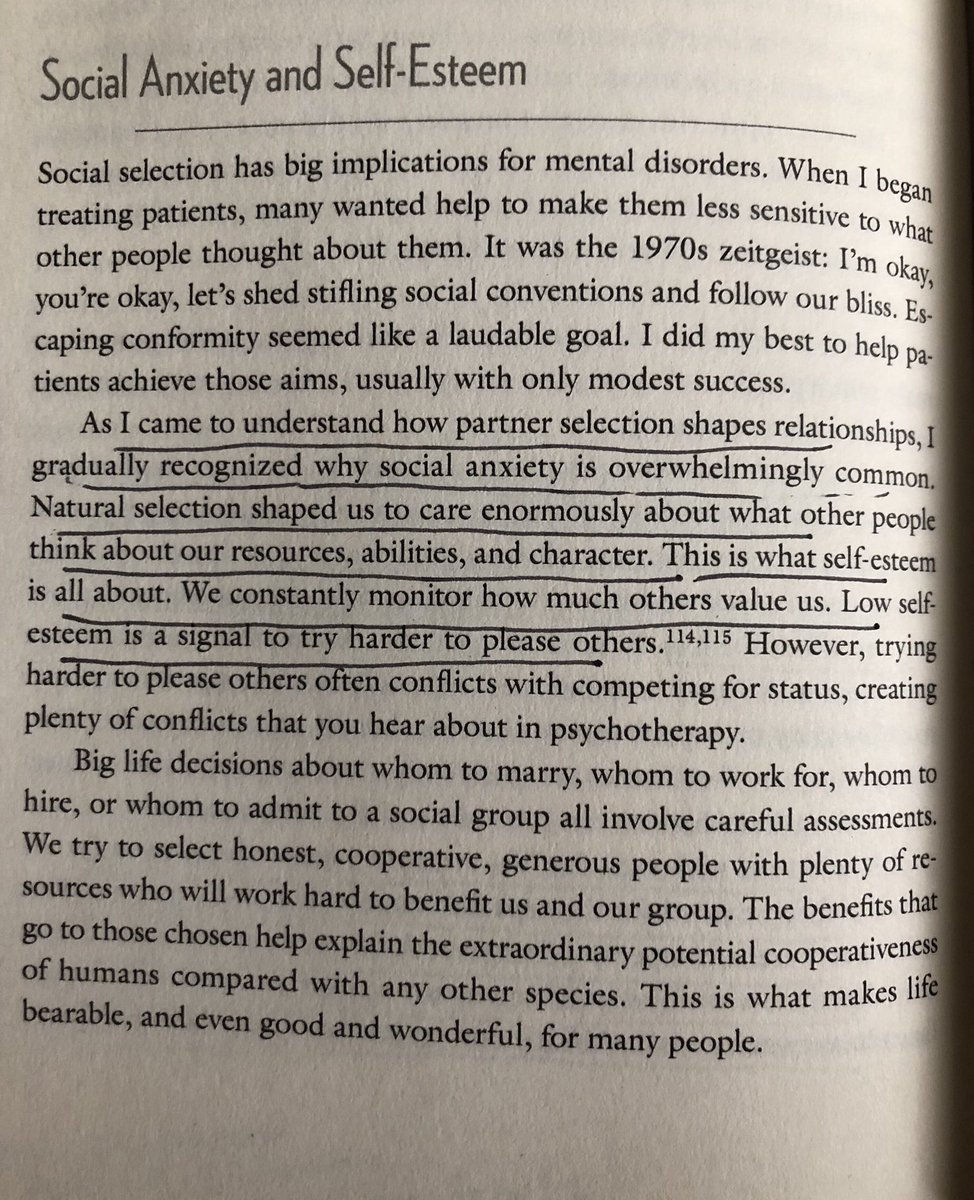
Good Reasons for Bad Feelings
https://t.co/KZDqte19nG
2. “social anxiety is overwhelmingly common. Natural selection shaped us to care enormously what other people think..We constantly monitor how much others value us..Low self-esteem is a signal to try harder to please others”
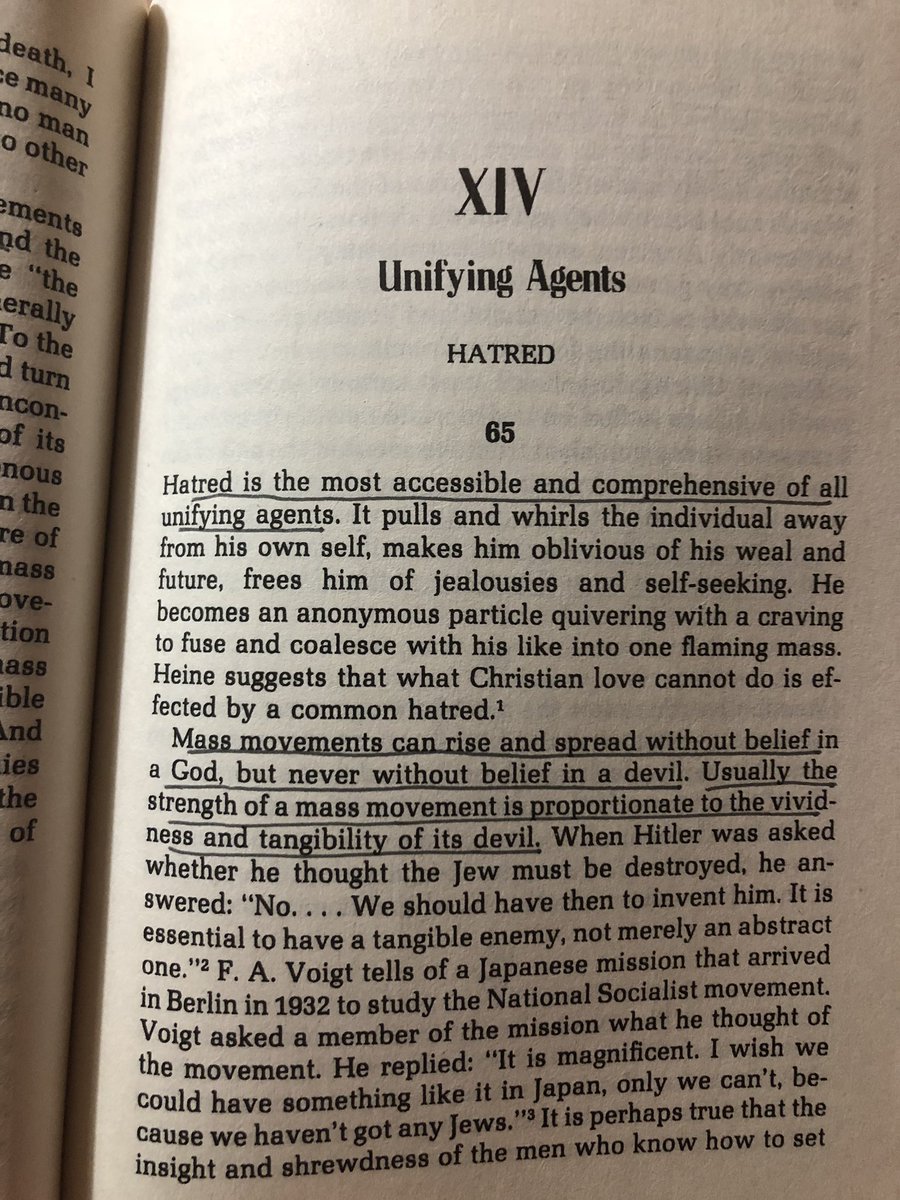
The True Believer by Eric Hoffer
https://t.co/uZT4kdhzvZ
“Hatred is the most accessible and comprehensive of all unifying agents...Mass movements can rise and spread without belief in a God, but never without a believe in a devil.”
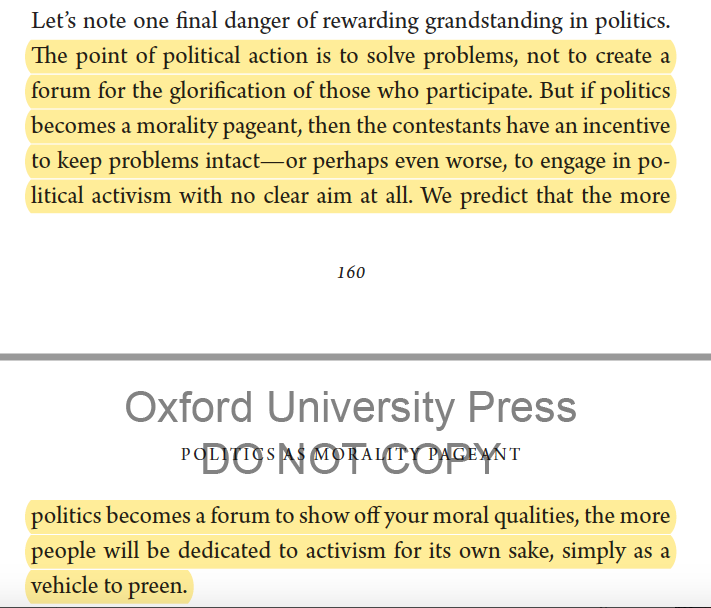
Grandstanding
https://t.co/4Of58AZUj8
"if politics becomes a morality pageant, then the contestants have an incentive to keep problems intact...politics becomes a forum to show off moral qualities...people will be dedicated to activism for its own sake, as a vehicle to preen"
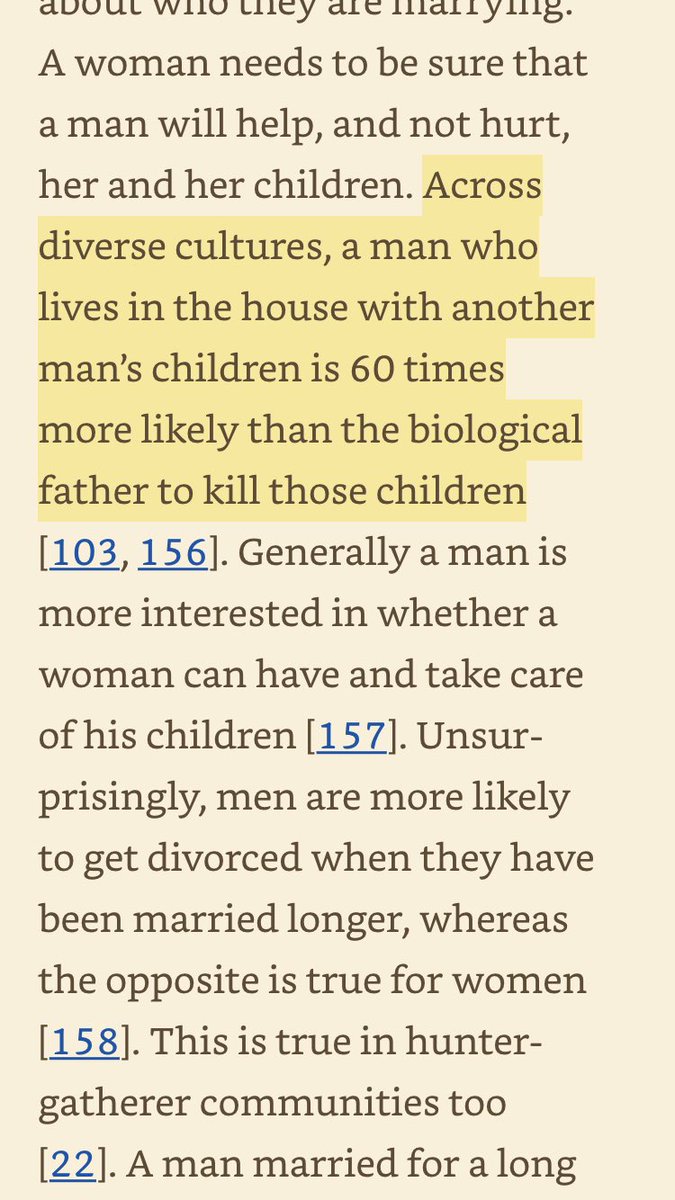
Warriors and Worriers by Joyce Benenson
https://t.co/yLC4eGHEd4
“Across diverse cultures, a man who lives in the house with another man’s children is about 60 times more likely than the biological father to kill those children.”
1. Atomic Habits by @JamesClear
“If you show up at the gym 5 days in a row—even for 2 minutes—you're casting votes for your new identity. You’re not worried about getting in shape. Youre focused on becoming the type of person who doesn’t miss workouts”
Good Reasons for Bad Feelings
https://t.co/KZDqte19nG
2. “social anxiety is overwhelmingly common. Natural selection shaped us to care enormously what other people think..We constantly monitor how much others value us..Low self-esteem is a signal to try harder to please others”
The True Believer by Eric Hoffer
https://t.co/uZT4kdhzvZ
“Hatred is the most accessible and comprehensive of all unifying agents...Mass movements can rise and spread without belief in a God, but never without a believe in a devil.”
Grandstanding
https://t.co/4Of58AZUj8
"if politics becomes a morality pageant, then the contestants have an incentive to keep problems intact...politics becomes a forum to show off moral qualities...people will be dedicated to activism for its own sake, as a vehicle to preen"
Warriors and Worriers by Joyce Benenson
https://t.co/yLC4eGHEd4
“Across diverse cultures, a man who lives in the house with another man’s children is about 60 times more likely than the biological father to kill those children.”










You May Also Like



Oh my Goodness!!!
I might have a panic attack due to excitement!!
Read this thread to the end...I just had an epiphany and my mind is blown. Actually, more than blown. More like OBLITERATED! This is the thing! This is the thing that will blow the entire thing out of the water!
Has this man been concealing his true identity?
Is this man a supposed 'dead' Seal Team Six soldier?
Witness protection to be kept safe until the right moment when all will be revealed?!
Who ELSE is alive that may have faked their death/gone into witness protection?

Were "golden tickets" inside the envelopes??

Are these "golden tickets" going to lead to their ultimate undoing?
Review crumbs on the board re: 'gold'.

#SEALTeam6 Trump re-tweeted this.

I might have a panic attack due to excitement!!
Read this thread to the end...I just had an epiphany and my mind is blown. Actually, more than blown. More like OBLITERATED! This is the thing! This is the thing that will blow the entire thing out of the water!
Tik Tok pic.twitter.com/8X3oMxvncP
— Scotty Mar10 (@Allenma15086871) December 29, 2020
Has this man been concealing his true identity?
Is this man a supposed 'dead' Seal Team Six soldier?
Witness protection to be kept safe until the right moment when all will be revealed?!
Who ELSE is alive that may have faked their death/gone into witness protection?
Were "golden tickets" inside the envelopes??
Are these "golden tickets" going to lead to their ultimate undoing?
Review crumbs on the board re: 'gold'.
#SEALTeam6 Trump re-tweeted this.

Master Thread of all my threads!
Hello!! 👋
• I have curated some of the best tweets from the best traders we know of.
• Making one master thread and will keep posting all my threads under this.
• Go through this for super learning/value totally free of cost! 😃
1. 7 FREE OPTION TRADING COURSES FOR
2. THE ABSOLUTE BEST 15 SCANNERS EXPERTS ARE USING
Got these scanners from the following accounts:
1. @Pathik_Trader
2. @sanjufunda
3. @sanstocktrader
4. @SouravSenguptaI
5. @Rishikesh_ADX
3. 12 TRADING SETUPS which experts are using.
These setups I found from the following 4 accounts:
1. @Pathik_Trader
2. @sourabhsiso19
3. @ITRADE191
4.
4. Curated tweets on HOW TO SELL STRADDLES.
Everything covered in this thread.
1. Management
2. How to initiate
3. When to exit straddles
4. Examples
5. Videos on
Hello!! 👋
• I have curated some of the best tweets from the best traders we know of.
• Making one master thread and will keep posting all my threads under this.
• Go through this for super learning/value totally free of cost! 😃
1. 7 FREE OPTION TRADING COURSES FOR
A THREAD:
— Aditya Todmal (@AdityaTodmal) November 28, 2020
7 FREE OPTION TRADING COURSES FOR BEGINNERS.
Been getting lot of dm's from people telling me they want to learn option trading and need some recommendations.
Here I'm listing the resources every beginner should go through to shorten their learning curve.
(1/10)
2. THE ABSOLUTE BEST 15 SCANNERS EXPERTS ARE USING
Got these scanners from the following accounts:
1. @Pathik_Trader
2. @sanjufunda
3. @sanstocktrader
4. @SouravSenguptaI
5. @Rishikesh_ADX
The absolute best 15 scanners which experts are using.
— Aditya Todmal (@AdityaTodmal) January 29, 2021
Got these scanners from the following accounts:
1. @Pathik_Trader
2. @sanjufunda
3. @sanstocktrader
4. @SouravSenguptaI
5. @Rishikesh_ADX
Share for the benefit of everyone.
3. 12 TRADING SETUPS which experts are using.
These setups I found from the following 4 accounts:
1. @Pathik_Trader
2. @sourabhsiso19
3. @ITRADE191
4.
12 TRADING SETUPS which experts are using.
— Aditya Todmal (@AdityaTodmal) February 7, 2021
These setups I found from the following 4 accounts:
1. @Pathik_Trader
2. @sourabhsiso19
3. @ITRADE191
4. @DillikiBiili
Share for the benefit of everyone.
4. Curated tweets on HOW TO SELL STRADDLES.
Everything covered in this thread.
1. Management
2. How to initiate
3. When to exit straddles
4. Examples
5. Videos on
Curated tweets on How to Sell Straddles
— Aditya Todmal (@AdityaTodmal) February 21, 2021
Everything covered in this thread.
1. Management
2. How to initiate
3. When to exit straddles
4. Examples
5. Videos on Straddles
Share if you find this knowledgeable for the benefit of others.

