"We're essentially experiencing the equivalent of a 9/11 every day in terms of number of deaths; our hospital systems are overburdened. ...We're going to be dealing w/ this for some time to come, even after people get the vaccine, certainly #LongCovid is real." /2
On our new podcast, we interviewed @angie_rasmussen, one of the leading virologists, who has been a guiding light during the pandemic. Thread here to summarize, transcript and audio https://t.co/Q6CabBsKCM @cuttingforstone /1
"We're essentially experiencing the equivalent of a 9/11 every day in terms of number of deaths; our hospital systems are overburdened. ...We're going to be dealing w/ this for some time to come, even after people get the vaccine, certainly #LongCovid is real." /2
"My philosophy about public health is that you can't have it without the engagement of the public. And my philosophy about communication is that information empowers people to decide for themselves" /3
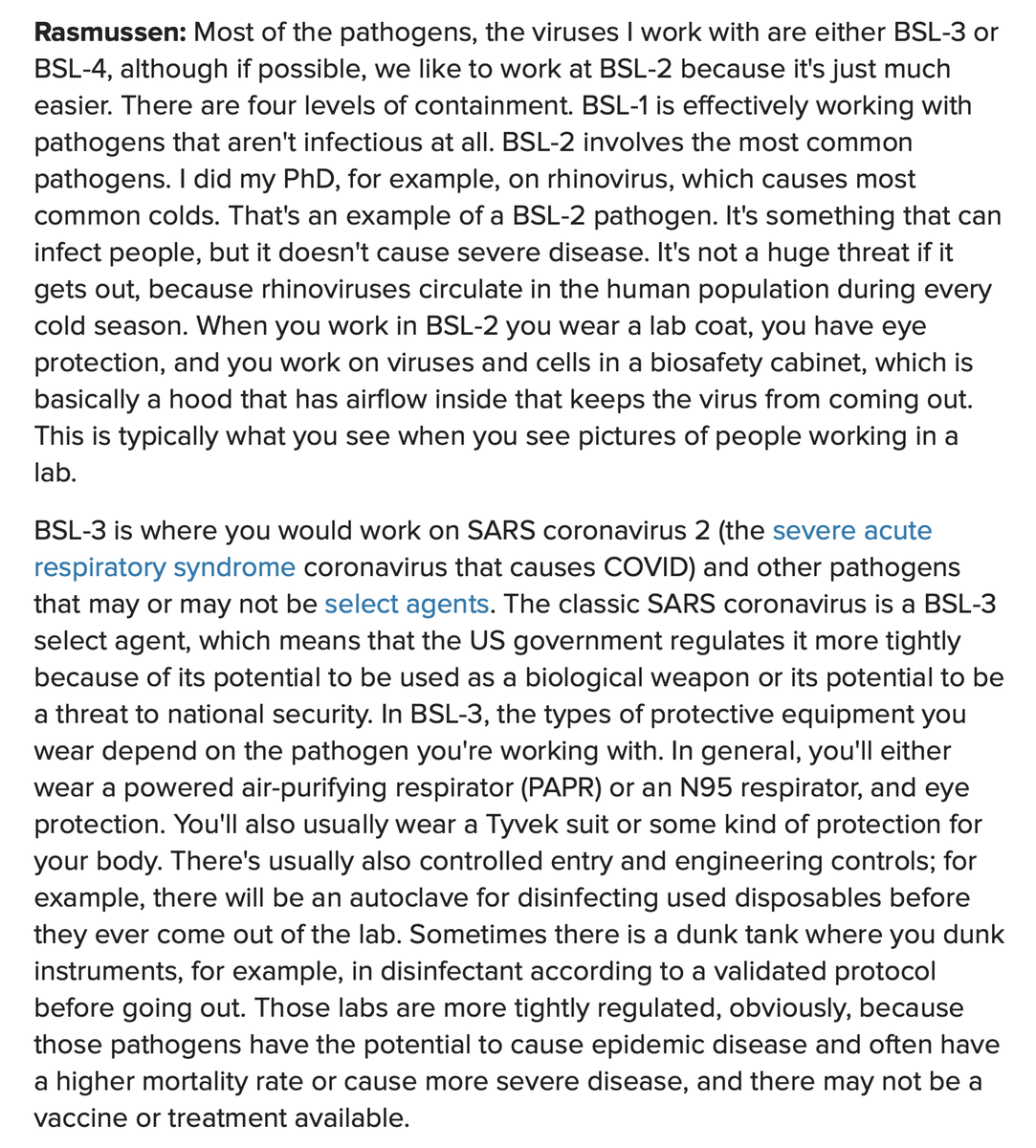
Angie reviewed parallels w/ ME/CFS
Because this is the 1st time we've had a pandemic w/ such broad effects on different organ systems ...try to understand how an acute viral infection can cause these complex, syndromic, long-term diseases like ME/CFS." /6
It's complicated. A master class here, starting with this, and will let you read on or listen to get the whole response, which gets into aerosols, too /7
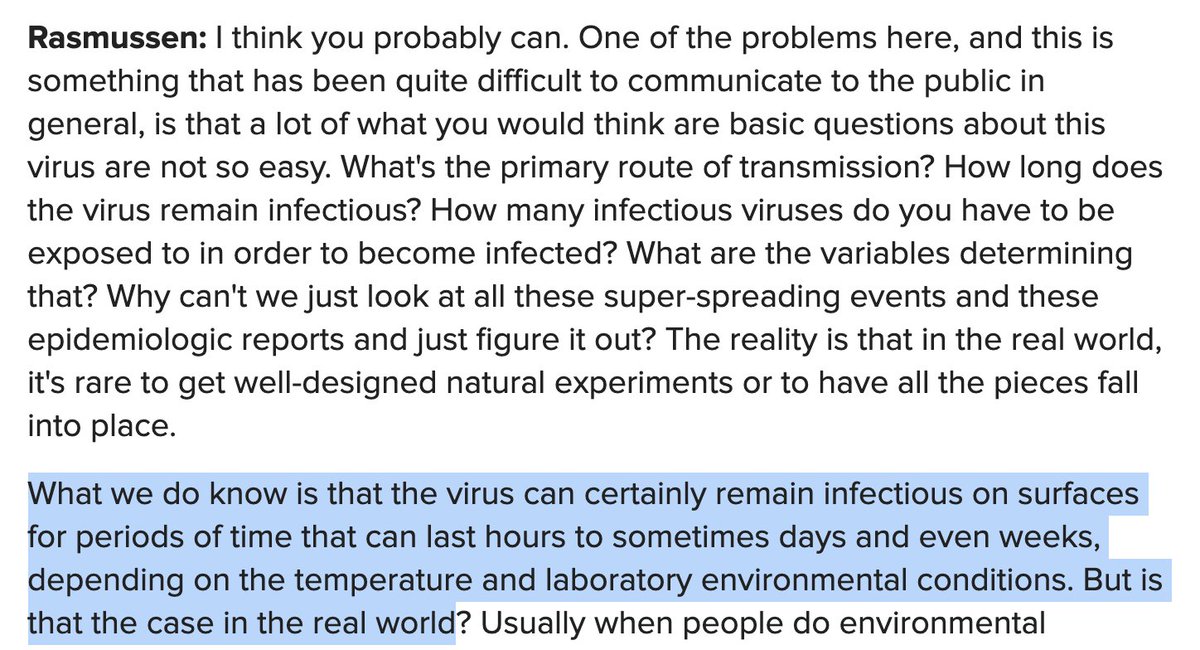
"We needn't be bleaching everything in sight and disinfecting our produce, our groceries, and our mail and so forth. But we should still do good hand hygiene; we should still emphasize that we should disinfect common high-touch surfaces, such as doorknobs.../8
Translate:
"My feeling is that if risk reduction is additive, if all of these measures — masks, social distancing, and ventilation — add up and create the most exposure reduction possible"/9


More from Culture





You May Also Like

Krugman is, of course, right about this. BUT, note that universities can do a lot to revitalize declining and rural regions.
See this thing that @lymanstoneky wrote:
And see this thing that I wrote:
And see this book that @JamesFallows wrote:
And see this other thing that I wrote:
One thing I've been noticing about responses to today's column is that many people still don't get how strong the forces behind regional divergence are, and how hard to reverse 1/ https://t.co/Ft2aH1NcQt
— Paul Krugman (@paulkrugman) November 20, 2018
See this thing that @lymanstoneky wrote:
And see this thing that I wrote:
And see this book that @JamesFallows wrote:
And see this other thing that I wrote: