Texas passed its first renewable energy target in 1999, 3 years before California. The law was signed by, Gov. George W. Bush — you may recall he’s a Republican.
For my book, I interviewed Texan Republicans, Democrats, oil guys + clean energy pioneers. Texas was once leading in wind energy, with GOP support. Now we get lies, from the Gov on down on renewables. What happened?
Lessons from Short Circuiting Policy https://t.co/KtxaBci5oC 🧵
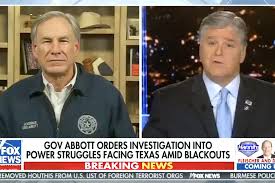
Texas passed its first renewable energy target in 1999, 3 years before California. The law was signed by, Gov. George W. Bush — you may recall he’s a Republican.
The "bill he signed in 1999 will make Texas the country’s largest market for renewable energy by 2009."
https://t.co/T4dKZ5qGnA
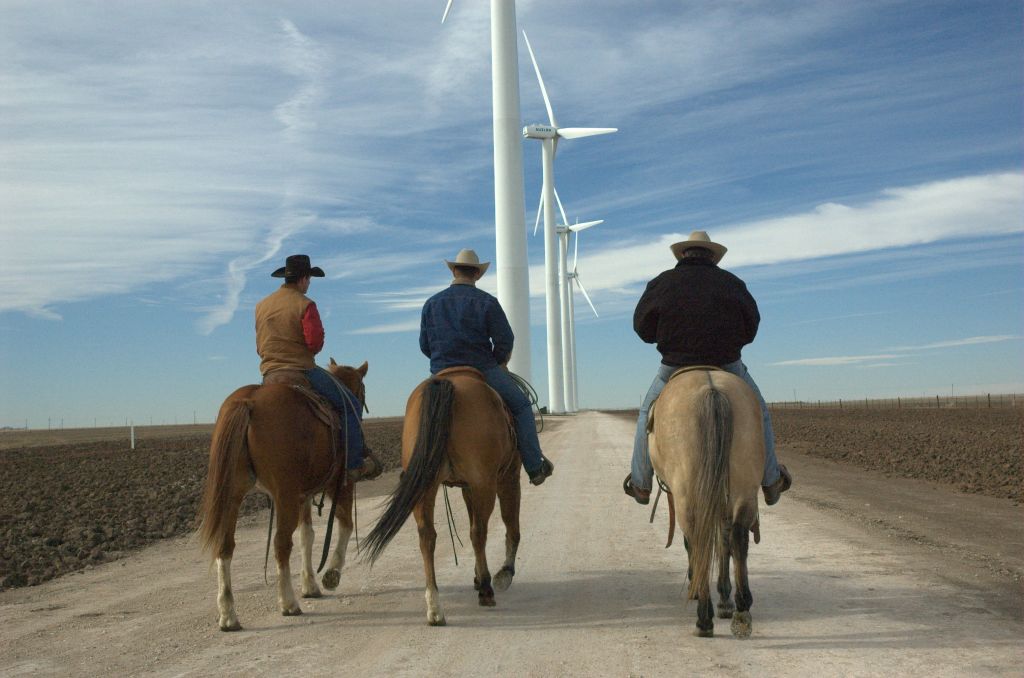
It was sponsored by Republican state Senator Troy Fraser and signed by Republican Gov. Rick Perry.
https://t.co/c9vnjyvn4i
What happened over the past 15 years?
https://t.co/jp3EqyORuu
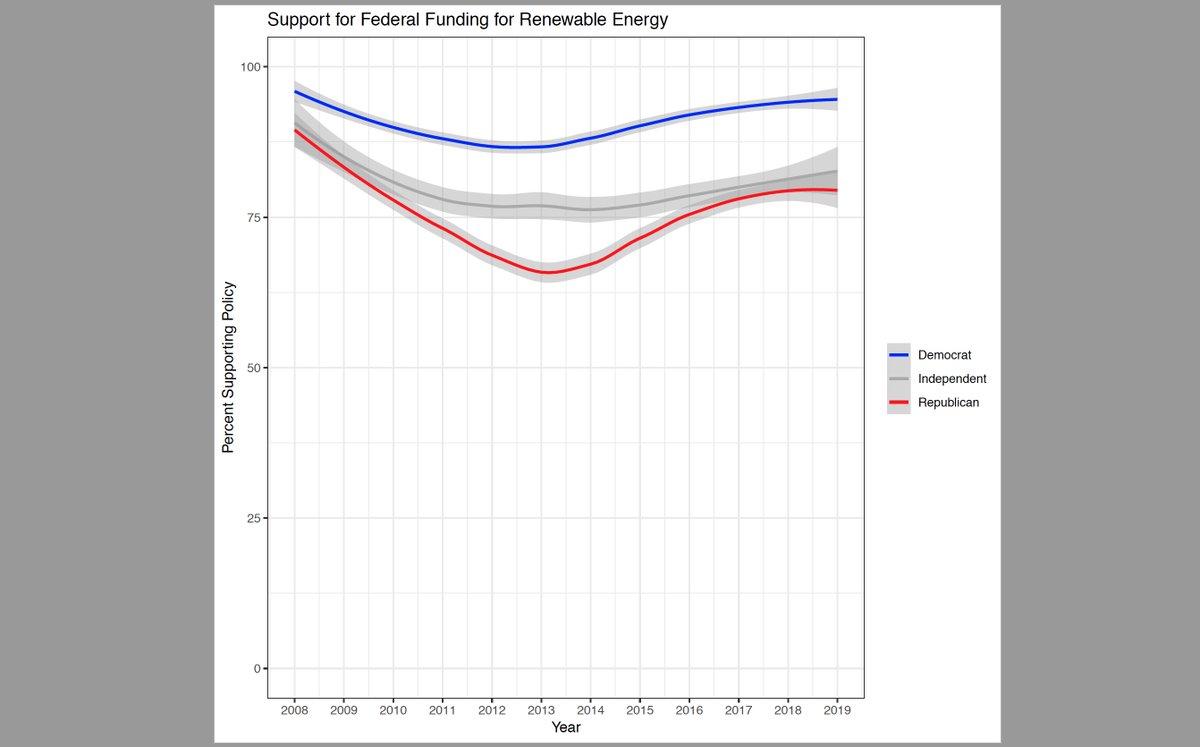
They maintain GOP discipline by threatening Republicans who support renewables or climate action with lost money and primary challengers. Over time, this shifts the party.
https://t.co/W8L5yqDgOJ
We might expect a similar result after the lies perpetuated over the past week.
In the early 2000s, California faced severe power outages. As a result, Gov. Gray Davis lost a recall election. If I were Gov. Abbott, I'd be worried.
If you enjoyed this thread, check out my book, Short Circuiting Policy!
https://t.co/MLrDKMQI4C
More from Culture

In a recent article published in the Stern, there is now a criminal complaint filed against Michael Inacker, the then CEO of the PR firm WMP for what includes allegations of the knock out payments from the emirate of Qatar to hide a dossier for their role in financing Hezbollah
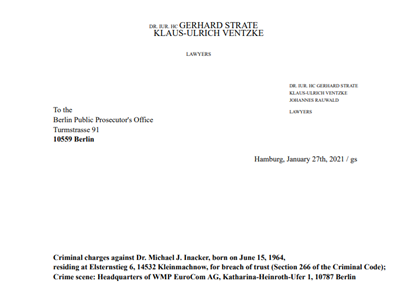
That allegedly 750,000 euros, which would have been divided between Jason and Michael.
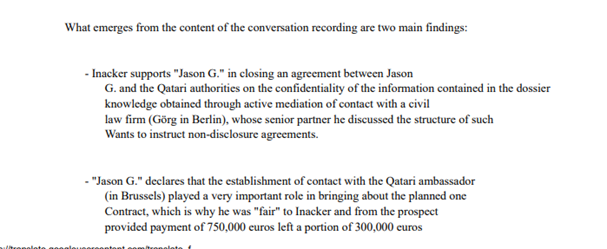
In return, "Jason" was supposed to keep to himself the information he had researched in Qatar, that a high-ranking person in the emirate of Qatar was financially supporting Hezbollah.
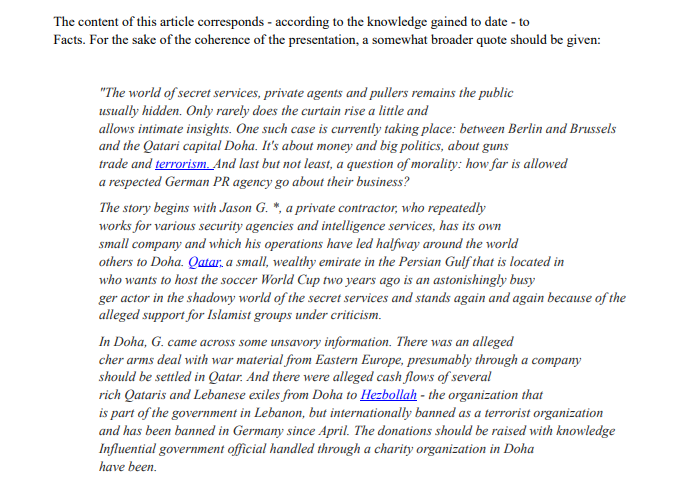
https://t.co/TdaAECu35a
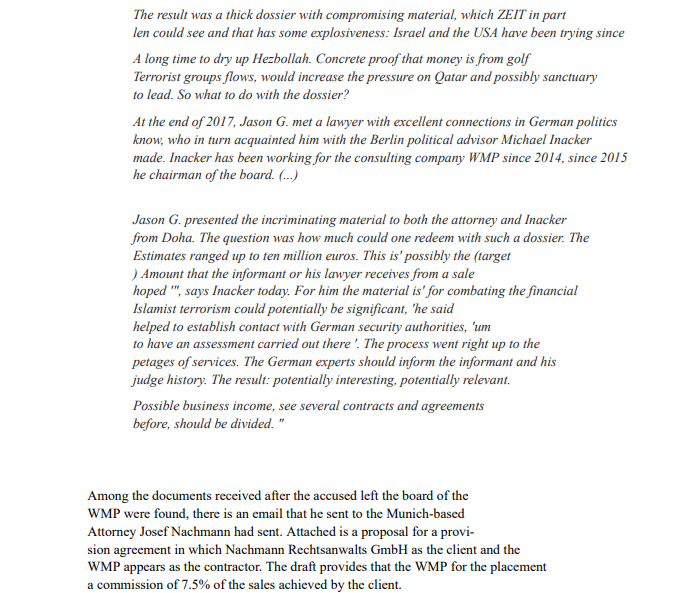
There is an interesting point in the article, WMP (Inacker) still had PR contracts with both Qatar and Saudi and “Jason” had some information about arms deliveries organized by people from Qatar with suppliers in Belarus, Serbia, Macedonia, and Yemen.
That allegedly 750,000 euros, which would have been divided between Jason and Michael.
In return, "Jason" was supposed to keep to himself the information he had researched in Qatar, that a high-ranking person in the emirate of Qatar was financially supporting Hezbollah.
https://t.co/TdaAECu35a
There is an interesting point in the article, WMP (Inacker) still had PR contracts with both Qatar and Saudi and “Jason” had some information about arms deliveries organized by people from Qatar with suppliers in Belarus, Serbia, Macedonia, and Yemen.




One of the authors of the Policy Exchange report on academic free speech thinks it is "ridiculous" to expect him to accurately portray an incident at Cardiff University in his study, both in the reporting and in a question put to a student sample.
Here is the incident Kaufmann incorporated into his study, as told by a Cardiff professor who was there. As you can see, the incident involved the university intervening to *uphold* free speech principles:
Here is the first mention of the Greer at Cardiff incident in Kaufmann's report. It refers to the "concrete case" of the "no-platforming of Germaine Greer". Any reasonable reader would assume that refers to an incident of no-platforming instead of its opposite.

Here is the next mention of Greer in the report. The text asks whether the University "should have overruled protestors" and "stepped in...and guaranteed Greer the right to speak". Again the strong implication is that this did not happen and Greer was "no platformed".
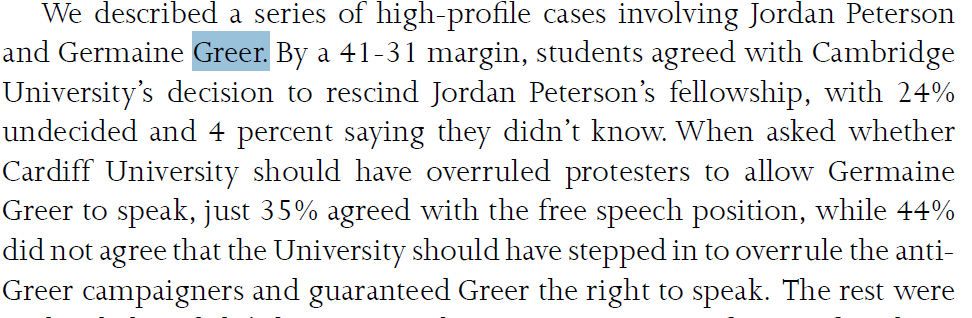
The authors could easily have added a footnote at this point explaining what actually happened in Cardiff. They did not.
This is ridiculous. Students were asked for their views on this example and several others. The study findings and conclusions were about student responses not the substance of each case. Could\u2019ve used hypotheticals. The responses not the cases were the basis of the conclusions.
— Eric Kaufmann (@epkaufm) February 17, 2021
Here is the incident Kaufmann incorporated into his study, as told by a Cardiff professor who was there. As you can see, the incident involved the university intervening to *uphold* free speech principles:
The UK govt\u2019s paper on free speech in Unis (with implications for Wales) is getting a lot of attention.
— Richard Wyn Jones (@RWynJones) February 16, 2021
Worth noting then that an important part of the evidence-base on which it rests relates to (demonstrably false) claims about my own institution
1/https://t.co/buoGE7ocG7
Here is the first mention of the Greer at Cardiff incident in Kaufmann's report. It refers to the "concrete case" of the "no-platforming of Germaine Greer". Any reasonable reader would assume that refers to an incident of no-platforming instead of its opposite.
Here is the next mention of Greer in the report. The text asks whether the University "should have overruled protestors" and "stepped in...and guaranteed Greer the right to speak". Again the strong implication is that this did not happen and Greer was "no platformed".
The authors could easily have added a footnote at this point explaining what actually happened in Cardiff. They did not.

OK. Chapter 7 of Book 4 of #WealthOfNations is tough going. It's long. It's serious. It's all about colonies.
We can take comfort, though, in knowing that the chapter #AdamSmith says is about colonies is, in fact, about colonies. (IV.vii) #WealthOfTweets #SmithTweets

Colonies were a vexed subject when #AdamSmith was writing, and they’re even more complicated now. So, before we even get to the tweeting, here’s a link to that thread on Smith and “savage nations.” (IV.vii) #WealthOfTweets
The reason for the ancient Greeks and Romans to settle colonies was straightforward: they didn’t have enough space for their growing populations. Their colonies were treated as “emancipated children”—connected but independent. (IV.vii.a.2) #WealthOfTweets #SmithTweets
(Both these things are in contrast to the European colonies, as we'll see.) (IV.vii.a.2) #WealthOfTweets #SmithTweets
Ancient Greeks and Romans needed more space because the land was owned by an increasingly small number of citizens and farming and nearly all trades and arts were performed by slaves. It was hard for a poor freeman to improve his life. (IV.vii.a.3) #WealthOfTweets #SmithTweets
We can take comfort, though, in knowing that the chapter #AdamSmith says is about colonies is, in fact, about colonies. (IV.vii) #WealthOfTweets #SmithTweets
Colonies were a vexed subject when #AdamSmith was writing, and they’re even more complicated now. So, before we even get to the tweeting, here’s a link to that thread on Smith and “savage nations.” (IV.vii) #WealthOfTweets
We have to pause now, because we have to have a whole new tweet thread on #AdamSmith and \u201csavage nations,\u201d because he\u2019s going to keep using this kind of phrase, so we need to talk about it. #WealthOfTweets #SmithTweets
— @AdamSmithWorks (@adamsmithworks) January 4, 2021
The reason for the ancient Greeks and Romans to settle colonies was straightforward: they didn’t have enough space for their growing populations. Their colonies were treated as “emancipated children”—connected but independent. (IV.vii.a.2) #WealthOfTweets #SmithTweets
(Both these things are in contrast to the European colonies, as we'll see.) (IV.vii.a.2) #WealthOfTweets #SmithTweets
Ancient Greeks and Romans needed more space because the land was owned by an increasingly small number of citizens and farming and nearly all trades and arts were performed by slaves. It was hard for a poor freeman to improve his life. (IV.vii.a.3) #WealthOfTweets #SmithTweets

A thread of very good, wonderful, truly Super Bowls.
Translucent agate bowl with ornamental grooves and coffee-and-cream marbling. Found near Qift in southern Egypt. 300 - 1,000 BC. 📷 Getty Museum https://t.co/W1HfQZIG2V

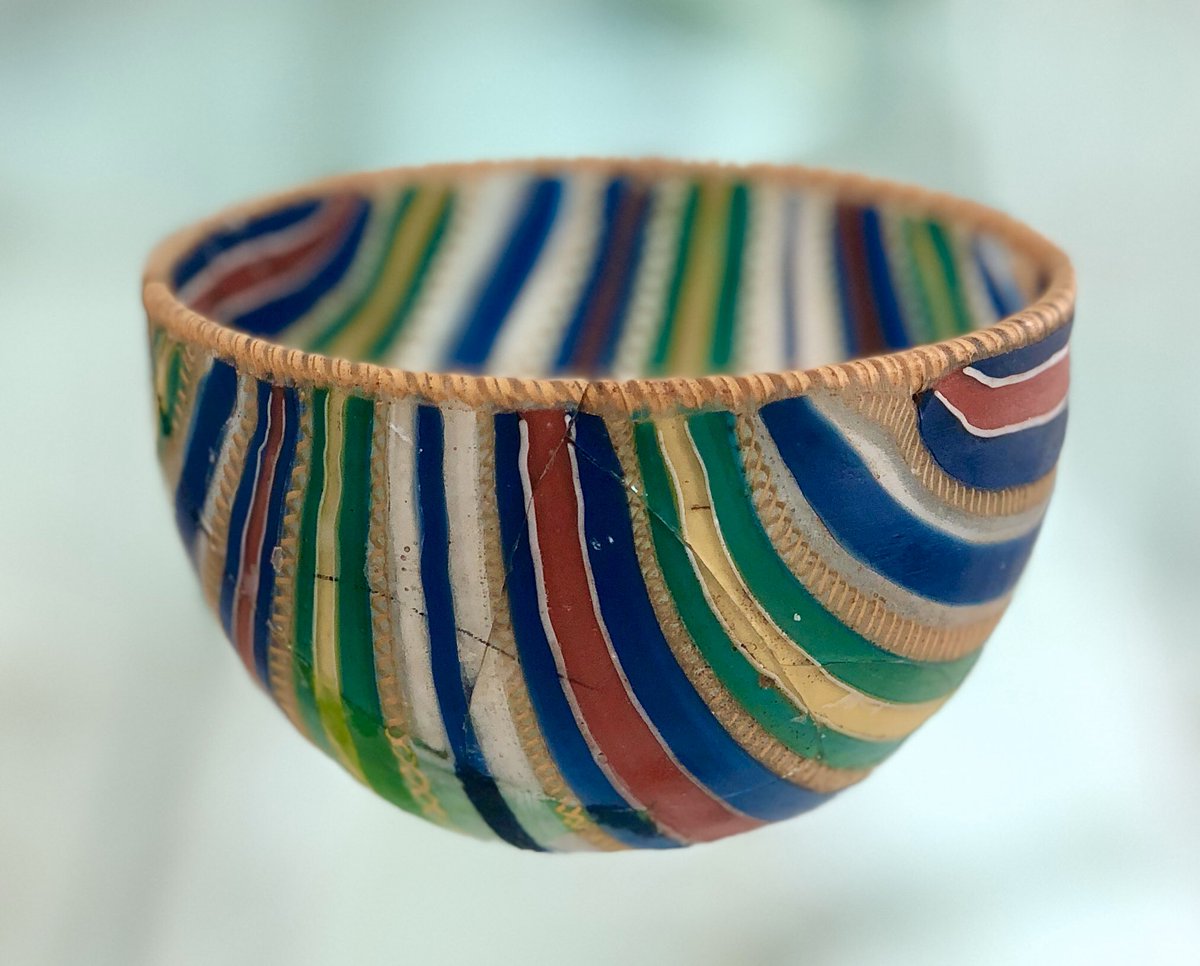
Technicolor dreambowl, found in a grave near Zadar on Croatia's Dalmatian Coast. Made by melding and winding thin bars of glass, each adulterated with different minerals to get different colors. 1st century AD. 📷 Zadar Museum of Ancient Glass https://t.co/H9VfNrXKQK
100,000-year-old abalone shells used to mix red ocher, marrow, charcoal, and water into a colorful paste. Possibly the oldest artist's palettes ever discovered. Blombos Cave, South Africa. 📷https://t.co/0fMeYlOsXG

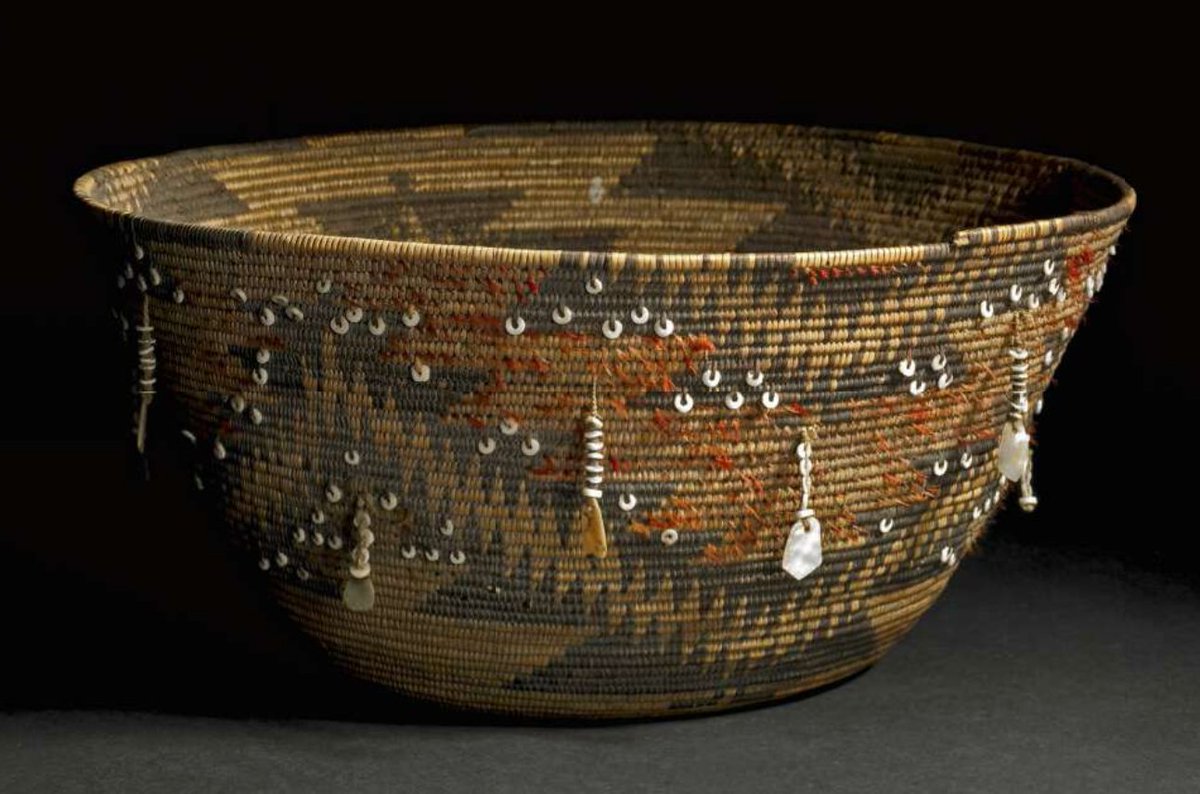
Reed basket bowl with shell and feather ornaments. Possibly from the Southern Pomo or Lake Miwok cultures. Found in Santa Barbara, CA, circa 1770. 📷 British Museum https://t.co/F4Ix0mXAu6
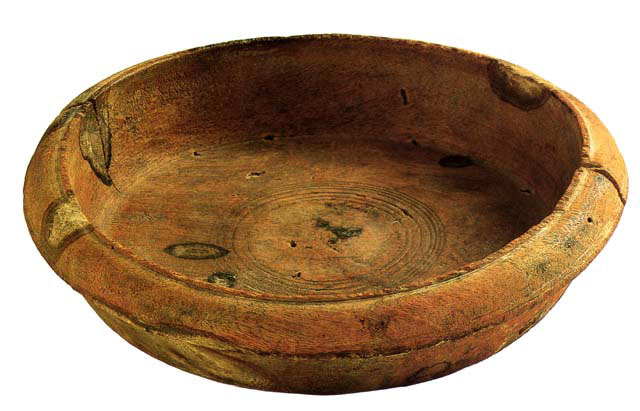
Wooden bowl with concentric circles and rounded rim, most likely made of umbrella thorn acacia (Vachellia/Acacia tortilis). Qumran. 1st Century BCE. 📷 https://t.co/XZCw67Ho03
Translucent agate bowl with ornamental grooves and coffee-and-cream marbling. Found near Qift in southern Egypt. 300 - 1,000 BC. 📷 Getty Museum https://t.co/W1HfQZIG2V
Technicolor dreambowl, found in a grave near Zadar on Croatia's Dalmatian Coast. Made by melding and winding thin bars of glass, each adulterated with different minerals to get different colors. 1st century AD. 📷 Zadar Museum of Ancient Glass https://t.co/H9VfNrXKQK
100,000-year-old abalone shells used to mix red ocher, marrow, charcoal, and water into a colorful paste. Possibly the oldest artist's palettes ever discovered. Blombos Cave, South Africa. 📷https://t.co/0fMeYlOsXG
Reed basket bowl with shell and feather ornaments. Possibly from the Southern Pomo or Lake Miwok cultures. Found in Santa Barbara, CA, circa 1770. 📷 British Museum https://t.co/F4Ix0mXAu6
Wooden bowl with concentric circles and rounded rim, most likely made of umbrella thorn acacia (Vachellia/Acacia tortilis). Qumran. 1st Century BCE. 📷 https://t.co/XZCw67Ho03
You May Also Like

![Peter McCormack [Jan/3\u279e\u20bf \U0001f511\u220e]](https://pbs.twimg.com/profile_images/1524287442307723265/_59ITDbJ_normal.jpg)

THREAD: 12 Things Everyone Should Know About IQ
1. IQ is one of the most heritable psychological traits – that is, individual differences in IQ are strongly associated with individual differences in genes (at least in fairly typical modern environments). https://t.co/3XxzW9bxLE
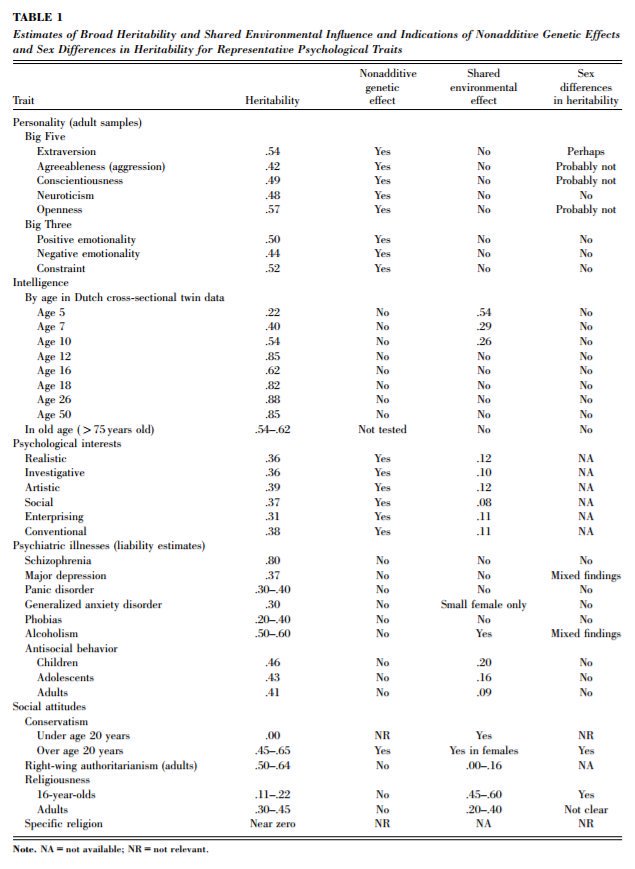
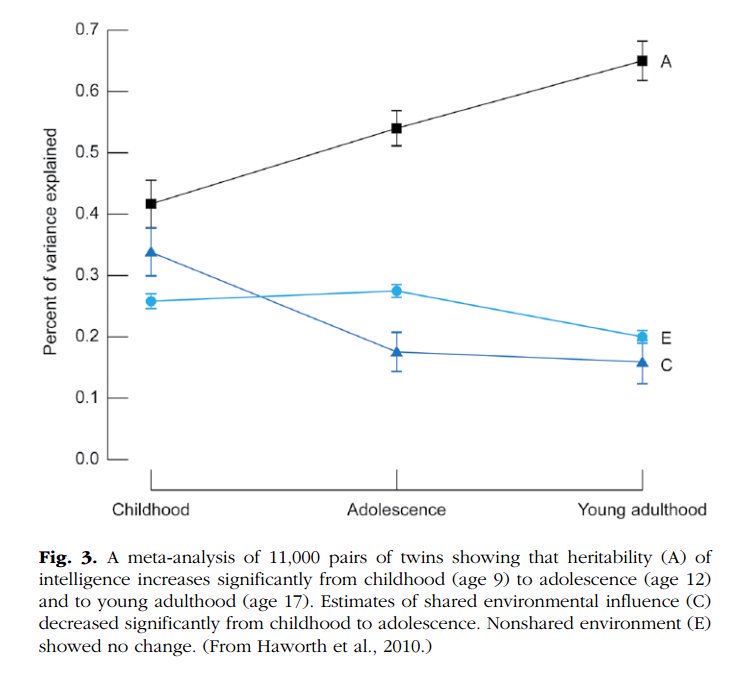
2. The heritability of IQ *increases* from childhood to adulthood. Meanwhile, the effect of the shared environment largely fades away. In other words, when it comes to IQ, nature becomes more important as we get older, nurture less. https://t.co/UqtS1lpw3n
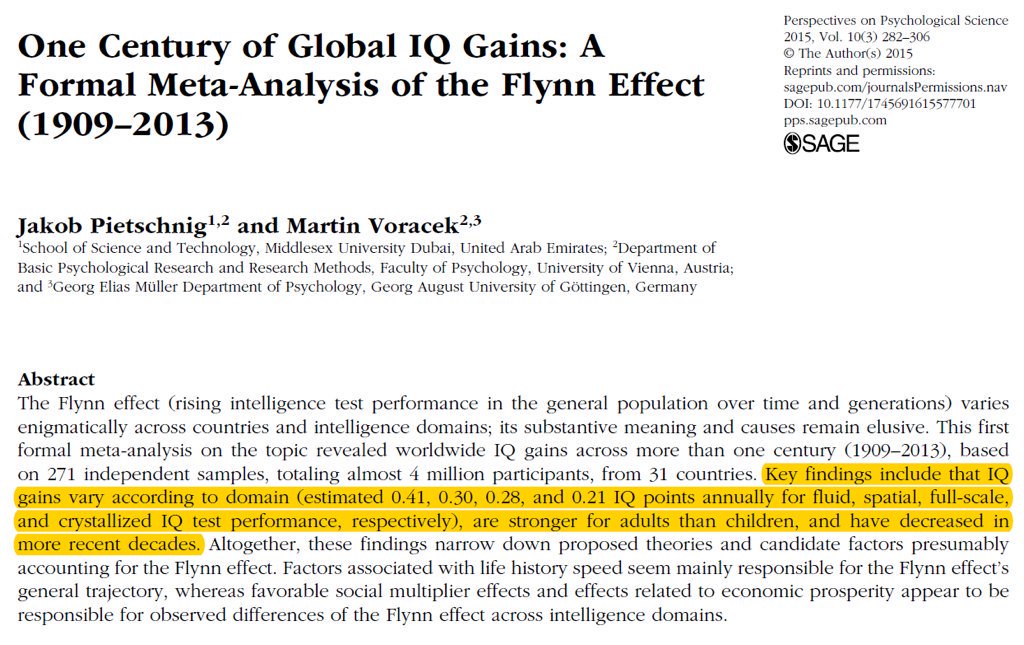
3. IQ scores have been increasing for the last century or so, a phenomenon known as the Flynn effect. https://t.co/sCZvCst3hw (N ≈ 4 million)
(Note that the Flynn effect shows that IQ isn't 100% genetic; it doesn't show that it's 100% environmental.)
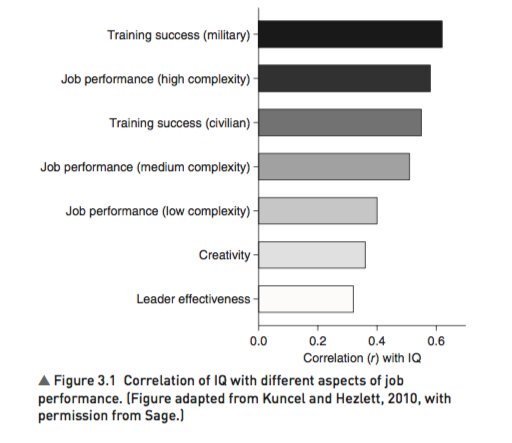
4. IQ predicts many important real world outcomes.
For example, though far from perfect, IQ is the single-best predictor of job performance we have – much better than Emotional Intelligence, the Big Five, Grit, etc. https://t.co/rKUgKDAAVx https://t.co/DWbVI8QSU3
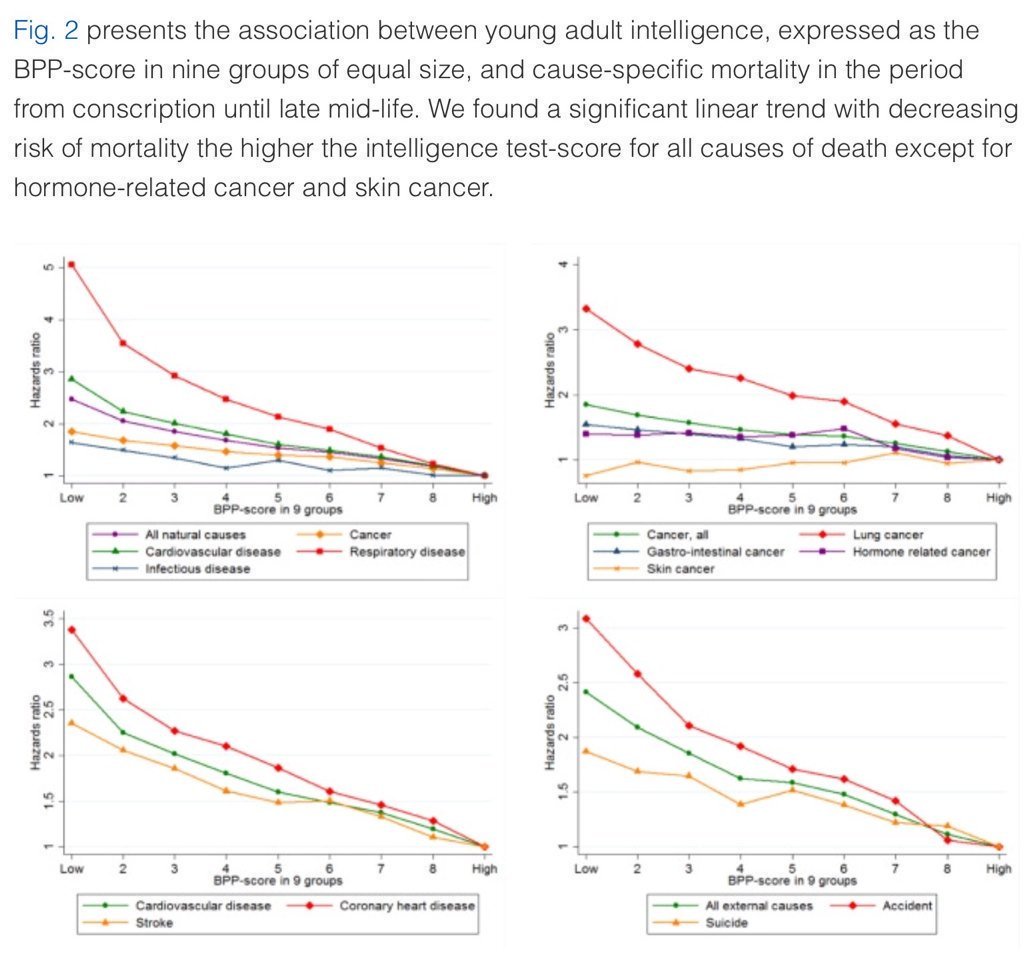
5. Higher IQ is associated with a lower risk of death from most causes, including cardiovascular disease, respiratory disease, most forms of cancer, homicide, suicide, and accident. https://t.co/PJjGNyeQRA (N = 728,160)
1. IQ is one of the most heritable psychological traits – that is, individual differences in IQ are strongly associated with individual differences in genes (at least in fairly typical modern environments). https://t.co/3XxzW9bxLE
2. The heritability of IQ *increases* from childhood to adulthood. Meanwhile, the effect of the shared environment largely fades away. In other words, when it comes to IQ, nature becomes more important as we get older, nurture less. https://t.co/UqtS1lpw3n
3. IQ scores have been increasing for the last century or so, a phenomenon known as the Flynn effect. https://t.co/sCZvCst3hw (N ≈ 4 million)
(Note that the Flynn effect shows that IQ isn't 100% genetic; it doesn't show that it's 100% environmental.)
4. IQ predicts many important real world outcomes.
For example, though far from perfect, IQ is the single-best predictor of job performance we have – much better than Emotional Intelligence, the Big Five, Grit, etc. https://t.co/rKUgKDAAVx https://t.co/DWbVI8QSU3
5. Higher IQ is associated with a lower risk of death from most causes, including cardiovascular disease, respiratory disease, most forms of cancer, homicide, suicide, and accident. https://t.co/PJjGNyeQRA (N = 728,160)