- LTO Network (https://t.co/LJUDzLMCb5) is a hybrid blockchain solution that connects to existing systems enabling efficient collaboration on complex and multi stakeholder processes. It is led by a great team of serial entrepreneurs.
1) Our thoughts on LTO Network
Not financial advice
- LTO Network (https://t.co/LJUDzLMCb5) is a hybrid blockchain solution that connects to existing systems enabling efficient collaboration on complex and multi stakeholder processes. It is led by a great team of serial entrepreneurs.
- Businesses don’t want an IT overhaul, but want communication with existing systems that only share process data and updates users via their own systems.
- LTO has had many high profile partners join the network. Recently, The UN released an open-source urban land registry for the Afghan Government: https://t.co/aakyqOJLa7
- Other high profile use cases include:
- Immutable, digitally signed PDFs with a verifiable timestamp using SignRequest
Executed legal contracts, hashed on blockchain via a smartphone using Quislex
- Going forward, continued emphasis could be put into business identities on the blockchain, solving KYC issues, a big pain point for particularly banks.
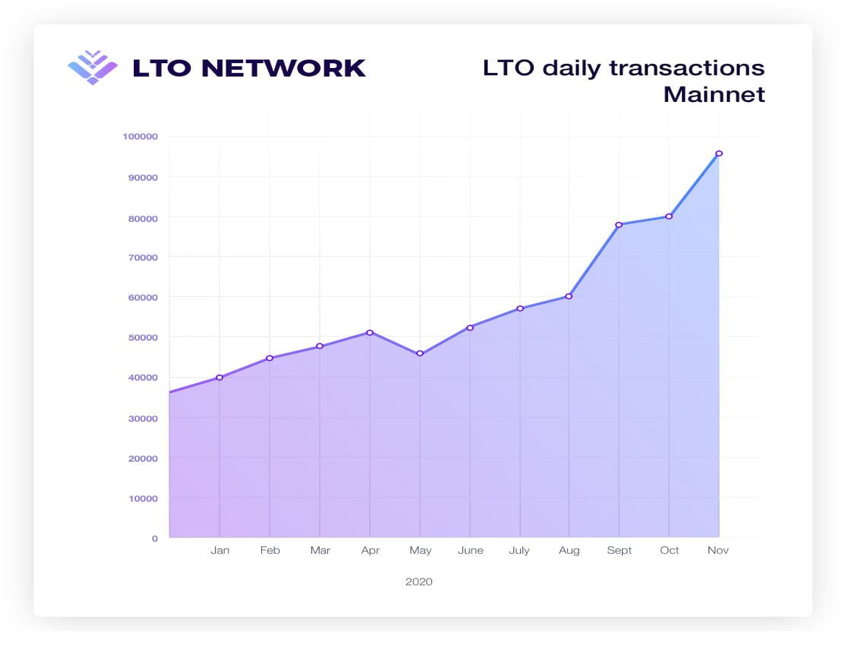
This increasing popularity has enabled LTO to collaborate with some well-established parties aside from the UN, including:
- IBM. Both IBM and LTO Network have formed a partnership with VI-D to deliver The Internet of Environments.
Leased-Proof-of-Stake:
- Rewards are transaction fees on the network corresponding to the ratio of your staked amount to the total staked amount.
- Foundation to create new products & services, e.g. one-click KYC for businesses and cross-chain associations, all while retaining GDPR compliance.
- Smart Contract are less readable by humans than a standard contract while still being open to exploits.
-Smart Contracts do not operate within a legal framework and are not enforceable by a judicial system.
- Live contracts allow easier integration with legal frameworks. LTO was built specifically to be EU GDPR compliant
- LTO has chosen to design more organic tokenomics. As the platform increases in health/users we see the intrinsic value of the token appreciating. However, it is possible the token price will not converge with its intrinsic value over shorter time horizons.
- As one of the first teams to bridge the gap between BC agreements and legal jurisdiction, as well as being fully GDPR compliant, we see LTO as being one of few blockchains fit to serve the BC needs of a wide-ranging group of firms. Growth potential is immense.
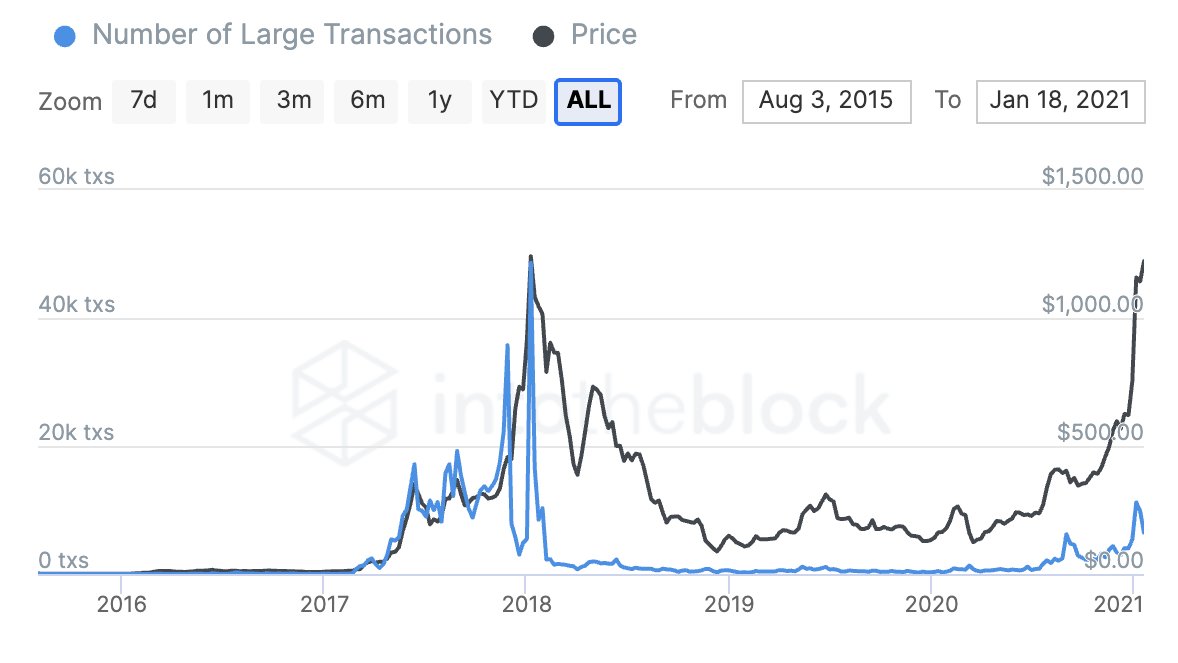
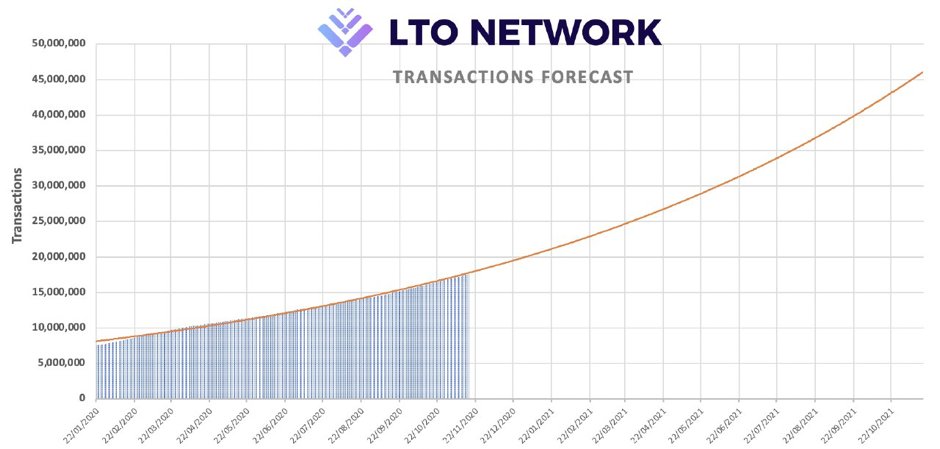
- Judging from expected transactions, we expect to see a healthy ecosystem driven by a strong roadmap and vision that focuses on real pain points such as SSIs
More from Crypto


1/ ERC-20 token standard approve() has caused an unnecessary cost of $53.8M for #Ethereum and #DeFi users
This is bad. Continue reading why and how to avoid this in the future.
👇👇👇

2/ Before you go all rage on the flaws of my analysis, please read the whole Twitter thread for disclaimers and caveats.
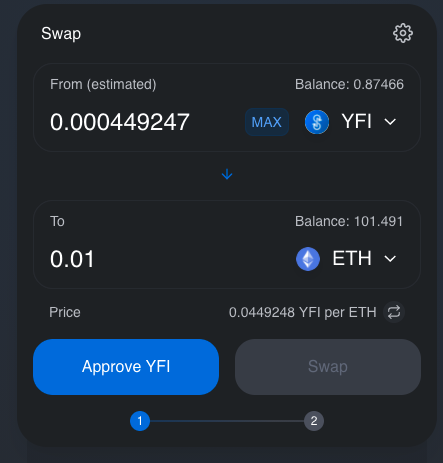
3/ approve() is an unnecessary step of ERC-20 tokens when they interact with smart contracts.
You know this because when you do a Uniswap trade you need press two transaction buttons instead of one.
4/ Why there is approve() - you can read the history in this Twitter
5/ I queried all approve() transactions on Google BigQuery public dataset and calculated their ETH cost and then converted this to the USD with the current ETH price.
This is bad. Continue reading why and how to avoid this in the future.
👇👇👇
2/ Before you go all rage on the flaws of my analysis, please read the whole Twitter thread for disclaimers and caveats.
3/ approve() is an unnecessary step of ERC-20 tokens when they interact with smart contracts.
You know this because when you do a Uniswap trade you need press two transaction buttons instead of one.
4/ Why there is approve() - you can read the history in this Twitter
1/ I just spend my Saturday morning on a call with a crypto fund explaining to them how #Ethereum ERC-20 token approve() function works
— \U0001f42e Mikko Ohtamaa (@moo9000) August 29, 2020
I am too old for this shit. pic.twitter.com/7EYfOaRP5L
5/ I queried all approve() transactions on Google BigQuery public dataset and calculated their ETH cost and then converted this to the USD with the current ETH price.

"Blockchain technology is energy-intensive..." => No, it doesn't have to be.
Let's look at Proof-Of-Stake, an alternative to the energy-intensive Proof-Of-Work algorithm.
🧵🔽
1️⃣ A Quick Recap On Proof-Of-Work
A Proof-Of-Work algorithm requires miners to do a certain amount of work that is compute-intensive to gain access to a service or the right to do something. This algorithm, by design, also requires that the work done shall not ...
... be reusable for anything else than what it was performed for. This lies at the core of the security concept of a blockchain. To gain the right to append a new block to a chain and to get some currency as a reward, there is work to be done, and this work must be verifyable.
That work is a race between different miners. Many miners try to compete and to be the first to find the answer to a problem presented to them. This implies that a lot of energy is wasted as only the first correct solution is accepted.
You can find a more detailed thread on Proof-Of-Work
Let's look at Proof-Of-Stake, an alternative to the energy-intensive Proof-Of-Work algorithm.
🧵🔽
1️⃣ A Quick Recap On Proof-Of-Work
A Proof-Of-Work algorithm requires miners to do a certain amount of work that is compute-intensive to gain access to a service or the right to do something. This algorithm, by design, also requires that the work done shall not ...
... be reusable for anything else than what it was performed for. This lies at the core of the security concept of a blockchain. To gain the right to append a new block to a chain and to get some currency as a reward, there is work to be done, and this work must be verifyable.
That work is a race between different miners. Many miners try to compete and to be the first to find the answer to a problem presented to them. This implies that a lot of energy is wasted as only the first correct solution is accepted.
You can find a more detailed thread on Proof-Of-Work
Proof-Of-Work is the name of a cryptographic algorithm that is used for some blockchains when new blocks are to be appended to the chain.
— Oliver Jumpertz (@oliverjumpertz) April 3, 2021
Let's take a higher-level look at how this one works, shall we?
\U0001f9f5\U0001f53d