
1. Ben Rhodes’s comment dismissing the concerns of former political prisoners and US hostages in Iran regarding Rob Malley’s potential appointment as Iran envoy is deeply unprofessional and offensive. As my own story illustrates, not everything is about partisan DC politics.
I think Joe Biden should pick his Iran envoy, not Tom Cotton and a bunch of cheerleaders for MBS and American authoritarianism. Elections have consequences.
— Ben Rhodes (@brhodes) January 22, 2021
https://t.co/KptDxI3gf0
More from Biden

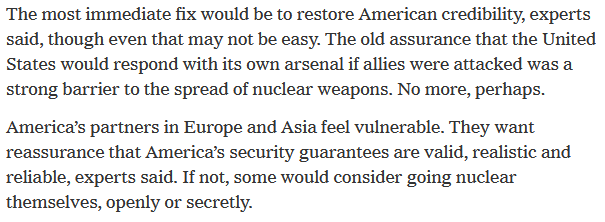

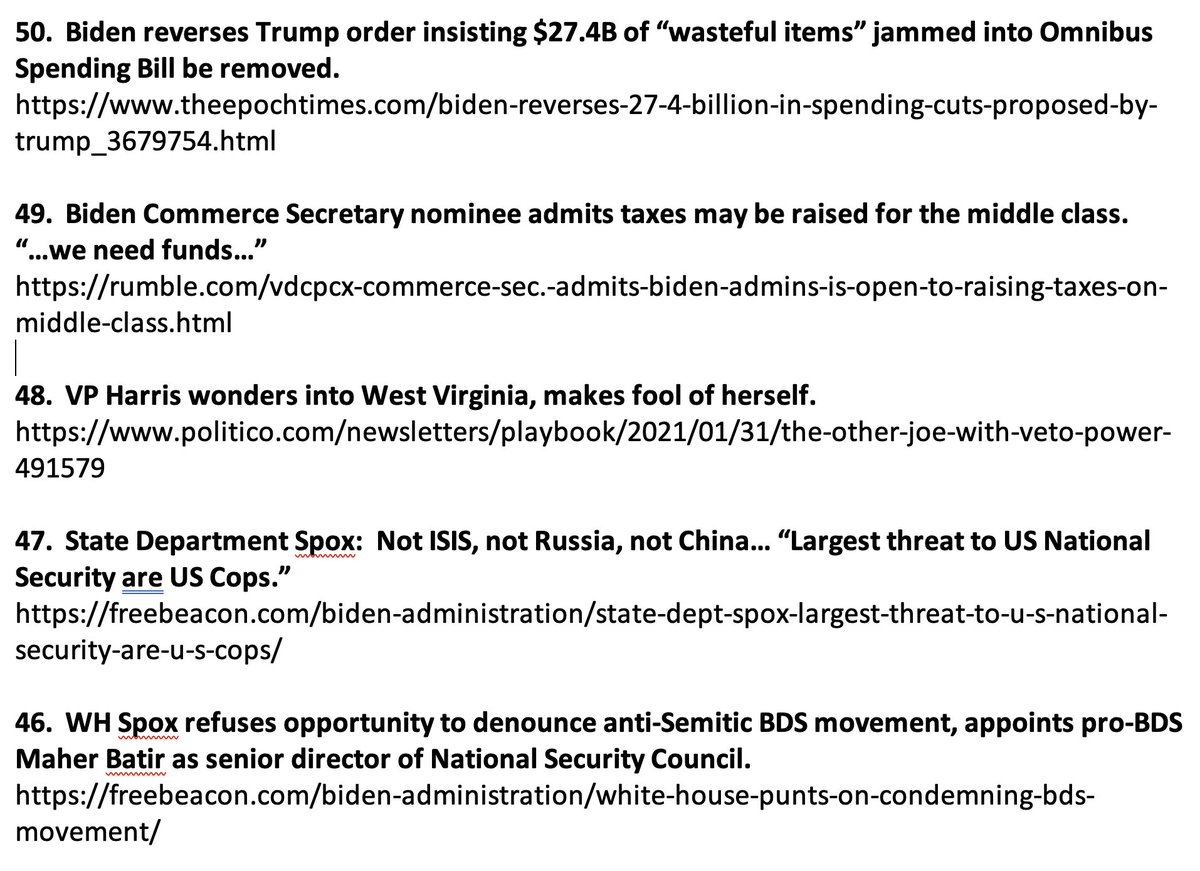
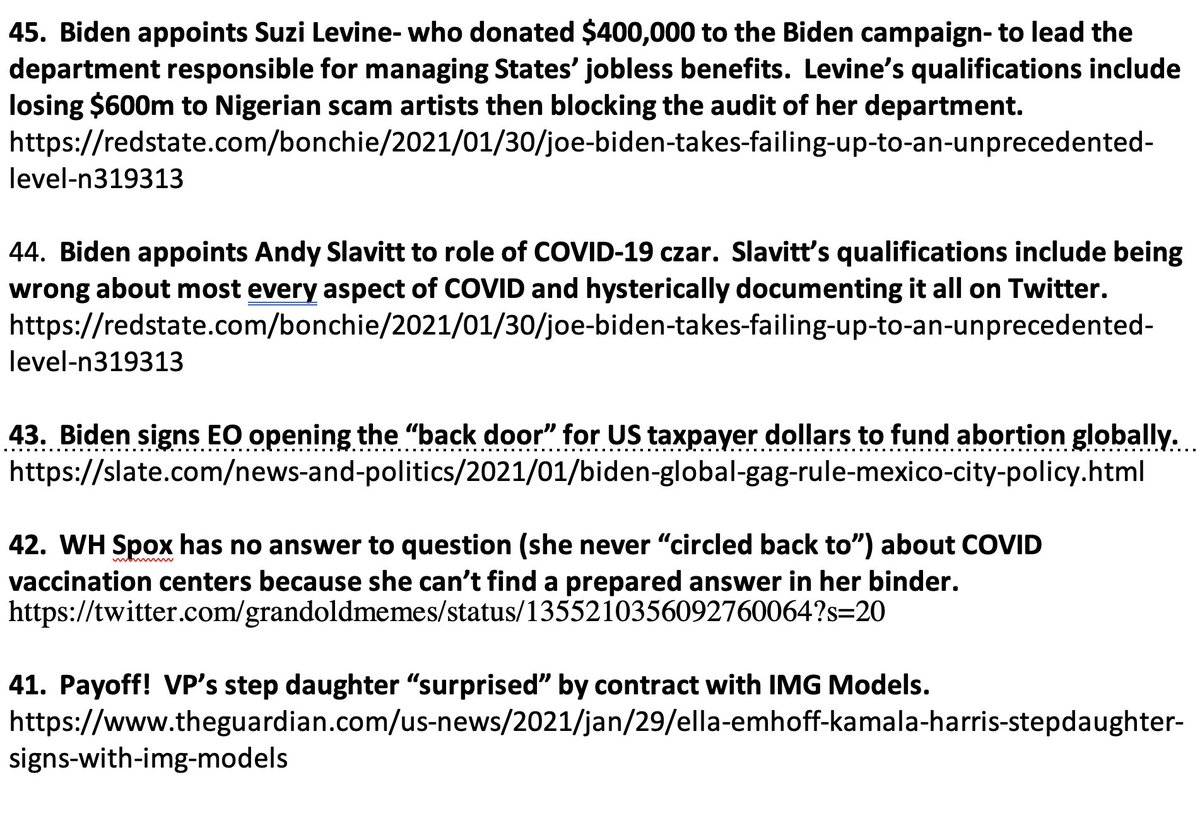


Biden clearly should not do #1. The problem with #2 is that reconciliation delays the inevitable and creates a tiered system where issues that happen to be ineligible - like civil rights and democracy reform - are relegated to second-class status and left to die by filibuster.
This👇is the danger. By using reconciliation you’re conceding the point that major legislation deserves to pass by majority vote, but only certain kinds for arbitrary reasons. Plus the process itself is opaque and ugly. You risk laying a logistical & political trap for yourself.
All the “here’s what you can do through reconciliation” takes are correct but also look through the wrong end of the telescope. Any of the items mentioned, or a small number of them, would be relatively easy. But putting them all together in one leadership-driven mega package...
... with no committee involvement and no real oversight, enduring tough press for jamming a massive package through a close process and stories about lobbyist giveaways while dodging the adverse parliamentary rulings that are virtually inevitable and still maintaining 50 votes...
It’s possible! Maybe the mega-ness of the package ends up helping hold 50 votes. But the ugliness of the process is being underpriced. And to what end? You’re just delaying the inevitable since you can’t use it for civil rights nor can you allow civil rights to die by filibuster.
Biden will have two options:
— Sahil Kapur (@sahilkapur) January 23, 2021
1. Cut the price tag sharply to court GOP support.
2. Use reconciliation to do what he can with 50 votes\u2014some stuff has to go, like $15 wage.
(A 3rd option is nuke the filibuster but @PressSec says he doesn\u2019t favor that.)https://t.co/AV49BcmDaI
This👇is the danger. By using reconciliation you’re conceding the point that major legislation deserves to pass by majority vote, but only certain kinds for arbitrary reasons. Plus the process itself is opaque and ugly. You risk laying a logistical & political trap for yourself.
Obvious answer is 2b where you tie yourself in knots trying to go nuclear lite and totally lose the plot in the process
— Liam Donovan (@LPDonovan) January 23, 2021
All the “here’s what you can do through reconciliation” takes are correct but also look through the wrong end of the telescope. Any of the items mentioned, or a small number of them, would be relatively easy. But putting them all together in one leadership-driven mega package...
... with no committee involvement and no real oversight, enduring tough press for jamming a massive package through a close process and stories about lobbyist giveaways while dodging the adverse parliamentary rulings that are virtually inevitable and still maintaining 50 votes...
It’s possible! Maybe the mega-ness of the package ends up helping hold 50 votes. But the ugliness of the process is being underpriced. And to what end? You’re just delaying the inevitable since you can’t use it for civil rights nor can you allow civil rights to die by filibuster.





You May Also Like









1/ Some initial thoughts on personal moats:
Like company moats, your personal moat should be a competitive advantage that is not only durable—it should also compound over time.
Characteristics of a personal moat below:
2/ Like a company moat, you want to build career capital while you sleep.
As Andrew Chen noted:
3/ You don’t want to build a competitive advantage that is fleeting or that will get commoditized
Things that might get commoditized over time (some longer than
4/ Before the arrival of recorded music, what used to be scarce was the actual music itself — required an in-person artist.
After recorded music, the music itself became abundant and what became scarce was curation, distribution, and self space.
5/ Similarly, in careers, what used to be (more) scarce were things like ideas, money, and exclusive relationships.
In the internet economy, what has become scarce are things like specific knowledge, rare & valuable skills, and great reputations.
Like company moats, your personal moat should be a competitive advantage that is not only durable—it should also compound over time.
Characteristics of a personal moat below:
I'm increasingly interested in the idea of "personal moats" in the context of careers.
— Erik Torenberg (@eriktorenberg) November 22, 2018
Moats should be:
- Hard to learn and hard to do (but perhaps easier for you)
- Skills that are rare and valuable
- Legible
- Compounding over time
- Unique to your own talents & interests https://t.co/bB3k1YcH5b
2/ Like a company moat, you want to build career capital while you sleep.
As Andrew Chen noted:
People talk about \u201cpassive income\u201d a lot but not about \u201cpassive social capital\u201d or \u201cpassive networking\u201d or \u201cpassive knowledge gaining\u201d but that\u2019s what you can architect if you have a thing and it grows over time without intensive constant effort to sustain it
— Andrew Chen (@andrewchen) November 22, 2018
3/ You don’t want to build a competitive advantage that is fleeting or that will get commoditized
Things that might get commoditized over time (some longer than
Things that look like moats but likely aren\u2019t or may fade:
— Erik Torenberg (@eriktorenberg) November 22, 2018
- Proprietary networks
- Being something other than one of the best at any tournament style-game
- Many "awards"
- Twitter followers or general reach without "respect"
- Anything that depends on information asymmetry https://t.co/abjxesVIh9
4/ Before the arrival of recorded music, what used to be scarce was the actual music itself — required an in-person artist.
After recorded music, the music itself became abundant and what became scarce was curation, distribution, and self space.
5/ Similarly, in careers, what used to be (more) scarce were things like ideas, money, and exclusive relationships.
In the internet economy, what has become scarce are things like specific knowledge, rare & valuable skills, and great reputations.