Successful work-life balance means both of us having the time and energy to pursue our goals.
Creating work-life balance is a daily struggle.
Here's the system I use to manage my time and energy between
• family (wife & 6 kids)
• work (CEO of a non-profit)
• personal time (hybrid athlete)
In the hope that this is useful to you too:
Successful work-life balance means both of us having the time and energy to pursue our goals.
You’re being bombarded with information:
• To-Dos
• Meeting notes
• Study assignments
• Gift idea for your spouse
• Online articles you want to read later
Without solid info capture, you’ll get overwhelmed.
The most important parts of your info capture are:
• it is readily available
• quick to enter info
• searchable
Choose one that fits these criteria and don’t waste time finding the ‘perfect’ tool.
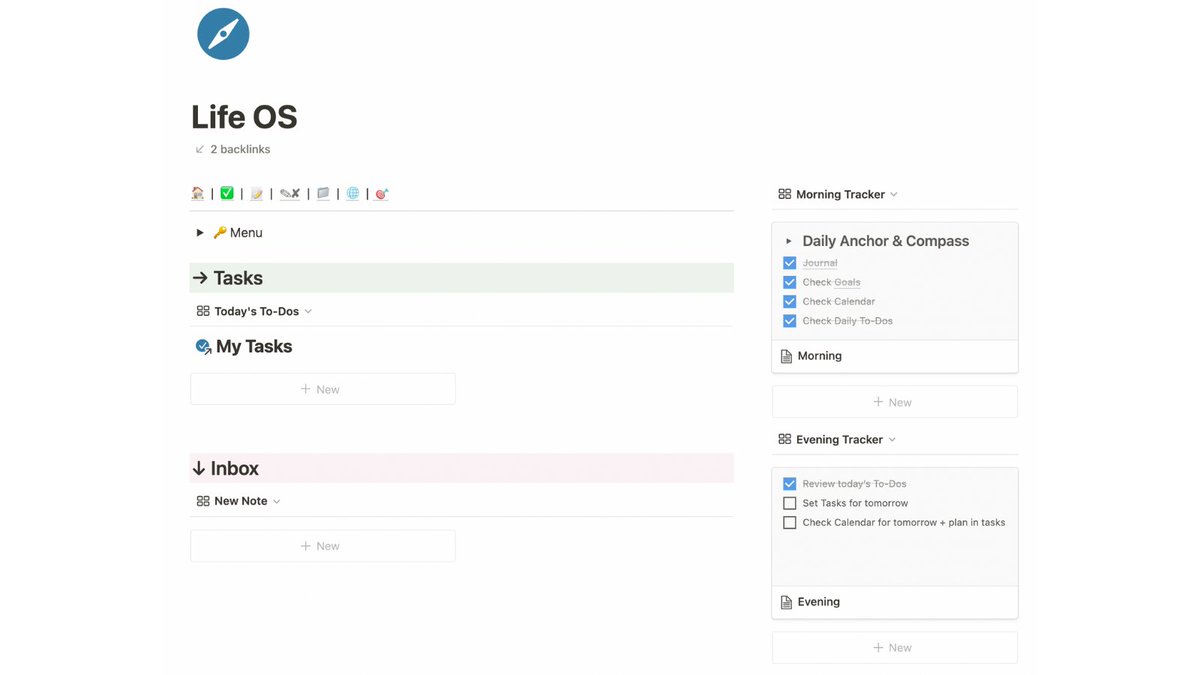
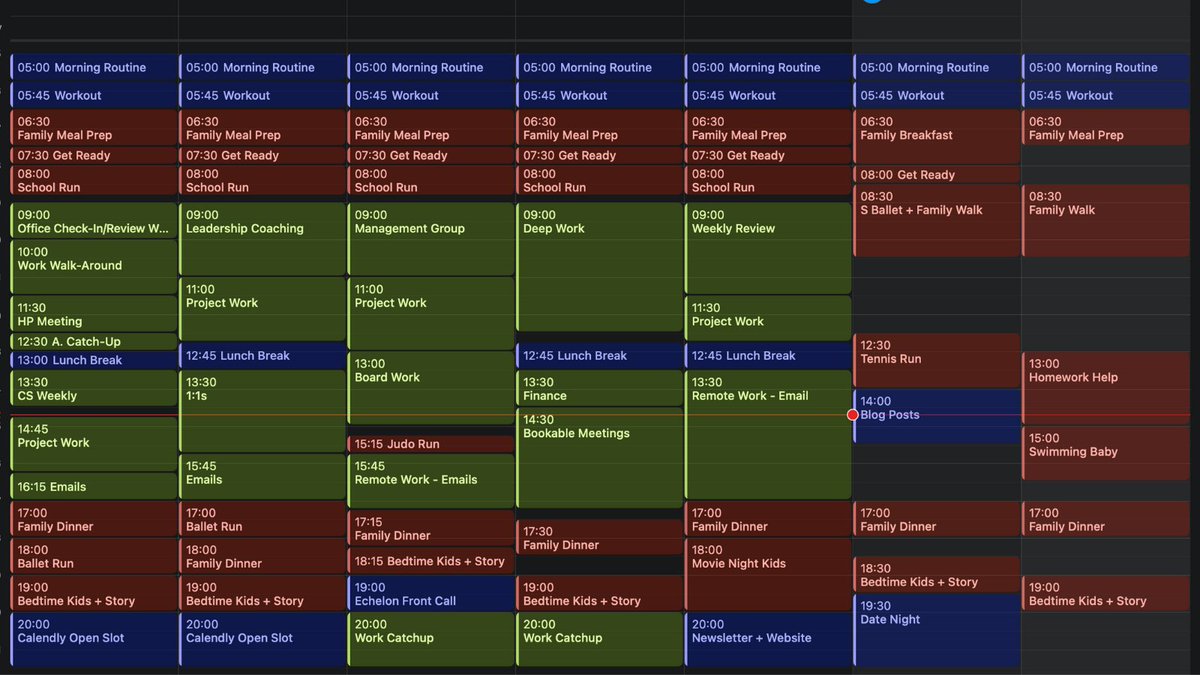
Having a to-do list is a start. But you need to block out time in your calendar, to do them.
It seems restrictive at first, but the more you assign blocks of time to specific items, the more freedom you create.
Here’s mine:
When your day is filled with work and family obligations, it is easy to simply go through the motions.
But living life on cruise control stops you from becoming a better version of yourself.
Fix this by building a solid morning routine.
04:55 Alarm
05:05 Glass of water, read affirmations
05:10 Coffee, journalling
05.25 Check calendar & to-dos for today
05:45 Workout
06:30 Meal prep for the family & get ready for the day
08:00 School run
Often we forget the bigger picture when life is just so busy and we get pulled in a million directions.
Start your day by recalling your “Why” to ensure you design your days in support of your life's purpose.
(Mine: to master myself in service of others)
Affirmations can:
• increase your confidence
• help you focus on your goals
• help build new positive beliefs
• guide you to who you want to become

Tomorrow’s success depends on how you end today.
• Determine how many hours of sleep you need
• Set an alarm 60mins before bedtime
• Check your calendar for tomorrow
• Turn off devices → no blue lights
• Lay out your clothes
• Pack your bag
But for your system to work, you need to schedule a weekly review.
Here’s a 3-step overview:
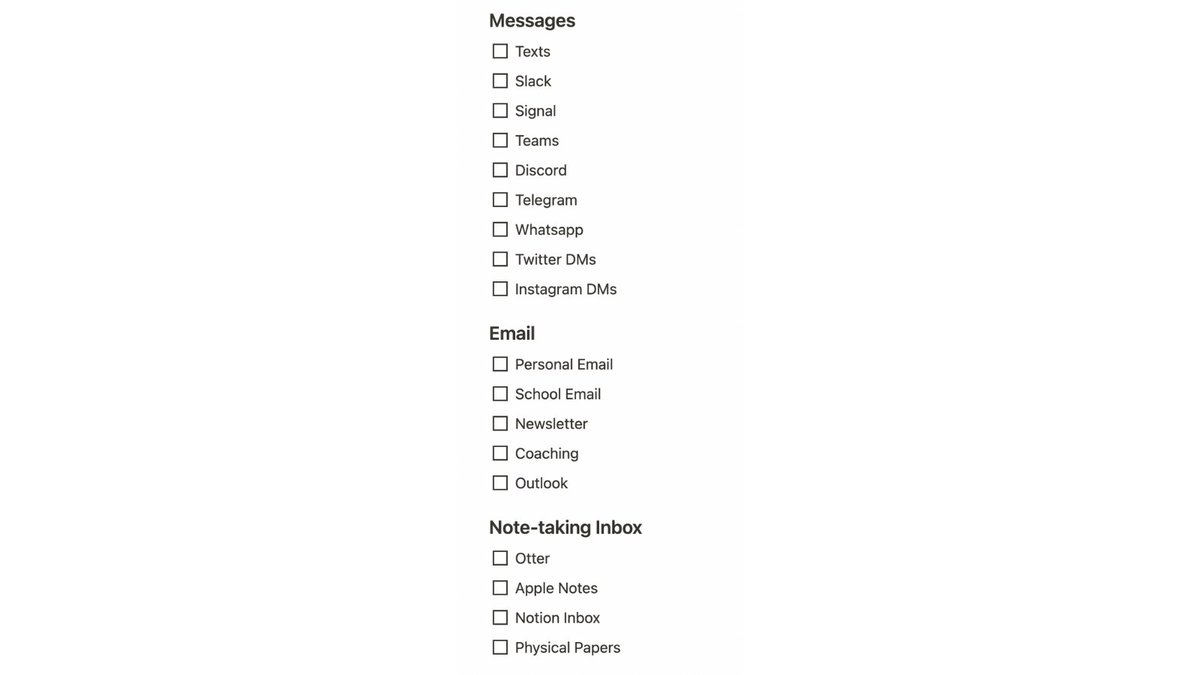
Check everything under your control:
- loose papers, receipts & lists
- inboxes (digital and & physical)
- capture everything on your mind
- review journal entries, meeting notes, etc
Get all your inboxes to zero. Schedule tasks or delegate where appropriate.
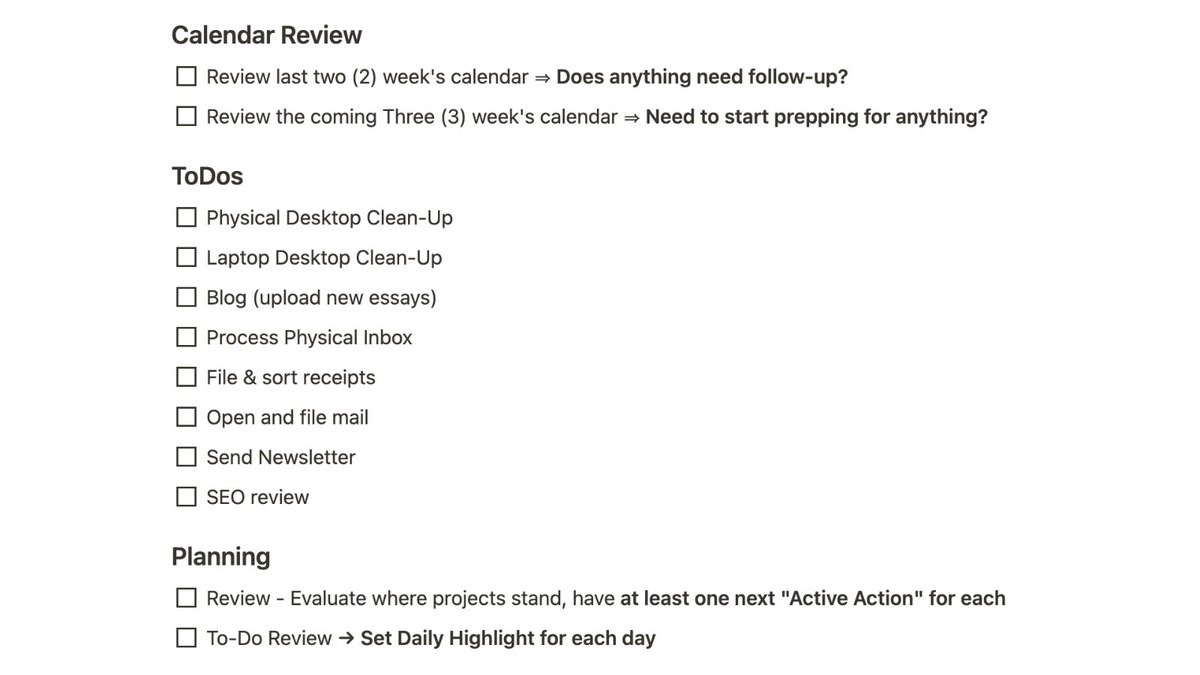
Review your To-Dos, Calendar and Projects.
- review your past week
- review your upcoming week
- go through your weekly checklists
- check on the progress of your projects
- mark off finished to-dos and re-assign unfinished ones
Review your Someday lists and items with no clear deadlines.
- any personal goals you want to plan for?
- dormant projects that need to be activated?
- new learning opportunities you want to pursue?
This stage allows you to review your life more broadly.
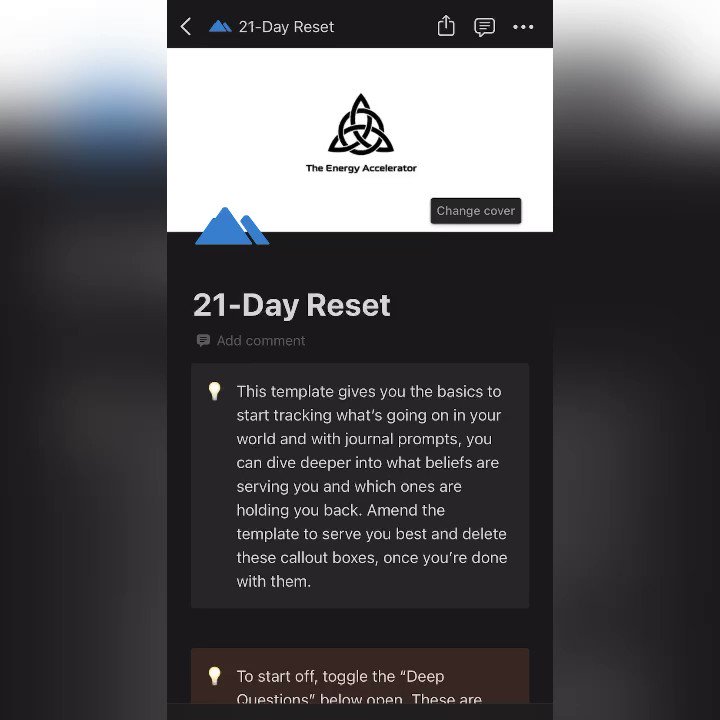
I created a basic template of my system (incl. morning & evening routines, journal prompts and a weekly review template).
You can download it for free here:
https://t.co/zJPUTsDcHS
All the time management won’t get you anywhere if you’re out of energy.
You need to dedicate time to regular exercise, eat well, spend time outdoors and relax.
It’s about creating a healthy lifestyle which takes care of your physical and mental health.
If you enjoyed this breakdown,
1. Follow me @tobi_emonts for more
2. RT the tweet below to share this thread with your audience https://t.co/6YLrIc20oV
Creating work-life balance is a daily struggle.
— Tobi Emonts-Holley (@tobi_emonts) January 10, 2023
Here's the system I use to manage my time and energy between
\u2022 family (wife & 6 kids)
\u2022 work (CEO of a non-profit)
\u2022 personal time (hybrid athlete)
In the hope that this is useful to you too:
• Save hours each week
• Transform their relationships
• Get them into the best physical shape of their lives
Results guaranteed.
Want in?
DM me if you're interested:
https://t.co/lopO08Cwms
More from All




https://t.co/6cRR2B3jBE
Viruses and other pathogens are often studied as stand-alone entities, despite that, in nature, they mostly live in multispecies associations called biofilms—both externally and within the host.
https://t.co/FBfXhUrH5d

Microorganisms in biofilms are enclosed by an extracellular matrix that confers protection and improves survival. Previous studies have shown that viruses can secondarily colonize preexisting biofilms, and viral biofilms have also been described.

...we raise the perspective that CoVs can persistently infect bats due to their association with biofilm structures. This phenomenon potentially provides an optimal environment for nonpathogenic & well-adapted viruses to interact with the host, as well as for viral recombination.

Biofilms can also enhance virion viability in extracellular environments, such as on fomites and in aquatic sediments, allowing viral persistence and dissemination.

Viruses and other pathogens are often studied as stand-alone entities, despite that, in nature, they mostly live in multispecies associations called biofilms—both externally and within the host.
https://t.co/FBfXhUrH5d
Microorganisms in biofilms are enclosed by an extracellular matrix that confers protection and improves survival. Previous studies have shown that viruses can secondarily colonize preexisting biofilms, and viral biofilms have also been described.
...we raise the perspective that CoVs can persistently infect bats due to their association with biofilm structures. This phenomenon potentially provides an optimal environment for nonpathogenic & well-adapted viruses to interact with the host, as well as for viral recombination.
Biofilms can also enhance virion viability in extracellular environments, such as on fomites and in aquatic sediments, allowing viral persistence and dissemination.


You May Also Like

This is NONSENSE. The people who take photos with their books on instagram are known to be voracious readers who graciously take time to review books and recommend them to their followers. Part of their medium is to take elaborate, beautiful photos of books. Die mad, Guardian.
THEY DO READ THEM, YOU JUDGY, RACOON-PICKED TRASH BIN

If you come for Bookstagram, i will fight you.
In appreciation, here are some of my favourite bookstagrams of my books: (photos by lit_nerd37, mybookacademy, bookswrotemystory, and scorpio_books)

Beautifully read: why bookselfies are all over Instagram https://t.co/pBQA3JY0xm
— Guardian Books (@GuardianBooks) October 30, 2018
THEY DO READ THEM, YOU JUDGY, RACOON-PICKED TRASH BIN
If you come for Bookstagram, i will fight you.
In appreciation, here are some of my favourite bookstagrams of my books: (photos by lit_nerd37, mybookacademy, bookswrotemystory, and scorpio_books)