First, some general principles that underlie the techniques and aid memory:
1) We don't remember all types of information equally (visual and spatial are best)
2) Attach new memories to old memories
3) Make information vivid and exciting
4) Engage as many senses as possible
Memory Palace
1) Prepare an organised location (E.g. your house layout)
2) Create markers in this location in an easy to follow order
3) Make a clear image of the information you would like to remember
4) Place each item you are trying to remember on the marked locations
The Textbook Method
Write your own textbook chapter on a topic.
It requires a deep understanding of the concepts and how they fit together.
You're forced to be consise and to create a clear mental structure of the topic.
There's no hiding behind knowledge gaps.
The Question-Book Method
Rephrase notes as questions to be answered later—this engages the retrieval muscle.
When reading a book, restate the big idea of a chapter or section as a question.
This requires deeper thinking and not just adding a "?" to notes you copied verbatim.
Retrieval
The hard thing to do when learning is actively trying to recall without re-reading or viewing.
Few will make the effort, so few get the rewards.
“It pays better to wait and recollect by an effort from within, than to look at the book again" - William James
Immersive Learning
Involves surrounding yourself directly in the environment where the skill will be used.
Example: Moving to a country to learn the native language.
An extreme example would be not allowing yourself to speak your first-language while there.
The Overkill Approach
Involves putting yourself in a high-demand environment, so you're unlikely to miss important feedback lessons.
Example: Standing onstage as early as possible to deliver a public speech when learning public speaking.
More feedback = more learning.
Project-Based Learning
Having a project increases our motivation to learn.
Ask, what project can you do to learn the skill or topic of knowledge?
Skill: Do a project. E.g., Learn programming by building a website
Knowledge: Write an essay or blog post. E.g., Sleep tips post
Spaced Repetition
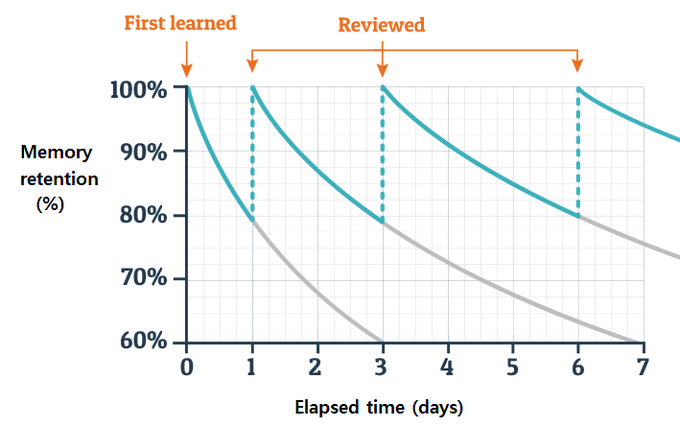
Memories weaken over time.
If we learn something new, we remember less and less of it as the days and weeks go by: the forgetting curve.
The way to combat this curve is through spaced repetition: repeated exposure to the information to be learned over time.
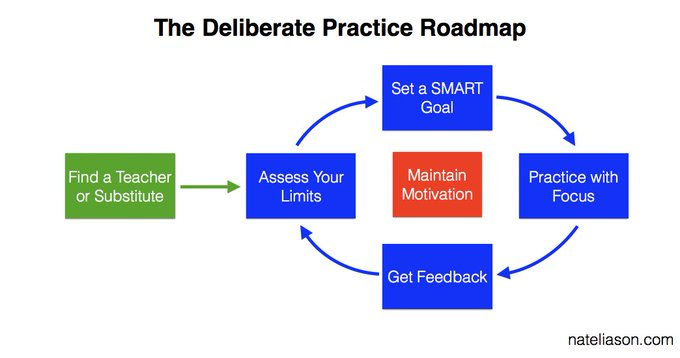
Deliberate Practice
Regular practice involves mindless repetitions and staying in your comfort zone.
Deliberate practice involves focused attention on the micro-components of a skill, specific goals, and feedback on performance from an expert.
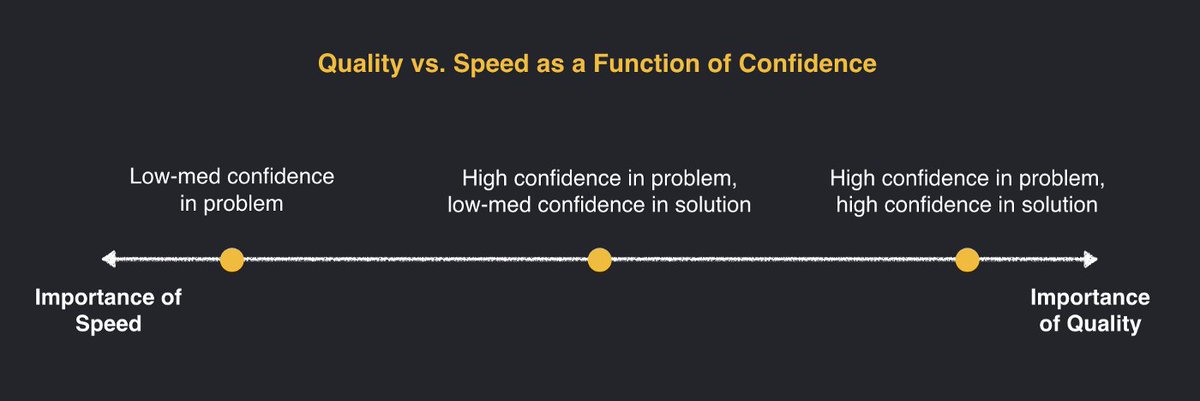
H/T (image) -
@nateliason
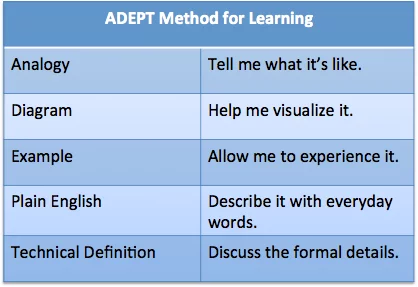
The ADEPT Method
A method to teach yourself a difficult idea, or explain one to others.
It's called making explanations ADEPT: Use an Analogy, Diagram, Example, Plain-English description, and then a Technical description.
Created by
@betterexplained.
@betterexplained That's a wrap!
Follow me
@_alexbrogan for more content to help you get better at the game of life.
https://t.co/PU7saOakgF














![Peter McCormack [Jan/3\u279e\u20bf \U0001f511\u220e]](https://pbs.twimg.com/profile_images/1524287442307723265/_59ITDbJ_normal.jpg)


