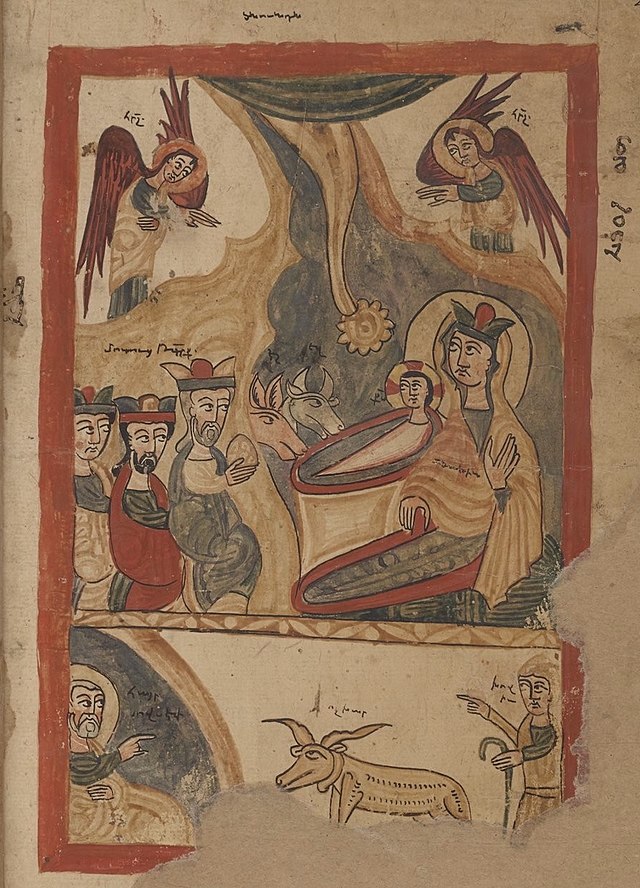
I wouldn't claim to know anything for certain about Lynch's artistic processes, but I wonder sometimes if he doesn't put more thought into the names of his characters than he'd let on...

Cooper speaking to an unseen Diane... my association would be Diana, the Roman equivalent to Artemis...

In Mulholland Dr., Adam Kesher converses with a distant secretary, Cynthia... that's an alternate name for Diana, as Artemis was born on Mount Cynthus...
Deer images are of course a constant in Twin Peaks... interesting that Diana is goddess of the hunt, and deer images are often connected by way of editing & shot-selection to the young females in the show: Laura, Donna, Maddie...
Diana often depicted with a crescent moon...

Cycles of the moon a constant visual motif... a frequent transition shot between scenes... I actually think they matched the moon phases to the chronology of the plot, including this grandfather clock in Donna Hayward's house...
Near the end of S2, a puzzle box that features the phases of the moon...

In the Lynch-directed finale, Sylvia Horne... Sylvia derived from the Latin for forest & the Horne's always intertwined with the Ghostwood Forest... a string of moon-like pearls over a black shirt...
Diana, Artemis, Cynthia, Sylvia, Selene...
Note the Madonna icon in Kesher's run-down hotel room...
I used to write a blog about Twin Peaks, sharing the posts was actually the reason why got on twitter in the first place... stopped when technology wouldn't let me take screenshots of film & tv anymore, but seems like I can again now, might resume...

https://t.co/6MPOqOgFzU

More from All

You May Also Like

THREAD: 12 Things Everyone Should Know About IQ

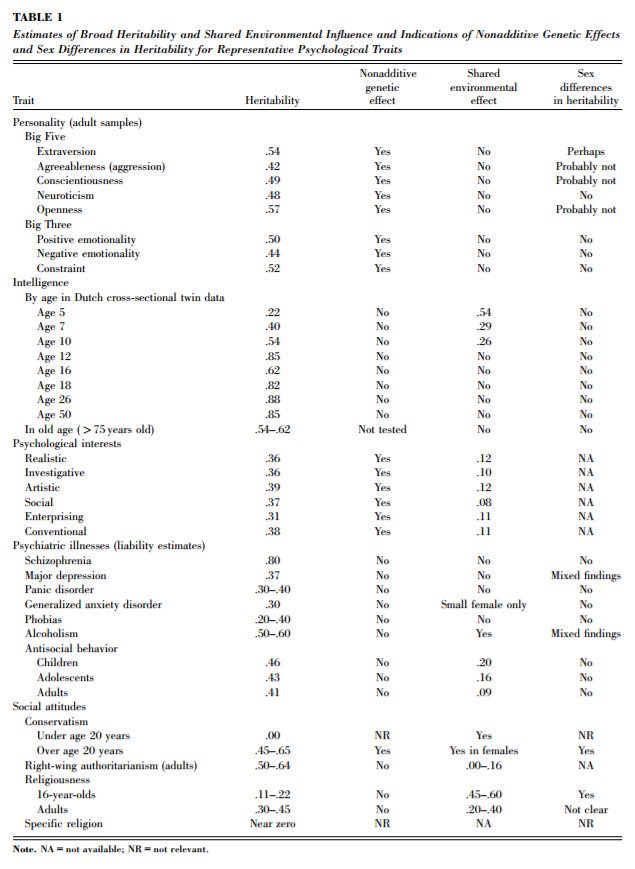
1. IQ is one of the most heritable psychological traits – that is, individual differences in IQ are strongly associated with individual differences in genes (at least in fairly typical modern environments). https://t.co/3XxzW9bxLE


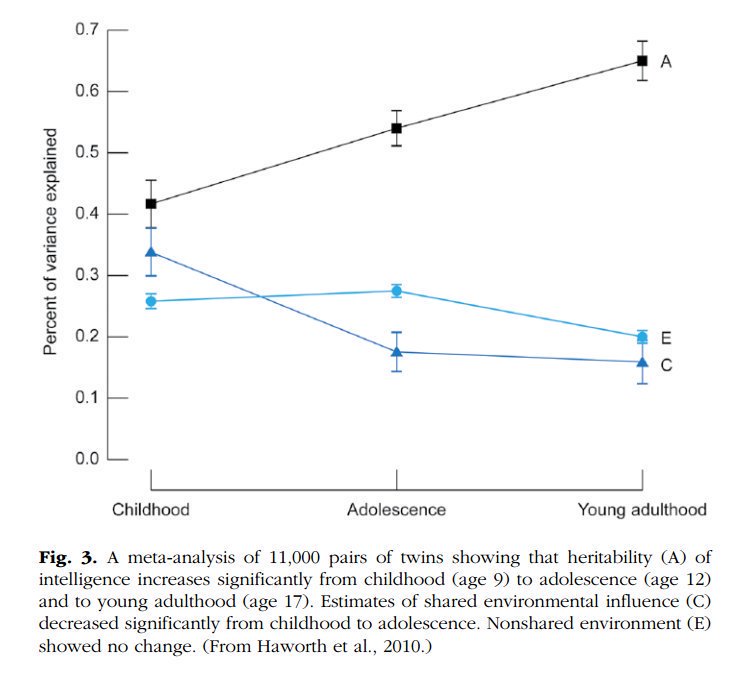
2. The heritability of IQ *increases* from childhood to adulthood. Meanwhile, the effect of the shared environment largely fades away. In other words, when it comes to IQ, nature becomes more important as we get older, nurture less.
https://t.co/UqtS1lpw3n


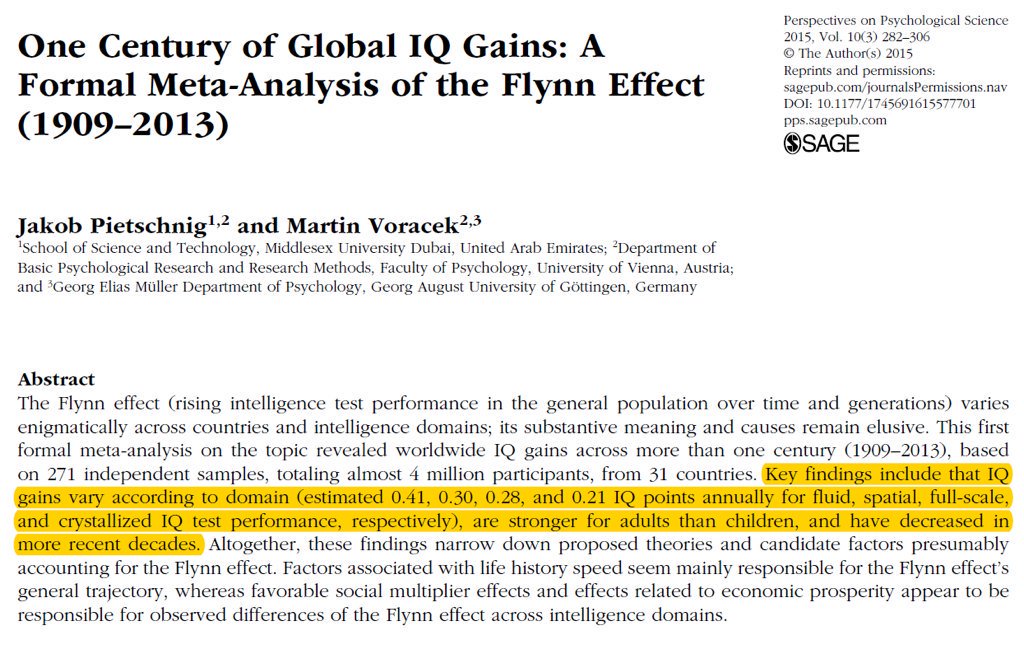
3. IQ scores have been increasing for the last century or so, a phenomenon known as the Flynn effect. https://t.co/sCZvCst3hw (N ≈ 4 million)

(Note that the Flynn effect shows that IQ isn't 100% genetic; it doesn't show that it's 100% environmental.)


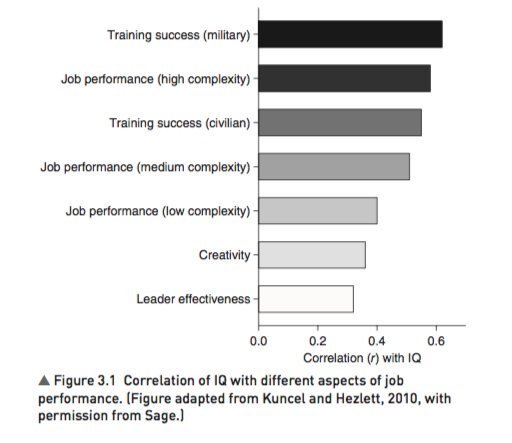
4. IQ predicts many important real world outcomes.

For example, though far from perfect, IQ is the single-best predictor of job performance we have – much better than Emotional Intelligence, the Big Five, Grit, etc. https://t.co/rKUgKDAAVx https://t.co/DWbVI8QSU3


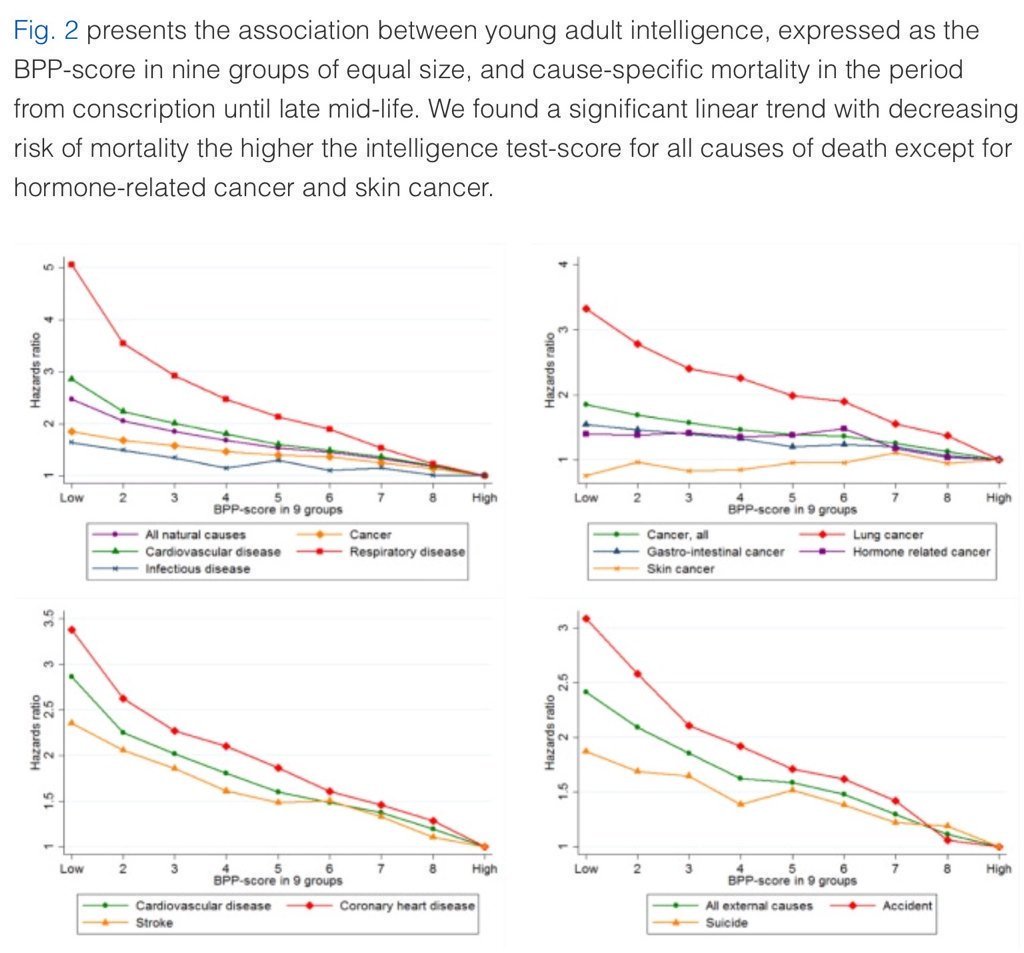
5. Higher IQ is associated with a lower risk of death from most causes, including cardiovascular disease, respiratory disease, most forms of cancer, homicide, suicide, and accident. https://t.co/PJjGNyeQRA (N = 728,160)
MDZS is laden with buddhist references. As a South Asian person, and history buff, it is so interesting to see how Buddhism, which originated from India, migrated, flourished & changed in the context of China. Here's some research (🙏🏼 @starkjeon for CN insight + citations)

1. LWJ’s sword Bichen ‘is likely an abbreviation for the term 躲避红尘 (duǒ bì hóng chén), which can be translated as such: 躲避: shunning or hiding away from 红尘 (worldly affairs; which is a buddhist teaching.) (
https://t.co/zF65W3roJe) (abbrev. TWX)

2. Sandu (三 毒), Jiang Cheng’s sword, refers to the three poisons (triviṣa) in Buddhism; desire (kāma-taṇhā), delusion (bhava-taṇhā) and hatred (vibhava-taṇhā).

These 3 poisons represent the roots of craving (tanha) and are the cause of Dukkha (suffering, pain) and thus result in rebirth.

Interesting that MXTX used this name for one of the characters who suffers, arguably, the worst of these three emotions.

3. The Qian kun purse “乾坤袋 (qián kūn dài) – can be called “Heaven and Earth” Pouch. In Buddhism, Maitreya (मैत्रेय) owns this to store items. It was believed that there was a mythical space inside the bag that could absorb the world.” (TWX)
I’m torn on how to approach the idea of luck. I’m the first to admit that I am one of the luckiest people on the planet. To be born into a prosperous American family in 1960 with smart parents is to start life on third base. The odds against my very existence are astronomical.


I’ve always felt that the luckiest people I know had a talent for recognizing circumstances, not of their own making, that were conducive to a favorable outcome and their ability to quickly take advantage of them.

In other words, dumb luck was just that, it required no awareness on the person’s part, whereas “smart” luck involved awareness followed by action before the circumstances changed.

So, was I “lucky” to be born when I was—nothing I had any control over—and that I came of age just as huge databases and computers were advancing to the point where I could use those tools to write “What Works on Wall Street?” Absolutely.

Was I lucky to start my stock market investments near the peak of interest rates which allowed me to spend the majority of my adult life in a falling rate environment? Yup.