
Given events over recent days (weeks, months) a few quick thoughts on policy & comms during a crisis.
Caveat: this may all seem elementary to some.
Tone: offered with due humility (based on hard Whitehall failures, as well as some relative successes).
More from Culture

The emerging picture of John Sullivan aka Jayden X, the Cap riot agitator, and the documentarian Jade Sacker who filmed the whole thing really is the perfect microcosm of how Globalist American Empire stages its narrative.
Here’s the summary overview:
First Sullivan: agent provocateur who is no more antifa/BLM than he is Proud Boy, with suspicious family ties to the security state (allegedly), who helps instigate and document the Jan 6 events leading to IC officials immediately demanding the removal of the incumbent regime...
The guy’s social media profile is all over the map. From Civil Liberties gun guy to Antifa activist. And who planned the Utah BLM event that ended in the bizarre car shooting. His feed since Jan has all led to the Cap Hill events, including the first of the Parlor call outs.

Okay so maybe the guy is just a confused burn-it-all-down nihilist. Possible, but then we might do a big think about how an unhinged political schizo gets hooked up with a filmmaker with a long-history of doing activist/journalism on behalf of Woke Imperialism...
If John Sullivan aka Jaydenx is the “Fake,” Jade Sacker, his accomplice, is the “Gay.” Here’s a few snapshots from her portfolio (https://t.co/YEO1CCsQn8)
The plight of Rohingya Muslims. The Kurds in Northern Syria. Trans Women in Cambodia. etc. Boiler plate globohomo

Here’s the summary overview:
First Sullivan: agent provocateur who is no more antifa/BLM than he is Proud Boy, with suspicious family ties to the security state (allegedly), who helps instigate and document the Jan 6 events leading to IC officials immediately demanding the removal of the incumbent regime...
The guy’s social media profile is all over the map. From Civil Liberties gun guy to Antifa activist. And who planned the Utah BLM event that ended in the bizarre car shooting. His feed since Jan has all led to the Cap Hill events, including the first of the Parlor call outs.
Okay so maybe the guy is just a confused burn-it-all-down nihilist. Possible, but then we might do a big think about how an unhinged political schizo gets hooked up with a filmmaker with a long-history of doing activist/journalism on behalf of Woke Imperialism...
If John Sullivan aka Jaydenx is the “Fake,” Jade Sacker, his accomplice, is the “Gay.” Here’s a few snapshots from her portfolio (https://t.co/YEO1CCsQn8)
The plight of Rohingya Muslims. The Kurds in Northern Syria. Trans Women in Cambodia. etc. Boiler plate globohomo








You May Also Like

A THREAD ON @SarangSood
Decoded his way of analysis/logics for everyone to easily understand.
Have covered:
1. Analysis of volatility, how to foresee/signs.
2. Workbook
3. When to sell options
4. Diff category of days
5. How movement of option prices tell us what will happen
1. Keeps following volatility super closely.
Makes 7-8 different strategies to give him a sense of what's going on.
Whichever gives highest profit he trades in.
2. Theta falls when market moves.
Falls where market is headed towards not on our original position.
3. If you're an options seller then sell only when volatility is dropping, there is a high probability of you making the right trade and getting profit as a result
He believes in a market operator, if market mover sells volatility Sarang Sir joins him.
4. Theta decay vs Fall in vega
Sell when Vega is falling rather than for theta decay. You won't be trapped and higher probability of making profit.
Decoded his way of analysis/logics for everyone to easily understand.
Have covered:
1. Analysis of volatility, how to foresee/signs.
2. Workbook
3. When to sell options
4. Diff category of days
5. How movement of option prices tell us what will happen
1. Keeps following volatility super closely.
Makes 7-8 different strategies to give him a sense of what's going on.
Whichever gives highest profit he trades in.
I am quite different from your style. I follow the market's volatility very closely. I have mock positions in 7-8 different strategies which allows me to stay connected. Whichever gives best profit is usually the one i trade in.
— Sarang Sood (@SarangSood) August 13, 2019
2. Theta falls when market moves.
Falls where market is headed towards not on our original position.
Anilji most of the time these days Theta only falls when market moves. So the Theta actually falls where market has moved to, not where our position was in the first place. By shifting we can come close to capturing the Theta fall but not always.
— Sarang Sood (@SarangSood) June 24, 2019
3. If you're an options seller then sell only when volatility is dropping, there is a high probability of you making the right trade and getting profit as a result
He believes in a market operator, if market mover sells volatility Sarang Sir joins him.
This week has been great so far. The main aim is to be in the right side of the volatility, rest the market will reward.
— Sarang Sood (@SarangSood) July 3, 2019
4. Theta decay vs Fall in vega
Sell when Vega is falling rather than for theta decay. You won't be trapped and higher probability of making profit.
There is a difference between theta decay & fall in vega. Decay is certain but there is no guaranteed profit as delta moves can increase cost. Fall in vega on the other hand is backed by a powerful force that sells options and gives handsome returns. Our job is to identify them.
— Sarang Sood (@SarangSood) February 12, 2020





BREAKING: @CommonsCMS @DamianCollins just released previously sealed #Six4Three @Facebook documents:
Some random interesting tidbits:
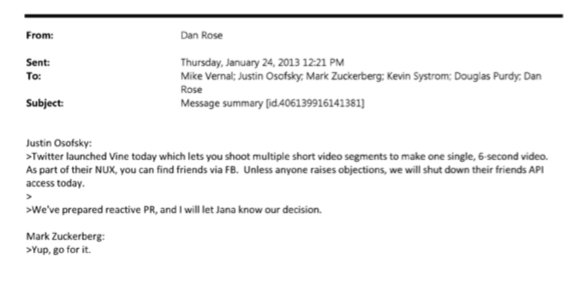
1) Zuck approves shutting down platform API access for Twitter's when Vine is released #competition
2) Facebook engineered ways to access user's call history w/o alerting users:
Team considered access to call history considered 'high PR risk' but 'growth team will charge ahead'. @Facebook created upgrade path to access data w/o subjecting users to Android permissions dialogue.
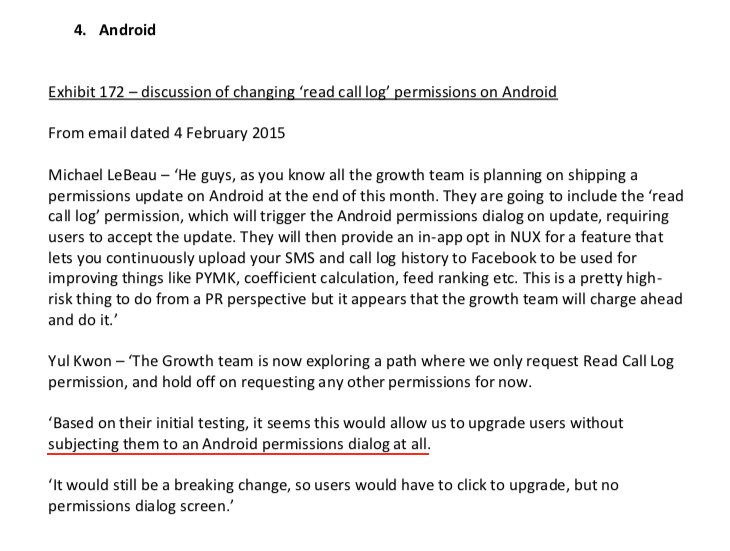
3) The above also confirms @kashhill and other's suspicion that call history was used to improve PYMK (People You May Know) suggestions and newsfeed rankings.
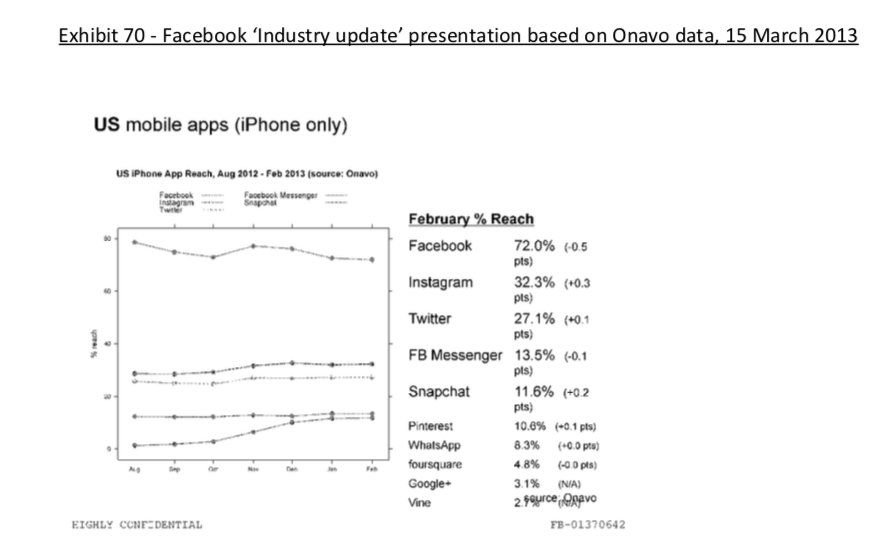
4) Docs also shed more light into @dseetharaman's story on @Facebook monitoring users' @Onavo VPN activity to determine what competitors to mimic or acquire in 2013.
https://t.co/PwiRIL3v9x
Some random interesting tidbits:
1) Zuck approves shutting down platform API access for Twitter's when Vine is released #competition
2) Facebook engineered ways to access user's call history w/o alerting users:
Team considered access to call history considered 'high PR risk' but 'growth team will charge ahead'. @Facebook created upgrade path to access data w/o subjecting users to Android permissions dialogue.
3) The above also confirms @kashhill and other's suspicion that call history was used to improve PYMK (People You May Know) suggestions and newsfeed rankings.
4) Docs also shed more light into @dseetharaman's story on @Facebook monitoring users' @Onavo VPN activity to determine what competitors to mimic or acquire in 2013.
https://t.co/PwiRIL3v9x


