Alex1Powell's Categories
Alex1Powell's Authors


Latest Saves


Pay attention to this timestamp. there is a second Tweet in this thread....
https://t.co/9gcsrHwzqY

\u201cThe President was responsible for those direct payments to Americans in the Covid-19 Relief Bill.\u201d @kilmeade @foxandfriends And the Moderna vaccine has already started rolling out. Very smooth distribution!
— Donald J. Trump (@realDonaldTrump) December 21, 2020


2020 was another year where I talked a *lot* of shop about dating sim history. Much of it was actual dating sims, like in some threads below, but sometimes I went on adjacent tangents, like for the cool Kojipro-developed Tokimeki Memorial adventure games:
I finished the drama CD for Shiori's route of Tokimemo Drama Vol. 3 earlier and it was sweet, but lacking. So, I'm plunging back into the world of Feeling Sad About Shiori! Maybe I'll make this a thread about all the cool ways KojiPro translated a dating sim to an adventure game? pic.twitter.com/SWXLvUwMO1
— Tom James, The Daigo Umehara of Dating Sims (@iiotenki) September 2, 2020
I also went down a whole new rabbit hole for Fuuraiki, an open-ended PS1/PS2 adventure game with a cult following about traveling around the island of Hokkaido that's set to real world photography. It's a unique tangent in galge well worth exploring:
So as I mentioned about a week ago, I've been digging into Fuuraiki, a late PS1 release I've been meaning to check out for years. It's an adventure game where you travel along Hokkaido on motorcycle taking photos of the scenery and writing travelogues and it's pretty rad. pic.twitter.com/uhajPmDrm9
— Tom James, The Daigo Umehara of Dating Sims (@iiotenki) January 27, 2020
I also took a quick jaunt into Michinoku Hitou Koi Monogatari, a spiritual predecessor to Fuuraiki that's about traveling around Tohoku against a backdrop of mahjong matches. It's a rough draft that would get much more refined later, but still worthwhile:
It's neat as a historical curiosity and I'm glad I did it to have context for a Fuuraikai route which sees Yumi (the oneesan in purple) return, but I wouldn't call it at all essential. My main takeaways are I suck real bad at hana-awase and a stupendously dumb swan boat chase. pic.twitter.com/aRe1S4yF6o
— Tom James, The Daigo Umehara of Dating Sims (@iiotenki) October 27, 2020
In terms of actual dating sims that I covered, the focus was mainly post-Amagami games released by Kadokawa such as Photo Kano. While I think these games have MANY flaws, they do offer key insight into the state of the genre during its decade-long decline:
Well.
— Tom James, The Daigo Umehara of Dating Sims (@iiotenki) April 25, 2020
Let's do this again, I guess. pic.twitter.com/pLoef5uHap

First off: hello! @marazepeda here. I used to be an economic reporter for places like @planetmoney & @Marketplace. (If credentials are your kink I even graduated at the top of my class from @columbiajourn 🎉) Follow along, friends, as we attempt to unravel this rat's nest.
We get this message: "Uh, WTF there is an article about Zebras without mentioning Zebras." This happens more often than you might think. (What's the best is when men tweak your ideas and then put another name on it like camel and publish in @HarvardBiz)
As a refresher @operaqueenie @JenniferBrandel @operaqueenie + @marazepeda coined the term in this essay written in, ahem, 2017 https://t.co/ipWzgPxfg1 You can see why the @TechCrunch article by @beckshoneyman sounded...familiar but what was really weird is
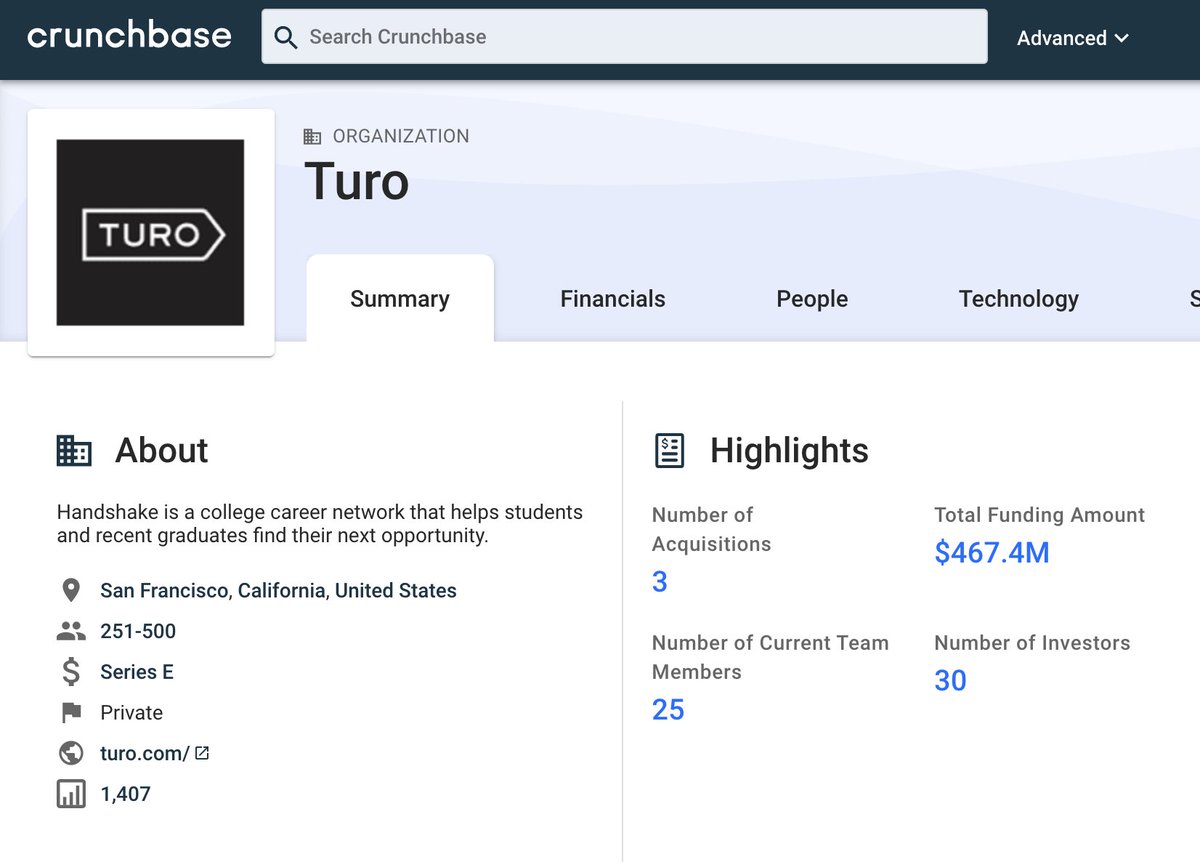
The examples @beckshoneyman cited of so called Zebra companies? @joinHandshake and @turo? Uh no. Handshake has raised $150M and Turo has raised $450M. These are squarely in the #VC funded 🦄 camp. AS THEY SHOULD BE! No shade to VC! You do you! However...


The CCP Virus relieve bill was tacked on to the **annual federal spending package**.
That includes the Defense budget, among other things.
The House of Representatives and the Senate on Monday passed a $900 billion #COVID19relief bill following months of negotiations. It heads to @realDonaldTrump to be signed. The bill is coupled with a $1.4 trillion annual federal spending package.https://t.co/wjkTkIqWcz
— The Epoch Times (@EpochTimes) December 22, 2020


🤔🤙
https://t.co/AMPtjUBKgE

2017-
Trump signs into law U.S. government ban on Kaspersky Lab software | Reuters
May 2019-
Kaspersky Lab Joins Forces with SolarWinds to Help MSPs Deliver Automated Cybersecurity Protection to Customers
Sept. -2019
U.S. Finalizes Rule Banning Kaspersky Products From Government Contracts







https://t.co/hmAz0tsyuv
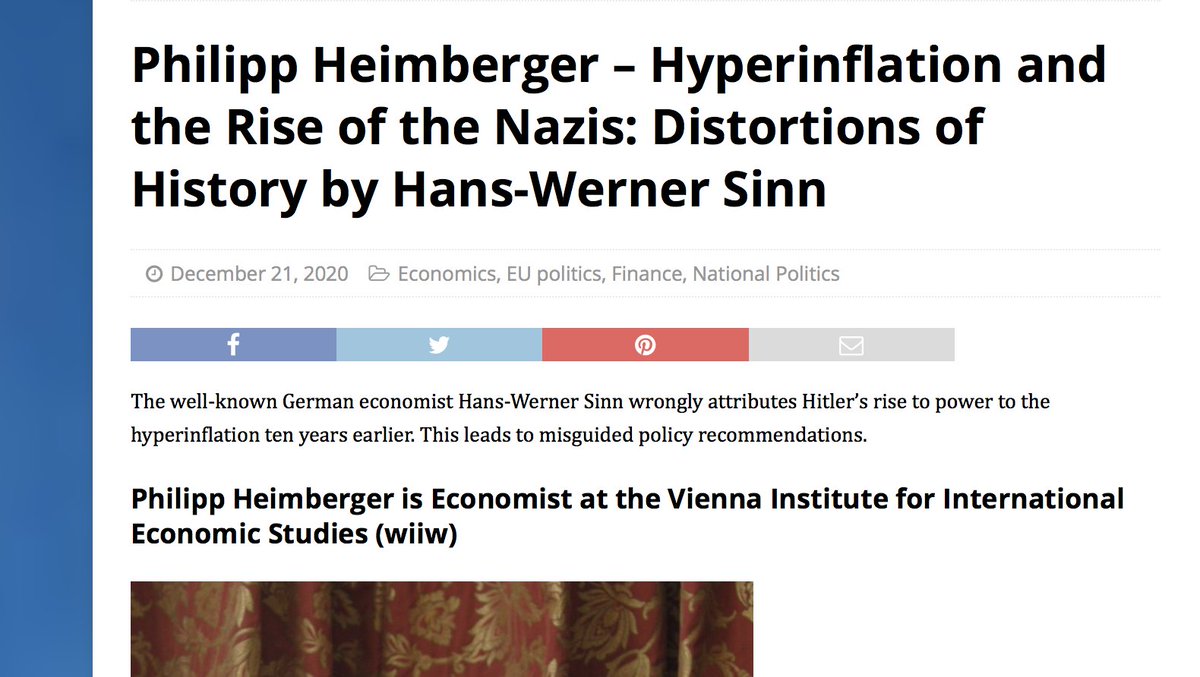
Sinn says hyperinflation after WW1 impoverished the German middle class in the Weimar Republic: "Ten years later they elected Adolf Hitler as Reich Chancellor." Policy recommendation today against hyperinflation: "tighter budget constraints" /2
https://t.co/ydfxgiCpkD
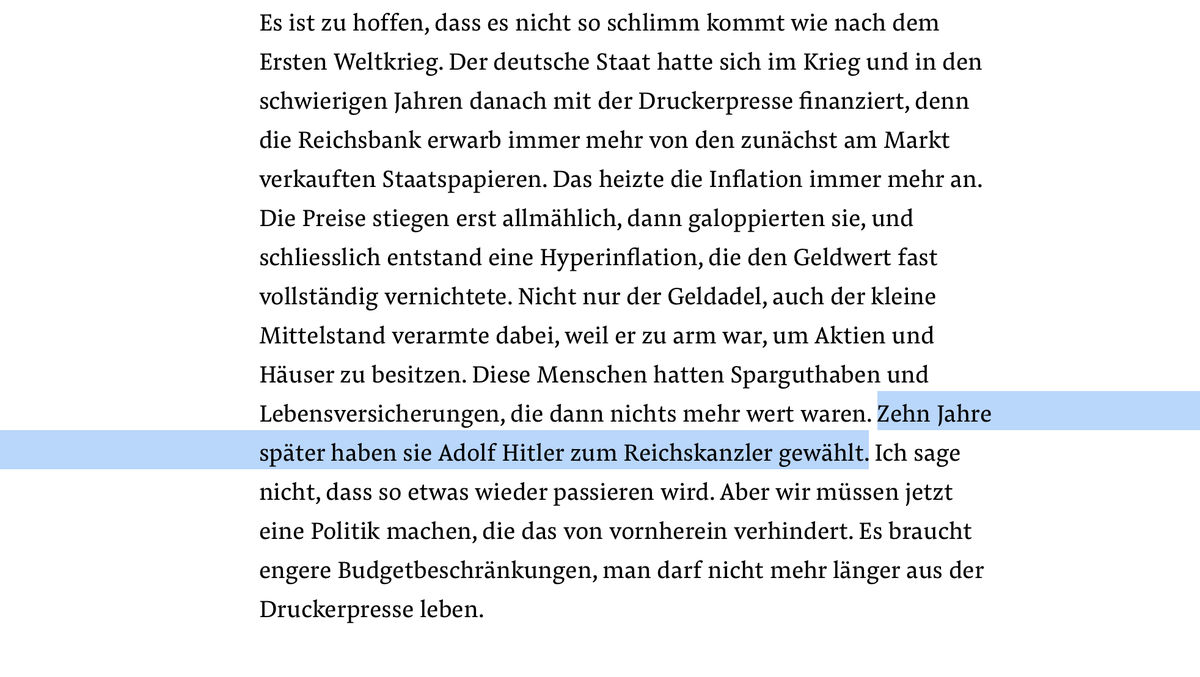
Sinn thus feeds a widespread misinterpretation. Mass poverty when the Nazis came to power in 1933 was not the result of hyperinflation, which at that time was ten years in the past; it was primarily a consequence of mass unemployment due to the recession in the early 1930s. /3
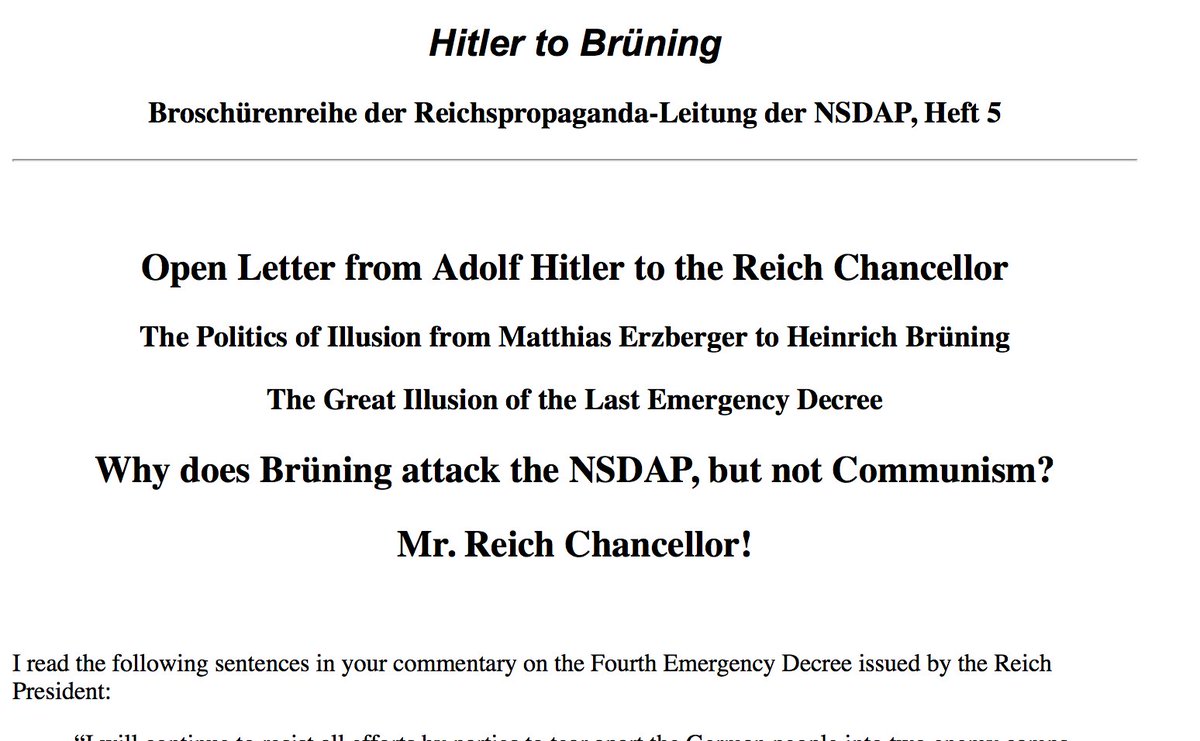
The Nazis had come to power after years of deflation - i.e. falling prices. From 1930 onwards, Reich Chancellor Brüning used emergency decrees to bring about tax increases and drastic state spending cuts that pierced the social safety net. /4
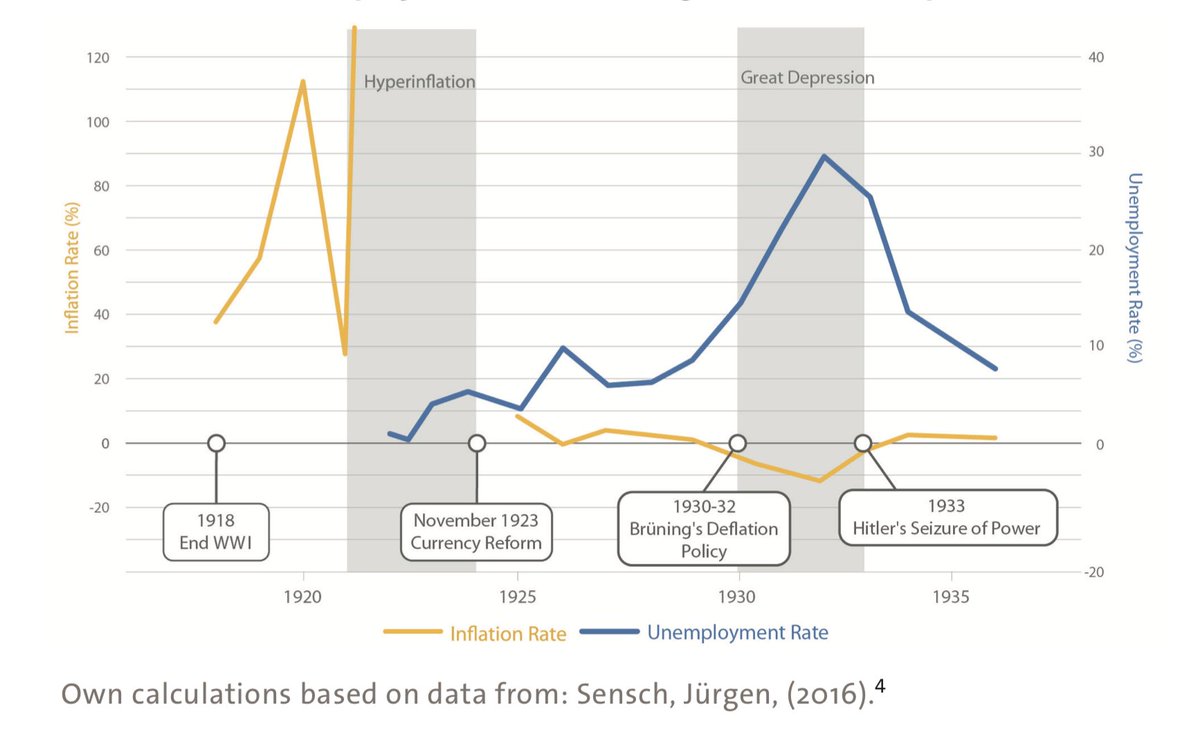
Austerity policies increased unemployment, led to social suffering and unrest. Hitler realised by the end of 1931 at the latest that Brüning's austerity policy would "help his party to victory and thus end the illusions of the present system." /5
https://t.co/yRN6hseciX