
Expected long-term cash flows, discounted by the cost of capital—not reported earnings—determine long-term stock prices.
In the short-term, Mr Market is bipolar and very susceptible to stories and what is fashionable.
More from Wise investing


Peter Lynch, Charlie Munger, Sanjoy Bhattacharyya and Philip Fisher.
Some notes on investing, savings and power of compounding!
Will keep adding stuff.
Like and retweet for wider reach.
A thread of threads!
Lessons from Peter Lynch. Best selling author of the book "One Up on Wall Street" and fund manager of one of the best performing mutual fund in the
Investing lessons from Peter Lynch.
— SKJ (@skj_102) June 3, 2021
- Legend of Stock Markets
- Author of book - "One Up on Wall Street"
- Managed one of the best performing mutual funds in the world.@dmuthuk
Thread\u2b07\ufe0f
Lessons from Charlie Munger. Warren Buffet's long-time friend and one of the greatest
Pearls of Wisdom from Charlie Munger and the lessons we can learn in our investing lives.
— SKJ (@skj_102) June 1, 2021
Let's not make the same mistakes again!@dmuthuk @contrarianEPS
Thread\u2b07\ufe0f
Lessons from Sanjoy Bhattacharyya. One of the legends of Indian Stock Market and a mentor to many great
Investing Lessons from Sanjoy Bhattacharyya - One of the legends of Indian Stock Markets and a mentor to many great investors.
— SKJ (@skj_102) June 2, 2021
These lessons are from the Morningstar Investment Conference when @safiranand had a conversation with Sanjoy Sir.@dmuthuk
Thread\u2b07\ufe0f
Lessons from Philip Fisher. One of the best selling authors of the book "Common Stocks and Uncommon
Wisdom.@dmuthuk pic.twitter.com/UOZJ18xLju
— SKJ (@skj_102) May 26, 2021


You May Also Like





Here I will share what I believe are essentials for anybody who is interested in stock markets and the resources to learn them, its from my experience and by no means exhaustive..
First the very basic : The Dow theory, Everybody must have basic understanding of it and must learn to observe High Highs, Higher Lows, Lower Highs and Lowers lows on charts and their
Even those who are more inclined towards fundamental side can also benefit from Dow theory, as it can hint start & end of Bull/Bear runs thereby indication entry and exits.
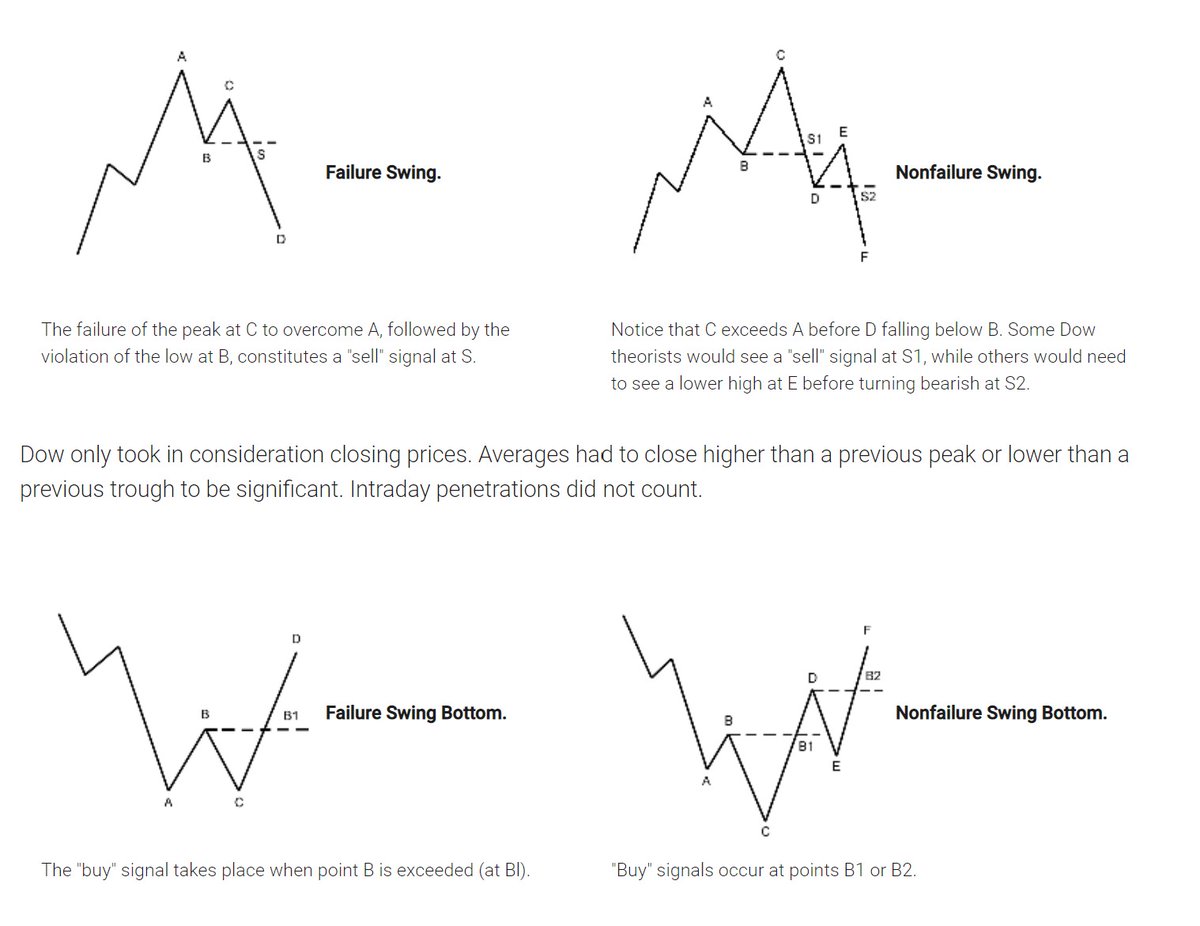
Next basic is Wyckoff's Theory. It tells how accumulation and distribution happens with regularity and how the market actually
Dow theory is old but
Old is Gold....
— Professor (@DillikiBiili) January 23, 2020
this Bharti Airtel chart is a true copy of the Wyckoff Pattern propounded in 1931....... pic.twitter.com/tQ1PNebq7d




Always. No, your company is not an exception.
A tactic I don’t appreciate at all because of how unfairly it penalizes low-leverage, junior employees, and those loyal enough not to question it, but that’s negotiation for you after all. Weaponized information asymmetry.
Listen to Aditya
"we don't negotiate salaries" really means "we'd prefer to negotiate massive signing bonuses and equity grants, but we'll negotiate salary if you REALLY insist" https://t.co/80k7nWAMoK
— Aditya Mukerjee, the Otterrific \U0001f3f3\ufe0f\u200d\U0001f308 (@chimeracoder) December 4, 2018
And by the way, you should never be worried that an offer would be withdrawn if you politely negotiate.
I have seen this happen *extremely* rarely, mostly to women, and anyway is a giant red flag. It suggests you probably didn’t want to work there.
You wish there was no negotiating so it would all be more fair? I feel you, but it’s not happening.
Instead, negotiate hard, use your privilege, and then go and share numbers with your underrepresented and underpaid colleagues. […]