In hindsight this is how a gruesome business would look like ::
Pricing power
Sticky and mandatory consumption
30-35% ROCE once optimal capacity utilisation is reached and asset has depreciated
170x stock returns excluding dividends over 25 years
D: I’ve been averaging up
More from Sajal Kapoor
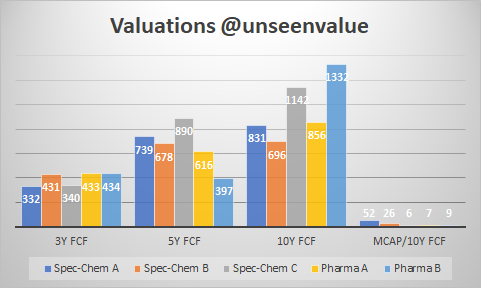
Those who exited at 1500 needed money. They can always come back near 969. Those who exited at 230 also needed money. They can come back near 95.
Those who sold L @ 660 can always come back at 360. Those who sold S last week can be back @ 301
Sir, Log yahan.. 13 days patience nhi rakh sakte aur aap 2013 ki baat kar rahe ho. Even Aap Ready made portfolio banakar bhi de do to bhi wo 1 month me hi EXIT kar denge \U0001f602
— BhavinKhengarSuratGujarat (@IntradayWithBRK) September 19, 2021
Neuland 2700 se 1500 & Sequent 330 to 230 kya huwa.. 99% retailers/investors twitter par charcha n EXIT\U0001f602
Technology is enabling new ways of credibly accessing medical knowledge via smart phones / tablets.
— Conviction | Patience (@unseenvalue) November 8, 2018
Android, iOS have > 5k health / fitness apps like @Medscape, pointing to a future where the Tech. drives a part of medical knowledge and therapeutic guidance instead of a Doctor!

More from Uvlearnings
In an example of how deeply ingrained misogyny is in the Indian system, billionaire investor Rakesh Jhunjhunwala asked the management of Jubilant Pharmova: \u201cHow can we be lower than the lady? We have to beat her,\u201d in a slighting reference to @kiranshaw.
— Dr. Kailashnath Koppikar (@koppik) June 26, 2021
https://t.co/1dkZ9JMLLr
You May Also Like

The question is:
Is this an official account for Bahcesehir Uni (Bau)?

Bahcesehir Uni, BAU has an official website https://t.co/ztzX6uj34V which links to their social media, leading to their Twitter account @Bahcesehir
BAU’s official Twitter account

BAU has many departments, which all have separate accounts. Nowhere among them did I find @BAUDEGS
@BAUOrganization @ApplyBAU @adayBAU @BAUAlumniCenter @bahcesehirfbe @baufens @CyprusBau @bauiisbf @bauglobal @bahcesehirebe @BAUintBatumi @BAUiletisim @BAUSaglik @bauebf @TIPBAU
Nowhere among them was @BAUDEGS to find