
The clearest lens through which I view the 1776 Report, Trump's apologia in response to the 1619 Project, is the same lens for viewing our overall political divisions: one of competing theories of American Exceptionalism:
Is America exceptional? How? Why? 1/x
More from Trump








1. @NYGovCuomo became a pandemic star by contrasting himself with Trump
Cuomo crafted an IMAGE of being determined, honest and grounded in science
But 11 months later this image is falling apart
Follow along for a FACTUAL assessment of Cuomo's
2. Cuomo WROTE A BOOK, published in October, celebrating his own leadership during the pandemic.
Cuomo writes that NY had "confronted and defeated" the virus, and had "achieved what all the experts told us was impossible."
Today, things look
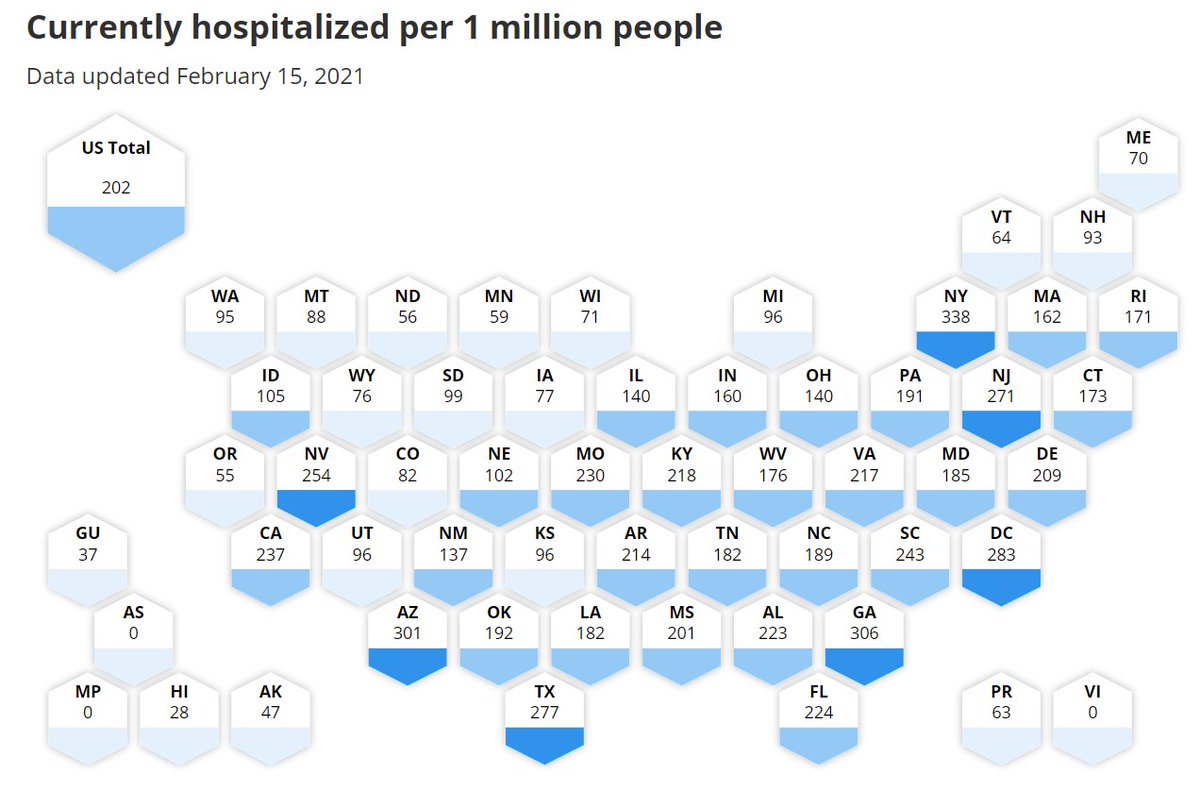
3. Today, New York has 338 people hospitalized with COVID per million residents.
This is the HIGHEST NUMBER IN ANY STATE by a considerable margin.
https://t.co/Hl4fsFxB6l
4. Overall, 46K New Yorkers have died of COVID, which trails only California (47K), a state with 2x as many people.
On a per capita basis, New York has had more deaths than every state but New Jersey.
Cuomo made decisions that made things
5. A new report by NY AG Letitia James (D) found Cuomo's order requiring nursing homes to accept residents w/COVID "may have put residents at increased risk of harm"
Cuomo dismissed criticisms of his nursing home policies in his book as
Cuomo crafted an IMAGE of being determined, honest and grounded in science
But 11 months later this image is falling apart
Follow along for a FACTUAL assessment of Cuomo's
2. Cuomo WROTE A BOOK, published in October, celebrating his own leadership during the pandemic.
Cuomo writes that NY had "confronted and defeated" the virus, and had "achieved what all the experts told us was impossible."
Today, things look
3. Today, New York has 338 people hospitalized with COVID per million residents.
This is the HIGHEST NUMBER IN ANY STATE by a considerable margin.
https://t.co/Hl4fsFxB6l
4. Overall, 46K New Yorkers have died of COVID, which trails only California (47K), a state with 2x as many people.
On a per capita basis, New York has had more deaths than every state but New Jersey.
Cuomo made decisions that made things
5. A new report by NY AG Letitia James (D) found Cuomo's order requiring nursing homes to accept residents w/COVID "may have put residents at increased risk of harm"
Cuomo dismissed criticisms of his nursing home policies in his book as


You May Also Like


THREAD: 12 Things Everyone Should Know About IQ
1. IQ is one of the most heritable psychological traits – that is, individual differences in IQ are strongly associated with individual differences in genes (at least in fairly typical modern environments). https://t.co/3XxzW9bxLE
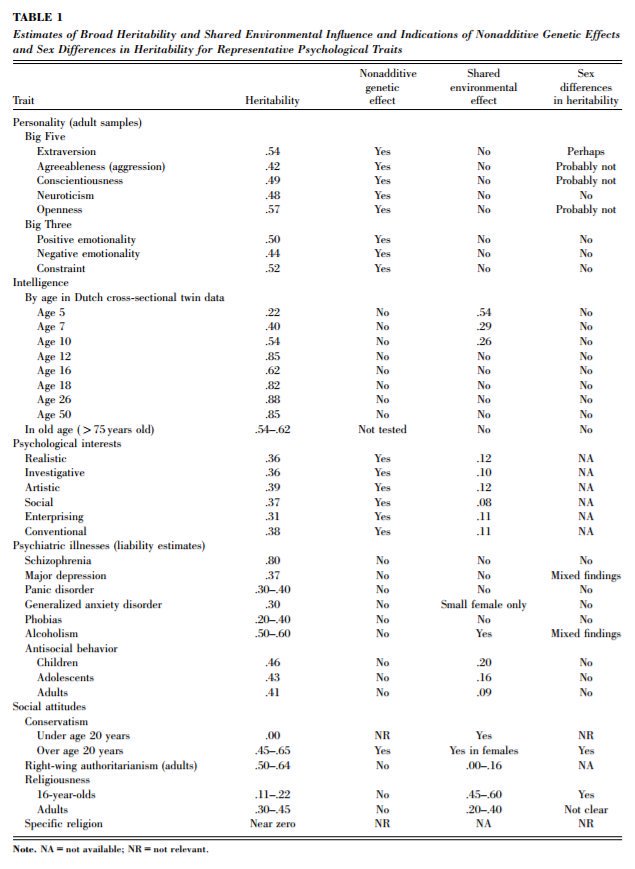
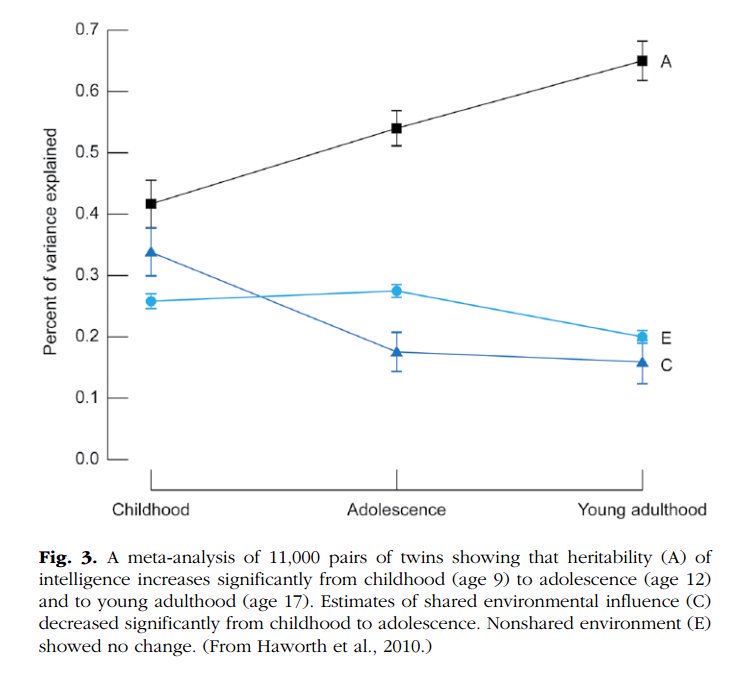
2. The heritability of IQ *increases* from childhood to adulthood. Meanwhile, the effect of the shared environment largely fades away. In other words, when it comes to IQ, nature becomes more important as we get older, nurture less. https://t.co/UqtS1lpw3n
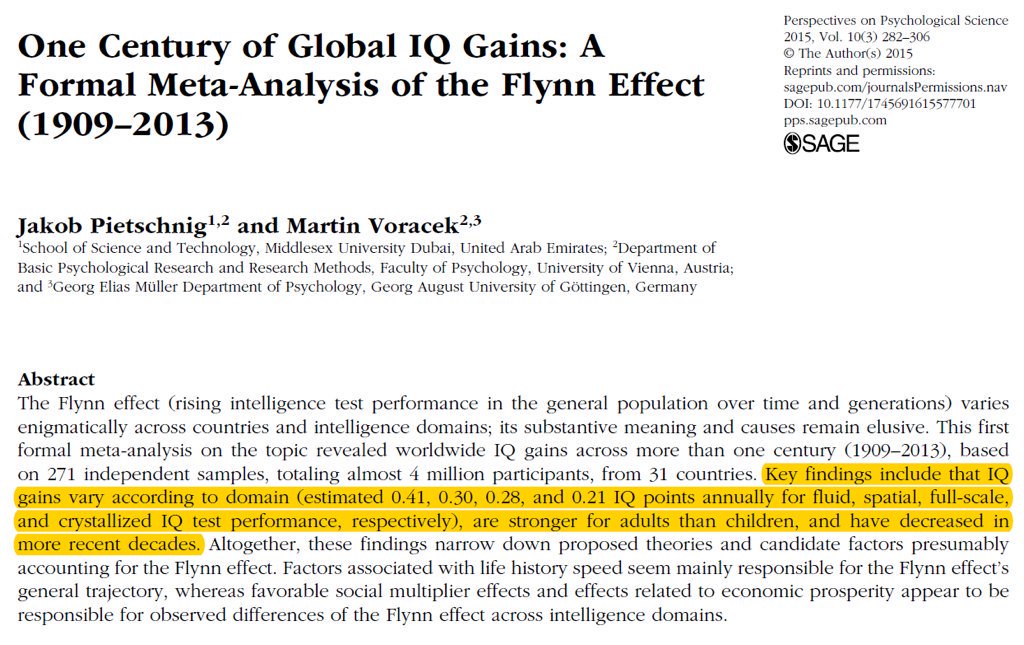
3. IQ scores have been increasing for the last century or so, a phenomenon known as the Flynn effect. https://t.co/sCZvCst3hw (N ≈ 4 million)
(Note that the Flynn effect shows that IQ isn't 100% genetic; it doesn't show that it's 100% environmental.)
4. IQ predicts many important real world outcomes.
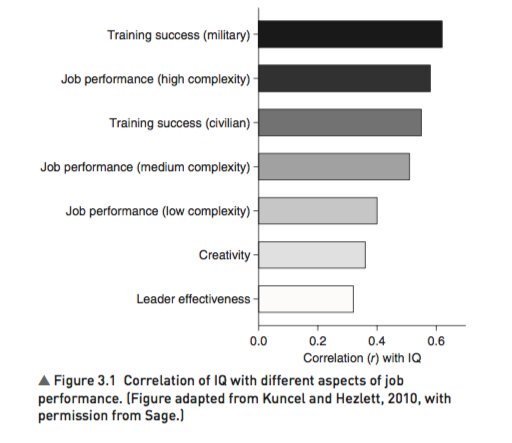
For example, though far from perfect, IQ is the single-best predictor of job performance we have – much better than Emotional Intelligence, the Big Five, Grit, etc. https://t.co/rKUgKDAAVx https://t.co/DWbVI8QSU3
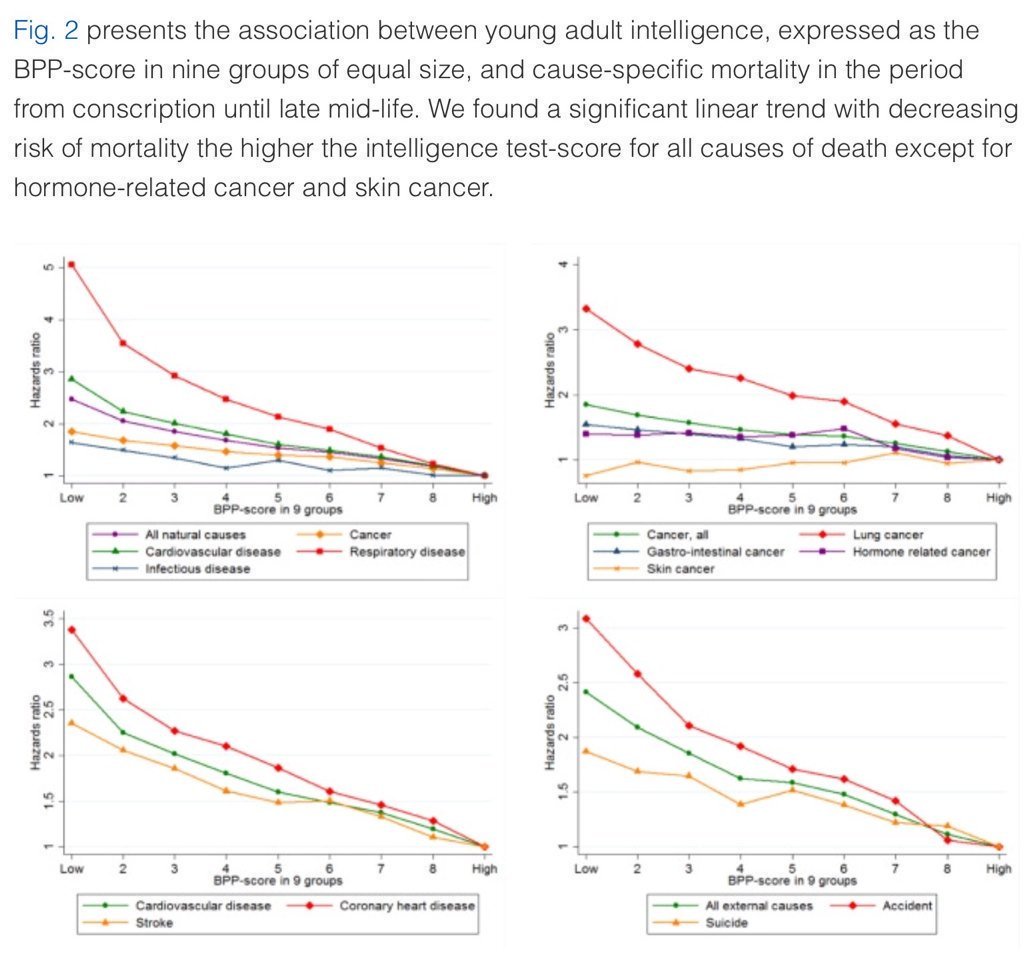
5. Higher IQ is associated with a lower risk of death from most causes, including cardiovascular disease, respiratory disease, most forms of cancer, homicide, suicide, and accident. https://t.co/PJjGNyeQRA (N = 728,160)
1. IQ is one of the most heritable psychological traits – that is, individual differences in IQ are strongly associated with individual differences in genes (at least in fairly typical modern environments). https://t.co/3XxzW9bxLE
2. The heritability of IQ *increases* from childhood to adulthood. Meanwhile, the effect of the shared environment largely fades away. In other words, when it comes to IQ, nature becomes more important as we get older, nurture less. https://t.co/UqtS1lpw3n
3. IQ scores have been increasing for the last century or so, a phenomenon known as the Flynn effect. https://t.co/sCZvCst3hw (N ≈ 4 million)
(Note that the Flynn effect shows that IQ isn't 100% genetic; it doesn't show that it's 100% environmental.)
4. IQ predicts many important real world outcomes.
For example, though far from perfect, IQ is the single-best predictor of job performance we have – much better than Emotional Intelligence, the Big Five, Grit, etc. https://t.co/rKUgKDAAVx https://t.co/DWbVI8QSU3
5. Higher IQ is associated with a lower risk of death from most causes, including cardiovascular disease, respiratory disease, most forms of cancer, homicide, suicide, and accident. https://t.co/PJjGNyeQRA (N = 728,160)
