
https://t.co/mgWQbsFQGN
1/Today's @bopinion post is about Trump's taxes, and what they show about how America allocates capital.
We appear to have some big problems.
https://t.co/mgWQbsFQGN
Why would creditors give money to a guy who wastes the money on bad businesses and doesn't even pay them back?
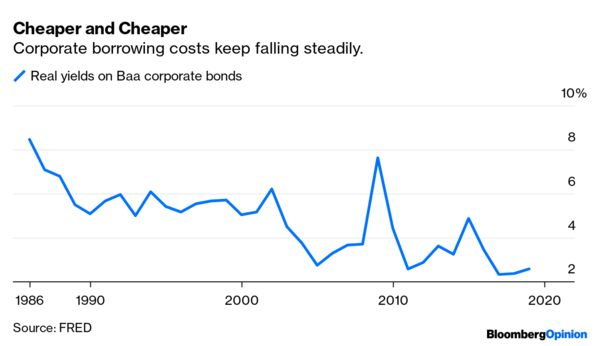
Why hasn't an abundance of cheap capital caused the return on financial capital to fall? Interest rates are low, but stock returns have held up strongly.
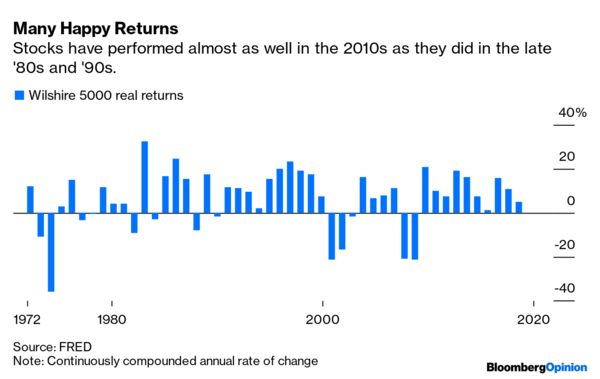
When you increase the supply of loanable funds, prices are supposed to go down. In other words, cheap capital should fund a lot of marginal businesses that compete away profits...
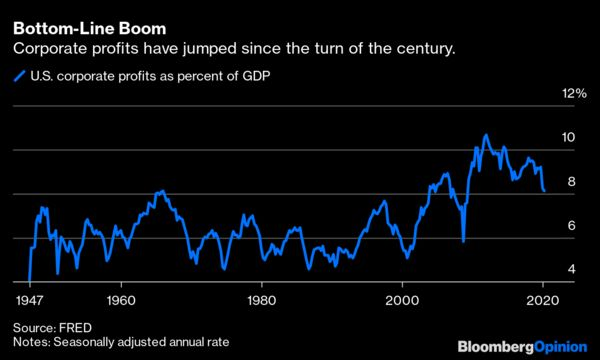
Simcha Barkai and Matt Rognlie have both written about this:
1. https://t.co/OLln8npr8b
2. https://t.co/BY1EWyluD7
https://t.co/xNzE9SO8nY
https://t.co/BY1EWyluD7
And it doesn't really explain Trump, does it? He's not a monopolist, and he doesn't even make profit. He's just a huckster who can borrow cheaply because he's famous.
Financiers are willing to throw tons of cheap money at big powerful companies or at famous hucksters like Trump, but charge inordinate prices to fund new entrants or marginal businesses.
We need to figure out what's going wrong, and fix it!
(end)
https://t.co/dHVCEQGa9q
More from Noah Smith 🐇
Time for panel #3: Big Tech and regulation!
I will be live-tweeting again, and you can also watch video at either the Twitter or Facebook links below!
Kaissar: Every industry gets regulated when it gets big. The question is what kind of regulation Big Tech will get,and whether the companies will be proactive in shaping it.
Kaissar: More profitable companies have higher returns. Why? Maybe it's a risk factor, because more profit = higher risk of getting regulated.
Bershidskyis showing a diagram of GDPR complaince pop-ups. What a massive ill-conceived bureaucratic mess.
Ritholtz: It's 2018 and we're still talking about Facebook privacy settings?! If you're still giving your personal data to Facebook, you just don't care about privacy!
I will be live-tweeting again, and you can also watch video at either the Twitter or Facebook links below!
Bloomberg Ideas conference now starting! I will be live-tweeting it. You can watch on our Facebook or Twitter pages (links below)! https://t.co/Mbr9dZzWBy
— Noah Smith (@Noahpinion) October 25, 2018
Kaissar: Every industry gets regulated when it gets big. The question is what kind of regulation Big Tech will get,and whether the companies will be proactive in shaping it.
Kaissar: More profitable companies have higher returns. Why? Maybe it's a risk factor, because more profit = higher risk of getting regulated.
Bershidskyis showing a diagram of GDPR complaince pop-ups. What a massive ill-conceived bureaucratic mess.
Ritholtz: It's 2018 and we're still talking about Facebook privacy settings?! If you're still giving your personal data to Facebook, you just don't care about privacy!
Today's @bopinion post is about how poor countries started catching up to rich ones.
It looks like decolonization just took a few decades to start
Basic econ theory says poor countries should grow faster than rich ones.
But for much of the Industrial Revolution, the opposite happened.
https://t.co/JjjVtWzz5c
Why? Probably because the first countries to discover industrial technologies used them to conquer the others!
But then colonial empires went away. And yet still, for the next 30 years or so, poor countries fell further behind rich ones.
https://t.co/hilDvv0IQV
Why??
Possible reasons:
1. Bad institutions (dictators, communism, autarkic trade regimes)
2. Civil wars
3. Lack of education
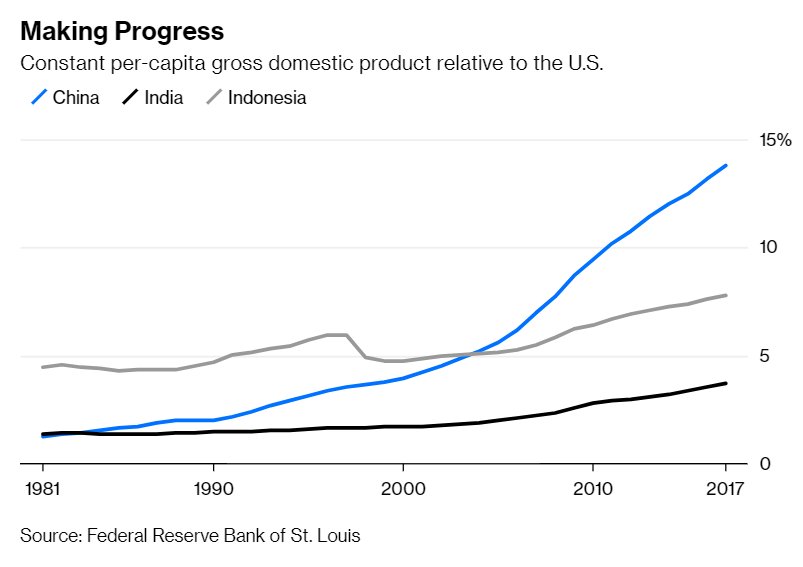
But then, starting in the 80s (for China) and the 90s (for India and Indonesia), some of the biggest poor countries got their acts together and started to catch up!
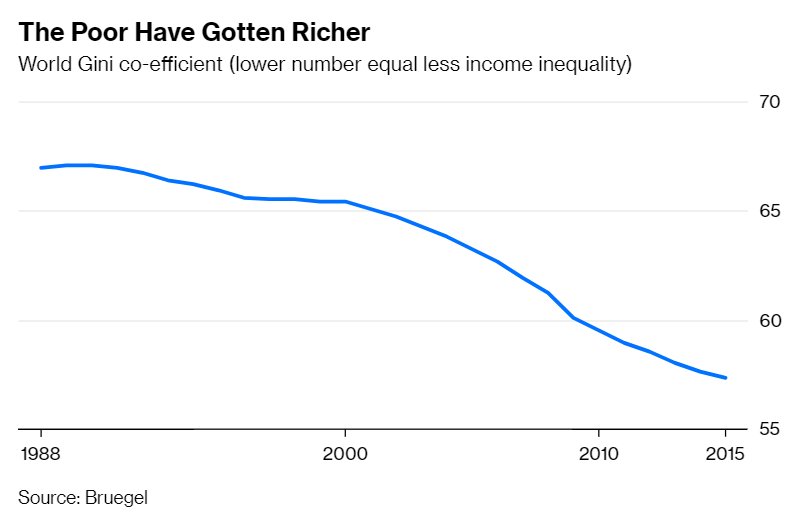
Global inequality began to fall.
It looks like decolonization just took a few decades to start
Basic econ theory says poor countries should grow faster than rich ones.
But for much of the Industrial Revolution, the opposite happened.
https://t.co/JjjVtWzz5c
Why? Probably because the first countries to discover industrial technologies used them to conquer the others!
But then colonial empires went away. And yet still, for the next 30 years or so, poor countries fell further behind rich ones.
https://t.co/hilDvv0IQV
Why??
Possible reasons:
1. Bad institutions (dictators, communism, autarkic trade regimes)
2. Civil wars
3. Lack of education
But then, starting in the 80s (for China) and the 90s (for India and Indonesia), some of the biggest poor countries got their acts together and started to catch up!
Global inequality began to fall.
More from Trump




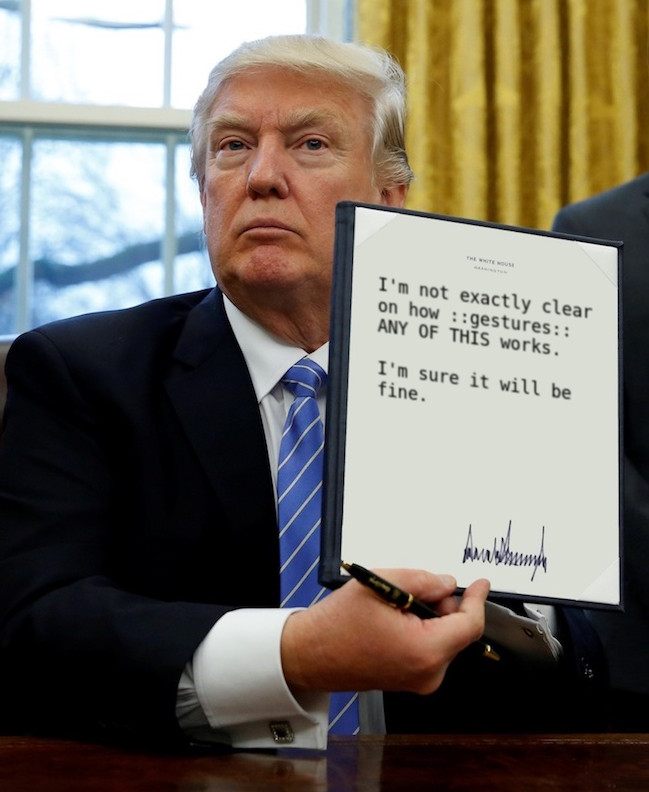
💥💥💥Situation Update, Dec. 3rd – Trump invokes foreign interference provision of his 2018 executive order, authorizing military response to cyber warfare, see NSPM 13 💥💥💥 [M.Adams]

⁉️ ✅ Ask yourself this question: What was the purpose of yesterday’s White House speech about election fraud and vote-rigging?
✅ If you think it was all about Trump communicating to the people, think again. This speech was really about Trump communicating with Chris Miller
✅ and the DoD about foreign interference in the U.S. election while laying out the key national security justifications that are necessary to invoke what I’m calling the “national security option” for defending the United States against an attempted cyber warfare coup.
⭕️ Decoding President Trump’s Dec. 2nd speech:
https://t.co/G9kmUfVQzS
🇺🇸Consider what Trump said in yesterday’s speech. About 95% of this speech was filler. Only 5% really matters, as I detail below:
1. First, he lays out that he has a sworn oath to defend the United States
2. Constitution against the wartime “siege” that’s underway:
As President, I have no higher duty than to defend the laws and the constitution of the United States. That is why I am determined to protect our election system, which is now under coordinated assault and siege.
⁉️ ✅ Ask yourself this question: What was the purpose of yesterday’s White House speech about election fraud and vote-rigging?
✅ If you think it was all about Trump communicating to the people, think again. This speech was really about Trump communicating with Chris Miller
✅ and the DoD about foreign interference in the U.S. election while laying out the key national security justifications that are necessary to invoke what I’m calling the “national security option” for defending the United States against an attempted cyber warfare coup.
⭕️ Decoding President Trump’s Dec. 2nd speech:
https://t.co/G9kmUfVQzS
🇺🇸Consider what Trump said in yesterday’s speech. About 95% of this speech was filler. Only 5% really matters, as I detail below:
1. First, he lays out that he has a sworn oath to defend the United States
2. Constitution against the wartime “siege” that’s underway:
As President, I have no higher duty than to defend the laws and the constitution of the United States. That is why I am determined to protect our election system, which is now under coordinated assault and siege.


You May Also Like


First thread of the year because I have time during MCO. As requested, a thread on the gods and spirits of Malay folk religion. Some are indigenous, some are of Indian origin, some have Islamic
Before I begin, it might be worth explaining the Malay conception of the spirit world. At its deepest level, Malay religious belief is animist. All living beings and even certain objects are said to have a soul. Natural phenomena are either controlled by or personified as spirits
Although these beings had to be respected, not all of them were powerful enough to be considered gods. Offerings would be made to the spirits that had greater influence on human life. Spells and incantations would invoke their
Two known examples of such elemental spirits that had god-like status are Raja Angin (king of the wind) and Mambang Tali Arus (spirit of river currents). There were undoubtedly many more which have been lost to time
Contact with ancient India brought the influence of Hinduism and Buddhism to SEA. What we now call Hinduism similarly developed in India out of native animism and the more formal Vedic tradition. This can be seen in the multitude of sacred animals and location-specific Hindu gods
i wonder if you can make a thread bout witchcraft in malaysia.. or list of our own local gods/deites..
— r a y a \U0001f319 (@lcvelylilith) February 20, 2020
Before I begin, it might be worth explaining the Malay conception of the spirit world. At its deepest level, Malay religious belief is animist. All living beings and even certain objects are said to have a soul. Natural phenomena are either controlled by or personified as spirits
Although these beings had to be respected, not all of them were powerful enough to be considered gods. Offerings would be made to the spirits that had greater influence on human life. Spells and incantations would invoke their
Animist ceremonies of a religious or magical nature were normally held for the purpose of divination or making a request. This would either be done at a keramat or at a shrine similar to the Thai spirit houses or Chinese roadside shrines pic.twitter.com/I1hliyi0x3
— \u2745\u1710\u170b\u1713\u170e (@uglyluhan) June 16, 2019
Two known examples of such elemental spirits that had god-like status are Raja Angin (king of the wind) and Mambang Tali Arus (spirit of river currents). There were undoubtedly many more which have been lost to time
Contact with ancient India brought the influence of Hinduism and Buddhism to SEA. What we now call Hinduism similarly developed in India out of native animism and the more formal Vedic tradition. This can be seen in the multitude of sacred animals and location-specific Hindu gods


