Quick thread on #NIODay from this weekend, the effect it is having on $TSLA, $BYDDF, $QS, $LAZR, $NVDA, CATL, and what is to come.

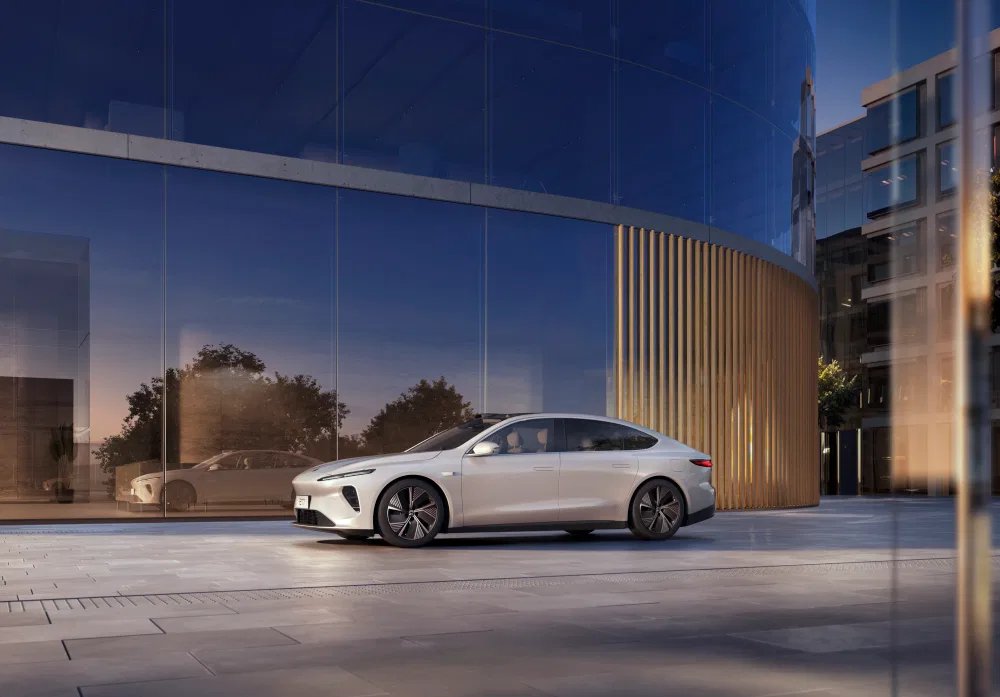
The NIO ET7 boasts 621mi range (150kWh battery) for $70k-$80k & Level 3 autonomy. This prices right in-between Model 3 SR+ & base Model S.

2/ $TSLA is down -6% today, largely on this news. Not surprising, but TSLA bulls aren't flinching from this. NIO ET7 isn't really expected to hit the roads until late next year–enough time for Tesla to refresh S/X & boost pack size, TSLA bulls think.

$NIO is up 8.5% today.
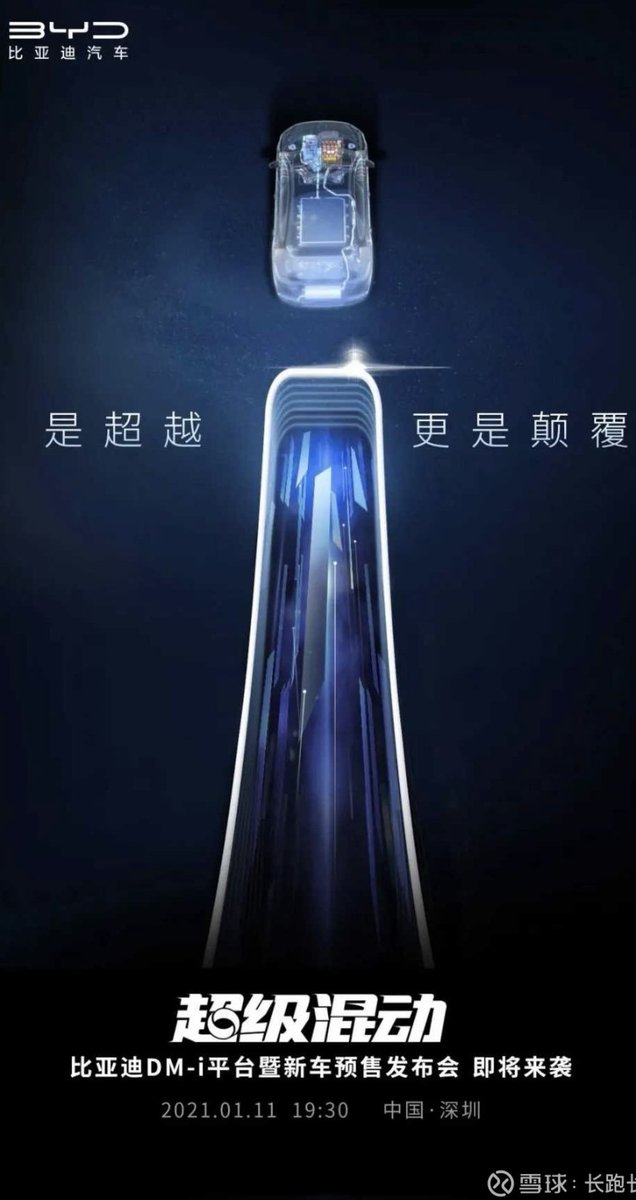
3/ BYD (1211 HK) was up 6.7% in China on Monday partially on the news of its surprise unveiling this morning of 3 new "super hybrid" models (PHEV): Qin PLUS DM-i, Song PLUS DM-i, & Tang DM-i.

$BYDDF is up 3.5% today
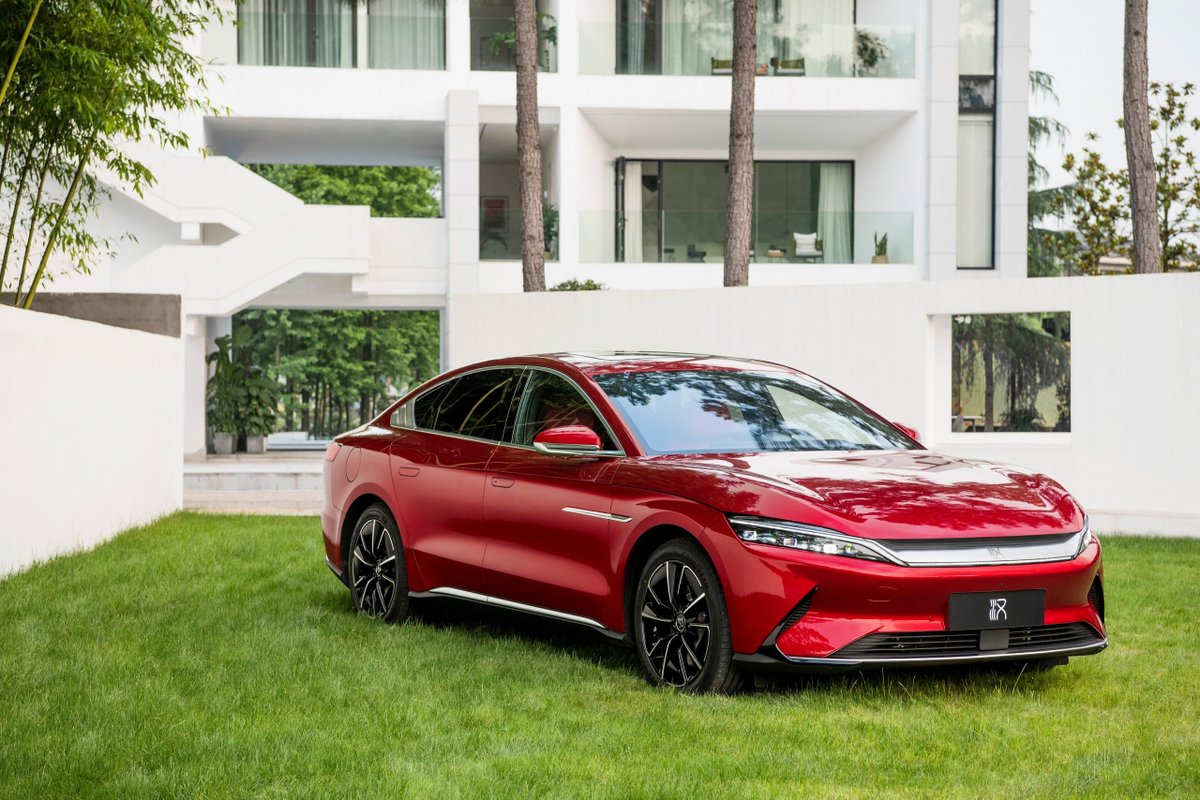
4/ BYD is also benefiting from #NIODay, as investors are excited about NIO ET7 specs, but it is still at least a year out. More investors are discovering BYD & how far ahead it is TODAY. BYD Han in particular already looks similar to NIO ET7...

$BYDDF $BYDDY
5/ ...and you can buy a Han today for only $32k. Lots of investor attention has been brought to BYD Blade battery, as well.

More on BYD here: https://t.co/rbiX4sZtdN

https://t.co/SYLpij5dTe

$BYDDF $BYDDY
6/ Investors are boiling it all down:

BYD is still the only car manufacturer producing its own batteries.

Blade battery is the cheapest & safest battery in the industry.

BYD is profitable, has the most diversified EV line-up, by far, & stock is cheap.

https://t.co/uxSlmQGBRv
7/ @QuantumScapeCo $QS is down -6.9% today, mostly on news of how NIO ET7 will achieve 621mi range: high-density solar-state battery. This is similar to what $QS is working on, but NIO's timeline for a SSB (Q4 2022) is ahead of QS's, which rules QS out as NIO's SSB supplier.
8/ As for the mystery supplier of $NIO's new SSB, it will likely be CATL; however, the market didn't know how to handle CATL stock, which closed -3.6% in China, despite high trading volume.
https://t.co/hIoslU9iim
9/ CATL currently supplies NIO with all of its batteries.

NIO CEO Li Bin said it will "adopt" this technology, but didn't say from whom.

Also, anyone who thinks NIO is making these batteries itself probably also believes Tesla will produce 10GWh of 4680 cells this year...
10/ NIO also debuted its approach to autonomy (Level 3), which will use 1550nm LiDAR from Innovusion, in which NIO's venture arm invested in 2018.

@luminartech's Iris LiDAR has comparable specs, but similar to how $QS is reacting to #NIODay, $LAZR is down -5.5% today.
11/ $NVDA is up 4.6% today partially on #CES2021 GPU news, but also on news NIO ET7 will use 4 @NVIDIADRIVE Orin chips to power NIO's Adam supercomputer for "NIO Autonomous Driving" (NAD). Similar to BaaS, NIO will offer Autonomy-as-a-Service AaaS (I'm coining that) for $105/mo.
TL;DR
$NIO ET7: Ready for tomorrow, not today. The market is confused, as usual.

More from Trading

Many of you have seen the famous Westrum Organizational Typology model, so prominently featured in State of DevOps Research, Accelerate, DevOps Handbook, etc.

This model was created Dr. Ron Westrum, a widely-cited sociologist who studied the impact of culture on safety


Thanks to Dr. @nicolefv, I was able to interview him for an upcoming episode of the Idealcast! 🤯

It was a very heady experience, and while preparing to interview him, I was startled to discover how much work he's done in healthcare, aviation, spaceflight, but also innovation.

I've read 4+ of his papers, so I thought I was familiar with his work. (Here's one paper:
https://t.co/7X00O67VgS)

I was startled to learn he has also studied in depth what enables innovation. He wrote a wonderful book "Sidewinder: Creative Missile Development at China Lake"


Dr. Westrum writes about China Lake Research Labs: "its design and structure had one purpose: to foster technical creativity. It did; China Lake operated far outside the normal envelope... Sidewinder & others were "impossible" accomplishments,

I love this book because it describes traits of organizations that routinely create and maintain greatness: US space program (Mercury, Gemini, Apollo), US Naval Reactors, Toyota, Team of Teams, Tesla, the tech giants (Amazon, Google, Netflix, Google)

You May Also Like

A brief analysis and comparison of the CSS for Twitter's PWA vs Twitter's legacy desktop website. The difference is dramatic and I'll touch on some reasons why.

Legacy site *downloads* ~630 KB CSS per theme and writing direction.

6,769 rules
9,252 selectors
16.7k declarations
3,370 unique declarations
44 media queries
36 unique colors
50 unique background colors
46 unique font sizes
39 unique z-indices

https://t.co/qyl4Bt1i5x


PWA *incrementally generates* ~30 KB CSS that handles all themes and writing directions.

735 rules
740 selectors
757 declarations
730 unique declarations
0 media queries
11 unique colors
32 unique background colors
15 unique font sizes
7 unique z-indices

https://t.co/w7oNG5KUkJ


The legacy site's CSS is what happens when hundreds of people directly write CSS over many years. Specificity wars, redundancy, a house of cards that can't be fixed. The result is extremely inefficient and error-prone styling that punishes users and developers.

The PWA's CSS is generated on-demand by a JS framework that manages styles and outputs "atomic CSS". The framework can enforce strict constraints and perform optimisations, which is why the CSS is so much smaller and safer. Style conflicts and unbounded CSS growth are avoided.