Indian Energy Exchange, like a toll bridge, connects power generators with power consumers & distributors. The alternative to IEX like alternatives to toll bridges is more expensive bilateral agreements.

Fasten your seatbelts as we’ll take you through the 19-20 AR of IEX.

1/

Megatrends for Energy

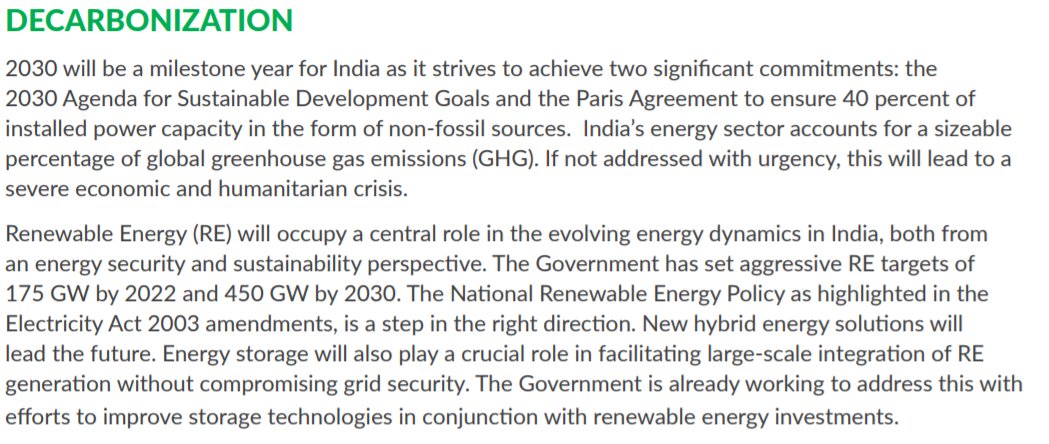
~Decarbonization
~Decentralization
~Digitization
~Democratization
2/
Transformation in the energy sector
~Benchmark prices for all electricity transactions
~Transparent mechanism for price discovery
~High liquidity on exchange to ensure the lowest cost and assured supply
3/
Key points
~Customer Centricity driven by intuitive, secure, & responsive design
~Efficiency through efficient matching algorithms, automation, & low latency
~State-of-the-Art analytics-based solutions that are future-ready.
4/

IGX
~ Launched on 15th June 2020
~ India’s 1st nation-wide automated gas trading platform
~ Govt plans to increase the share of natural gas from 6% to 15% by 2022
~Enabler in making India transition towards a gas-based economy.
5/

Products Offering
~Day Ahead Markets
~Term Ahead Markets
~Real Time Market
~Renewabe Energy Certificates
~Energy Saving Certificates
6/

All Stakeholders
~Ecosystem
~Customers
~Share-ownership
~Active/Registered Participants
7/

IEX : Journey Over The Years
8/

Factors Driving Growth in Consumption
~Core Sector Growth
~Rapid Urbanization
~Growth in Consumer Demand
9/

Govt Initiatives

~Demand Augmentation
~PSM for Generating Companies
~Smart Prepaid Metering to improve Distribution Efficiency
~Deepening of the Market
~REC Addition and Grid Integration through REMCs
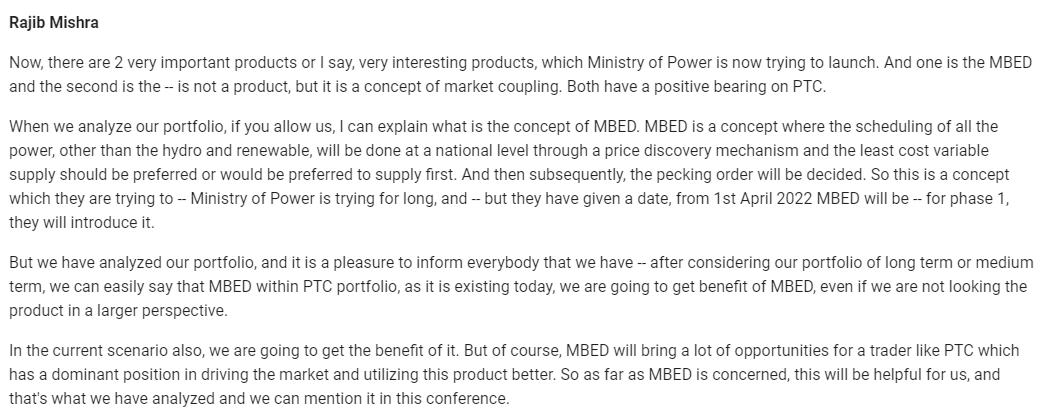
~Cost Optimization through National level Merit Order Dispatch
10/

Core Business Growth by

~DISCOM Maximization
~Open Access Maximization
~New Market Products and Segments
11/

Extensive Risk Management Policy Framework
12/

Financials

~Balance Sheet
~Profit& Loss
~Cash Flow Statement
13/

What Uber did to the highly inefficient passenger taxi market in the world, IEX has the potential to do something similar in the highly inefficient power market in India.

~Liquidity (Available on Demand)
~Cheap Energy Prices
~Network effects to kick in as users increase
14/

To deep dive, check

@Dhruvapandey Posts
~https://t.co/xPKOban4oi
~https://t.co/g9mK5v78LF

You may also check SSS resource on IEX:
5 Min Stock Idea https://t.co/FYBkI8xKdo
Infographic https://t.co/jxFQcz2ihR
Concall Notes: https://t.co/qrB3bRM46d

L&R for wider reach🙂

More from Smart Sync Services

More from Trading

You May Also Like

So the cryptocurrency industry has basically two products, one which is relatively benign and doesn't have product market fit, and one which is malignant and does. The industry has a weird superposition of understanding this fact and (strategically?) not understanding it.


The benign product is sovereign programmable money, which is historically a niche interest of folks with a relatively clustered set of beliefs about the state, the literary merit of Snow Crash, and the utility of gold to the modern economy.

This product has narrow appeal and, accordingly, is worth about as much as everything else on a 486 sitting in someone's basement is worth.

The other product is investment scams, which have approximately the best product market fit of anything produced by humans. In no age, in no country, in no city, at no level of sophistication do people consistently say "Actually I would prefer not to get money for nothing."

This product needs the exchanges like they need oxygen, because the value of it is directly tied to having payment rails to move real currency into the ecosystem and some jurisdictional and regulatory legerdemain to stay one step ahead of the banhammer.
"I really want to break into Product Management"

make products.

"If only someone would tell me how I can get a startup to notice me."

Make Products.

"I guess it's impossible and I'll never break into the industry."

MAKE PRODUCTS.

Courtesy of @edbrisson's wonderful thread on breaking into comics –
https://t.co/TgNblNSCBj – here is why the same applies to Product Management, too.


There is no better way of learning the craft of product, or proving your potential to employers, than just doing it.

You do not need anybody's permission. We don't have diplomas, nor doctorates. We can barely agree on a single standard of what a Product Manager is supposed to do.

But – there is at least one blindingly obvious industry consensus – a Product Manager makes Products.

And they don't need to be kept at the exact right temperature, given endless resource, or carefully protected in order to do this.

They find their own way.