On the first day of class, Professor Bazerman announces a game that seems innocuous enough. Waving a twenty-dollar bill in the air, he offers it up for auction.
How even after knowing everything about your work, a series of emotional judgments can place you in a difficult situation.
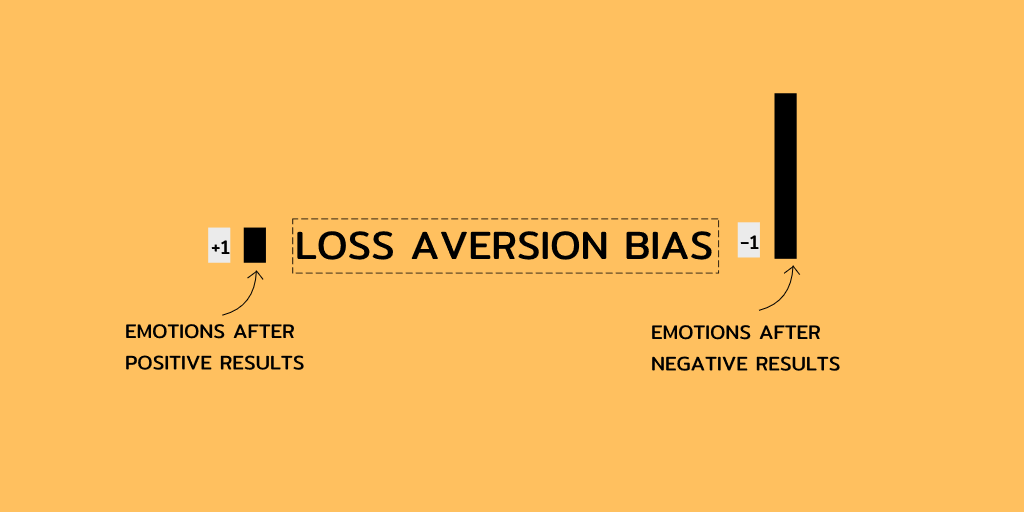
A thread on how loss Aversion causes us to take irrational decisions-
On the first day of class, Professor Bazerman announces a game that seems innocuous enough. Waving a twenty-dollar bill in the air, he offers it up for auction.
The winner of the auction, of course, wins the bill. But the runner-up must still honor his or her bid,
In other words,this is a situation where second best finishes last. Indeed, at the beginning of the auction, as people sniff out an opportunity to get a $20 bill for a bargain, the hands quickly shoot up, and the auction is officially under way
There is a collective hard swallow. As if sensing the floodwaters rising, the students get jittery.
Without realizing it, the two students with the highest bids get locked in. "One bidder has bid $16 and the other has bid $ 17," Bazerman said.
Up to this point the students were looking to make a quick dollar; now neither one wants to be the sucker who paid good money for nothing.
Like a runaway train, the auction continues, with the bidding going up past $ 18, $19, and $20.
"Of course," reflected Bazerman, "the rest of the group roars with laughter when the bidding goes over $20."
But that's easier said than done. Students are pulled by both the momentum of the auction and the looming loss
The two forces, in turn, feed off each other: commitment to a chosen path inspires additional bids, driving the price up, making the potential loss loom even larger.
Over the years that Bazerman has conducted the experiment, he has never lost a penny (he donates all proceeds to charity).
This example was from the book, Sway.
When you Buy something at 100 , it goes to 110 and you didn’t sell, when it comes back to 105 you cant sell,and then you sell it way lower. because you felt again it will go up.
Traders feel loss 2X the emotions we feel when we are in profits.
How to avoid loss aversion bias-
1. Think of long term instead of short term results.
More from Trader knight


More from Trading







12 TRADING SETUPS used by professional traders:🧵
Collaborated with @niki_poojary
Here's what you'll learn in this thread:
1. Capture Overnight Theta Decay
2. Trading Opening Range Breakouts
3. Reversal Trading Setups
4. Selling strangles and straddles in Bank Nifty
6. NR4 + IB
7. NR 21-Vwap Strategy
Let's dive in ↓
1/ STBT option Selling (Positional Setup):
The setup uses price action to sell options for overnight theta decay.
Check Bank Nifty at 3:15 everyday.
Sell directional credit spreads with capped
@jigspatel1988 2/ Selling Strangles in Bank Nifty based on Open Interest Data
Don't trade till 9:45 Am.
Identify the highest OI on puts and calls.
Check combined premium and put a stop on individual
@jigspatel1988 3/ Open Drive (Intraday)
This is an opening range breakout setup with a few conditions.
To be used when the market opens above yesterday's day high
or Below yesterday's day's
Collaborated with @niki_poojary
Here's what you'll learn in this thread:
1. Capture Overnight Theta Decay
2. Trading Opening Range Breakouts
3. Reversal Trading Setups
4. Selling strangles and straddles in Bank Nifty
6. NR4 + IB
7. NR 21-Vwap Strategy
Let's dive in ↓
1/ STBT option Selling (Positional Setup):
The setup uses price action to sell options for overnight theta decay.
Check Bank Nifty at 3:15 everyday.
Sell directional credit spreads with capped
A thread about STBT options selling,
— Jig's Patel (@jigspatel1988) July 17, 2021
The purpose is simple to capture overnight theta decay,
Generally, ppl sell ATM straddle with hedge or sell naked options,
But I am using Today\u2019s price action for selling options in STBT,
(1/n)
@jigspatel1988 2/ Selling Strangles in Bank Nifty based on Open Interest Data
Don't trade till 9:45 Am.
Identify the highest OI on puts and calls.
Check combined premium and put a stop on individual
Thread on
— Jig's Patel (@jigspatel1988) July 4, 2021
"Intraday Banknifty Strangle based on OI data"
(System already shared, today just share few examples)
(1/n)
@jigspatel1988 3/ Open Drive (Intraday)
This is an opening range breakout setup with a few conditions.
To be used when the market opens above yesterday's day high
or Below yesterday's day's
#OpenDrive#intradaySetup
— Pathik (@Pathik_Trader) April 16, 2019
Sharing one high probability trending setup for intraday.
Few conditions needs to be met
1. Opening should be above/below previous day high/low for buy/sell setup.
2. Open=low (for buy)
Open=high (for sell)
(1/n)