1) Top US intelligence expert on China explains how CCP combines spying with political influence operations by targeting "soft targets" like politicians. @neftimiades
"'When you have access to that, why do you need classified information?' @neftimiades said."
More from Society


1/ A thread of comments & observations about the death of the cackling vampire Rush Limbaugh.
My first observations in the main thread are here, but this offshoot is needed because there's been so many wise & witty things I've
2/ First, re: those who in their wayward moral obtuseness feel we "can't speak ill of the dead." I've said that this is what abuse enablers say, but I hear that some religious traditions preach this. Oy.
So there's this: https://t.co/7Ky4RA3nkZ &
3/ Drucker is another great wit, and this carries the proper mood
4/ There's definitely a Jewish Tradition angle for how to treat evil people who die: the only respect is to justice, right & wrong, and above all compassion's existence necessitates condemning cruelty
5/ We're coming up on #Purim, and that's all about how to remember evil. There may be a reason, then, that I share the attitude of many other people committed to righting
My first observations in the main thread are here, but this offshoot is needed because there's been so many wise & witty things I've
37.90/ Limbaugh was a cruel hate-machine who made a fortune off hurting people. To say "don't speak ill of the dead" is the attitude of abuse enablers.
— Joshua Cypess (@JoshuaCypess) February 18, 2021
If you can't condemn a ghoul who dedicated his life to destroying society, you're part of the problem! https://t.co/ijvG2zDACH
2/ First, re: those who in their wayward moral obtuseness feel we "can't speak ill of the dead." I've said that this is what abuse enablers say, but I hear that some religious traditions preach this. Oy.
So there's this: https://t.co/7Ky4RA3nkZ &
This is how Rush's death should be honored. Let's not speak ill of the dead, let's quote Rush speaking ill of the dead.
— Sane English (@SaneEnglish) February 17, 2021
3/ Drucker is another great wit, and this carries the proper mood
It's easy to make fun of Rush Limbaugh right now, but it's important to remember that he also brought a lot of people a lot of joy by dying
— Mike Drucker (@MikeDrucker) February 17, 2021
4/ There's definitely a Jewish Tradition angle for how to treat evil people who die: the only respect is to justice, right & wrong, and above all compassion's existence necessitates condemning cruelty
It\u2019s ok\u2014essential, even\u2014to speak the truth about people who caused great harm.
— Rabbi Danya Ruttenberg (@TheRaDR) February 17, 2021
Even after their death.
5/ We're coming up on #Purim, and that's all about how to remember evil. There may be a reason, then, that I share the attitude of many other people committed to righting
today i said Jewish culture requires dancing on the graves of those who have wronged us and i picked up like 300 followers LMAO
— Erin Biba (@erinbiba) February 18, 2021
people love Jewish vengeance \U0001f923\U0001f923
wait till they hear about Purim

You May Also Like


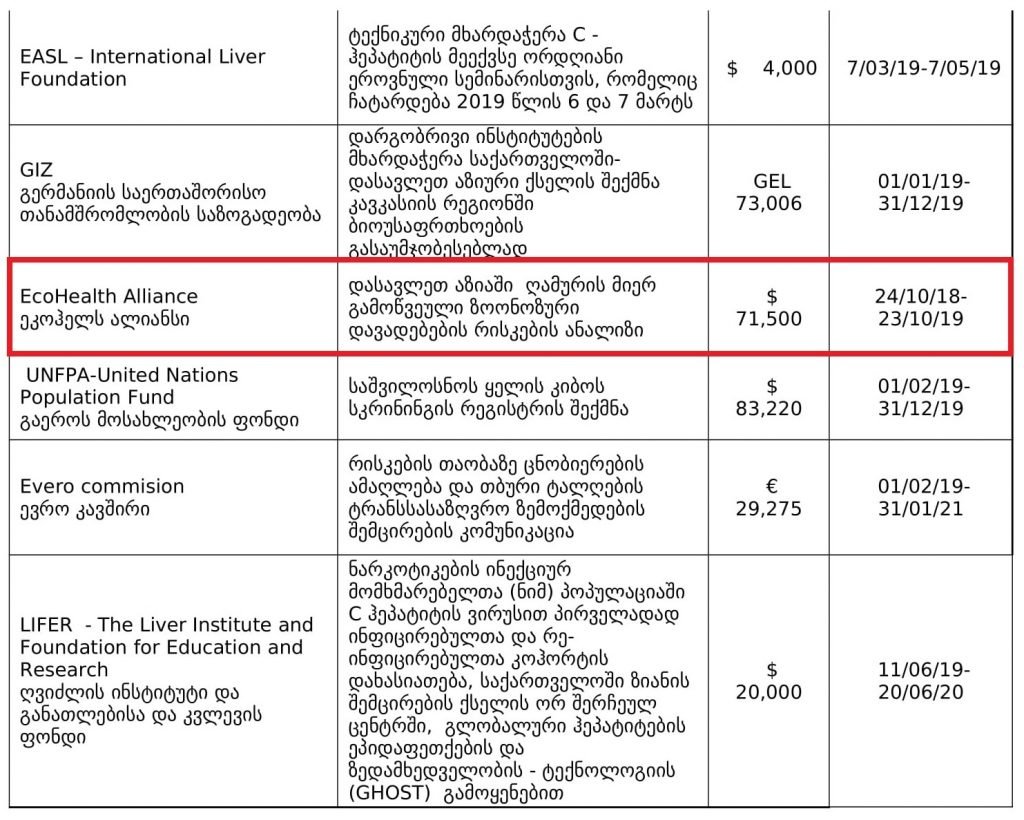
1. Project 1742 (EcoHealth/DTRA)
Risks of bat-borne zoonotic diseases in Western Asia
Duration: 24/10/2018-23 /10/2019
Funding: $71,500
@dgaytandzhieva
https://t.co/680CdD8uug
2. Bat Virus Database
Access to the database is limited only to those scientists participating in our ‘Bats and Coronaviruses’ project
Our intention is to eventually open up this database to the larger scientific community
https://t.co/mPn7b9HM48
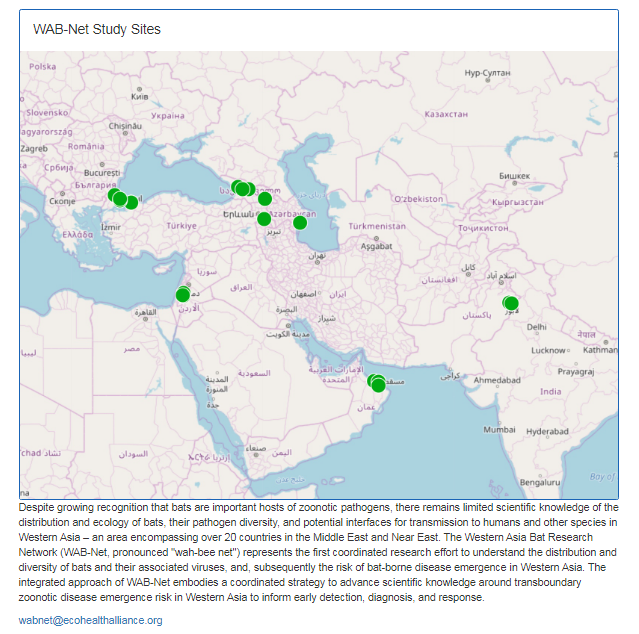
3. EcoHealth Alliance & DTRA Asking for Trouble
One Health research project focused on characterizing bat diversity, bat coronavirus diversity and the risk of bat-borne zoonotic disease emergence in the region.
https://t.co/u6aUeWBGEN
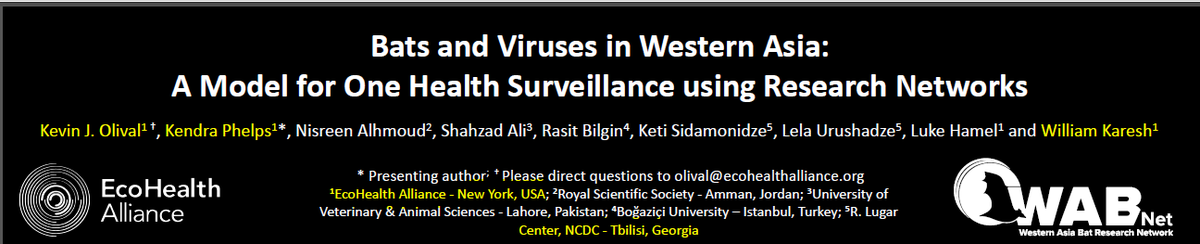
4. Phelps, Olival, Epstein, Karesh - EcoHealth/DTRA
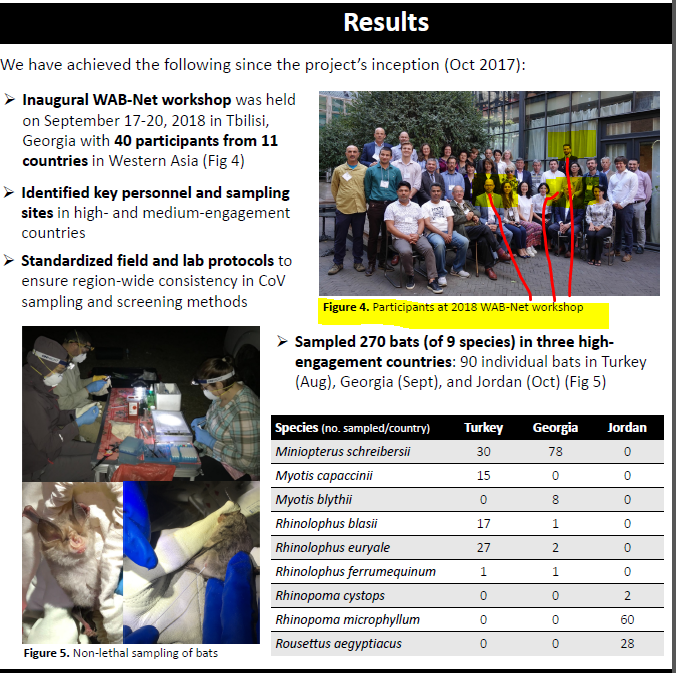
5, Methods and Expected Outcomes
(Unexpected Outcome = New Coronavirus Pandemic)
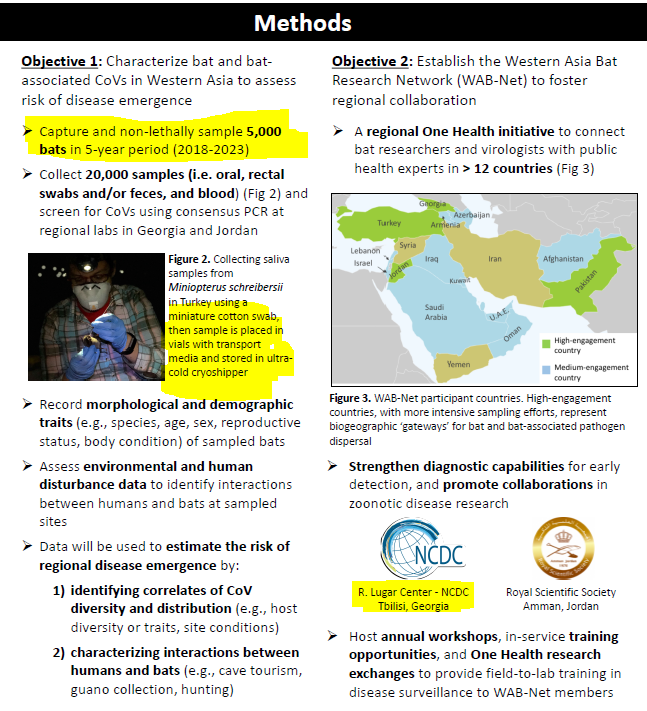
Risks of bat-borne zoonotic diseases in Western Asia
Duration: 24/10/2018-23 /10/2019
Funding: $71,500
@dgaytandzhieva
https://t.co/680CdD8uug
2. Bat Virus Database
Access to the database is limited only to those scientists participating in our ‘Bats and Coronaviruses’ project
Our intention is to eventually open up this database to the larger scientific community
https://t.co/mPn7b9HM48
3. EcoHealth Alliance & DTRA Asking for Trouble
One Health research project focused on characterizing bat diversity, bat coronavirus diversity and the risk of bat-borne zoonotic disease emergence in the region.
https://t.co/u6aUeWBGEN
4. Phelps, Olival, Epstein, Karesh - EcoHealth/DTRA
5, Methods and Expected Outcomes
(Unexpected Outcome = New Coronavirus Pandemic)

First thread of the year because I have time during MCO. As requested, a thread on the gods and spirits of Malay folk religion. Some are indigenous, some are of Indian origin, some have Islamic
Before I begin, it might be worth explaining the Malay conception of the spirit world. At its deepest level, Malay religious belief is animist. All living beings and even certain objects are said to have a soul. Natural phenomena are either controlled by or personified as spirits
Although these beings had to be respected, not all of them were powerful enough to be considered gods. Offerings would be made to the spirits that had greater influence on human life. Spells and incantations would invoke their
Two known examples of such elemental spirits that had god-like status are Raja Angin (king of the wind) and Mambang Tali Arus (spirit of river currents). There were undoubtedly many more which have been lost to time
Contact with ancient India brought the influence of Hinduism and Buddhism to SEA. What we now call Hinduism similarly developed in India out of native animism and the more formal Vedic tradition. This can be seen in the multitude of sacred animals and location-specific Hindu gods
i wonder if you can make a thread bout witchcraft in malaysia.. or list of our own local gods/deites..
— r a y a \U0001f319 (@lcvelylilith) February 20, 2020
Before I begin, it might be worth explaining the Malay conception of the spirit world. At its deepest level, Malay religious belief is animist. All living beings and even certain objects are said to have a soul. Natural phenomena are either controlled by or personified as spirits
Although these beings had to be respected, not all of them were powerful enough to be considered gods. Offerings would be made to the spirits that had greater influence on human life. Spells and incantations would invoke their
Animist ceremonies of a religious or magical nature were normally held for the purpose of divination or making a request. This would either be done at a keramat or at a shrine similar to the Thai spirit houses or Chinese roadside shrines pic.twitter.com/I1hliyi0x3
— \u2745\u1710\u170b\u1713\u170e (@uglyluhan) June 16, 2019
Two known examples of such elemental spirits that had god-like status are Raja Angin (king of the wind) and Mambang Tali Arus (spirit of river currents). There were undoubtedly many more which have been lost to time
Contact with ancient India brought the influence of Hinduism and Buddhism to SEA. What we now call Hinduism similarly developed in India out of native animism and the more formal Vedic tradition. This can be seen in the multitude of sacred animals and location-specific Hindu gods