
What are the classics of the "Science of Science" or "Meta Science"? If you were teaching a class on the subject, what would go in the syllabus?
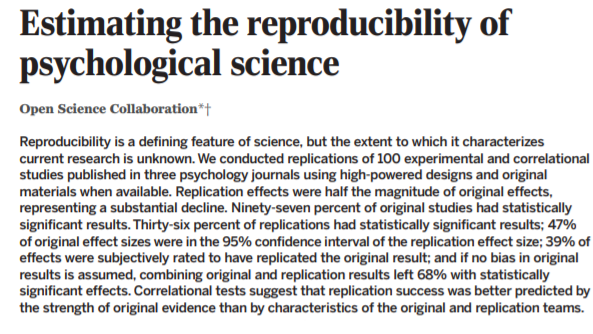
psychological science" from the Open Science Collaboration of @BrianNosek et al. https://t.co/yjGczLZ6Je
(Look at that abstract, wow!)
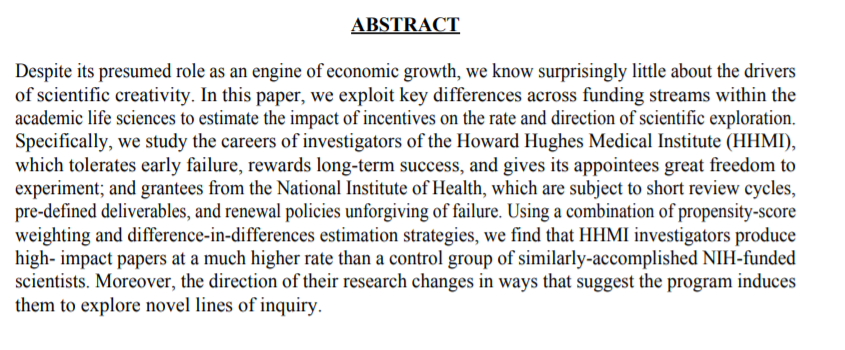
https://t.co/xduj2A8c8q
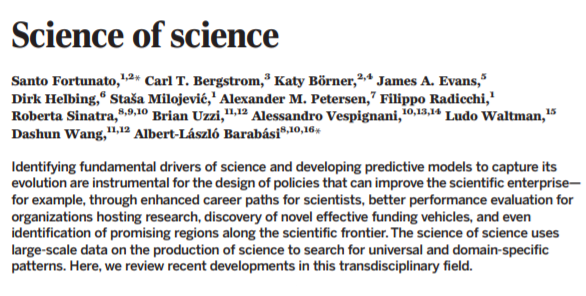
A few observations from "The Science of Science", a useful review article appearing in this week's Science: https://t.co/D6DENKF4rS
— Michael Nielsen (@michael_nielsen) March 9, 2018
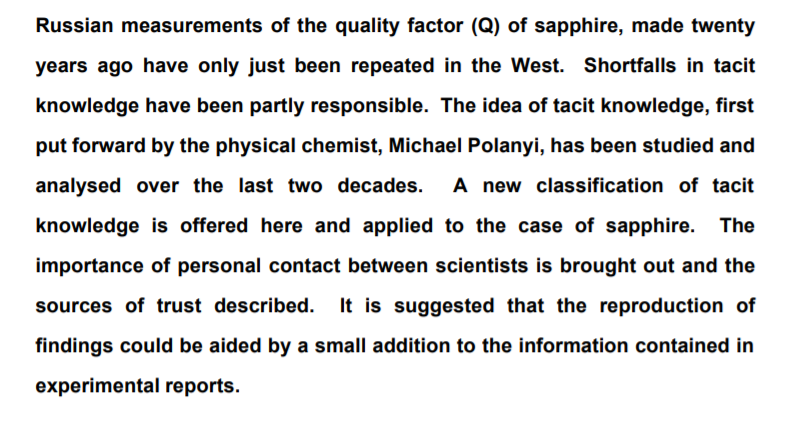
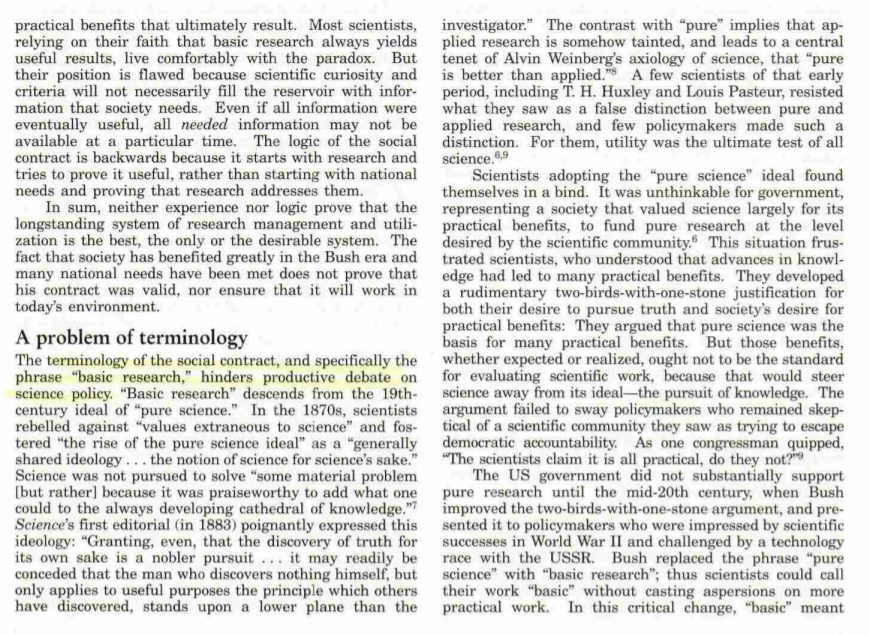
The book has been in my queue for some time, and is almost certainly a good overview of a huge chunk of economic thinking about science.
Great thread. I\u2019d add Paula Stephan\u2019s book: https://t.co/QdIPBchdym
— David Lang (@davidtlang) January 14, 2021
Twitter threading makes it a little hard to skim the thread. Expandable tree version here, thanks to @paulgb's great treeverse Chrome extension: https://t.co/vF4JF0Gf4J
More from Science


Localized Surface Plasmon Resonance - an overview | ScienceDirect Topics
https://t.co/mzS7vVSREJ
https://t.co/353PdAX2fa
https://t.co/3yBImjOdd4
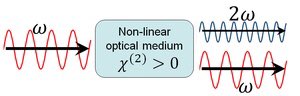
In some cases, almost 100% of the light energy can be converted to the second harmonic frequency. These cases typically involve intense pulsed laser beams passing through large crystals, and careful alignment to obtain phase matching.
https://t.co/mzS7vVSREJ
https://t.co/353PdAX2fa
https://t.co/3yBImjOdd4
In some cases, almost 100% of the light energy can be converted to the second harmonic frequency. These cases typically involve intense pulsed laser beams passing through large crystals, and careful alignment to obtain phase matching.

https://t.co/a6yrWK5dqg

https://t.co/Xe5xFdtDfO

https://t.co/e3RBxj0ly3
https://t.co/cJlCMqyP2v
https://t.co/5n5TK67iKB

https://t.co/Xe5xFdtDfO
https://t.co/e3RBxj0ly3
1. Monkey Outrage!
— Billy Bostickson \U0001f3f4\U0001f441&\U0001f441 \U0001f193 (@BillyBostickson) August 17, 2020
The worst treatment was kept for the monkeys. The macaques breed of monkeys are small, relatively light primates, which are often used for animal experiments at LPT. \u2018They are kept in cramped conditions in small cages. https://t.co/6D0yisjd9B
https://t.co/cJlCMqyP2v
11. Max Planck Monkey Photos (2) pic.twitter.com/0yE9D6iswp
— Billy Bostickson \U0001f3f4\U0001f441&\U0001f441 \U0001f193 (@BillyBostickson) August 17, 2020
https://t.co/5n5TK67iKB
You May Also Like











Recently, the @CNIL issued a decision regarding the GDPR compliance of an unknown French adtech company named "Vectaury". It may seem like small fry, but the decision has potential wide-ranging impacts for Google, the IAB framework, and today's adtech. It's thread time! 👇
It's all in French, but if you're up for it you can read:
• Their blog post (lacks the most interesting details): https://t.co/PHkDcOT1hy
• Their high-level legal decision: https://t.co/hwpiEvjodt
• The full notification: https://t.co/QQB7rfynha
I've read it so you needn't!
Vectaury was collecting geolocation data in order to create profiles (eg. people who often go to this or that type of shop) so as to power ad targeting. They operate through embedded SDKs and ad bidding, making them invisible to users.
The @CNIL notes that profiling based off of geolocation presents particular risks since it reveals people's movements and habits. As risky, the processing requires consent — this will be the heart of their assessment.
Interesting point: they justify the decision in part because of how many people COULD be targeted in this way (rather than how many have — though they note that too). Because it's on a phone, and many have phones, it is considered large-scale processing no matter what.
It's all in French, but if you're up for it you can read:
• Their blog post (lacks the most interesting details): https://t.co/PHkDcOT1hy
• Their high-level legal decision: https://t.co/hwpiEvjodt
• The full notification: https://t.co/QQB7rfynha
I've read it so you needn't!
Vectaury was collecting geolocation data in order to create profiles (eg. people who often go to this or that type of shop) so as to power ad targeting. They operate through embedded SDKs and ad bidding, making them invisible to users.
The @CNIL notes that profiling based off of geolocation presents particular risks since it reveals people's movements and habits. As risky, the processing requires consent — this will be the heart of their assessment.
Interesting point: they justify the decision in part because of how many people COULD be targeted in this way (rather than how many have — though they note that too). Because it's on a phone, and many have phones, it is considered large-scale processing no matter what.