#SAIL Directionally it is headed to 140/150 levels next over short period of time. SL - todays low

More from Dare2Dream

#Indiamart Update : The correction in the stock could be over. Stock holding good supports. Watch for upside momentum as #Unlock plays out. My SL here would be 6650 levels#Dare2Drm pic.twitter.com/JLwujVPcl0
— Dare2Dream (@Dare2Dr10109801) June 13, 2021
#Metals
#Sail Hourly Chart. We could see sellers run for cover above 126. Levels of 120 could be my stop on this one. #Metals pic.twitter.com/2CNvUZbhNY
— Dare2Dream (@Dare2Dr10109801) June 10, 2021
#NMDC the stock is at supports. A clean break out above 160, this could do well. My stops on this one could be 148, if the break out get triggered#Dare2DRM #Watchlist pic.twitter.com/pGG7qj5IhP
— Dare2Dream (@Dare2Dr10109801) May 1, 2021
#Dare2Drm
Will post charts of next potential movers tomorrow. Interested.#Dare2Drm
— Dare2Dream (@Dare2Dr10109801) July 9, 2021
#HindCopper Stock is coming out of a big consolidation. A move above 147, stock could be headed to 165 (next resistance). If #BseMetals index breaks out, i am expecting levels of 196 again and if that gets taken out, levels of 220. lets see - one step at a time
#Dare2Drm

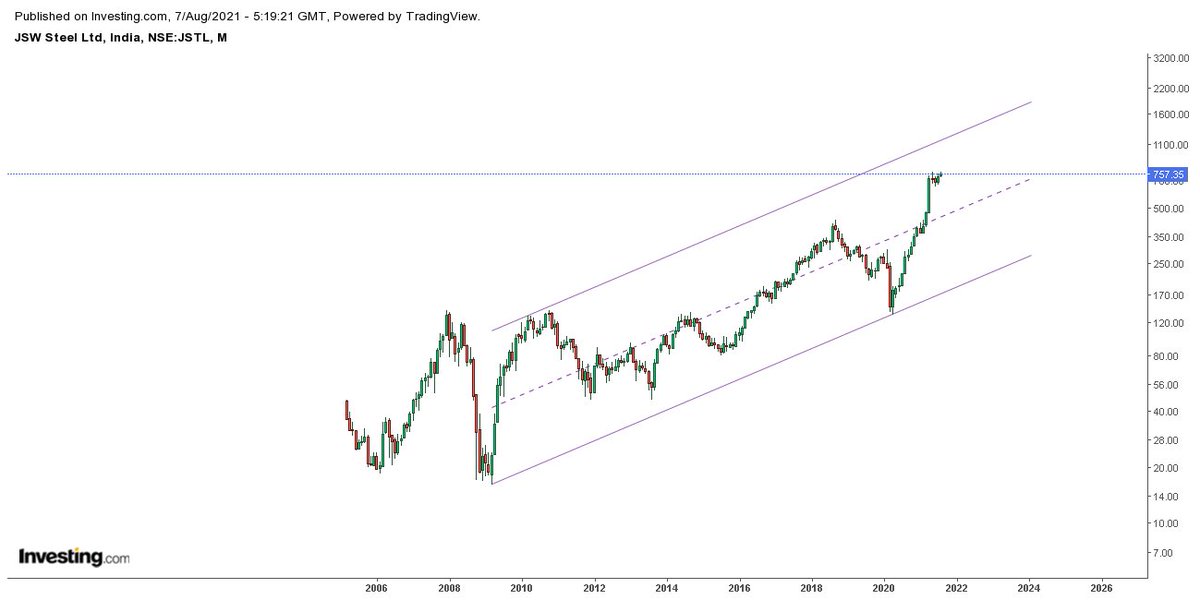
More from Sail

Views are for educational purpose.
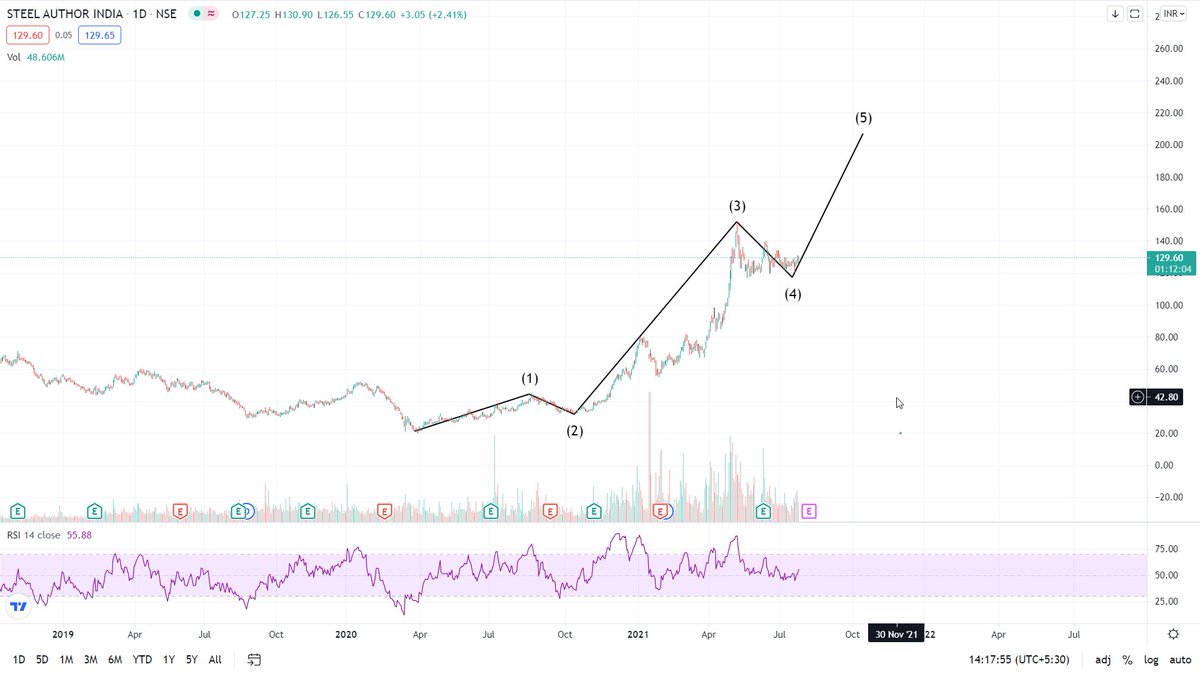
Riding from levels of 47 (Refer old tweet, tagged)
Impulse wave cycle + subs, completed and now waves adjusted.
This major wave 5 will only unfold, once it gives a closing above 153 levels on a weekly basis.
Pic 1 is for investors https://t.co/d4xtiRI45j
— Vipul Kankaria (@cobbervipul) May 1, 2021
Another condition (refer 2nd image) is formation of a pennant (giving a sneak peak for a BO, closing awaited).
This is for short term / positional players
OI data is skewed because of expiry & will be misleading currently.
DYOR for opportunities


You May Also Like


He's STILL in charge of the Mueller investigation.
He's STILL refusing to hand over the McCabe memos.
He's STILL holding up the declassification of the #SpyGate documents & their release to the public.
I love a good cover story.......
The guy had a face-to-face with El Grande Trumpo himself on Air Force One just 2 days ago. Inside just about the most secure SCIF in the world.
And Trump came out of AF1 and gave ol' Rod a big thumbs up!
And so we're right back to 'that dirty rat Rosenstein!' 2 days later.
At this point it's clear some members of Congress are either in on this and helping the cover story or they haven't got a clue and are out in the cold.
Note the conflicting stories about 'Rosenstein cancelled meeting with Congress on Oct 11!"
First, rumors surfaced of a scheduled meeting on Oct. 11 between Rosenstein & members of Congress, and Rosenstein just cancelled it.
Rep. Andy Biggs and Rep. Matt Gaetz say DAG Rod Rosenstein cancelled an Oct. 11 appearance before the judiciary and oversight committees. They are now calling for a subpoena. pic.twitter.com/TknVHKjXtd
— Ivan Pentchoukov \U0001f1fa\U0001f1f8 (@IvanPentchoukov) October 10, 2018