Pattinatar part 2
Chendanar his clerk
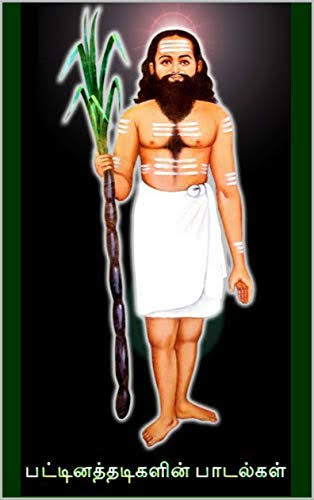
pattinathar went to Kashi Himalaya and many pilgrimage as when he returned he saw his clerk chendanar harassed by king and jailed. King wants to cease pattinatar property and add them to his treasury. pattinathar argued and released him.
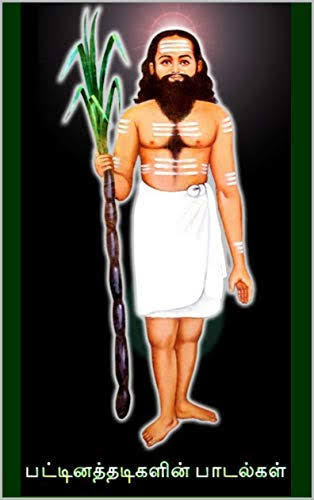
Divine voice Said about chendanar life incident all amazed
He retrieved dead boy to life in temple.during his mother's last moment he came and he cremated her. One dog became friend with bhadragiri when pattinathar ask the food he told to ask food from samsari indicating bhadragiri attachment with dog.
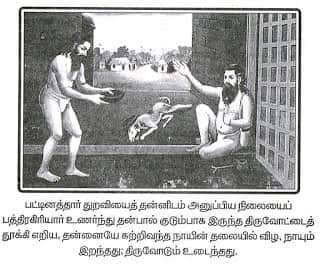
bhadragiri realized this and thrown bowl at dog and dog died and she became princess of kashi .she grew up and came to bhadragiri with her father.s he told her past life to Bhadragiri.he taken her to his Guru.she wanted mukti so pattinatar sang song
shiva gave sugarcane and said
When it becomes sweet that's place of your mukti.Pattinathar went tiruvannamalai he got darshan of Shiva then he went to to kanchipuram and sang many songs on ekambareshwar then he came to thiruvottiyur.
He came mysteriously from another side when basket still closed.This way he played with them .He turned sand to candy .all children amused .

https://t.co/fX95MtX6QG
Pattinathar
— bhargava (@bhargava_06) December 28, 2020
wealthy man who turn into Mystic.
During Chola Empire there was a city called kaveripoompattinam. There rich merchant lived and his name was sivanesan and his wife name was nyaya kalai. With Shiva blessing child was born to them and child was named thiruvenkadar pic.twitter.com/9lqNRU2XjI
More from Religion

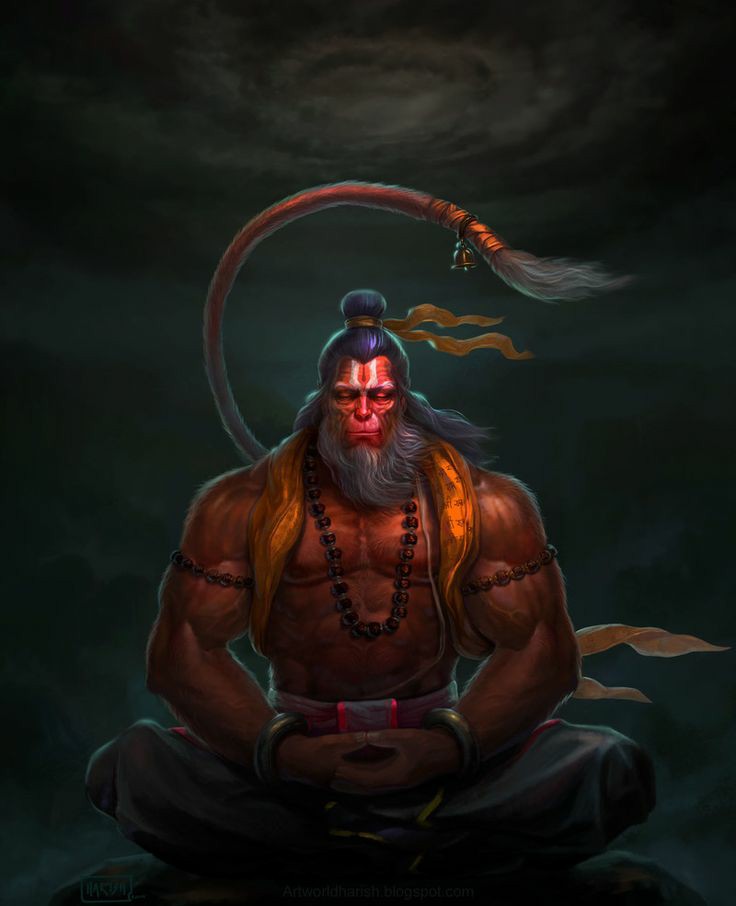


#Bookmark this
The full story of || Dhruv ||
We’ll see How Dhruv occupied a fixed position in the northern sky?
I repeat “Untold Unsung now Unearthed”
Go through entire thread carefully.
OM NAMO BHAGWATE VAASUDEVAAY
RT & spread the knowledge.
Any questions use #AskPratz
.... continuing from previous thread/story
O prince! Thus concentrate on that omnipotent eternal Lord with the mantra - ‘OM NAMO BHAGWATE VAASUDEVAAY’ .
https://t.co/H62ehDT3ix
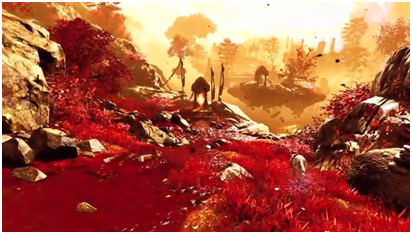
The prince Dhruv greeted the sages and continued on his journey. At last, he reached a beautiful forest Madhuvan on the bank of the river Yamuna. It was the same forest, which was later occupied by a demon Madhu.
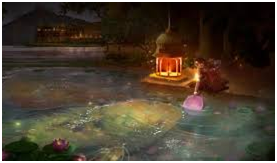
Shatrughana, the youngest brother of Sri Rama had killed demon Lavan, son of Madhu in the same forest & founded the township of Mathura. In the same forest, prince Dhruv decided to carry out his penance. As per the dictate of the sages, he began to recite the mantra continuously
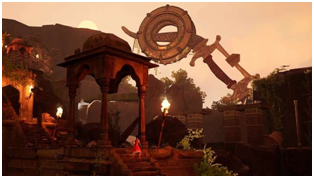
Very soon, the earth began to move because of Dhruv’s severe penance. Even the seat of Indra could not remain stable. A stampede resulted among the gods. The gods then hatched a conspiracy to disturb the penance.
The full story of || Dhruv ||
We’ll see How Dhruv occupied a fixed position in the northern sky?
I repeat “Untold Unsung now Unearthed”
Go through entire thread carefully.
OM NAMO BHAGWATE VAASUDEVAAY
RT & spread the knowledge.
Any questions use #AskPratz
.... continuing from previous thread/story
O prince! Thus concentrate on that omnipotent eternal Lord with the mantra - ‘OM NAMO BHAGWATE VAASUDEVAAY’ .
https://t.co/H62ehDT3ix
So you too go and recite the same mantra in order to please Lord Vishnu.
— Prateechi \U0001f6eb\u2708\ufe0f\U0001f6e9\ufe0f (@BahuRaani) February 6, 2021
\u2026To be continued
It\u2019s a beautiful long story. Read it to your loved ones.
(Next Weekly Thread)
We\u2019ll see How Dhruv occupied a fixed position in the northern sky?
Stay Tuned
Jai Maa
_/\\_ pic.twitter.com/7TxdNsoZes
The prince Dhruv greeted the sages and continued on his journey. At last, he reached a beautiful forest Madhuvan on the bank of the river Yamuna. It was the same forest, which was later occupied by a demon Madhu.
Shatrughana, the youngest brother of Sri Rama had killed demon Lavan, son of Madhu in the same forest & founded the township of Mathura. In the same forest, prince Dhruv decided to carry out his penance. As per the dictate of the sages, he began to recite the mantra continuously
Very soon, the earth began to move because of Dhruv’s severe penance. Even the seat of Indra could not remain stable. A stampede resulted among the gods. The gods then hatched a conspiracy to disturb the penance.