1. God should not possess faculties. Faculties imply other, alike to how sight implies there is light for it to see. Any faculty possessed by God must be perfected, and so the perfect faculty must actualise its perfect end.
SHORT THREAD CRITIQUE OF ST. THOMAS AQUINAS | SUMMA THEOLOGIAE | AGAINST LOVE & WILL IN GOD
--------
Article 1. Whether love exists in God?
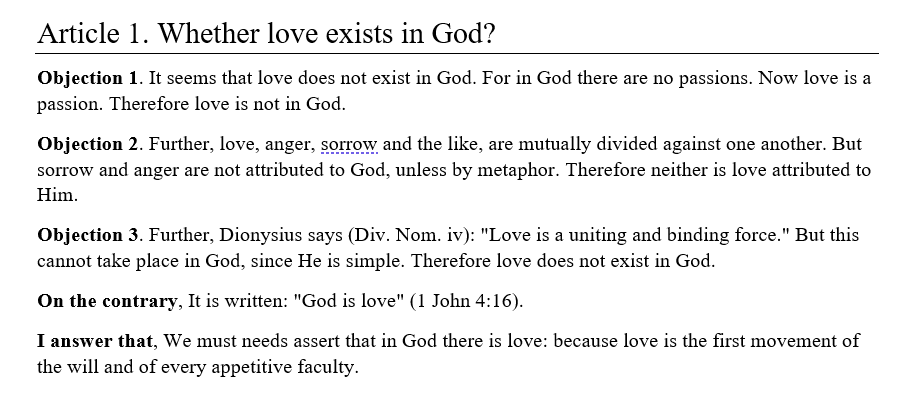
1. God should not possess faculties. Faculties imply other, alike to how sight implies there is light for it to see. Any faculty possessed by God must be perfected, and so the perfect faculty must actualise its perfect end.
1.We read “the acts of the will tend towards good and evil”, and that “good is essentially and especially the object of the will and the appetite”, evil being “only the object secondarily and indirectly”.
More from Religion
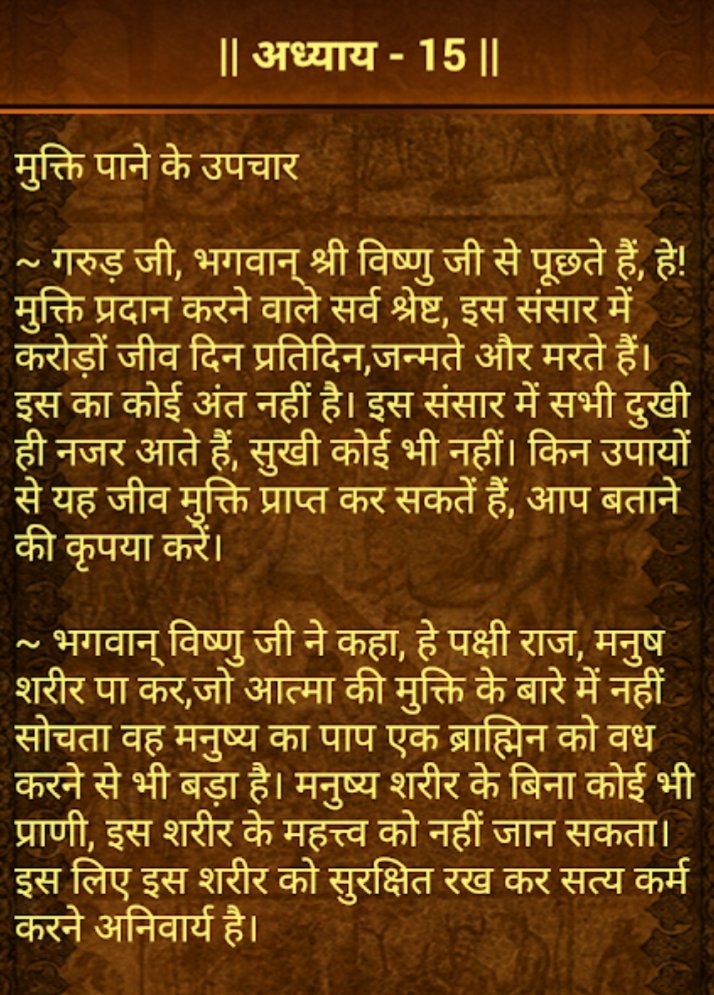
A TINY THREAD ON NON-ACCEPTANCE OF ATHEISTS IN SOME HINDU HOLY BOOKS.
Many RW Hindus with confused identity think that Hinduism accepts Atheists.
What do some of the Hindu sacred texts say on this topic? Let's see.
Shri Krishna was 100% clear on importance of Shaastras as we already know.
Shri Rama was also clear on what should be done to atheists.
Ayodhya Kanda of Valmiki Ramayana.
https://t.co/lbCkEkPobA
Maharaaj Manu on Atheists.
Bhagvan Ved Vyas Ji in Shanti Parva of Mahabharata said this to his son Shukadeva regarding Atheists.
Many RW Hindus with confused identity think that Hinduism accepts Atheists.
What do some of the Hindu sacred texts say on this topic? Let's see.
Shri Krishna was 100% clear on importance of Shaastras as we already know.
Shri Rama was also clear on what should be done to atheists.
Ayodhya Kanda of Valmiki Ramayana.
https://t.co/lbCkEkPobA
Maharaaj Manu on Atheists.
Bhagvan Ved Vyas Ji in Shanti Parva of Mahabharata said this to his son Shukadeva regarding Atheists.
First thread of the year because I have time during MCO. As requested, a thread on the gods and spirits of Malay folk religion. Some are indigenous, some are of Indian origin, some have Islamic
Before I begin, it might be worth explaining the Malay conception of the spirit world. At its deepest level, Malay religious belief is animist. All living beings and even certain objects are said to have a soul. Natural phenomena are either controlled by or personified as spirits
Although these beings had to be respected, not all of them were powerful enough to be considered gods. Offerings would be made to the spirits that had greater influence on human life. Spells and incantations would invoke their
Two known examples of such elemental spirits that had god-like status are Raja Angin (king of the wind) and Mambang Tali Arus (spirit of river currents). There were undoubtedly many more which have been lost to time
Contact with ancient India brought the influence of Hinduism and Buddhism to SEA. What we now call Hinduism similarly developed in India out of native animism and the more formal Vedic tradition. This can be seen in the multitude of sacred animals and location-specific Hindu gods
i wonder if you can make a thread bout witchcraft in malaysia.. or list of our own local gods/deites..
— r a y a \U0001f319 (@lcvelylilith) February 20, 2020
Before I begin, it might be worth explaining the Malay conception of the spirit world. At its deepest level, Malay religious belief is animist. All living beings and even certain objects are said to have a soul. Natural phenomena are either controlled by or personified as spirits
Although these beings had to be respected, not all of them were powerful enough to be considered gods. Offerings would be made to the spirits that had greater influence on human life. Spells and incantations would invoke their
Animist ceremonies of a religious or magical nature were normally held for the purpose of divination or making a request. This would either be done at a keramat or at a shrine similar to the Thai spirit houses or Chinese roadside shrines pic.twitter.com/I1hliyi0x3
— \u2745\u1710\u170b\u1713\u170e (@uglyluhan) June 16, 2019
Two known examples of such elemental spirits that had god-like status are Raja Angin (king of the wind) and Mambang Tali Arus (spirit of river currents). There were undoubtedly many more which have been lost to time
Contact with ancient India brought the influence of Hinduism and Buddhism to SEA. What we now call Hinduism similarly developed in India out of native animism and the more formal Vedic tradition. This can be seen in the multitude of sacred animals and location-specific Hindu gods
"Hinduism was one of the world's most easy-going faith traditions, famed for it's non-persecutory history."
I can assure you, it is NOT.
It is neither easy-going, nor non-persecutory. In fact it is the very opposite.
Thread.
Modern Hinduism is a British colonial concept, created in concert with Brahmins, who are at the "apex" of the caste system. The word "Hindoo" in fact, is of Persian origin, meaning a person who lives in the Indus valley.
Colonialists who attempted to study Indian religion in the 18th century (NOT, at the time, Hinduism) were baffled by it. Strata of people living distinctly (the caste system) with overlapping gods didn't fit into their Judeo-Christian understanding of religion.
Which has an ecclesiastical authority, a holy book etc., which Indian religions lacked. In studying "The Hindoo", colonialists prioritized textual sources of knowledge, which is where Brahmins, the priestly caste with a monopoly over education/text come in.
Brahminism was a distinct "religion" (although i don't really want to use the term in this way) that was frankly terrorized of other castes. In fact, the very basis of Brahminism is oppression. Brahmins had scholars who recorded *Brahminical* canon textually.
I can assure you, it is NOT.
It is neither easy-going, nor non-persecutory. In fact it is the very opposite.
Thread.
Hinduism was historically one of the world's most easy-going faith traditions, famed for its non-persecutory history. Now this ... pic.twitter.com/Obln4cns7b
— David Frum (@davidfrum) February 3, 2021
Modern Hinduism is a British colonial concept, created in concert with Brahmins, who are at the "apex" of the caste system. The word "Hindoo" in fact, is of Persian origin, meaning a person who lives in the Indus valley.
Colonialists who attempted to study Indian religion in the 18th century (NOT, at the time, Hinduism) were baffled by it. Strata of people living distinctly (the caste system) with overlapping gods didn't fit into their Judeo-Christian understanding of religion.
Which has an ecclesiastical authority, a holy book etc., which Indian religions lacked. In studying "The Hindoo", colonialists prioritized textual sources of knowledge, which is where Brahmins, the priestly caste with a monopoly over education/text come in.
Brahminism was a distinct "religion" (although i don't really want to use the term in this way) that was frankly terrorized of other castes. In fact, the very basis of Brahminism is oppression. Brahmins had scholars who recorded *Brahminical* canon textually.