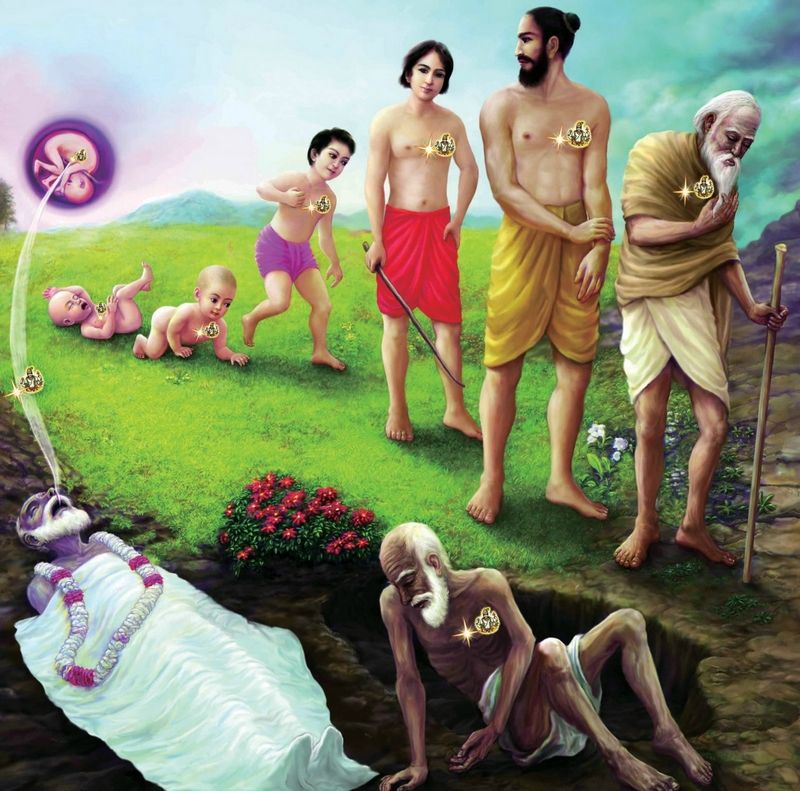
Biggest Regrets: Lessons from a 100 Years Old

~ Thread ~

1. You will regret not choosing your life partner carefully

Take the time to get to know someone before committing.

Make sure the person is the right one.
2. You will regret not spending time with loved ones

You feel more stressed,

When you don't spend enough with people you love.

Don't pursue professional life at cost of personal life.
3. You will regret not traveling enough

Travel when you’re able to.

It opens new perspectives of life for you.
4. You will regret settling in a condition you hate

Our human lives are very finite.

It's not so cheap to spend somewhere you hate.
5. You will regret worrying about what others think about you

What other people think of you is none of your business.

It's about their mindset, not about you.
6. You will regret not paying yourself first

You may spend most of your money on materialistic things,

But how much do you spend on yourself?

Ask this question continuously to yourself.
7. You will regret deteriorating your health

You will never be proud of:
- Not working out
- Being a regular smoker
- Being a crap eater

Change your habits before it's too late.
Thanks for reading.

If you have learned something from it, Retweet the first tweet to help others.

https://t.co/ZonMI5Tn8t

More from Wealthy Brains

More from Life

It doesn't happen because you want it to happen.

It doesn't happen because you made it happen.

It happens because you allow it to happen.

https://t.co/j5hPyw9m9m
1/ Some initial thoughts on personal moats:

Like company moats, your personal moat should be a competitive advantage that is not only durable—it should also compound over time.

Characteristics of a personal moat below:


2/ Like a company moat, you want to build career capital while you sleep.

As Andrew Chen noted:


3/ You don’t want to build a competitive advantage that is fleeting or that will get commoditized

Things that might get commoditized over time (some longer than


4/ Before the arrival of recorded music, what used to be scarce was the actual music itself — required an in-person artist.

After recorded music, the music itself became abundant and what became scarce was curation, distribution, and self space.

5/ Similarly, in careers, what used to be (more) scarce were things like ideas, money, and exclusive relationships.

In the internet economy, what has become scarce are things like specific knowledge, rare & valuable skills, and great reputations.

You May Also Like

"I lied about my basic beliefs in order to keep a prestigious job. Now that it will be zero-cost to me, I have a few things to say."


We know that elite institutions like the one Flier was in (partial) charge of rely on irrelevant status markers like private school education, whiteness, legacy, and ability to charm an old white guy at an interview.

Harvard's discriminatory policies are becoming increasingly well known, across the political spectrum (see, e.g., the recent lawsuit on discrimination against East Asian applications.)

It's refreshing to hear a senior administrator admits to personally opposing policies that attempt to remedy these basic flaws. These are flaws that harm his institution's ability to do cutting-edge research and to serve the public.

Harvard is being eclipsed by institutions that have different ideas about how to run a 21st Century institution. Stanford, for one; the UC system; the "public Ivys".