CONTD:
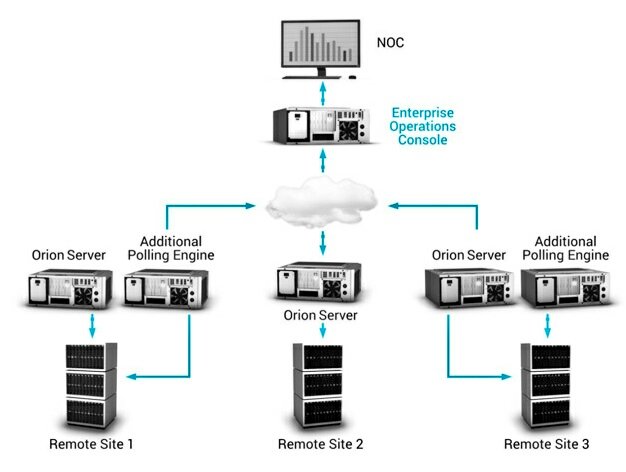
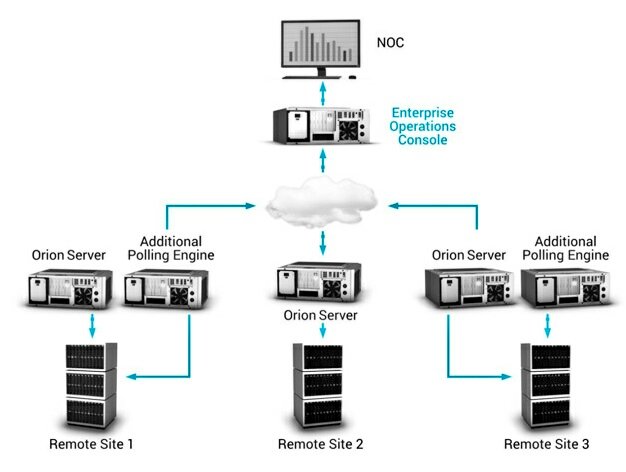
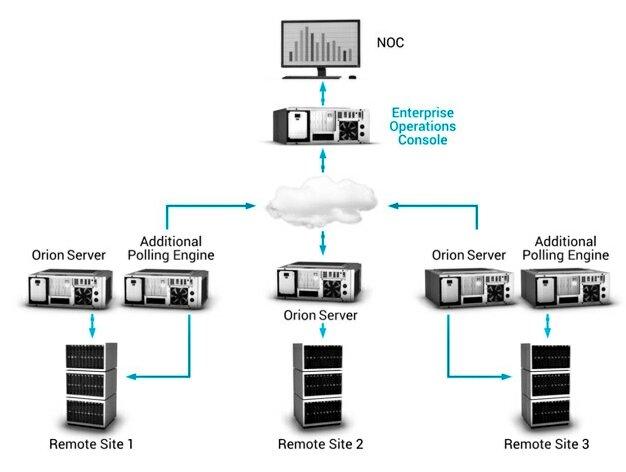
@CISAgov is responding to an exploit of Federally operated
@solarwinds Orion products by malicious actors. They Issued an Emergency Directive to federal civilian agencies to review networks & DISCONNECT OR POWER DOWN ALL SOLARWINDS ORION PRODUCTS NOW!
CONTD:
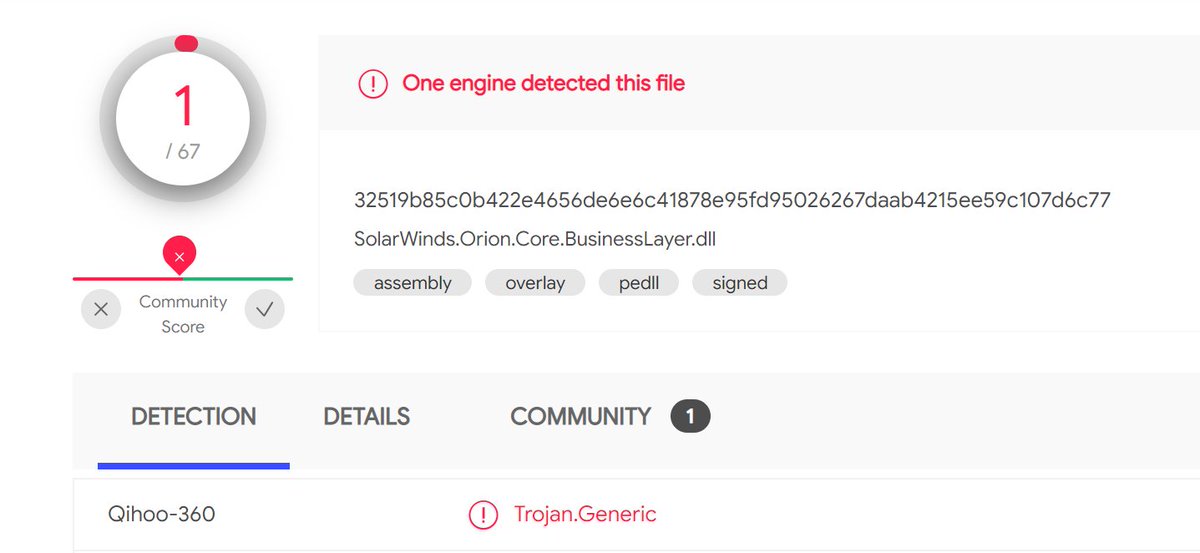
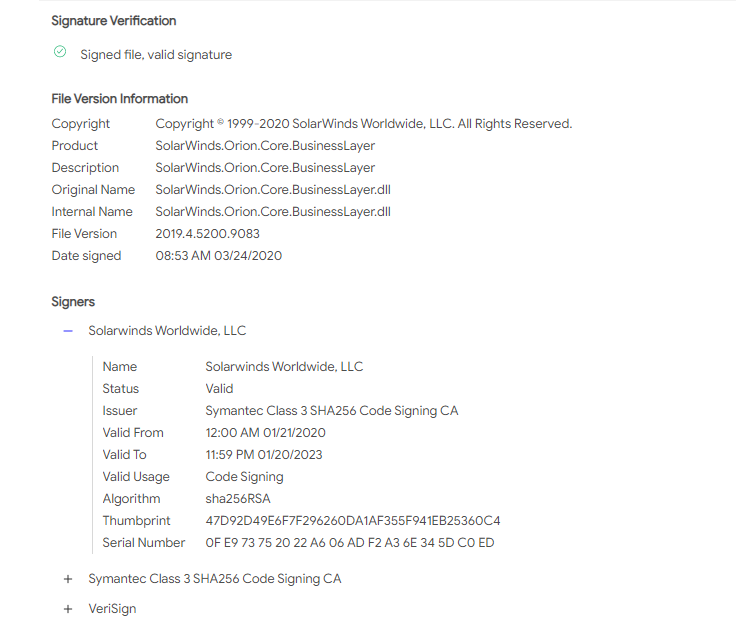
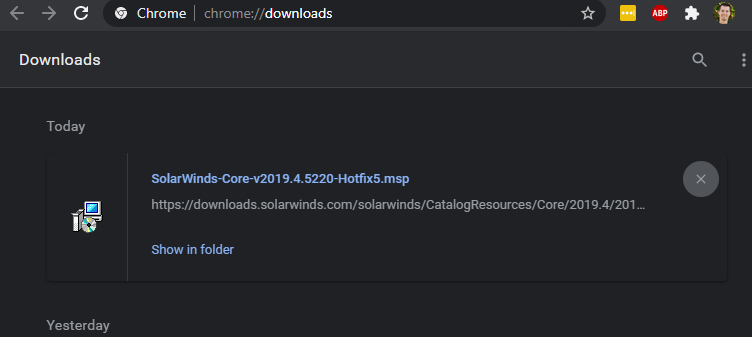
@FireEye discovered an attack trojanizing
@solarwinds Orion biz software distributing malware named #SUNBURST.
The attacker’s use multiple techniques to evade detection/obscure activity. The campaign is widespread affecting public & private organizations around the world.
CONTD: The trojan version of a
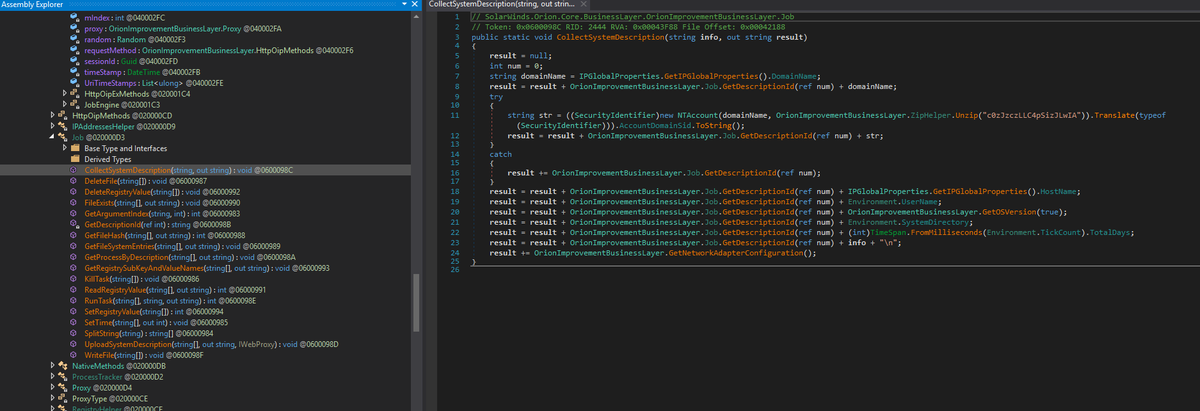
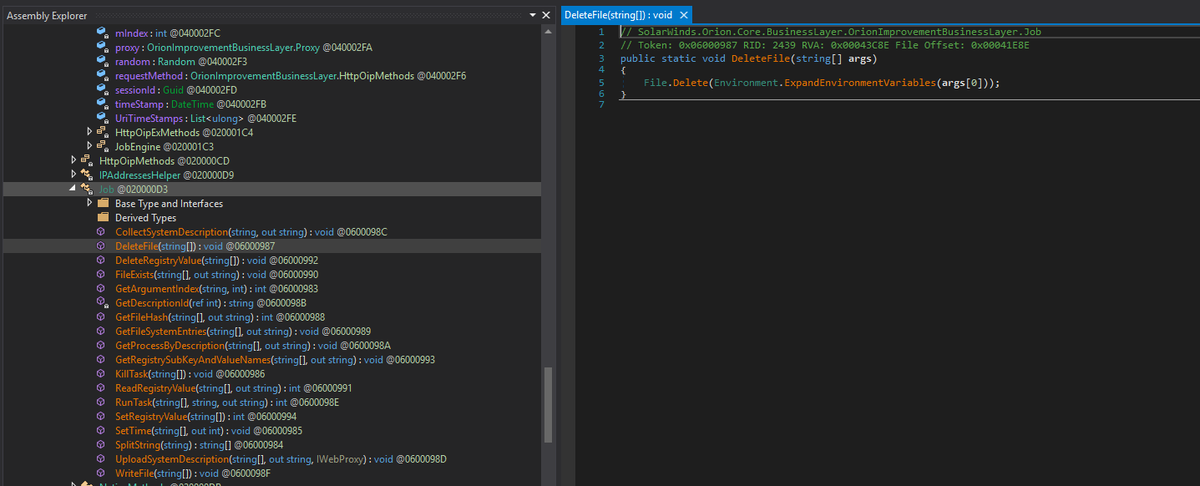
@SolarWinds Orion plug-in codename #SUNBURST. After a dormant period of up to 2 weeks, it retrieves & executes commands including transfering files, executing files, profile the system, reboot, & disable system services.... more
CONTD: #SUNBURST hides network traffic & stores recon within legitimate plugin configuration files allowing it to blend in with legitimate activity. The backdoor uses obfuscated blocklists to i.d. forensic & anti-virus tools running as processes, services, & drivers.... more
CONTD: Worldwide Victims With #SUNBURST Distributed March thru May 2020.
@FireEye has detected this malware in government, consulting, tech, telecom & extractive entities in North America, Europe, Asia & the Middle East & anticipate there are additional victims.... more
CONTD: After #SUNBURST gains access the attacker group disguise their operations moving laterally in the compromised network. The attacker maintains a light malware footprint, instead preferring legitimate credentials & remote access for access through the victim’s environment.
CONTD: If
@SolarWinds infrastructure is not isolated:
-Restrict scope of connectivity to endpoints from SolarWinds servers!
-Restrict the scope of accounts that have local administrator privileged on SolarWinds servers!
.... more
CONTD: If
@solarwinds infrastructure is not isolated:
-Block Internet egress from servers or other endpoints with SolarWinds software.
-At MINIMUM changing passwords for accounts that have access to SolarWinds servers / infrastructure.
....more
CONTD: If
@solarwinds manages networking infrastructure:
-Review network device configurations for unexpected / unauthorized modifications. This is a proactive measure due to the scope of SolarWinds functionality.
CONTD:
@SolarWinds’ Customers;
-425+ of US Fortune 500 co's
-All of top 10 US telecom co's
-All 5 branches US Military
-Pentagon
-State Department
-NASA
-NSA
-USPS
-NOAA
-DOJ
-Office of POTUS
-Top 5 US accounting firms
-100's universities/colleges
List:
https://t.co/N202UZdyjC