I just completed "Rain Risk" - Day 12 - Advent of Code 2020 https://t.co/0wRPluJVeL #AdventOfCode
Today I learned that I really need coffee ☕️ to operate properly. Made a trivial mistake and it took me forever to catch it. This would have been obv. with a statically typed lang.
More from Internet

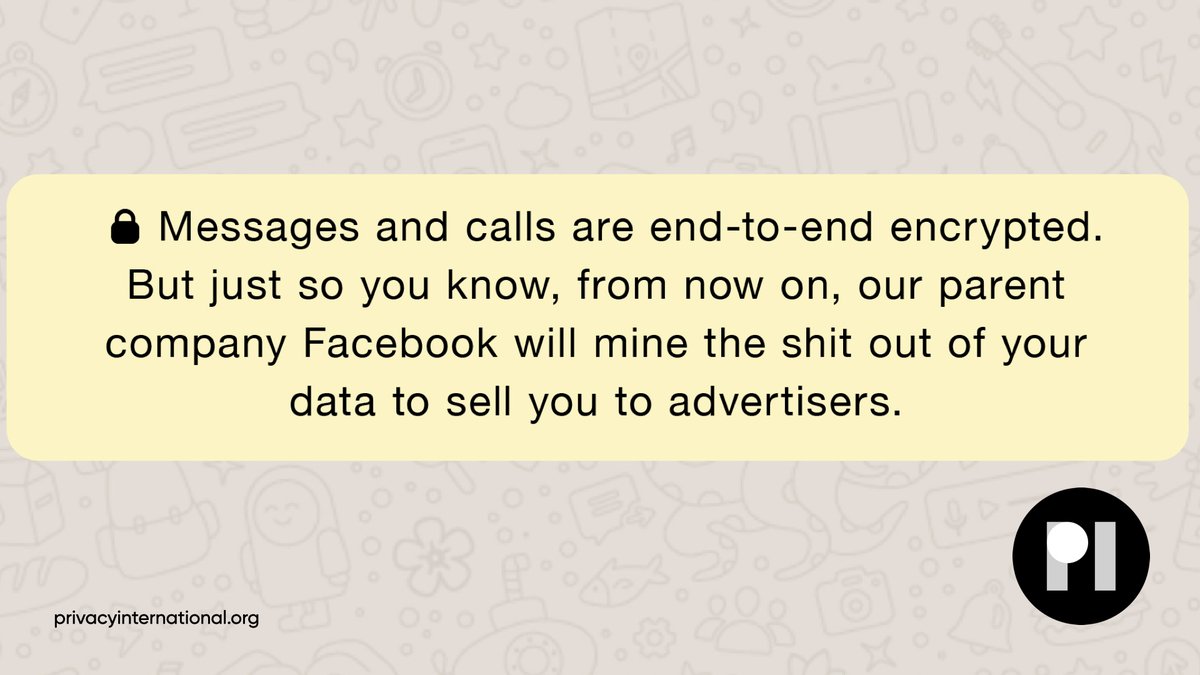
Many conversations happening on #WhatsApp (WA) groups about new #WhatsAppPrivacyPolicy .
This thread has arguments to help ditch WA & move to @signalapp:
https://t.co/En4fe9VxUN
Share, use, copy-paste, modify with understanding as you deem fit on any platform in whole or part
1/n
Note: No affiliations, conflict of interest
Info presented with NO bias, prejudice, malice or indemnity.
Open to corrections: individual tweets may be deleted, tweets added to thread or corrected as replies.
Points that are unclear or uncertain are marked with "(?)".
2/n
CONTENT OF WA MESSAGES SHALL REMAIN ENCRYPTED END TO END.
BUT, there's data: contacts, group affiliations, co-affiliations, locations (live?), frequency of contacts, *tags* generated when we send or forward a message or file to contacts or groups, links, clicks on links, etc.
3/n
It is unclear whether this data is anonymized.
NOTHING in latest policy *prevents* the collection, retention, sharing or sale by FaceBook (FB: owner of WA) of this data in part or whole whether with identifying information or anonymized.
Meme source:
https://t.co/nMDTUlb0rl
4/n
Companies need to make money & generate profits:
To create software, install & maintain infrastructure.
Google, FB, Insta, Amazon etc sell data created from our content & data generated from our interactions (searches, clicks, purchases etc).
This makes many uncomfortable.
5/n
This thread has arguments to help ditch WA & move to @signalapp:
https://t.co/En4fe9VxUN
Share, use, copy-paste, modify with understanding as you deem fit on any platform in whole or part
1/n
Note: No affiliations, conflict of interest
Info presented with NO bias, prejudice, malice or indemnity.
Open to corrections: individual tweets may be deleted, tweets added to thread or corrected as replies.
Points that are unclear or uncertain are marked with "(?)".
2/n
CONTENT OF WA MESSAGES SHALL REMAIN ENCRYPTED END TO END.
BUT, there's data: contacts, group affiliations, co-affiliations, locations (live?), frequency of contacts, *tags* generated when we send or forward a message or file to contacts or groups, links, clicks on links, etc.
3/n
It is unclear whether this data is anonymized.
NOTHING in latest policy *prevents* the collection, retention, sharing or sale by FaceBook (FB: owner of WA) of this data in part or whole whether with identifying information or anonymized.
Meme source:
https://t.co/nMDTUlb0rl
4/n
Now that #WhatsApp have updated their terms, forcing users to share their data with #Facebook, here's our suggested update to that notification you see at the top of your chats.#WhatsappNewPolicy #WhatsappPrivacy pic.twitter.com/FjxFGBm6Q8
— Privacy International (@privacyint) January 7, 2021
Companies need to make money & generate profits:
To create software, install & maintain infrastructure.
Google, FB, Insta, Amazon etc sell data created from our content & data generated from our interactions (searches, clicks, purchases etc).
This makes many uncomfortable.
5/n



1.
01/06/2021 Riot decode via Youtube/Twitch
Symbolism comms allow hiding messages in plain sight, classified data updates, or signals to coordinate crimes.
e.g. I decoded a song that implied Mi6 + CIA used the Radio to coordinate the removal of JFK.
01/06/2021 Riot decode via Youtube/Twitch
Symbolism comms allow hiding messages in plain sight, classified data updates, or signals to coordinate crimes.
e.g. I decoded a song that implied Mi6 + CIA used the Radio to coordinate the removal of JFK.
1.
— CodesUcq (@CodesUcq) March 28, 2020
I've gotten a lot of requests to decode the new 17/Q Minute Bob Dylan song about JFK's murder.
Ok.
So first up this isn't a new song except in that it's just been released. The question of why wasn't it released before is worth considering.
https://t.co/FZjO8Dm92l