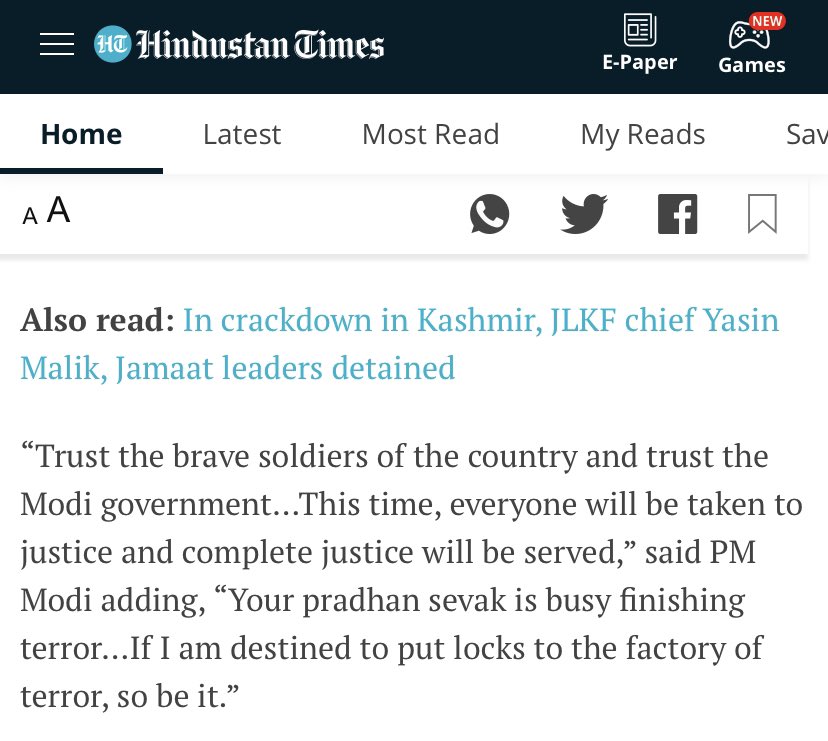
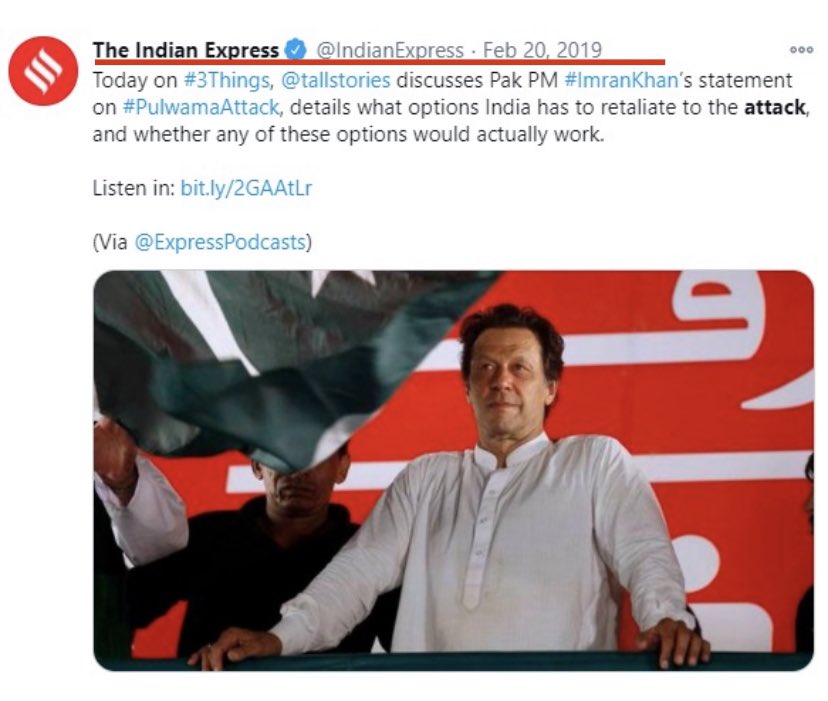
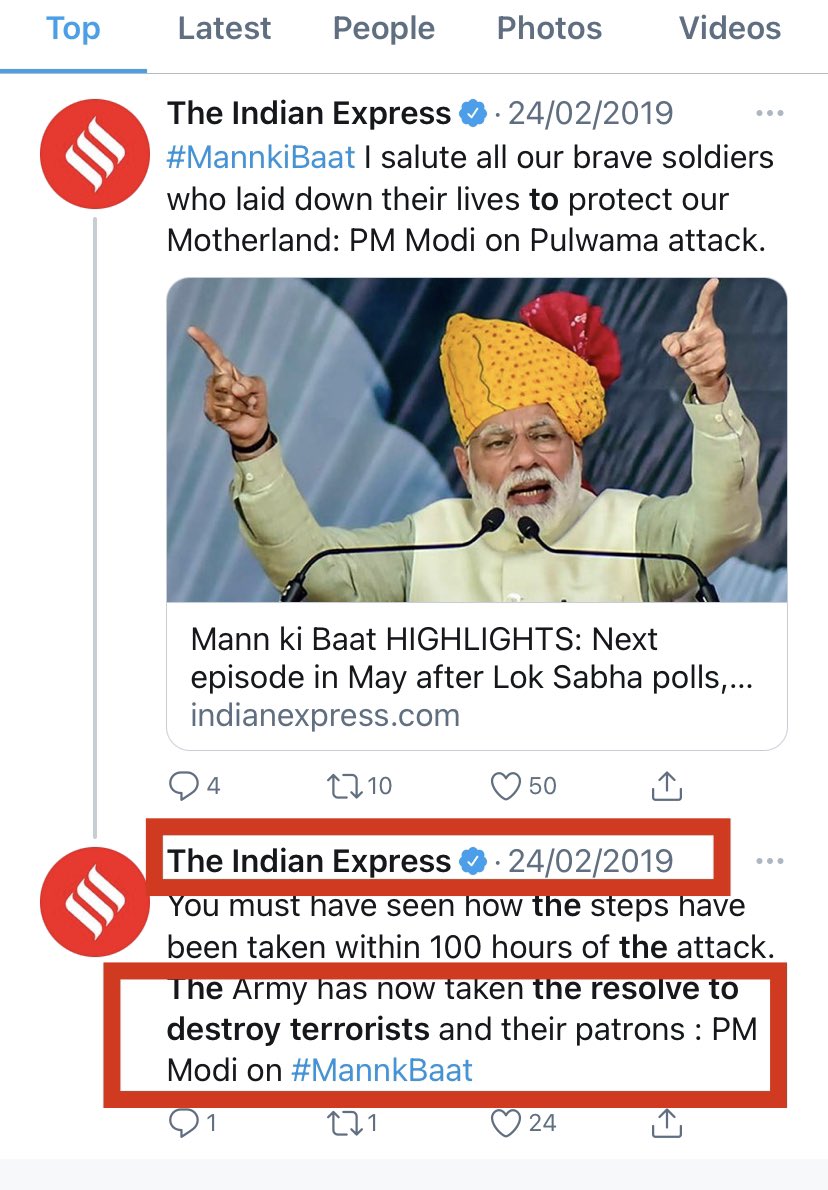
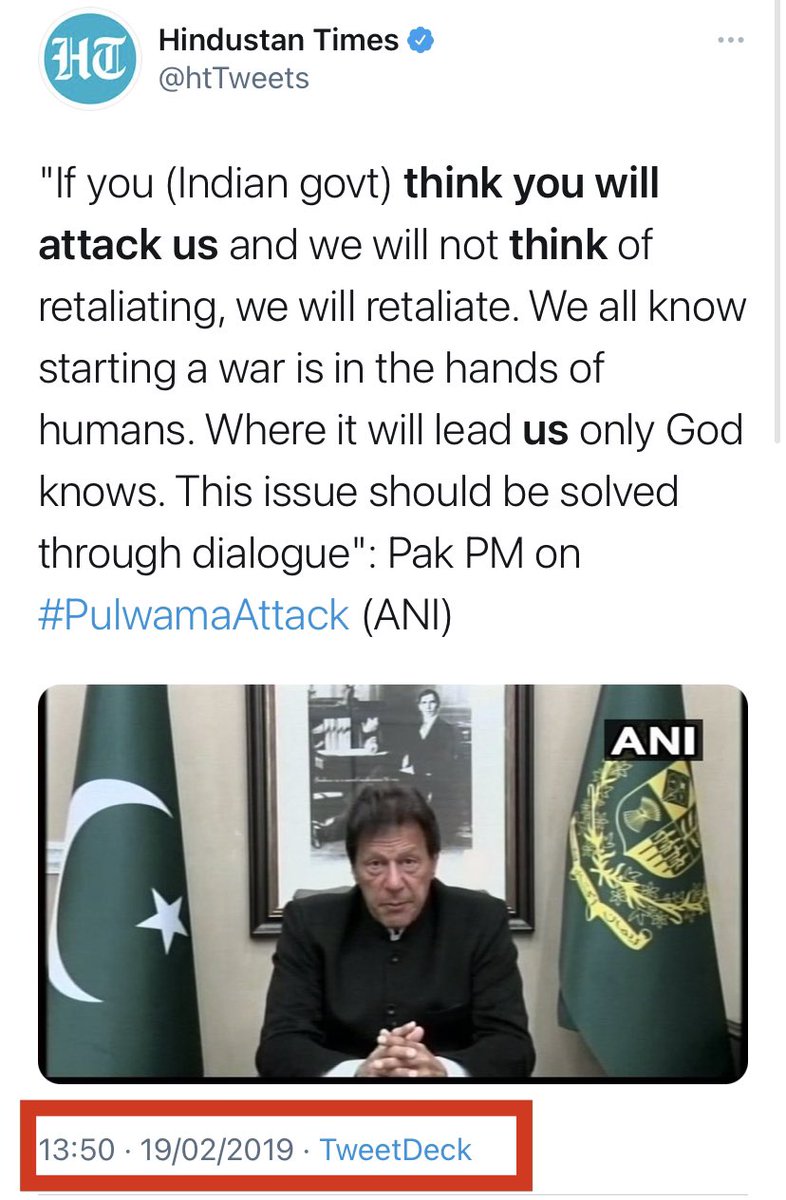
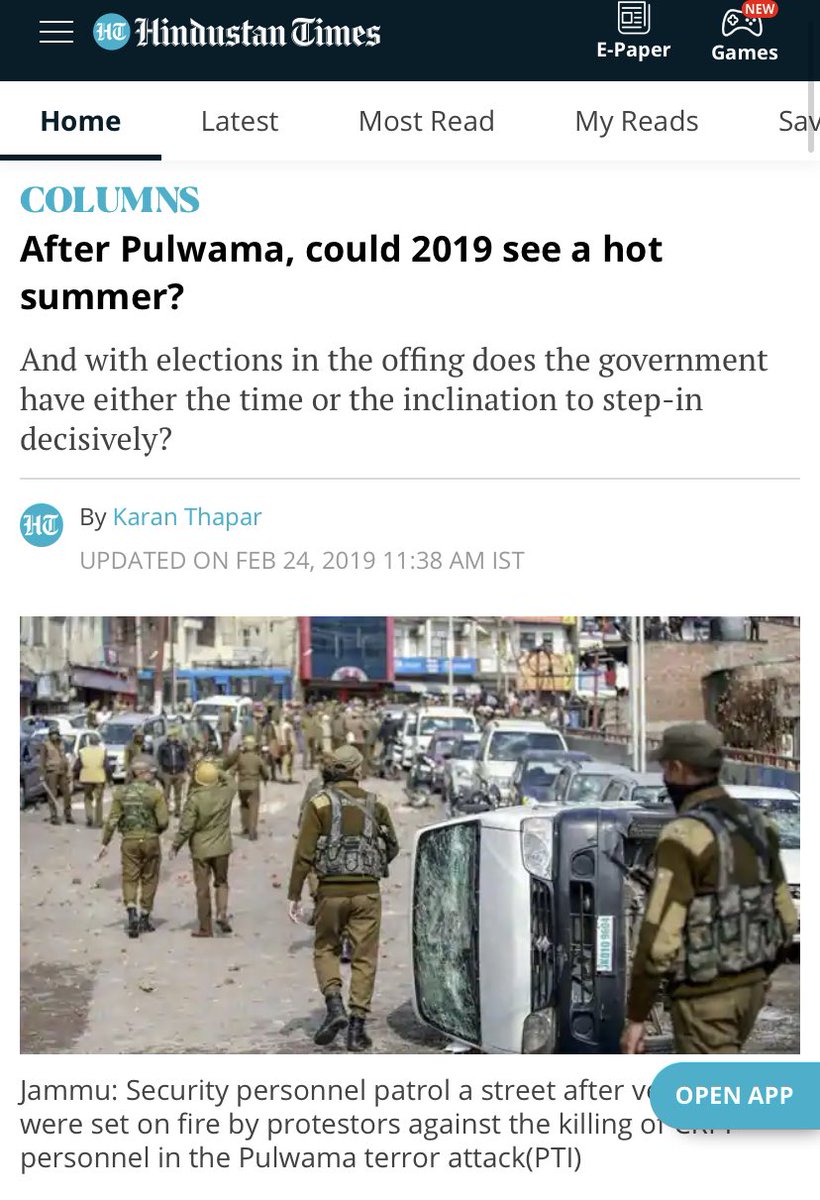
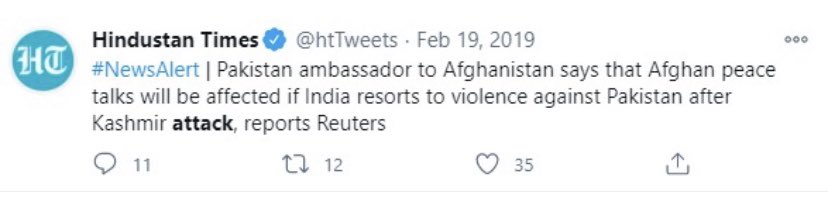
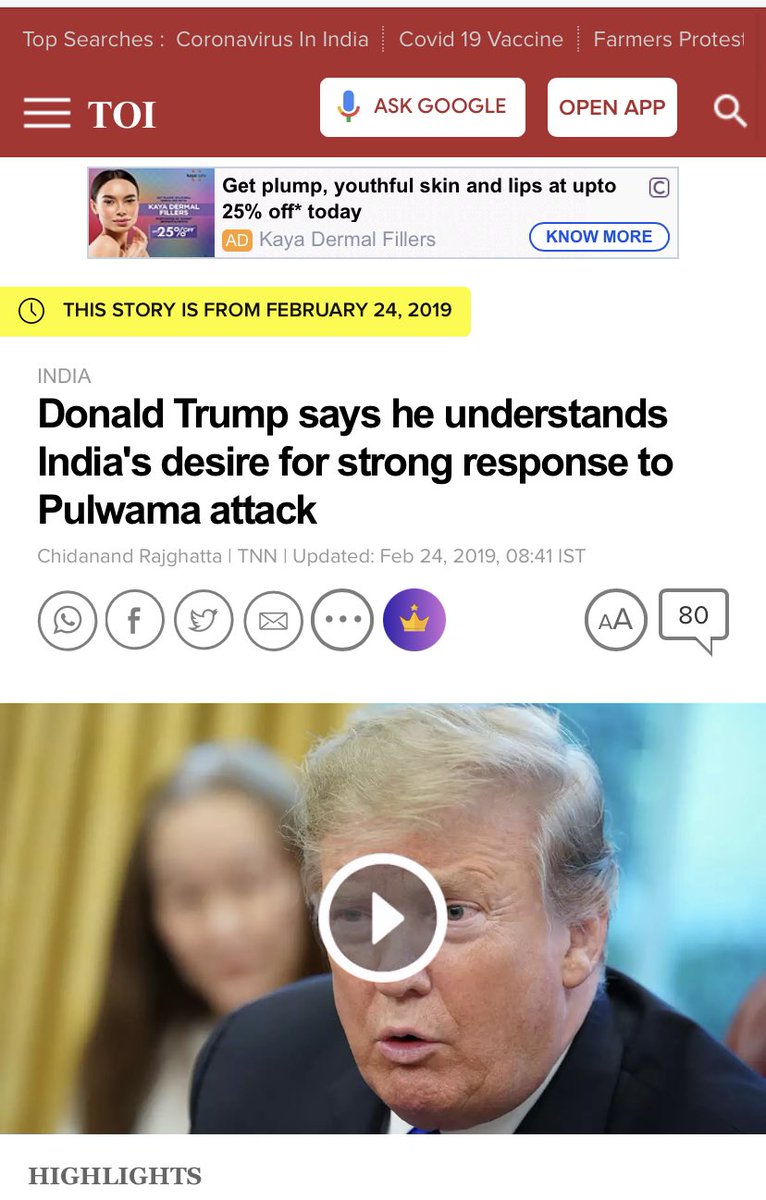
Thread on the #ArnabGate #WhatsAppLeaks. Alleged Journos are outraging how Arnab knew a retaliatory strike for #PulwamaAttack was imminent days before. Well here’s a list of people who knew beforehand
1. @htTweets because the PM said so on 23rd FEB
More from India
1/n
On Feb 25, 2021 we published an analysis of the draft IT Rules, 2021. Alongside the analysis is a rundown of the contentious history of the Rules and the need for starting afresh on this vital conversation about platform accountability. Thread
\U0001f6a8 Breaking: We are releasing a copy of the Draft IT (Intermediary Guidelines and Digital Media Ethics Code) Rules, 2021, which seek to change the face of how digital media is governed in India.
— Internet Freedom Foundation (IFF) (@internetfreedom) February 25, 2021
Read our thread and analysis of the biggest concerns.
1/nhttps://t.co/zQnCGTgGzz
On Feb 25, 2021, the IT Rules, 2021 came into force. On Feb 27, 2021, we shared with you our comprehensive deep-dive into the Rules - an overview of its contents, the “safeguards” it seeks to establish, and how they affect your fundamental rights.
It's done: The IT Rules, 2021, are officially in play. We cannot stress this enough - this fundamentally changes the Indian internet. Please RT this thread on the Rules and how they bring government control over digital media like never before.https://t.co/S7K9wnIkvI
— Internet Freedom Foundation (IFF) (@internetfreedom) February 27, 2021
1/n
We're also talking directly to young people and making sure that they are empowered with knowledge about their digital rights w.r.t. the IT Rules, 2021. Watch our video explaining the background of the Rules and the crux of the matter in 5
Currently, public analysis including our own provides a broad overview of concerns. Since new IT Rules are here to stay, we're also providing you with segmented explainers. Our simple video on how the new Rules will affect digital news
How do the IT Rules, 2021 affect digital news media?
— Internet Freedom Foundation (IFF) (@internetfreedom) March 3, 2021
Our video explains the 4 biggest implications in 5 minutes - simply and directly. Everyone and specially journalists, please RT and share this critical info on social media, WA, Signal!https://t.co/iZ0Ya0gU8K
You May Also Like
Here I will share what I believe are essentials for anybody who is interested in stock markets and the resources to learn them, its from my experience and by no means exhaustive..
First the very basic : The Dow theory, Everybody must have basic understanding of it and must learn to observe High Highs, Higher Lows, Lower Highs and Lowers lows on charts and their
Even those who are more inclined towards fundamental side can also benefit from Dow theory, as it can hint start & end of Bull/Bear runs thereby indication entry and exits.
Next basic is Wyckoff's Theory. It tells how accumulation and distribution happens with regularity and how the market actually
Dow theory is old but
Old is Gold....
— Professor (@DillikiBiili) January 23, 2020
this Bharti Airtel chart is a true copy of the Wyckoff Pattern propounded in 1931....... pic.twitter.com/tQ1PNebq7d
Further Examination of the Motif near PRRA Reveals Close Structural Similarity to the SEB Superantigen as well as Sequence Similarities to Neurotoxins and a Viral SAg.
The insertion PRRA together with 7 sequentially preceding residues & succeeding R685 (conserved in β-CoVs) form a motif, Y674QTQTNSPRRAR685, homologous to those of neurotoxins from Ophiophagus (cobra) and Bungarus genera, as well as neurotoxin-like regions from three RABV strains
(20) (Fig. 2D). We further noticed that the same segment bears close similarity to the HIV-1 glycoprotein gp120 SAg motif F164 to V174.
https://t.co/EwwJOSa8RK
In (B), the segment S680PPRAR685 including the PRRA insert and highly conserved cleavage site *R685* is shown in van der Waals representation (black labels) and nearby CDR residues of the TCRVβ domain are labeled in blue/white
https://t.co/BsY8BAIzDa
Sequence Identity %
https://t.co/BsY8BAIzDa
Y674 - QTQTNSPRRA - R685
Similar to neurotoxins from Ophiophagus (cobra) & Bungarus genera & neurotoxin-like regions from three RABV strains
T678 - NSPRRA- R685
Superantigenic core, consistently aligned against bacterial or viral SAgs
Like company moats, your personal moat should be a competitive advantage that is not only durable—it should also compound over time.
Characteristics of a personal moat below:
I'm increasingly interested in the idea of "personal moats" in the context of careers.
— Erik Torenberg (@eriktorenberg) November 22, 2018
Moats should be:
- Hard to learn and hard to do (but perhaps easier for you)
- Skills that are rare and valuable
- Legible
- Compounding over time
- Unique to your own talents & interests https://t.co/bB3k1YcH5b
2/ Like a company moat, you want to build career capital while you sleep.
As Andrew Chen noted:
People talk about \u201cpassive income\u201d a lot but not about \u201cpassive social capital\u201d or \u201cpassive networking\u201d or \u201cpassive knowledge gaining\u201d but that\u2019s what you can architect if you have a thing and it grows over time without intensive constant effort to sustain it
— Andrew Chen (@andrewchen) November 22, 2018
3/ You don’t want to build a competitive advantage that is fleeting or that will get commoditized
Things that might get commoditized over time (some longer than
Things that look like moats but likely aren\u2019t or may fade:
— Erik Torenberg (@eriktorenberg) November 22, 2018
- Proprietary networks
- Being something other than one of the best at any tournament style-game
- Many "awards"
- Twitter followers or general reach without "respect"
- Anything that depends on information asymmetry https://t.co/abjxesVIh9
4/ Before the arrival of recorded music, what used to be scarce was the actual music itself — required an in-person artist.
After recorded music, the music itself became abundant and what became scarce was curation, distribution, and self space.
5/ Similarly, in careers, what used to be (more) scarce were things like ideas, money, and exclusive relationships.
In the internet economy, what has become scarce are things like specific knowledge, rare & valuable skills, and great reputations.