
2/n
Some readers have been asking what #India2030 is all about.
Here’s a chapter-by-chapter thread on the 20 forecasts by 20 thought leaders on 20 themes that will define India in the 2020s.
1/n
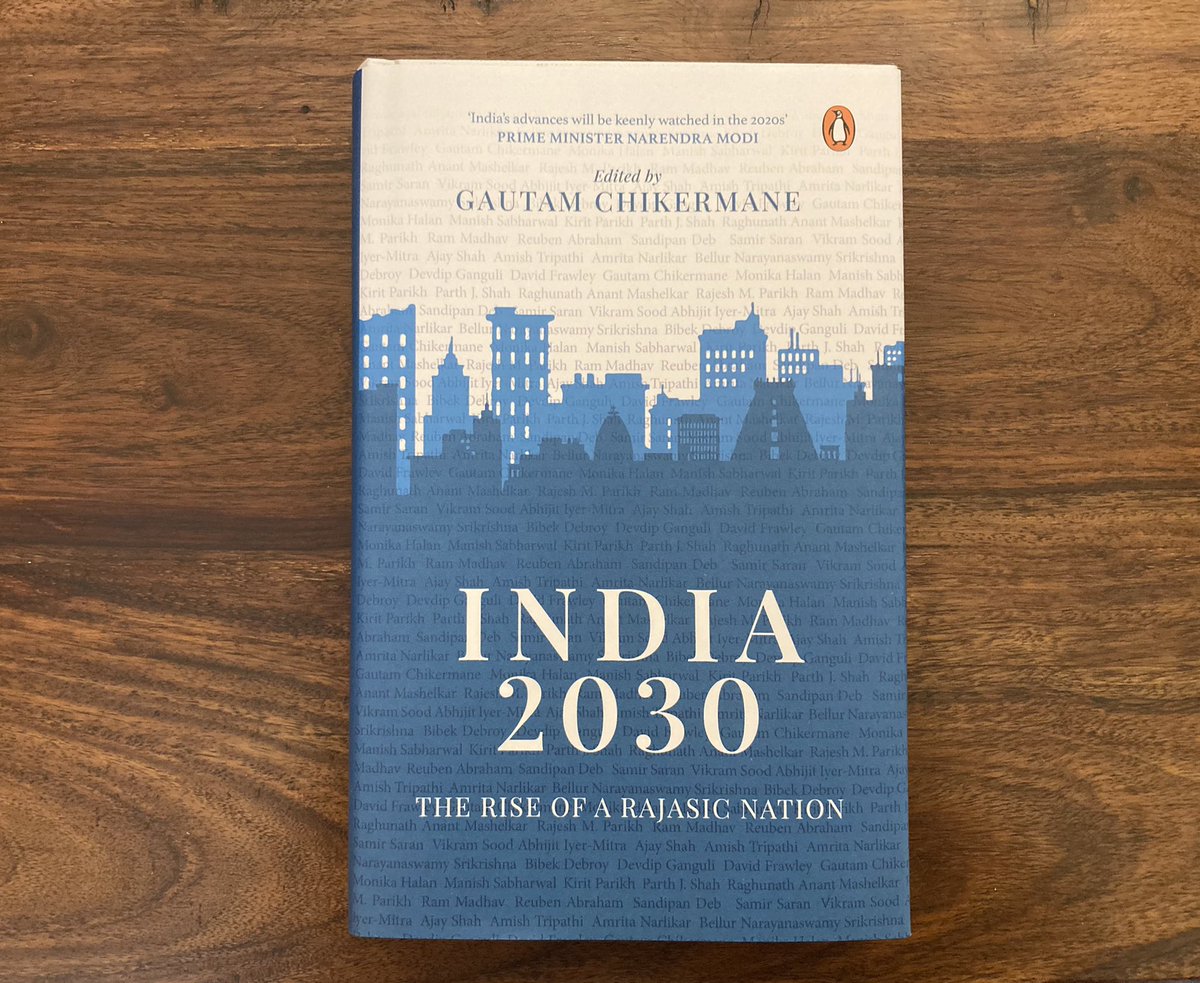
Delighted to announce the forthcoming release of my fifth book \u2014 #India2030: The Rise of a Rajasic Nation.
— Gautam Chikermane (@gchikermane) January 13, 2021
It hits the bookstores on 25 January.
Gratitude to my contributors and @PenguinIndia for partnering this adventure. pic.twitter.com/I0SdQk19JG
2/n
3/n
4/n
5/n
6/n
8/n
10/n
11/n
12/n
13/n
14/n
15/n
16/n
17/n
18/n
19/n
20/n
[PS: Don’t forget to pre-order the book, here’s the link
https://t.co/uzgZiULgR1
n/n
More from India


Hindutva does not belong to Modi nor his party, it belongs to the people as a unifying, decolonial ideology similar to pan-Africanism or Yugoslavism.
His own brand of "positive secularism" is even milder - deepening special rights and welfare schemes for religious minorities.
After the disbanding of the Hindu Mahasabha and Jana Sangh, Hindutva as a political ideology does not even exist, except as a bogeyman in the minds of the Anglophone elite.
Even the BJP gave up Hindutva for civic nationalism, Gandhian socialism, and positive secularism in 1980s.
Under Modi, there has been compete policy continuity on minority rights and welfare from the Congress era, with little to no "Hindutva agenda" coming to see the light of day.
The most radical policy they can dream of is religion-neutral laws and equal rights for equal citizens.
Hindutva was essential in forming a national consciousness, but was abandoned with time. The modern BJP refuses to self-identify as a Hindutva movement, adopting moderates like Sardar Patel, Deendayal Upadhyay, and JP Narayan as their icons, rather than Savarkar or the Mahasabha.
When they say Hindu Rashtra, all they mean is an "Indic polity".
When British India was partitioned into a Muslim homeland and a Dharmic homeland, one state became a 'Ghazi' garrison state, and one the successor state to the Indic
His own brand of "positive secularism" is even milder - deepening special rights and welfare schemes for religious minorities.
I'm not entirely comfortable with Modi's "Hindutva".
— Onye Nkuzi (@cchukudebelu) February 2, 2021
I know many of my Indian followers will come at me, angrily - but let me just say this out.
I'm not sure it is a great model for democracy in a diverse, multi-cultural developing nation.
After the disbanding of the Hindu Mahasabha and Jana Sangh, Hindutva as a political ideology does not even exist, except as a bogeyman in the minds of the Anglophone elite.
Even the BJP gave up Hindutva for civic nationalism, Gandhian socialism, and positive secularism in 1980s.
Under Modi, there has been compete policy continuity on minority rights and welfare from the Congress era, with little to no "Hindutva agenda" coming to see the light of day.
The most radical policy they can dream of is religion-neutral laws and equal rights for equal citizens.
Hindutva was essential in forming a national consciousness, but was abandoned with time. The modern BJP refuses to self-identify as a Hindutva movement, adopting moderates like Sardar Patel, Deendayal Upadhyay, and JP Narayan as their icons, rather than Savarkar or the Mahasabha.
When they say Hindu Rashtra, all they mean is an "Indic polity".
When British India was partitioned into a Muslim homeland and a Dharmic homeland, one state became a 'Ghazi' garrison state, and one the successor state to the Indic

You May Also Like

Facebook originally a CIA program called "LifeLog".
LifeLog, via DARPA, terminated on Feb 4th, 2004.
Facebook was launched on Feb 4th, 2004.
Many of the LifeLog team became execs at FB.
Zuckerberg is a figurehead.
CIA allowed Cambridge to help Trump win
https://t.co/enzOXDCogV

Pentagon Kills LifeLog
LifeLog, via DARPA, terminated on Feb 4th, 2004.
Facebook was launched on Feb 4th, 2004.
Many of the LifeLog team became execs at FB.
Zuckerberg is a figurehead.
CIA allowed Cambridge to help Trump win
https://t.co/enzOXDCogV
Project: Lifelog
— Robert Horan (@Robby12692) December 13, 2018
Started by DARPA in 1999, the goal of Lifelog was to create a database on civilians without their knowledge, and track everything they do.
The project "ended" on Feb 4th, 2004.
Facebook began the exact same day.
The CIA funneled tens of millions into Facebook. pic.twitter.com/r7hwF0v9kh
Pentagon Kills LifeLog



Neo-nazi group #PatriotFront held a photo op in #Chicago last weekend & is currently marching around #DC so it's as good time as any to compile a list of their identified members for folks to watch for
Who are these chuds?
Patriot Front broke away from white nationalist org Vanguard America following #unitetheright in #charlottesville after James Alex Fields was seen with a VA shield before driving his car into a crowd, murdering Heather Heyer & injuring dozens of others
Syed Robbie Javid a.k.a. Sayed Robbie Javid or Robbie Javid of Alexandria,
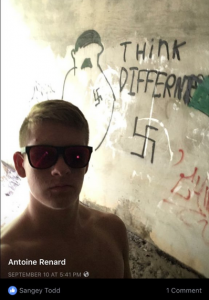
Antoine Bernard Renard (a.k.a. “Charlemagne MD” on Discord) from Rockville, MD.
https://t.co/ykEjdZFDi6
Brandon Troy Higgs, 25, from Reisterstown,
Who are these chuds?
Patriot Front broke away from white nationalist org Vanguard America following #unitetheright in #charlottesville after James Alex Fields was seen with a VA shield before driving his car into a crowd, murdering Heather Heyer & injuring dozens of others
Syed Robbie Javid a.k.a. Sayed Robbie Javid or Robbie Javid of Alexandria,
Happy Monday everyone :-) Let's ring in September by reacquainting ourselves with Virginia neo-Nazi and NSC Dixie affiliate Sayed "Robbie" Javid, now known by "Reform the States". Robbie is an explicitly genocidal neo-Nazi, so lets get to know him a bit better!
— Garfield but Anti-Fascist (@AntifaGarfield) August 31, 2020
CW on this thread pic.twitter.com/3gzxrIo9HD
Antoine Bernard Renard (a.k.a. “Charlemagne MD” on Discord) from Rockville, MD.
https://t.co/ykEjdZFDi6
Brandon Troy Higgs, 25, from Reisterstown,
