#KnowYourHistory - 001

#AsalBharat - How Sanatan Dharma brings out heroes even Avengers may not match up with -

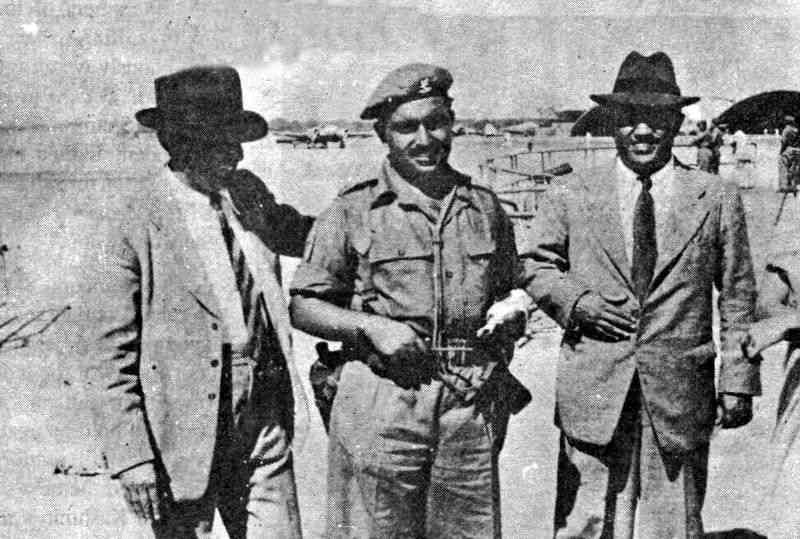
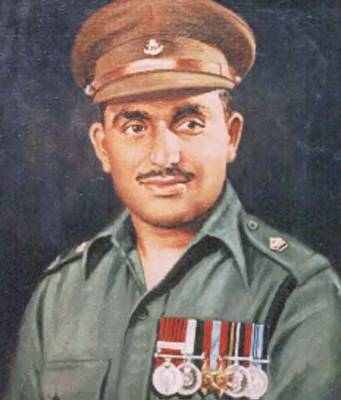
Today is the day when in 1923, a braveheart took birth in the home of Dr. Amarnath Sharma, an officer in the Armed Medical Corps of the then British Indian Army. He was not extremely studious, but was brilliant at sports and other physical activities.
He followed into the footsteps of his illustrious family, and joined the British Indian Army as a 2nd Lieutenant, right into the middle of World War II. Later on, he would gain name by fighting against all odds at Badgam in November 1947, getting martyred when he was only 24.
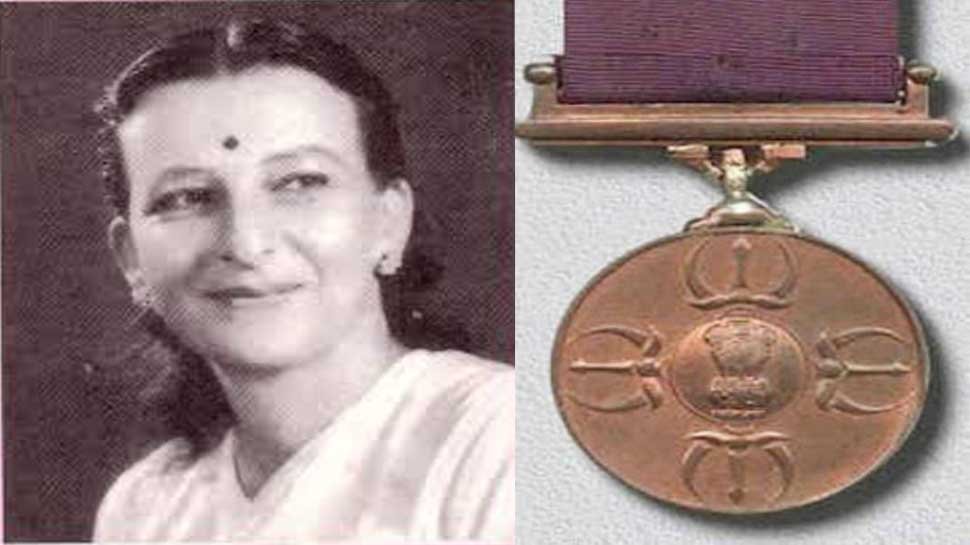
This was Major Somnath Sharma, the first recipient of India's highest gallantry award, the Param Vir Chakra. But did you know that the medal was designed by his own brother's mother in law? -
Yes, call it a twist of irony, or sheer coincidence, but the Param Vir Chakra was actually designed by the mother in law of Major Somnath Sharma's brother, whose name was Savitri Bai Khanolkar. Even more interesting is the fact she was not a Bharatiya by birth either -
Born on 20 July 1913 as Eve Yvonne Maday de Maros, Savitribai Khanolkar was a Swiss artist, who spent her early childhood in Geneva. Though living in Europe, Eve was extremely interested in the beauty of nature, and was equally interested towards Sanatana Dharma.
Her interest towards Hinduism took a whole new turn, when she met Vikram Ramji Khanolkar, a young cadet on a break from his training at the Royal Military Academy in Sandhurst -
Though there was a stark difference of 8 years in their age, the two slowly fell in love with each other. Eve was so much attracted towards Vikram and his beliefs, that she rebelled against her hesitating father, and arrived at India a couple of years later.
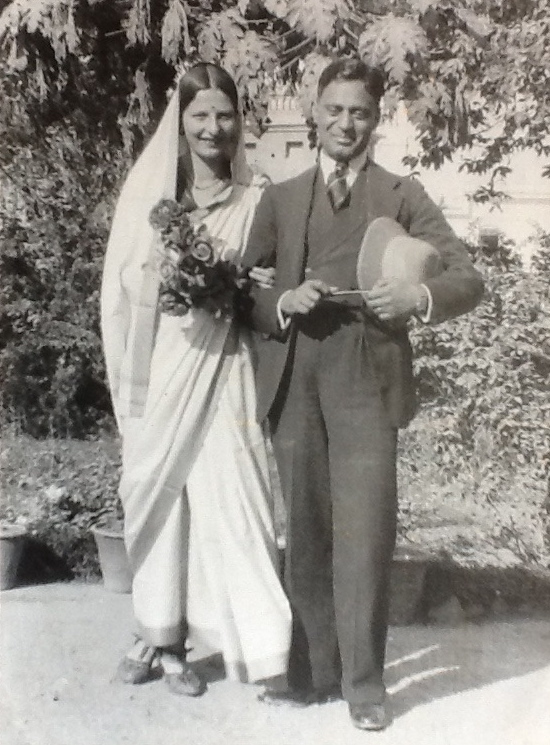
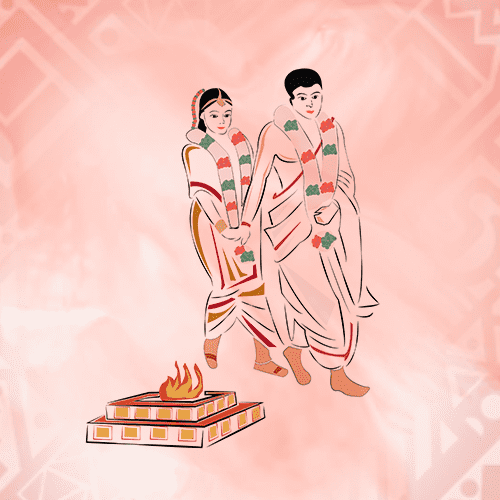
Vikram and Eve married each other in 1932, and Savitri willingly converted to Hinduism, adopting the name Savitribai for herself, based on the determined woman who compelled even Yamraj to revert his decision and restore the life of her husband Satyavan.
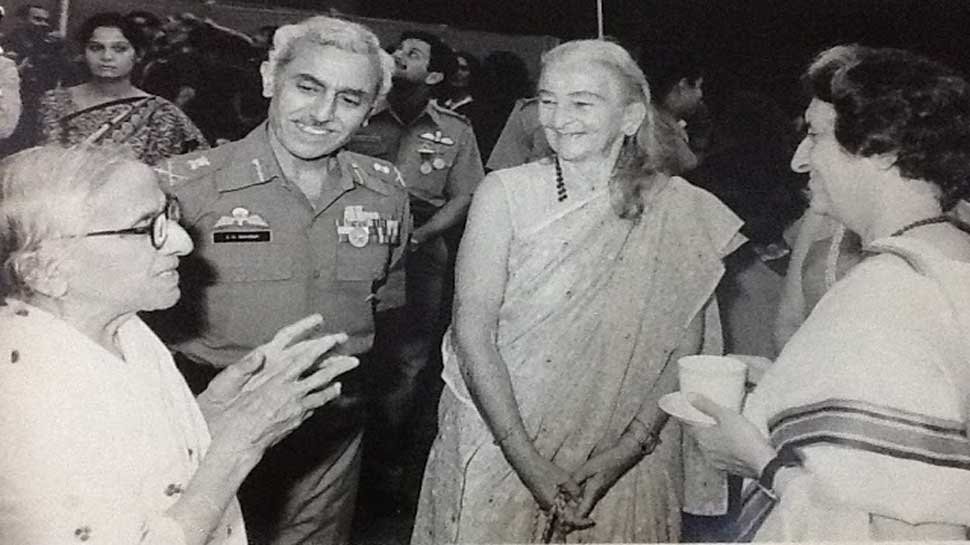
Savitri Bai Khanolkar Savitri Bai identified so closely with Hindu traditions and ideals, that her integration into Indian society was smooth and effortless -
She was a vegetarian, learnt to speak fluent Marathi, Sanskrit and Hindi and learnt Indian music, dance and painting. She always claimed that she had been "born in Europe by mistake" as she was Indian soul, and woe unto him who dared to call her a "foreigner"!
She was so fascinated with Indian culture that she read extensively from Hindu scriptures and had a deep knowledge of India's ancient history and legends.
It was this knowledge that led Major General Hira Lal Atal, the creator of the Param Vir Chakra, to ask for Savitri Bai's help in designing a medal that would truly symbolize the highest bravery -
Savitribai thought of the sage Dadhichi – a vedic rishi who made the ultimate sacrifice to the Gods. He gave up his body so that the Gods could fashion a deadly weapon – a Vajra, or thunderbolt, from his spine. This was why the Param Vir Chakra has the Vajra emblazoned on it.
This was how the Param Vir Chakra became India's highest gallantry award since independence. Little did she realize that the first recipient would be her own daughter's brother in law, that too posthumously -
The Param Vir Chakra is not awarded in the style of other gallantry awards in the world. It is only given to the rarest of the rare in terms of gallantry, i.e. in order to win it, you have to defy every known notion of realism and practicality in terms of bravery -
This is why out of the 21 brave souls who won the Param Vir Chakra, only 7 had the blessings of proudly getting the medal pinned on their chest. Their stories are such that even fans of Avengers or action heroes like Arnold, Rambo etc. be like

"WHAT THE HELL DID WE JUST MISS?"
This is only the beginning, for we deserve to know more. It is the beauty of Sanatana Dharma, that even people who have no close association with the religion are compelled to be attracted towards its charming world, as Savitribai Khanolkar was.

More from India

Some readers have been asking what #India2030 is all about.
Here’s a chapter-by-chapter thread on the 20 forecasts by 20 thought leaders on 20 themes that will define India in the 2020s.
1/n


Chapter 20 of #India2030 by @davidfrawleyved talks about how the Civilizational Resurgence of India will reconnect its ancient past to ride into a dharmic future
2/n

Chapter 19 of #India2030 by @devdip tells us what the new idea of Nationalism in the 2020s will be — an integral union of the nation with the self
3/n

Chapter 18 of #India2030 by @sandipanthedeb examines how ideologies and technologies will intrude into and redefine Friendships
4/n

Chapter 17 of #India2030 by @authoramish studies the Soft Power of India and says its global influence will be through the confluence of materialism and spiritualism
5/n
A lot has happened in the last week re: the IT Rules, 2021! It may feel chilling, but mass awareness is the first step. This is an official thread of our resources on the Rules. Send it to anyone who wants to learn about them. This thread will evolve with updates over time.
1/n

On Feb 25, 2021 we published an analysis of the draft IT Rules, 2021. Alongside the analysis is a rundown of the contentious history of the Rules and the need for starting afresh on this vital conversation about platform accountability. Thread


On Feb 25, 2021, the IT Rules, 2021 came into force. On Feb 27, 2021, we shared with you our comprehensive deep-dive into the Rules - an overview of its contents, the “safeguards” it seeks to establish, and how they affect your fundamental rights.


We're also talking directly to young people and making sure that they are empowered with knowledge about their digital rights w.r.t. the IT Rules, 2021. Watch our video explaining the background of the Rules and the crux of the matter in 5

Currently, public analysis including our own provides a broad overview of concerns. Since new IT Rules are here to stay, we're also providing you with segmented explainers. Our simple video on how the new Rules will affect digital news

You May Also Like

The first ever world map was sketched thousands of years ago by Indian saint
“Ramanujacharya” who simply translated the following verse from Mahabharat and gave the world its real face

In Mahabharat,it is described how 'Maharishi Ved Vyasa' gave away his divine vision to Sanjay


Dhritarashtra's charioteer so that he could describe him the events of the upcoming war.

But, even before questions of war could begin, Dhritarashtra asked him to describe how the world looks like from space.

This is how he described the face of the world:

सुदर्शनं प्रवक्ष्यामि द्वीपं तु कुरुनन्दन। परिमण्डलो महाराज द्वीपोऽसौ चक्रसंस्थितः॥
यथा हि पुरुषः पश्येदादर्शे मुखमात्मनः। एवं सुदर्शनद्वीपो दृश्यते चन्द्रमण्डले॥ द्विरंशे पिप्पलस्तत्र द्विरंशे च शशो महान्।

—वेद व्यास, भीष्म पर्व, महाभारत


Meaning:-

हे कुरुनन्दन ! सुदर्शन नामक यह द्वीप चक्र की भाँति गोलाकार स्थित है, जैसे पुरुष दर्पण में अपना मुख देखता है, उसी प्रकार यह द्वीप चन्द्रमण्डल में दिखायी देता है। इसके दो अंशो मे पीपल और दो अंशो मे विशाल शश (खरगोश) दिखायी देता है।


Meaning: "Just like a man sees his face in the mirror, so does the Earth appears in the Universe. In the first part you see leaves of the Peepal Tree, and in the next part you see a Rabbit."

Based on this shloka, Saint Ramanujacharya sketched out the map, but the world laughed
Margatha Natarajar murthi - Uthirakosamangai temple near Ramanathapuram,TN
#ArudraDarisanam
Unique Natarajar made of emerlad is abt 6 feet tall.
It is always covered with sandal paste.Only on Thriuvadhirai Star in month Margazhi-Nataraja can be worshipped without sandal paste.


After removing the sandal paste,day long rituals & various abhishekam will be
https://t.co/e1Ye8DrNWb day Maragatha Nataraja sannandhi will be closed after anointing the murthi with fresh sandal paste.Maragatha Natarajar is covered with sandal paste throughout the year


as Emerald has scientific property of its molecules getting disturbed when exposed to light/water/sound.This is an ancient Shiva temple considered to be 3000 years old -believed to be where Bhagwan Shiva gave Veda gyaana to Parvati Devi.This temple has some stunning sculptures.