Apostle of 'non-violence' rationalising violence by 'Samudaya Vishesh'!
"Secualrism is a curse for India"
It's a tool to cover up Muslim Appeasement in India. In last centuries, we have seen that how invaders destroyed India, but in 1947, Mahatma Gandhi and Nehru opted for "Secualrism".
A Thread about the so called "Father of the Nation, India"
Apostle of 'non-violence' rationalising violence by 'Samudaya Vishesh'!
Jihadis: Convert or Die.
Gandhi: Just Die.
If he refuses to give a free passage out. Allow your man woman child to be slaughtered!'
- 'Coward' Gandhi's advice to Britons when Hitler was invading Britain.
'FATHER WHO PRESCRIBED JAUHAR WITHOUT FIRE'
'Secular' Gandhi asked Hindus to let Jihadis kill them!
That's how thin the line between Islamism & Secularism is.
'Islamists' will send a Jihadi mob to kill Kaafirs. 'Seculars' will ask d Kaafirs to embrace death w/o retaliation!
FATHER of 'Suicidal Secularism!'
More from India

Ambedker's 22 vows Vs BUDDHISM
/Read it Full /
Ambedker-1: I shall have no faith in Brahma, Vishnu and Mahesh nor shall I worship them
BUDDHISM: I believe in them as a subordinate to buddha, we have different philoshphical model regarding them,we have many eg ,My many sect...
.Worship them , respect them ; some sects consider them to be emanation of Boddhisatva Avlokiteshwara,In tantra they are worshipped
A2: I shall have no faith in Rama and Krishna who are believed to be incarnation of God nor shall I worship them
B: Buddha says Rama was his.
.. previous life ,and Krishna was one of previous life of Sariputta ,My many sects worship them as previous life of Buddha, Krishna is not very much known but his sculpture is seen in Buddhist temples,you can pay respect to them atleast
A3: shall have no faith in ‘Gauri’, Ganapati and other gods and goddesses of Hindus nor shall I worship them
B: Hindu goddess gauri and Ganesha is widely accepted by us we have our own mantra for them ,they seek dharini from buddha ,Our some sects worship them
A4: I do not believe in the incarnation of God
B: Ok! This is acceptable,but we do have previous life/births of Buddha and rebirth ,which you Rejected
A5: I do not and shall not believe that Lord Buddha was the incarnation of Vishnu I believe this to be sheer madness and false
/Read it Full /
Ambedker-1: I shall have no faith in Brahma, Vishnu and Mahesh nor shall I worship them
BUDDHISM: I believe in them as a subordinate to buddha, we have different philoshphical model regarding them,we have many eg ,My many sect...
Navayan and Buddhism of Ambedkar
— \U0001f1ee\U0001f1f3Sonal \U0001f1ee\U0001f1f3 (@Dharma_Vaarta) January 2, 2021
BR Ambedkar announced to accept Buddhism on 14th October, 1956 in a press conference.
He formed a new sect Navayan inspite of following pre existing sects such as Mahayana, Vajrayan and Heenayan. pic.twitter.com/gQgYtSDzf7
.Worship them , respect them ; some sects consider them to be emanation of Boddhisatva Avlokiteshwara,In tantra they are worshipped
A2: I shall have no faith in Rama and Krishna who are believed to be incarnation of God nor shall I worship them
B: Buddha says Rama was his.
.. previous life ,and Krishna was one of previous life of Sariputta ,My many sects worship them as previous life of Buddha, Krishna is not very much known but his sculpture is seen in Buddhist temples,you can pay respect to them atleast
A3: shall have no faith in ‘Gauri’, Ganapati and other gods and goddesses of Hindus nor shall I worship them
B: Hindu goddess gauri and Ganesha is widely accepted by us we have our own mantra for them ,they seek dharini from buddha ,Our some sects worship them
A4: I do not believe in the incarnation of God
B: Ok! This is acceptable,but we do have previous life/births of Buddha and rebirth ,which you Rejected
A5: I do not and shall not believe that Lord Buddha was the incarnation of Vishnu I believe this to be sheer madness and false


People you're seeing in TV posing as locals of #SinghuBorder are NOT locals. Infact, locals are extremely warm with the protestors. This is what real locals have to say!
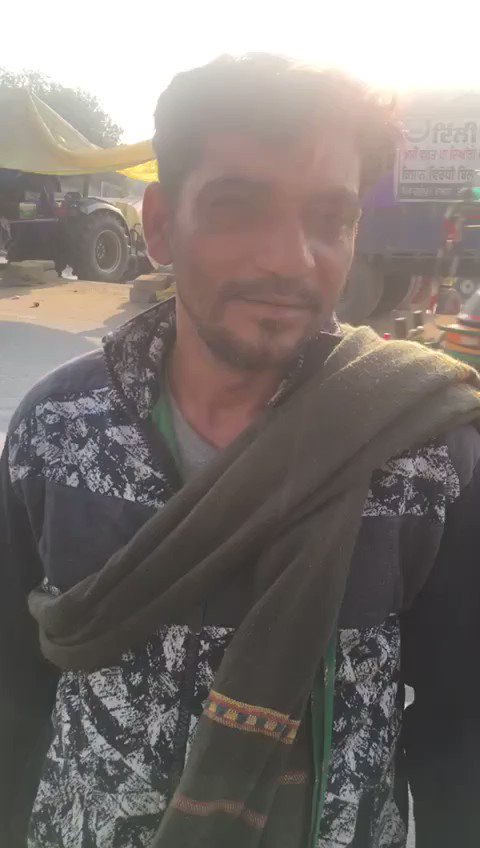
No one has a problem with protestors at #SinghuBorder. Who were the ones who came to protest??
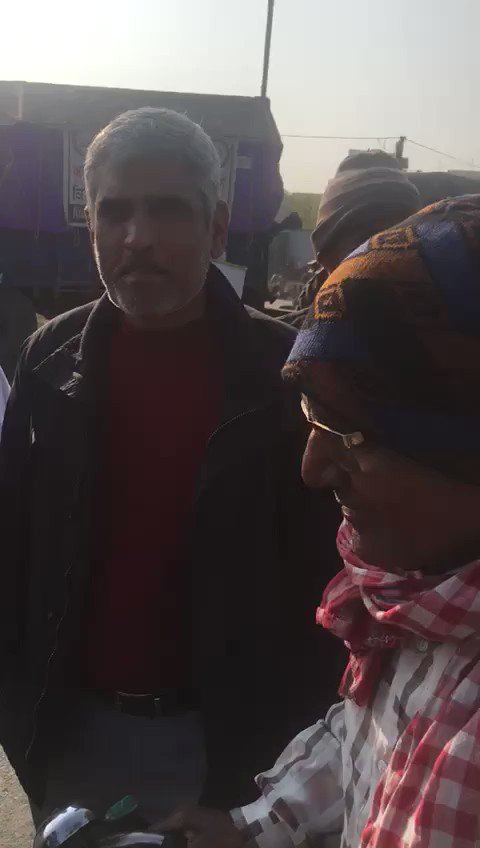
https://t.co/l3xWK8z0m7
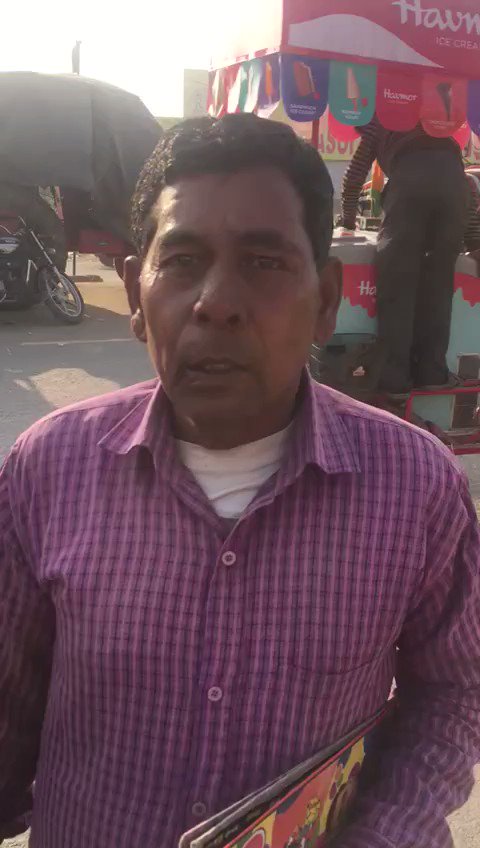
#IndiaStandsWithFarmers
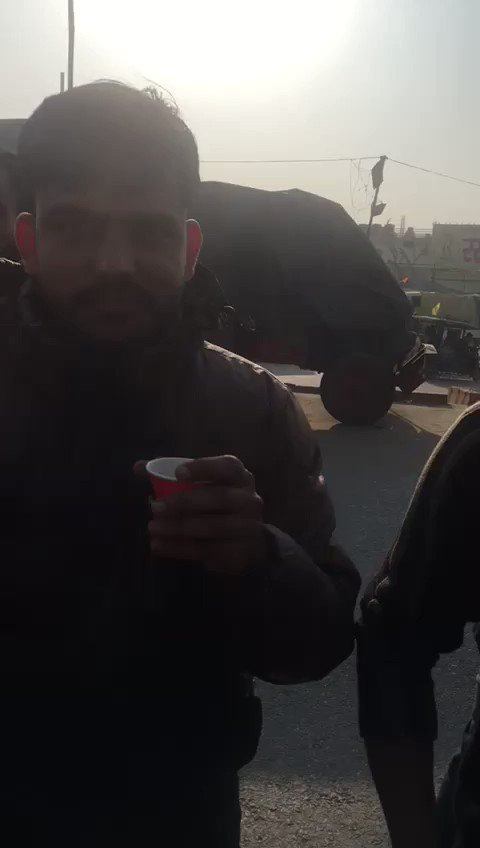
Sweeetestt ❣️❣️❣️
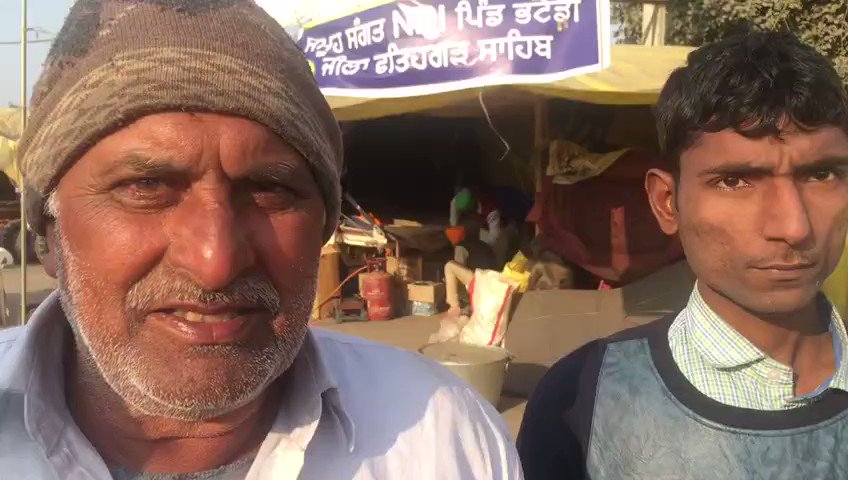
No one has a problem with protestors at #SinghuBorder. Who were the ones who came to protest??
https://t.co/l3xWK8z0m7
#IndiaStandsWithFarmers
Sweeetestt ❣️❣️❣️