Topics to be discussed are:
• Definition/Overview
• Types of seizures
• Causes
• Symptoms
• Treatment
Thread's gonna be a bit long.
(So starting in the name of Allah from the beginning until the end)
What is a seizure?
A seizure occurs when part(s) of the brain receives a burst of abnormal electrical signals that temporarily interrupts normal electrical brain function.
The brain is the center that controls and regulates all responses in the body. It consists of nerve cells
that communicate with each other through electrical activity.
√What is epilepsy?
Epilepsy is a neurological condition involving the brain that makes people more susceptible to having recurrent, unprovoked seizures. It is one of the most common disorders of the nervous system
and affects people of all ages, races, and ethnic background. Anything that interrupts the normal connections between nerve cells in the brain can cause a seizure. This includes a high fever, low blood sugar, high blood sugar, alcohol or drug withdrawal, or a brain concussion.
Under these circumstances, anyone can have one or more seizures. However, when a person has two or more unprovoked seizures, he or she is considered to have epilepsy.
√ Types of Seizures:
1) Focal or partial seizures:
Focal seizures take place when abnormal electrical brain
function occurs in one or more areas of one side of the brain. Focal seizures may also be called partial seizures.
Two types of focal seizures include:
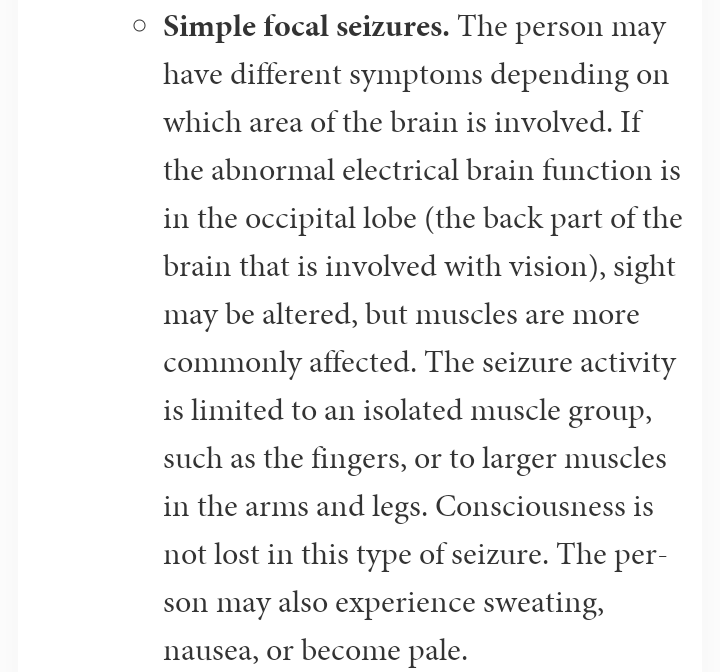
1. Simple Focal seizures.
2. Complex Focal seizures.
(Described in the pictures)
2) Generalized seizures:
Seizures that appear to involve all areas of the brain are called generalized seizures. Six types of generalized seizures exist.
1.Absence seizures: Absence seizures, previously known as petit mal seizures, often occur in children and are characterized
by characterized by staring into space or subtle body movements such as eye blinking or lip smacking. These seizures may occur in clusters and cause a brief loss of awareness.
2. Tonic seizures: Tonic seizures cause stiffening of your muscles. These seizures usually affect muscles in your back, arms and legs and may cause you to fall to the ground.
3. Atonic seizures: Atonic seizures, also known as drop seizures, cause a loss of muscle control, which
which may cause you to suddenly collapse or fall down.
4. Clonic seizures: Clonic seizures are associated with repeated or rhythmic, jerking muscle movements. These seizures usually affect the neck, face and arms.
5. Myoclonic seizures: Myoclonic seizures usually appear as sudden brief jerks or twitches of your arms and legs.
6. Tonic-clonic seizures: Tonic-clonic seizures, previously known as grand mal seizures, are the most dramatic type of epileptic seizure and can cause an abrupt loss
√ Causes:
Genetic Influence, Brain Condition,
Head Trauma, Infectious Diseases, Developmental Disorders, Prenatal injury are the most common causes.
√ Symptoms Or Warning signs may include:
• Staring
• Jerking movements of the arms and legs
• Stiffening of the body
• Loss of bowel or bladder control
• Falling suddenly for no apparent reason, especially when associated with loss of consciousness
• Not responding to noise or words for brief periods.
• Appearing confused or in a haze
• Nodding the head rhythmically, when associated with
loss of awareness or even loss of consciousness
• Periods of rapid eye blinking and staring.
√ Complications:
Other life-threatening complications of epilepsy are uncommon such as:
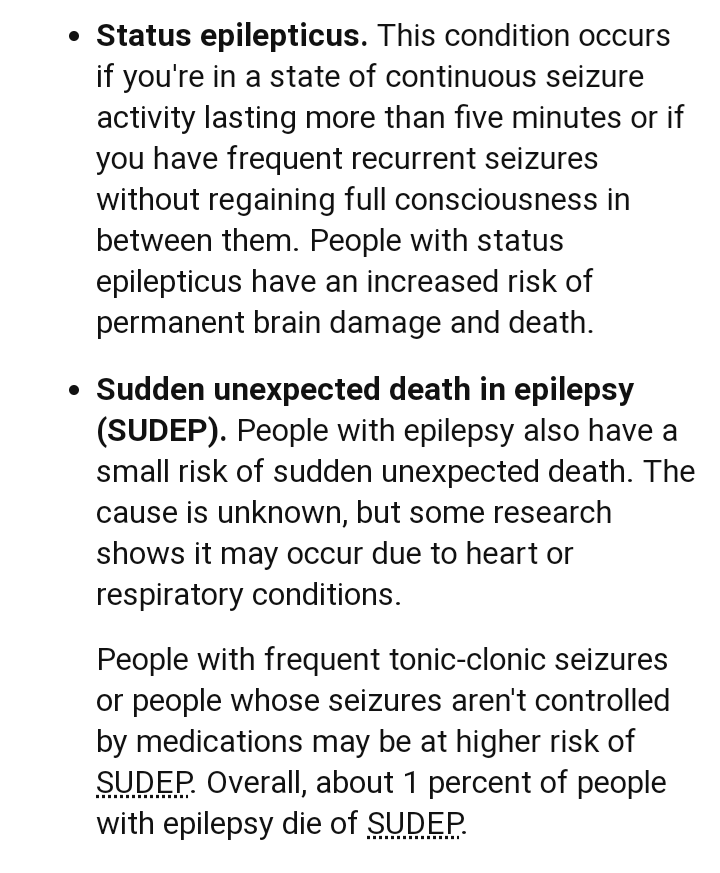
1. Status epilepticus.
2. Sudden unexpected death in epilepsy (SUDEP).
(Described in pic)
Treatment:
There are various methods to treat epilepsy depending upon the type of Seizures.
Treatments are described in pictures below.
Note:
I've managed this thread in such a way that you don't have to google things again n again.
Please share/retweet this thread as much as possible so if anyone unaware of seizures can get help.
May Allah heal all those who are suffering. Ameen. 🤲🏻❤️