For me, the accommodations I need are about time. My body doesn't care what I want to do - when I want to wake up or be asleep. My body wants to wake up at 10-11am, and go to sleep at 3am, always.
Just a one hour shift in my sleep schedule can screw me up for days. 2/16
When I tell people that I'd really "prefer it" if we could meet at 10am or later, it's because getting up before that has consequences for me. Big consequences. Most people won't see them. Sometimes I still give in and say it's fine. It ruins 2-3 of my days, sometimes more. 3/16
Let me explain. When I am required to wake up at 9am, esp. in covid times working from home, my body pays me back for it later.
I'm going to show you ways this happens. I can usually withstand 1 day of waking up early, with some consequences, but 2 days in a row kills me. 4/16
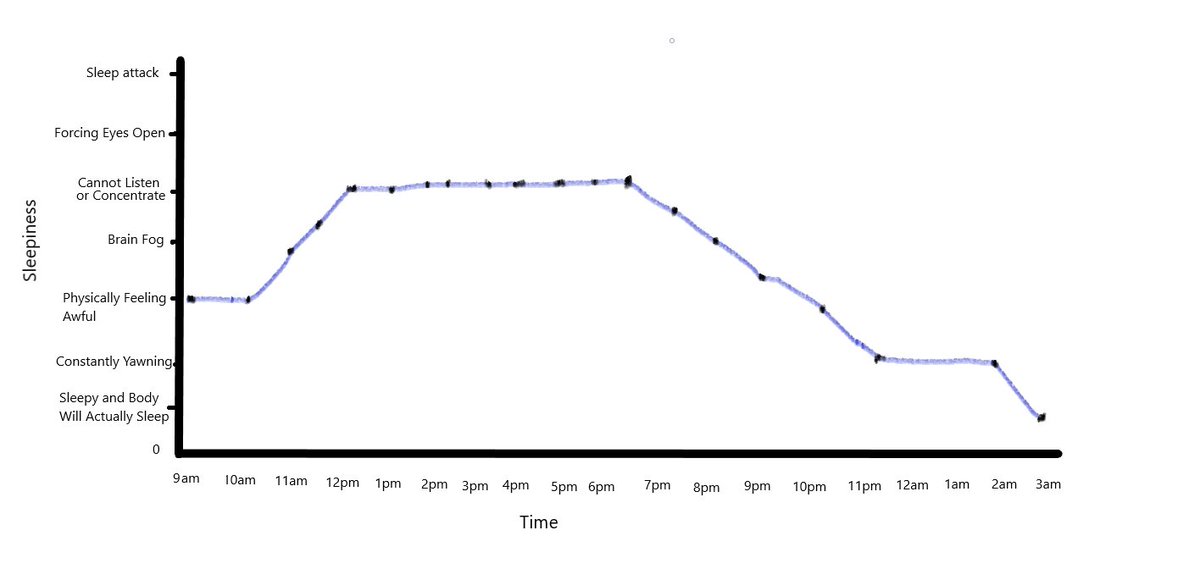
Let's say this graph represents Day 1, the first time I am required to get up early. The y-axis is my level of Sleepiness. Any symptom listed higher up includes that symptom + every other symptom below it. Getting up that early means I can't listen or concentrate all day. 5/16
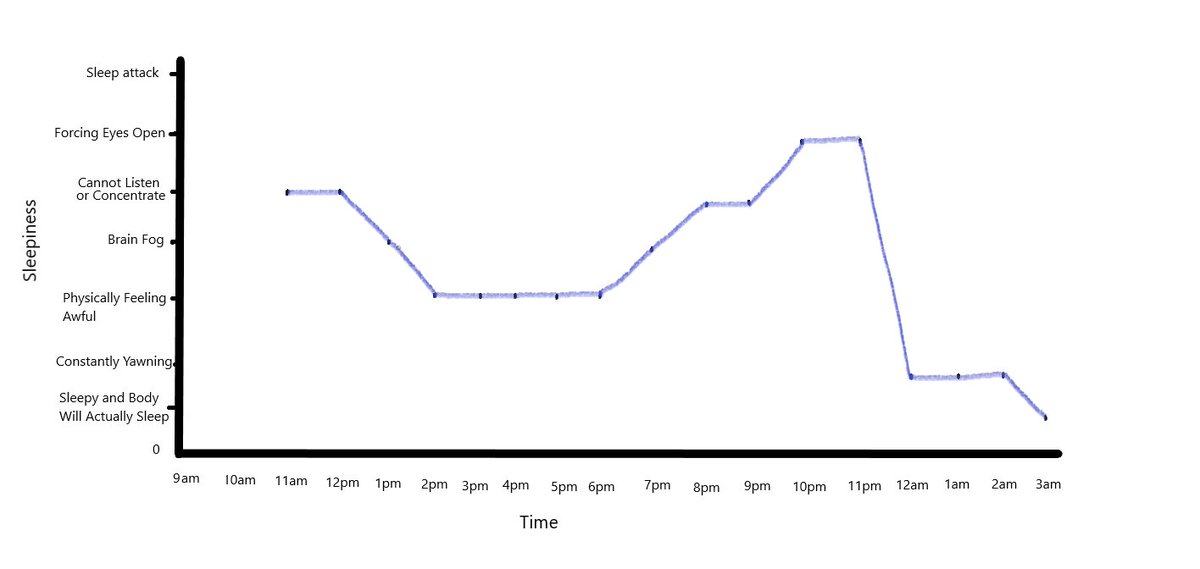
Now there are 2 options for Day 2. Let's call this option Day 2A.
This is when I can sleep in until 11am because I do not have an event the next day. My body is not happy because of my switch in sleep cycles. It's not great, but it's not completely terrible. 6/16
Note that the "forces eyes open" and "sleep attack" tick marks really should be a lot higher than the other categories of sleepiness. Going into those categories is another level of horrible. It's like my brain is addicted to sleep in those moments. 7/16
And I can fight it all I want, but it's not up to me. My body just craves sleep. It doesn't matter if I don't want to fall asleep. And it's not going to be good sleep either, it's going to be hallucinations and half-sleep. 8/16
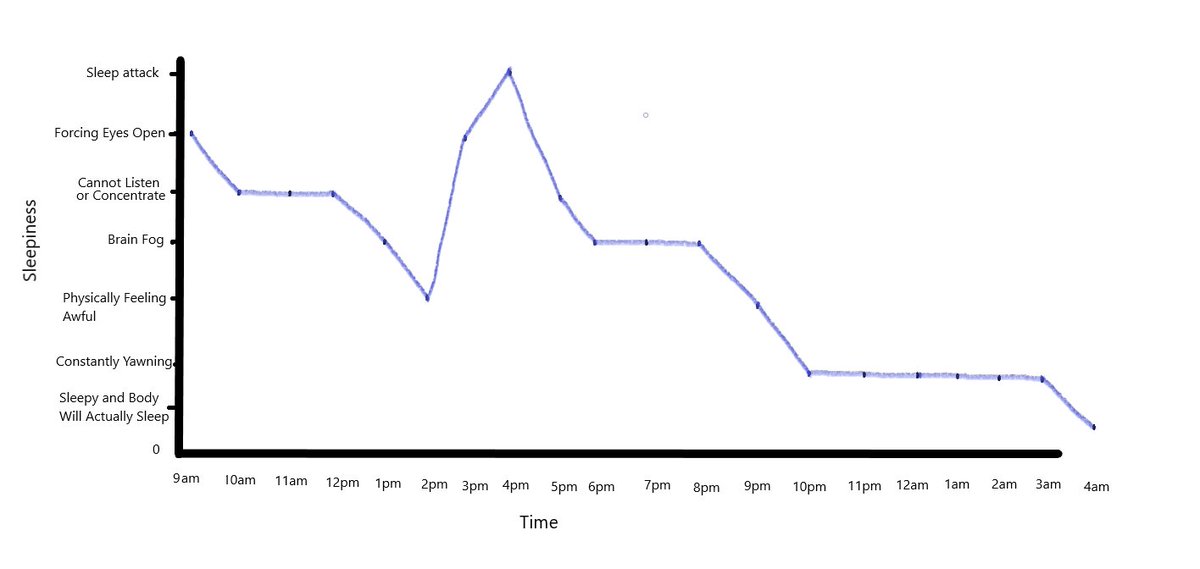
So here's what Day 2B looks like, when I have to have 2 days in a row that require me to wake up at 9am. This is what the 2nd day would look like for me. Significantly worse, sleep attack included. 9/16
When someone asks me "Hey there's really no good time to schedule this, can we go ahead and move it to [time before 10am]?" this is what I have to think about. And if I say "no" then I may be seen as rude or selfish. 10/16
Having a meeting or event before 10am for me, means giving up an entire day, possibly 2 or 3 days, of feeling okay and possibly being productive. I have a meeting this term that I can't move, and it means my entire weekend is essentially my body leveling out my sleep. 11/16
And sometimes this is why I end up working between 10pm and 2am, because I know I'll be awake, no matter what, for no particular reason. It doesn't matter when I go to bed or when I wake up, that's when I'll be most awake. 12/16
If I give in to that work pattern though, my sleep schedule gets worse and it makes it even harder to wake up in the morning. It means that even later meetings (10-11am meetings), or anything during the day, can be more of a struggle. It's a constant balancing act. 13/16
So when someone asks you to be flexible about meeting times, or to have meetings later (or earlier) due to their sleep issues, please just realize that for some of us, we don't control our attentiveness/sleepiness/sleep schedule in our lives. And it's a struggle. 14/16
So even if you don't want to, even if it's hard to schedule, please just remember what we're giving up when you say that you're too busy or that there's no other time. And I'm not saying it's possible to accommodate us 100% all the time. 15/16
But please just acknowledge that it's hard and that we often sacrifice a lot of ourselves to literally just -be there.- Please recognize that sometimes we are only going to be able to just be there, and that is absolutely enough.
If you can, please accommodate us. 16/16