🇺🇸🏛️ The US Department of the Treasury’s Office of Foreign Assets Control designated a 🇨🇳 China-based supplier of graphite electrodes, a key element in steel production, as well as twelve 🇮🇷 Iranian producers of steel and other metals products, and three foreign-based sales
Treasury sanctions key actors in Iran\u2019s steel sector https://t.co/NxjgtQr6h2
— Treasury Department (@USTreasury) January 5, 2021
More from Government







A thread.
The Government's strategy at the beginning of the pandemic was to 'cocoon' the vulnerable (e.g. those in care homes). This was a 'herd immunity' strategy. This interview is from
Government #coronavirus science advisor Dr David Halpern tells me of plans to \u2018cocoon\u2019 vulnerable groups. pic.twitter.com/dhECJNbmnI
— Mark Easton (@BBCMarkEaston) March 11, 2020
This strategy failed. It is impossible to 'cocoon' the vulnerable, as Covid is passed from younger people to older, more vulnerable people.
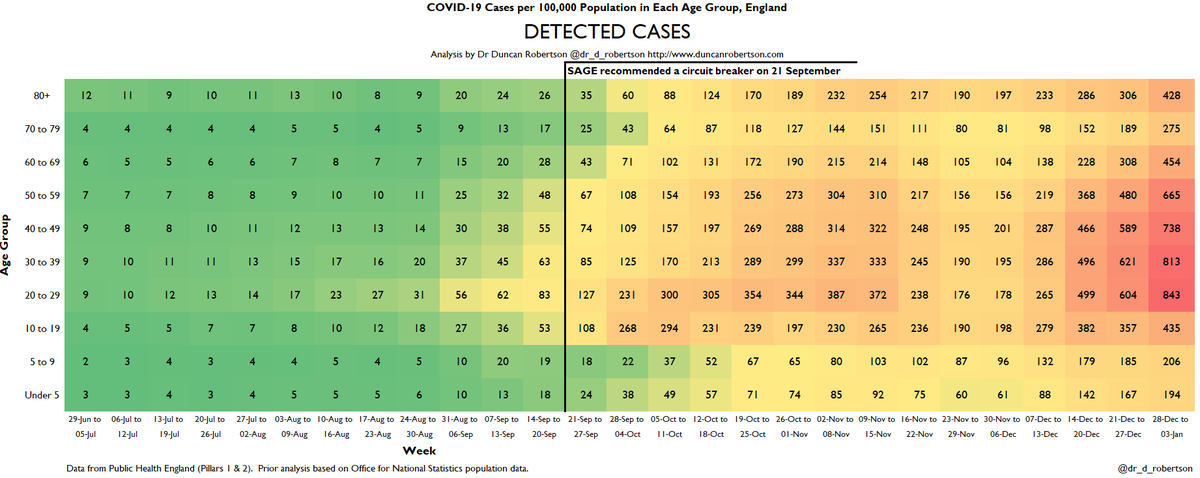
We can see this playing out through heatmaps. e.g. these heatmaps from the second
Here are the heatmaps for Covid detected cases, positivity, hospitalizations, and ICU admissions. This is for the week to 3 January 2021.
— Dr Duncan Robertson (@Dr_D_Robertson) January 7, 2021
I have marked a line on 21 September, when SAGE recommended a circuit breaker, so you can see how the situation has deteriorated since then. pic.twitter.com/SEEVgUVK4j
The Government then decided to change its strategy to 'preventing a second wave that overwhelms the NHS'. This was announced on 8 June in Parliament.
This is not the same as 'preventing a second wave'.
https://t.co/DPWiJbCKRm
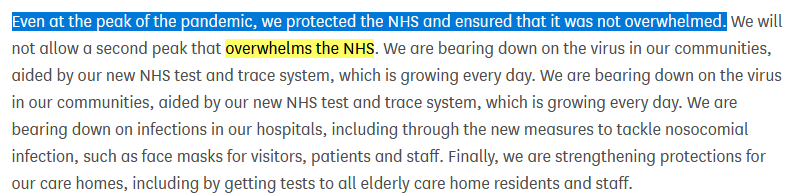
The Academy of Medical Scientists published a report on 14 July 'Preparing for a Challenging Winter' commissioned by the Chief Scientific Adviser that set out what needed to be done in order to prevent a catastrophe over the winter
One thing civil servants learn is to write things down. Here is @acadmedsci's 14 July report commissioned by @uksciencechief. For the record.
— Dr Duncan Robertson (@Dr_D_Robertson) September 17, 2020


Sen. @JohnCornyn on budget reconciliation: "Chipping away at the rights of the minority may help you now. But you're sure to regret that someday." pic.twitter.com/12wwUkq43r
— The Hill (@thehill) February 1, 2021
https://t.co/W18nqFlLru

The GOP got rid of the SCOTUS filibuster so they could jam through three fringy right-wing Alito clones, including one right before the election, but sure thing, bud.
“Uh, actually, they got rid of the SCOTUS filibuster because Harry Reid did it first for something totally different! I am very smart!”
No. Knock it off.
Here’s the thing about the “But Harry Reid...” excuse:
1. McConnell was holding up Obama nominees, some *for literal years* without a vote.
2. Had he *not* done that, Trump would have inherited *even more* vacant seats.

You May Also Like


Ironies of Luck https://t.co/5BPWGbAxFi
— Morgan Housel (@morganhousel) March 14, 2018
"Luck is the flip side of risk. They are mirrored cousins, driven by the same thing: You are one person in a 7 billion player game, and the accidental impact of other people\u2019s actions can be more consequential than your own."
I’ve always felt that the luckiest people I know had a talent for recognizing circumstances, not of their own making, that were conducive to a favorable outcome and their ability to quickly take advantage of them.
In other words, dumb luck was just that, it required no awareness on the person’s part, whereas “smart” luck involved awareness followed by action before the circumstances changed.
So, was I “lucky” to be born when I was—nothing I had any control over—and that I came of age just as huge databases and computers were advancing to the point where I could use those tools to write “What Works on Wall Street?” Absolutely.
Was I lucky to start my stock market investments near the peak of interest rates which allowed me to spend the majority of my adult life in a falling rate environment? Yup.