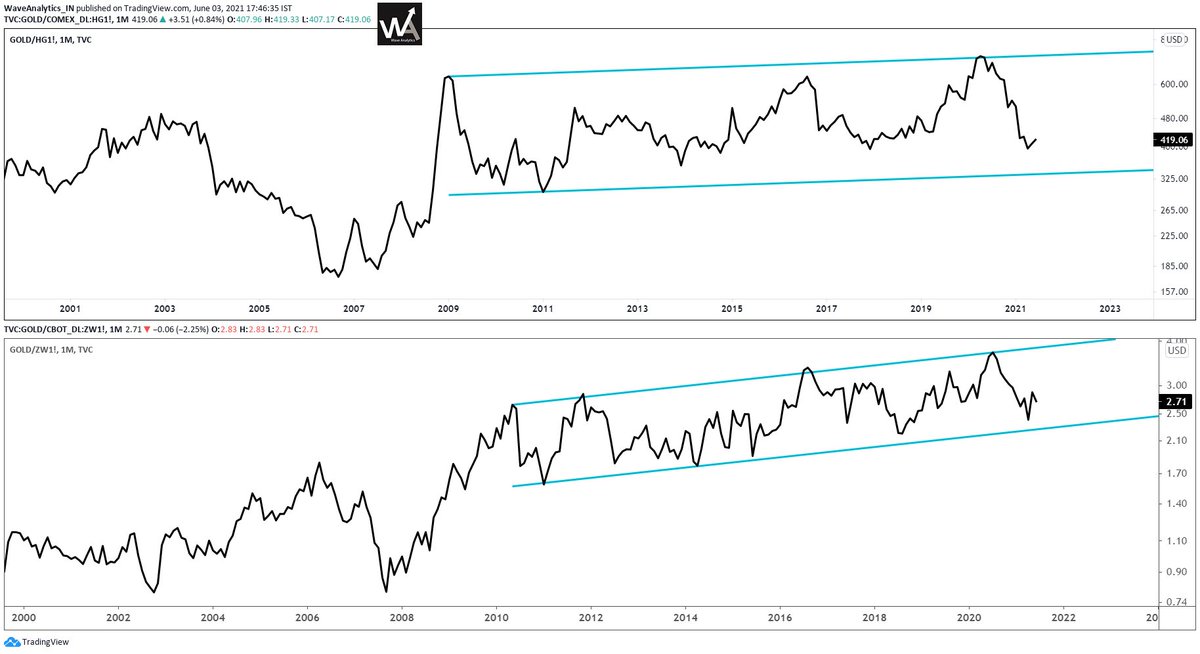
More from Piyush Chaudhry
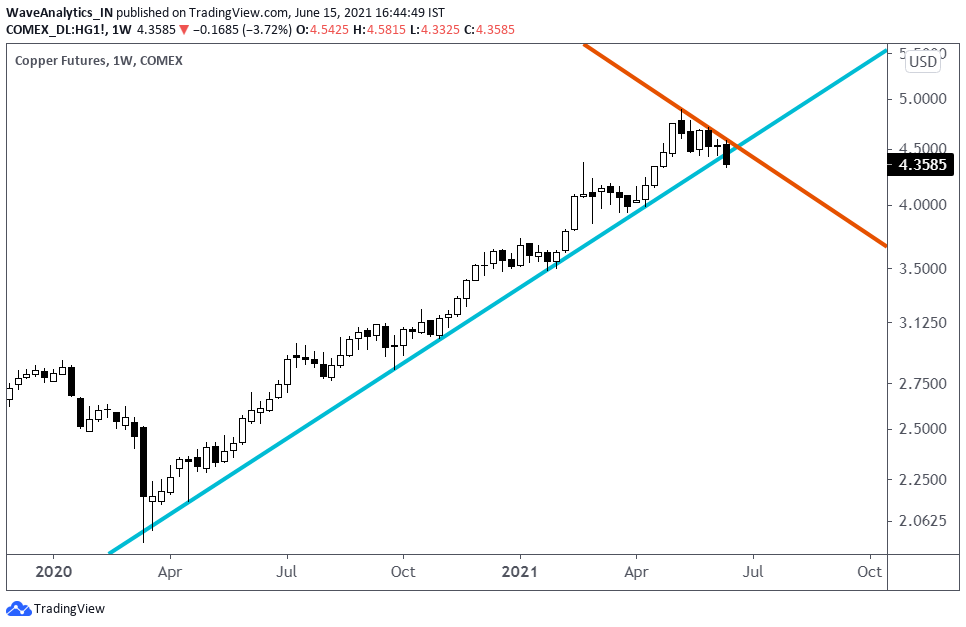
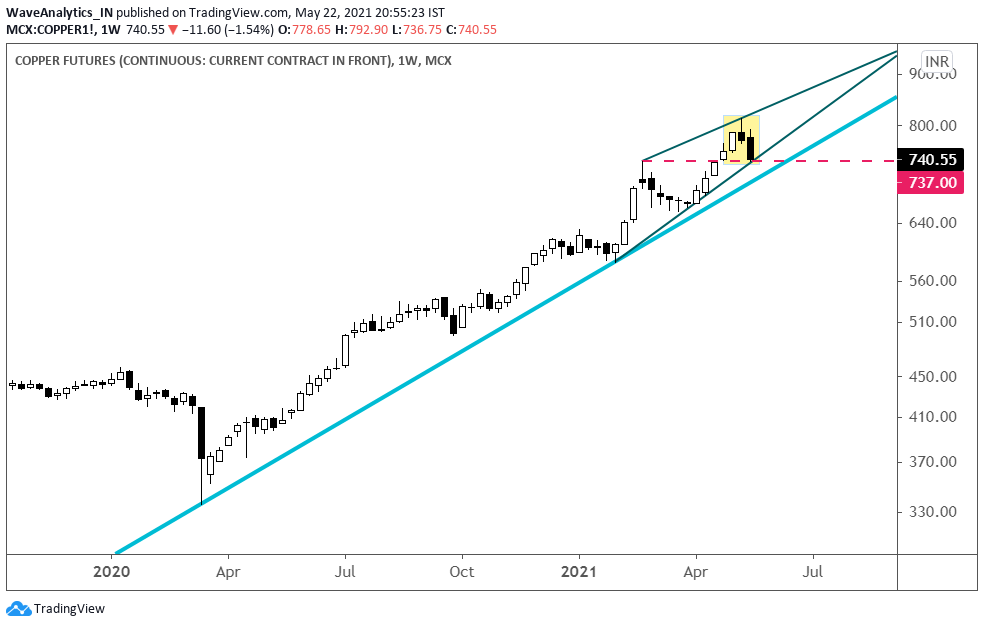
Copper breaching the rising Trendline.
Weekly Candles, so we still need to wait.
Earlier two tweets on Copper:
1. Copper - EM:
https://t.co/WogWRMIMHH
and,
2. Copper - Gold
https://t.co/Cq2zcn4bi3
Weekly Candles, so we still need to wait.
Earlier two tweets on Copper:
1. Copper - EM:
https://t.co/WogWRMIMHH
and,
2. Copper - Gold
https://t.co/Cq2zcn4bi3
Amazingly super positive correlation between Emerging Markets and Copper.
— Piyush Chaudhry (@piyushchaudhry) June 2, 2021
*MSCI Emerging Markets ETF #EEM
*Copper Futures #Comex pic.twitter.com/rVAwfqvqD4
More from Gold
90% of my savings were in equity, debt was never attractive! Last few months have taught me the imp of diversification!
Gold - through SGBs was my move on diversifying! Holder since Jan'20 - so far so good!
A🧵on talk given by @PositiveGamma on Investing in Gold!
(1/16)
Link to the here - https://t.co/NxEkVKZi2H
MMTC PAMP is where Krishna worked before Setu and he was also responsible for launching Digi Gold at PayTM!
1) Why Gold?
1.1 Diversification - Volatility & Returns not tied to market conditions - diff. from financial assets.
(2/16)
1.2 Safe Haven - High value asset, easy to transport! Large value - limited space. Liquid and easy to convert to cash across the world.
1.3 Hedge against inflation and currency depreciation! (Depreciation of Rupee is a major factor behind Gold returns in India)
(3/16)
1.4 Upside in Tail Risk - Confidence in currencies & financial systems is low, gold can see upside in scenarios like this!
1.5 Upside on Demand/Supply - Constant Demand - Supply is stable!
2) Gold - Indian Context - Better returns compared to other asset classes...
(4/16)
... specially in the last 2-3 years. Gold has done well both in low inflation & high inflation returns. So both real (ex. inflation) & nominal returns have been good!
3) How much to Allocate?
3.1 Diversification/Inflation Hedge - 10-20%
3.2 Tail Risk/Safe Haven - 5-20%
(5/16)
Gold - through SGBs was my move on diversifying! Holder since Jan'20 - so far so good!
A🧵on talk given by @PositiveGamma on Investing in Gold!
(1/16)
Link to the here - https://t.co/NxEkVKZi2H
MMTC PAMP is where Krishna worked before Setu and he was also responsible for launching Digi Gold at PayTM!
1) Why Gold?
1.1 Diversification - Volatility & Returns not tied to market conditions - diff. from financial assets.
(2/16)
1.2 Safe Haven - High value asset, easy to transport! Large value - limited space. Liquid and easy to convert to cash across the world.
1.3 Hedge against inflation and currency depreciation! (Depreciation of Rupee is a major factor behind Gold returns in India)
(3/16)
1.4 Upside in Tail Risk - Confidence in currencies & financial systems is low, gold can see upside in scenarios like this!
1.5 Upside on Demand/Supply - Constant Demand - Supply is stable!
2) Gold - Indian Context - Better returns compared to other asset classes...
(4/16)
... specially in the last 2-3 years. Gold has done well both in low inflation & high inflation returns. So both real (ex. inflation) & nominal returns have been good!
3) How much to Allocate?
3.1 Diversification/Inflation Hedge - 10-20%
3.2 Tail Risk/Safe Haven - 5-20%
(5/16)
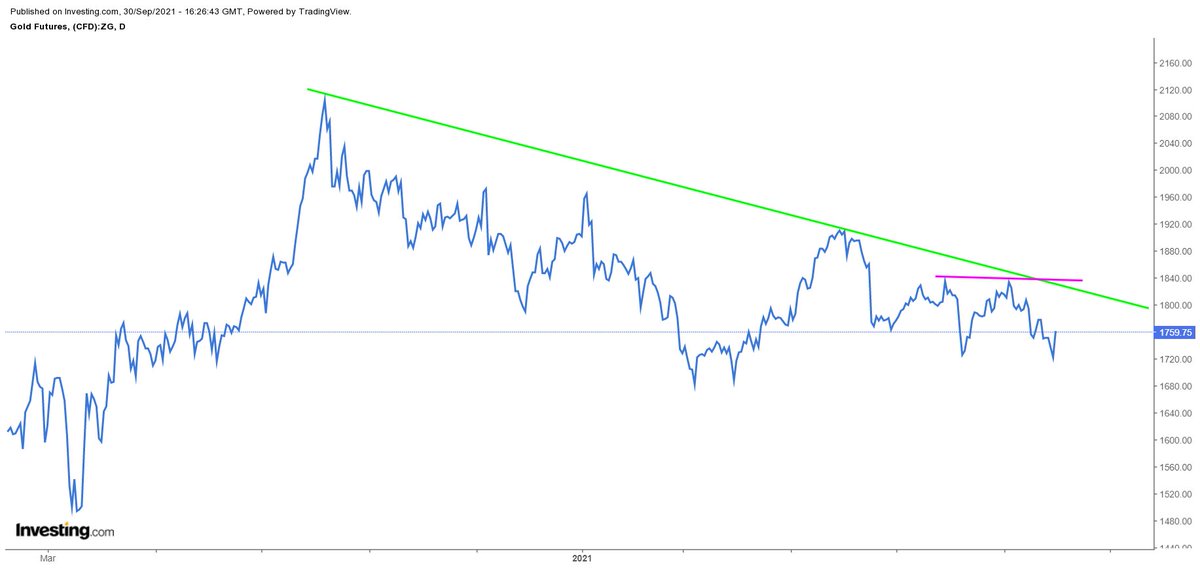
What my simple analysis showed was the decadal breakout in making in #Gold along with the outperformance over S&P500 #SPX
Result?
1850$ to 2070$
Updated chart https://t.co/l6pEGD7r6D
Result?
1850$ to 2070$
Updated chart https://t.co/l6pEGD7r6D
Most interesting chart:
— The_Chartist \U0001f4c8 (@charts_zone) February 12, 2022
Orange line = Gold
Blue Curve = Gold/S&P 500
Previously the ratio crossed 50 days MA in Feb' 20 with Gold giving a breakout on the charts. The previous cross of 50 days MA didn't result in gold breaking out. pic.twitter.com/HRG1fvsILp
You May Also Like
THREAD: 12 Things Everyone Should Know About IQ
1. IQ is one of the most heritable psychological traits – that is, individual differences in IQ are strongly associated with individual differences in genes (at least in fairly typical modern environments). https://t.co/3XxzW9bxLE
2. The heritability of IQ *increases* from childhood to adulthood. Meanwhile, the effect of the shared environment largely fades away. In other words, when it comes to IQ, nature becomes more important as we get older, nurture less. https://t.co/UqtS1lpw3n
3. IQ scores have been increasing for the last century or so, a phenomenon known as the Flynn effect. https://t.co/sCZvCst3hw (N ≈ 4 million)
(Note that the Flynn effect shows that IQ isn't 100% genetic; it doesn't show that it's 100% environmental.)
4. IQ predicts many important real world outcomes.
For example, though far from perfect, IQ is the single-best predictor of job performance we have – much better than Emotional Intelligence, the Big Five, Grit, etc. https://t.co/rKUgKDAAVx https://t.co/DWbVI8QSU3
5. Higher IQ is associated with a lower risk of death from most causes, including cardiovascular disease, respiratory disease, most forms of cancer, homicide, suicide, and accident. https://t.co/PJjGNyeQRA (N = 728,160)
1. IQ is one of the most heritable psychological traits – that is, individual differences in IQ are strongly associated with individual differences in genes (at least in fairly typical modern environments). https://t.co/3XxzW9bxLE
2. The heritability of IQ *increases* from childhood to adulthood. Meanwhile, the effect of the shared environment largely fades away. In other words, when it comes to IQ, nature becomes more important as we get older, nurture less. https://t.co/UqtS1lpw3n
3. IQ scores have been increasing for the last century or so, a phenomenon known as the Flynn effect. https://t.co/sCZvCst3hw (N ≈ 4 million)
(Note that the Flynn effect shows that IQ isn't 100% genetic; it doesn't show that it's 100% environmental.)
4. IQ predicts many important real world outcomes.
For example, though far from perfect, IQ is the single-best predictor of job performance we have – much better than Emotional Intelligence, the Big Five, Grit, etc. https://t.co/rKUgKDAAVx https://t.co/DWbVI8QSU3
5. Higher IQ is associated with a lower risk of death from most causes, including cardiovascular disease, respiratory disease, most forms of cancer, homicide, suicide, and accident. https://t.co/PJjGNyeQRA (N = 728,160)