1/ Regulations are ultimately about managing risk, whether that risk is fraud, unsafe practices or someone building an ugly building.
The more (actually or performatively) worried you are about the specific risk, the more checks, approvals, rules and guidelines you put in place.
Their regulations tend to assume that management are bastards, and must be monitored and constrained lest they exploit people or generate negative externalities for profit.
Their regulations tend to assume folks are out to scam any benefits scheme, and must be monitored and constrained lest they take advantage of the tax-payer's generosity.
The specific behaviors targeted tend to be different (criminalizing hate speech vs criminalizing drug use, for example), but it's still all regulation.
Because cutting regulations on something you don't think should be controlled is harder administratively and politically than new rules on an area you think is too lax, the democratic back and forth tends to lead to ever increasing aggregate levels of regulation.
"We want to (largely performatively) trim some regulation in the areas we aren't worried about, but we'll be adding much more in the areas we are."
Transparency, digitization, single windows, removing arbitrary gatekeepers, and removing pointless redundancy. /end
More from For later read

Wow, Morgan McSweeney again, Rachel Riley, SFFN, Center for Countering Digital Hate, Imran Ahmed, JLM, BoD, Angela Eagle, Tracy-Ann Oberman, Lisa Nandy, Steve Reed, Jon Cruddas, Trevor Chinn, Martin Taylor, Lord Ian Austin and Mark Lewis. #LabourLeaks #StarmerOut 24 tweet🧵
Morgan McSweeney, Keir Starmer’s chief of staff, launched the organisation that now runs SFFN.
The CEO Imran Ahmed worked closely with a number of Labour figures involved in the campaign to remove Jeremy as leader.
Rachel Riley is listed as patron. https://t.co/nGY5QrwBD0

SFFN claims that it has been “a project of the Center For Countering Digital Hate” since 4 May 2020. The relationship between the two organisations, however, appears to date back far longer. And crucially, CCDH is linked to a number of figures on the Labour right. #LabourLeaks
Center for Countering Digital Hate registered at Companies House on 19 Oct 2018, the organisation’s only director was Morgan McSweeney – Labour leader Keir Starmer’s chief of staff. McSweeney was also the campaign manager for Liz Kendall’s leadership bid. #LabourLeaks #StarmerOut
Sir Keir - along with his chief of staff, Morgan McSweeney - held his first meeting with the Jewish Labour Movement (JLM). Deliberately used the “anti-Semitism” crisis as a pretext to vilify and then expel a leading pro-Corbyn activist in Brighton and Hove
Morgan McSweeney, Keir Starmer’s chief of staff, launched the organisation that now runs SFFN.
The CEO Imran Ahmed worked closely with a number of Labour figures involved in the campaign to remove Jeremy as leader.
Rachel Riley is listed as patron. https://t.co/nGY5QrwBD0
SFFN claims that it has been “a project of the Center For Countering Digital Hate” since 4 May 2020. The relationship between the two organisations, however, appears to date back far longer. And crucially, CCDH is linked to a number of figures on the Labour right. #LabourLeaks
Center for Countering Digital Hate registered at Companies House on 19 Oct 2018, the organisation’s only director was Morgan McSweeney – Labour leader Keir Starmer’s chief of staff. McSweeney was also the campaign manager for Liz Kendall’s leadership bid. #LabourLeaks #StarmerOut
Sir Keir - along with his chief of staff, Morgan McSweeney - held his first meeting with the Jewish Labour Movement (JLM). Deliberately used the “anti-Semitism” crisis as a pretext to vilify and then expel a leading pro-Corbyn activist in Brighton and Hove

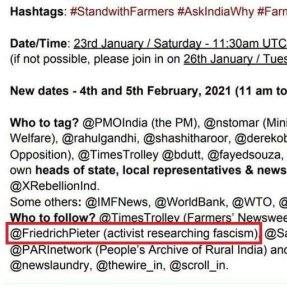
A name has caught the radar of agencies investigating #GretaToolkit- FRIEDRICH PIETER. Delhi Police expressed shock over the appearance of Pieter's name as "Who to Follow" in g-doc as he is under cops' scanner since 2006 for his Anti-India activities. Some shocking details..
1/9
Pieter is close associate (read hired by) Bhajan Singh Bhindar, founder of OFMI (Org for Minorities of India) that considers itself an anti-Gandhi 'crusader' & is Pro-Khalistan. They also campaigned to free Bhullar (convicted Khalistani terr0r!st) & lobby against Modi in US.
2/9
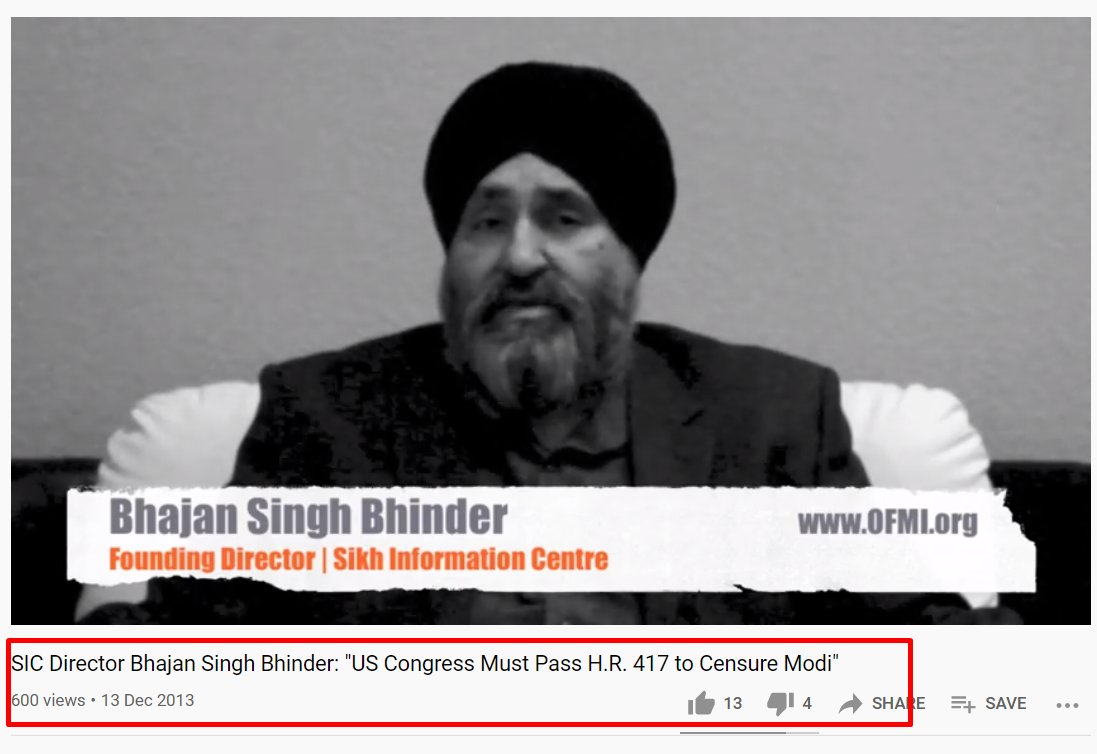
Bhinder has alleged connection with ISI & had records of owning inter-state drugs cartel & DVD piracy for terr0r funding. They also took control Fremont Gurudwara, US back in 2003 for millions of donation. Details of this 'Info-War' by @DisinfoLab
https://t.co/oIDFSoaDX2
3/9
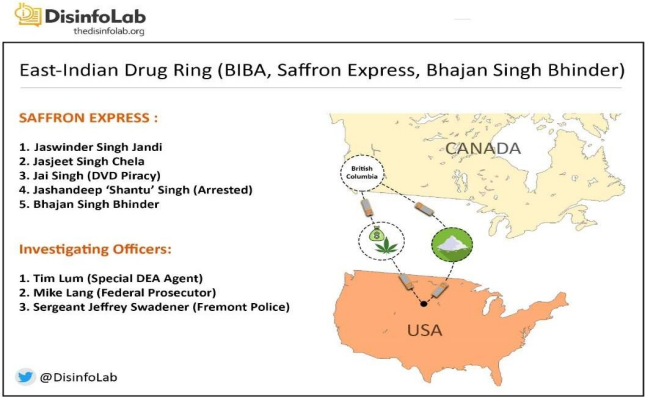
Back to Pieter. Take a glance at his work. His TL is filled with anti-BJP/RSS/Modi propaganda. From his speeches to articles, everything have few keywords in common- RSS/Fascism/gen0c!de/k!ll!ing/Kashmir/Hindutva, as if running a non-stop unrest in India is his bread & butter
4/9
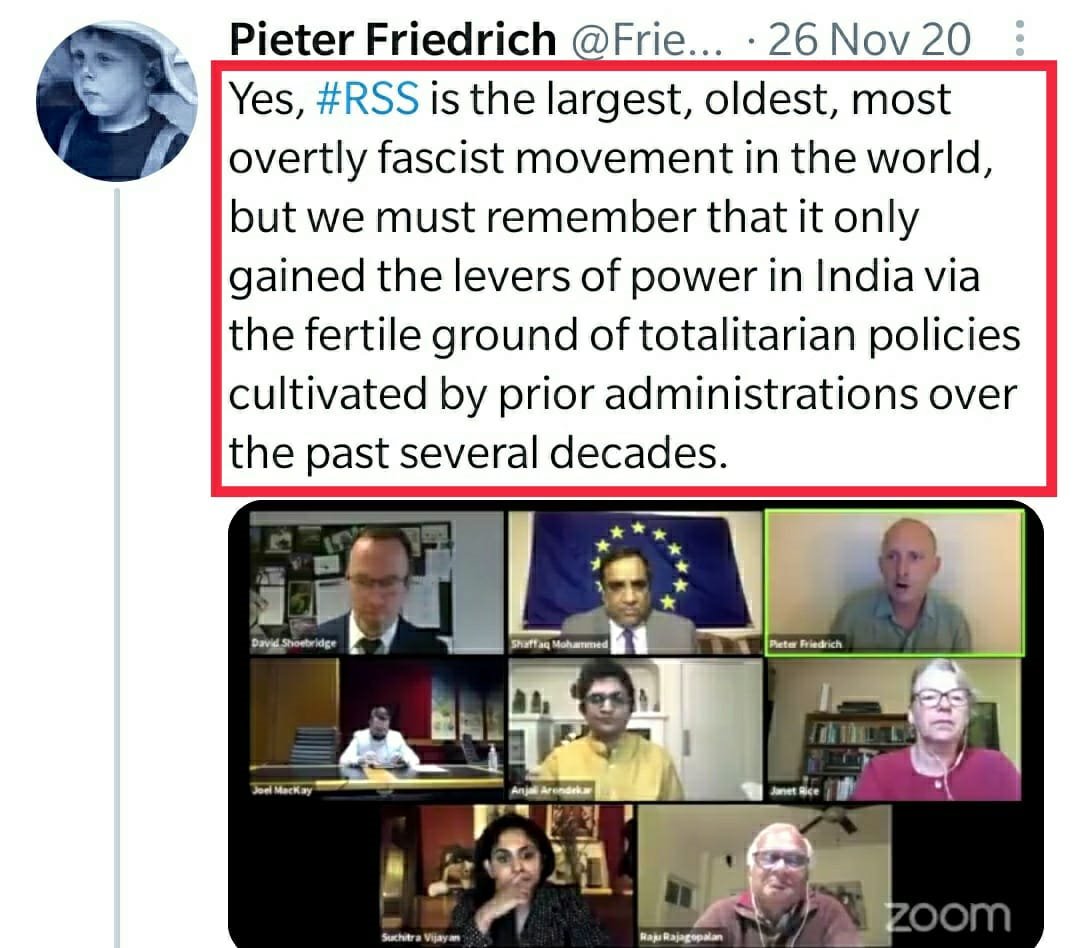
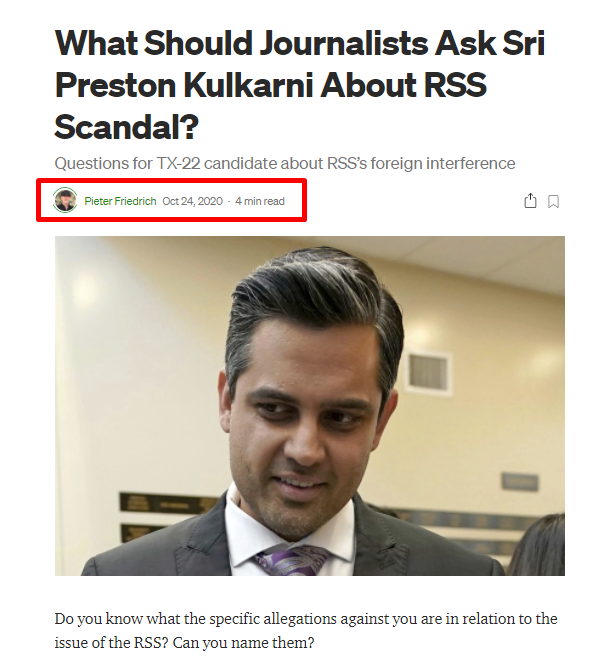
He picks every topic with an extreme narrative that potentially hurts integrity of nation, be it Kashmir,CAA,1984 & with his recent projects- Farmer protest & campaigning heavily against Sri Kulkarni. Despite all, Kulkarni appointed as Chief of Ext Affairs at Biden admin.
5/9
1/9
Pieter is close associate (read hired by) Bhajan Singh Bhindar, founder of OFMI (Org for Minorities of India) that considers itself an anti-Gandhi 'crusader' & is Pro-Khalistan. They also campaigned to free Bhullar (convicted Khalistani terr0r!st) & lobby against Modi in US.
2/9
Bhinder has alleged connection with ISI & had records of owning inter-state drugs cartel & DVD piracy for terr0r funding. They also took control Fremont Gurudwara, US back in 2003 for millions of donation. Details of this 'Info-War' by @DisinfoLab
https://t.co/oIDFSoaDX2
3/9
Back to Pieter. Take a glance at his work. His TL is filled with anti-BJP/RSS/Modi propaganda. From his speeches to articles, everything have few keywords in common- RSS/Fascism/gen0c!de/k!ll!ing/Kashmir/Hindutva, as if running a non-stop unrest in India is his bread & butter
4/9
He picks every topic with an extreme narrative that potentially hurts integrity of nation, be it Kashmir,CAA,1984 & with his recent projects- Farmer protest & campaigning heavily against Sri Kulkarni. Despite all, Kulkarni appointed as Chief of Ext Affairs at Biden admin.
5/9



Today's Twitter threads (a Twitter thread).
Inside: Planet Money on HP's myriad ripoffs; Strength in numbers; and more!
Archived at: https://t.co/esjoT3u5Gr
#Pluralistic
1/

On Feb 22, I'm delivering a keynote address for the NISO Plus conference, "The day of the comet: what trustbusting means for digital manipulation."
https://t.co/Z84xicXhGg
2/

Planet Money on HP's myriad ripoffs: Ink-stained wretches of the world, unite!
https://t.co/k5ASdVUrC2
3/

Strength in numbers: The crisis in accounting.
https://t.co/DjfAfHWpNN
4/

#15yrsago Bad Samaritan family won’t return found expensive camera https://t.co/Rn9E5R1gtV
#10yrsago What does Libyan revolution mean for https://t.co/Jz28qHVhrV? https://t.co/dN1e4MxU4r
5/

Inside: Planet Money on HP's myriad ripoffs; Strength in numbers; and more!
Archived at: https://t.co/esjoT3u5Gr
#Pluralistic
1/
On Feb 22, I'm delivering a keynote address for the NISO Plus conference, "The day of the comet: what trustbusting means for digital manipulation."
https://t.co/Z84xicXhGg
2/
Planet Money on HP's myriad ripoffs: Ink-stained wretches of the world, unite!
https://t.co/k5ASdVUrC2
3/
Back in November, I published an article for @EFF about @HP's latest printer-ink ripoff: after offering its customers a free-ink-for-life plan, it unilaterally switched them all to a $1/month-for-life plan.https://t.co/bsc73xPSuo
— Cory Doctorow #BLM (@doctorow) February 18, 2021
1/ pic.twitter.com/tagduPupA5
Strength in numbers: The crisis in accounting.
https://t.co/DjfAfHWpNN
4/
Accountancy is more likely to be mocked than celebrated (or condemned), but accountants, far more than poets, are the unacknowledged legislators of the world.
— Cory Doctorow #BLM (@doctorow) February 18, 2021
1/ pic.twitter.com/FaNQc66gQN
#15yrsago Bad Samaritan family won’t return found expensive camera https://t.co/Rn9E5R1gtV
#10yrsago What does Libyan revolution mean for https://t.co/Jz28qHVhrV? https://t.co/dN1e4MxU4r
5/

#IDTwitter #IDFellows
Introducing our new series: “IDFN top 10 articles every fellow should read”🔖
#1: SAB management
by @mmcclean1 @LeMiguelChavez
Reviewers @KaBourgi, @IgeGeorgeMD, @Courtcita, @MDdreamchaser
We know is subjective & expect feedback/future improvements 👇
1. Clinical management of Staphylococcus aureus bacteremia: a review.
https://t.co/9tBCtp9mlP
👉 A must read written by Holland et al. where they review the evidence of the management of SAB.
2. Impact of Infectious Disease Consultation on Quality of Care, Mortality, and Length of Stay in Staphylococcus aureus Bacteremia: Results From a Large Multicenter Cohort Study.
https://t.co/XujO68pCuH
👉ID consult associated with reduced inpatient mortality.
3. Predicting Risk of Endocarditis Using a Clinical Tool (PREDICT): Scoring System to Guide Use of Echocardiography in the Management of Staphylococcus aureus Bacteremia
https://t.co/otcA1pxjAw
👉Predictive risk factors for infective endocarditis, and thus the need for TEE.
4. The Cefazolin Inoculum Effect Is Associated With Increased Mortality in Methicillin-Susceptible Staphylococcus aureus Bacteremia.
https://t.co/CQZiryVWZz
👉Presence of cefazolin inoculum effect in the infecting isolate was associated with an increase 30-day mortality.
Introducing our new series: “IDFN top 10 articles every fellow should read”🔖
#1: SAB management
by @mmcclean1 @LeMiguelChavez
Reviewers @KaBourgi, @IgeGeorgeMD, @Courtcita, @MDdreamchaser
We know is subjective & expect feedback/future improvements 👇
1. Clinical management of Staphylococcus aureus bacteremia: a review.
https://t.co/9tBCtp9mlP
👉 A must read written by Holland et al. where they review the evidence of the management of SAB.
2. Impact of Infectious Disease Consultation on Quality of Care, Mortality, and Length of Stay in Staphylococcus aureus Bacteremia: Results From a Large Multicenter Cohort Study.
https://t.co/XujO68pCuH
👉ID consult associated with reduced inpatient mortality.
3. Predicting Risk of Endocarditis Using a Clinical Tool (PREDICT): Scoring System to Guide Use of Echocardiography in the Management of Staphylococcus aureus Bacteremia
https://t.co/otcA1pxjAw
👉Predictive risk factors for infective endocarditis, and thus the need for TEE.
4. The Cefazolin Inoculum Effect Is Associated With Increased Mortality in Methicillin-Susceptible Staphylococcus aureus Bacteremia.
https://t.co/CQZiryVWZz
👉Presence of cefazolin inoculum effect in the infecting isolate was associated with an increase 30-day mortality.
You May Also Like


The entire discussion around Facebook’s disclosures of what happened in 2016 is very frustrating. No exec stopped any investigations, but there were a lot of heated discussions about what to publish and when.
In the spring and summer of 2016, as reported by the Times, activity we traced to GRU was reported to the FBI. This was the standard model of interaction companies used for nation-state attacks against likely US targeted.
In the Spring of 2017, after a deep dive into the Fake News phenomena, the security team wanted to publish an update that covered what we had learned. At this point, we didn’t have any advertising content or the big IRA cluster, but we did know about the GRU model.
This report when through dozens of edits as different equities were represented. I did not have any meetings with Sheryl on the paper, but I can’t speak to whether she was in the loop with my higher-ups.
In the end, the difficult question of attribution was settled by us pointing to the DNI report instead of saying Russia or GRU directly. In my pre-briefs with members of Congress, I made it clear that we believed this action was GRU.
The story doesn\u2019t say you were told not to... it says you did so without approval and they tried to obfuscate what you found. Is that true?
— Sarah Frier (@sarahfrier) November 15, 2018
In the spring and summer of 2016, as reported by the Times, activity we traced to GRU was reported to the FBI. This was the standard model of interaction companies used for nation-state attacks against likely US targeted.
In the Spring of 2017, after a deep dive into the Fake News phenomena, the security team wanted to publish an update that covered what we had learned. At this point, we didn’t have any advertising content or the big IRA cluster, but we did know about the GRU model.
This report when through dozens of edits as different equities were represented. I did not have any meetings with Sheryl on the paper, but I can’t speak to whether she was in the loop with my higher-ups.
In the end, the difficult question of attribution was settled by us pointing to the DNI report instead of saying Russia or GRU directly. In my pre-briefs with members of Congress, I made it clear that we believed this action was GRU.