Affordable transportation. Reliable & built to last (with 10 year warranties). Fun and easy to ride every day. https://t.co/o69kOT19YX
Here's our Sunday Wrapup
- Our 2021 Spring Previews are out (will be linked below
- Bike shortages will be a real thing this year. We're already feeling it with some brands.
- We're upset/scared/frustrated about Covid, and are limiting appointments to urgent repairs only.
Affordable transportation. Reliable & built to last (with 10 year warranties). Fun and easy to ride every day. https://t.co/o69kOT19YX
--
Good availability on most models, limited availability on Arroyo Elite and EasyFlow
https://t.co/hZWhj1VLn8
--
So many amazing choices to have fun with your family while getting stuff done. Our family is rolling with a Larry vs Harry Bullitt, and a Tern GSD in 2021. https://t.co/mwC2oeDbru
This is a new opportunity for local businesses to take advantage of an incredible $2000 grant toward an electric cargo bike. We're here to consult with you on the best way to move your business forward, on a bike!
https://t.co/zpdXVKJB48
https://t.co/X5EYGtQGy6
Cafe will be closed (again... sigh...).
More from For later read





(1/50)
#Cardano “Understanding Kamali”
#Cardano will be the underpinning of the emergence of Africa.
To grasp the full weight of the SOLUTIONS #Cardano can provide it is pertinent to read “Understanding Africa” as I will draw directly from the PROBLEMS laid out.

(2/50)
Here is a link if you have not already read
(3/50)
What I will attempt to do here, is to create an immersive world for you to be placed in to grasp the weight and size of problems from the ground level and then take a grass-roots approach at solving them using #Cardano and its technology.
(4/50)
As an investor and community member of #Cardano, this should be extremely important to you as you have a stake (pun intended) in this.
“You are paid in direct proportion to the difficulty of the problems you solve” - @elonmusk
(5/50)
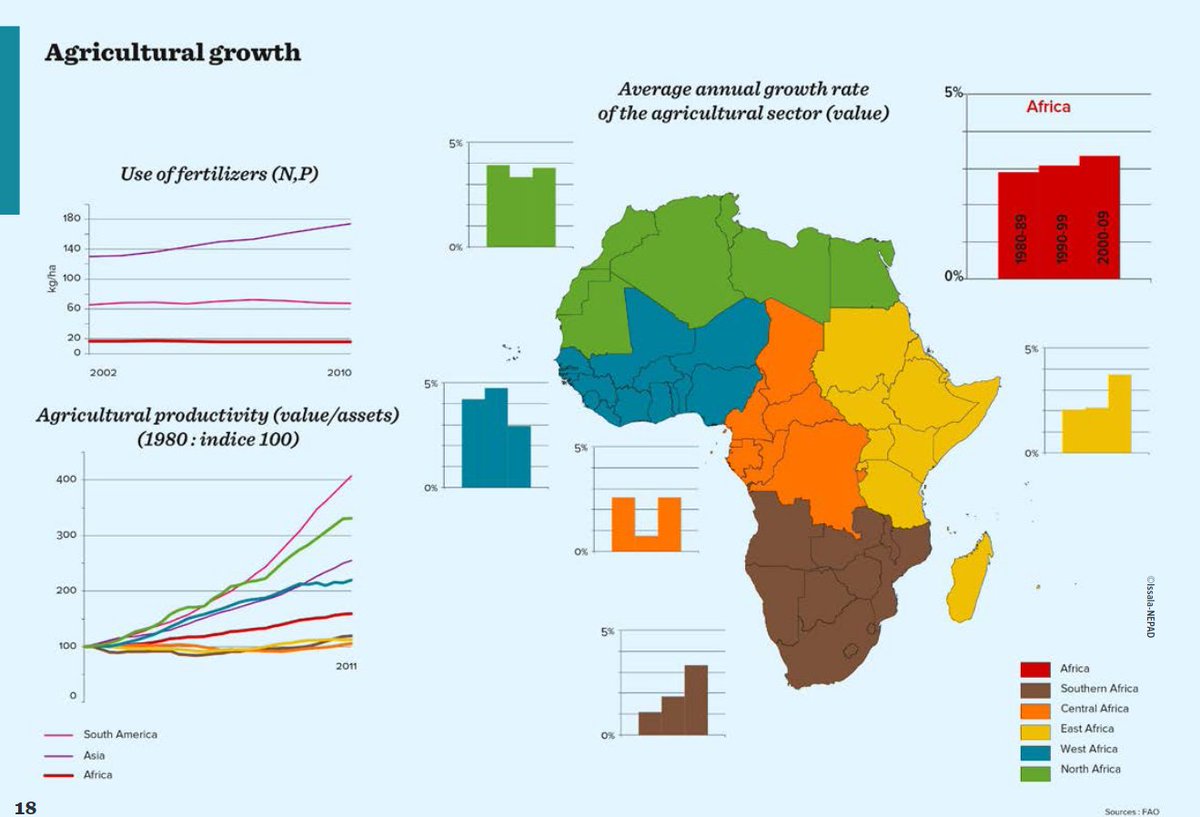
In Africa, agribusiness, more than any other sector, has the potential to reduce poverty and drive economic growth. Agriculture accounts for nearly half of the continent’s gross domestic product and employs 60 percent of the labor force.
#Cardano “Understanding Kamali”
#Cardano will be the underpinning of the emergence of Africa.
To grasp the full weight of the SOLUTIONS #Cardano can provide it is pertinent to read “Understanding Africa” as I will draw directly from the PROBLEMS laid out.
(2/50)
Here is a link if you have not already read
(1/38) #Cardano \u201cUnderstanding Africa\u201d (Part 1 of 2)
— FatCat (@fatcatofcrypto) February 10, 2021
This thread will be split into two parts with the 2nd coming out on Sunday.
Part 1 will layout the pervasive PROBLEMS Africa faces whereas Part 2 will apply direct technologies @InputOutputHK can implement as SOLUTIONS. pic.twitter.com/n3I91bnddq
(3/50)
What I will attempt to do here, is to create an immersive world for you to be placed in to grasp the weight and size of problems from the ground level and then take a grass-roots approach at solving them using #Cardano and its technology.
(4/50)
As an investor and community member of #Cardano, this should be extremely important to you as you have a stake (pun intended) in this.
“You are paid in direct proportion to the difficulty of the problems you solve” - @elonmusk
(5/50)
In Africa, agribusiness, more than any other sector, has the potential to reduce poverty and drive economic growth. Agriculture accounts for nearly half of the continent’s gross domestic product and employs 60 percent of the labor force.

Excited we finally have a draft of this paper, which attempts to provide a 'unifying theory' of the long economic divergence between the Middle East & Western Europe
As we see it, there are 3 recent theories that hit on important aspects of the divergence...
1/
One set of theories focus on the legitimating power of Islam (Rubin, @prof_ahmetkuru, Platteau). This gave religious clerics greater power, which pulled political resources away form those encouraging economic development
But these theories leave some questions unanswered...
2/
Religious legitimacy is only effective if people
care what religious authorities dictate. Given the economic consequences, why do people remain religious, and thereby render religious legitimacy effective? Is religiosity a cause or a consequence of institutional arrangements?
3/
Another set of theories focus on the religious proscriptions of Islam, particular those associated with Islamic law (@timurkuran). These laws were appropriate for the setting they formed but had unforeseeable consequences and failed to change as economic circumstances changed
4/
There are unaddressed questions here, too
Muslim rulers must have understood that Islamic law carried proscriptions that hampered economic development. Why, then, did they continue to use Islamic institutions (like courts) that promoted inefficiencies?
5/
As we see it, there are 3 recent theories that hit on important aspects of the divergence...
1/
New CEPR Discussion Paper - DP15802
— CEPR (@cepr_org) February 14, 2021
Culture, Institutions & the Long Divergence@albertobisin @nyuniversity, Jared Rubin @jaredcrubin @ChapmanU, Avner Seror @SerorAvner @amseaixmars @univamu, Thierry Verdier @PSEinfohttps://t.co/lhs6AJb7jE#CEPR_DE, #CEPR_EH, #CEPR_ITRE pic.twitter.com/FtMzAELljJ
One set of theories focus on the legitimating power of Islam (Rubin, @prof_ahmetkuru, Platteau). This gave religious clerics greater power, which pulled political resources away form those encouraging economic development
But these theories leave some questions unanswered...
2/
Religious legitimacy is only effective if people
care what religious authorities dictate. Given the economic consequences, why do people remain religious, and thereby render religious legitimacy effective? Is religiosity a cause or a consequence of institutional arrangements?
3/
Another set of theories focus on the religious proscriptions of Islam, particular those associated with Islamic law (@timurkuran). These laws were appropriate for the setting they formed but had unforeseeable consequences and failed to change as economic circumstances changed
4/
There are unaddressed questions here, too
Muslim rulers must have understood that Islamic law carried proscriptions that hampered economic development. Why, then, did they continue to use Islamic institutions (like courts) that promoted inefficiencies?
5/