For what it's worth, a THREAD on Gary Player, my dad, and redemption.

My father was politicized by sport. His experiences as a young, sport-obsessed Indian boy gave him his first real sense of the inequities of apartheid...

...seeing white kids playing cricket on perfect greens, in their crisp whites - a world away from what he had.
And because he developed such a strong sense of how sport and politics were intertwined, he loathed sportsmen who used their platform to support apartheid...
...who played a fair and gentlemanly game on the pitch, but off the pitch were cheerleaders for such extreme unfairness and injustice. None drew the ire of my dad more than Player.
It infuriated him that Player could thrive, despite being so publicly unrepentant, "in a democracy that he once did all he could to thwart".
Here was a sports star who had been a flag bearer for white supremacy - “I am a South African of Verwoerd and apartheid” - who refused to acknowledge his complicity in a historical crime, yet was honored by the ANC government with the Order of Ikhamanga in 2003.
My father often spoke about the travesty of Papwa Sewgolum's victory in the 1965 Natal Open, and Player's silence when the Indian caddie turned golfing legend was made to accept his trophy in the rain outside the Durban country club.
My father was a man of Mandela's ANC and was devoted to the reconciliation project, but felt that an important part of that project was that those who'd been complicit in apartheid needed to own up to it.
Player never did, and after he was awarded the Order, my father wrote a letter to the Sunday Times condemning the decision to honour him. To his surprise, while on the golf course (playing "badly") my dad got a call from Player, who wanted to discuss the letter.
Ever sportsmanly, and ever the fair journalist, my dad decided to hear the other side, and ended up meeting Player at his Colesburg farm.
The engagement moderated my dad's views of Player. These were more forgiving times, and my dad left their meeting feeling that Player was just like many others who had been complicit in the crime of apartheid - a fundamentally decent person who had been conditioned by life...
...in a racist system.

My dad wrote an opinion piece in the Mail Guardian, noting Player's claim, seemingly genuine, to be totally committed to what was then the 'new' South Africa, and that Player's public stance on apartheid appeared to have changed by the mid-80s.
Though their meeting had ended amicably, the article ended on a more frustrating note. Until Player publicly acknowledged his role in apartheid and stopped hiding from his past, my dad wrote, "Player will inevitably be dogged by controversy every time his monumental golfing...
...achievements are recognised with honours and awards".

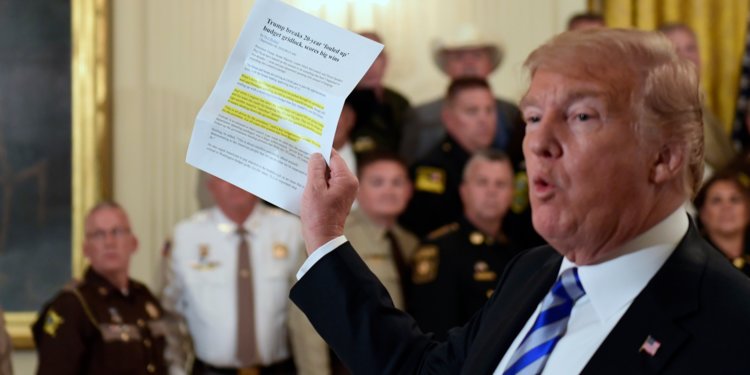
Yesterday, away from the cameras, Trump awarded Player the Presidential Medal of Freedom.
It was an easy opportunity for Player to help correct his past support for white supremacy by simply not gracing a cornered, barking-mad white supremacist who's been rejected by just about every decent person the world over.
Player had a clear shot, but blew it by accepting that award. At 85, he has lost his swing, and is yet to find his spine. He probably won't get an opening like that again.

More from For later read

The common understanding of propaganda is that it is intended to brainwash the masses. Supposedly, people get exposed to the same message repeatedly and over time come to believe in whatever nonsense authoritarians want them to believe /1

And yet authoritarians often broadcast silly, unpersuasive propaganda.

Political scientist Haifeng Huang writes that the purpose of propaganda is not to brainwash people, but to instill fear in them /2


When people are bombarded with propaganda everywhere they look, they are reminded of the strength of the regime.

The vast amount of resources authoritarians spend to display their message in every corner of the public square is a costly demonstration of their power /3

In fact, the overt silliness of authoritarian propaganda is part of the point. Propaganda is designed to be silly so that people can instantly recognize it when they see it


Propaganda is intended to instill fear in people, not brainwash them.

The message is: You might not believe in pro-regime values or attitudes. But we will make sure you are too frightened to do anything about it.

You May Also Like

1/“What would need to be true for you to….X”

Why is this the most powerful question you can ask when attempting to reach an agreement with another human being or organization?

A thread, co-written by @deanmbrody:


2/ First, “X” could be lots of things. Examples: What would need to be true for you to

- “Feel it's in our best interest for me to be CMO"
- “Feel that we’re in a good place as a company”
- “Feel that we’re on the same page”
- “Feel that we both got what we wanted from this deal

3/ Normally, we aren’t that direct. Example from startup/VC land:

Founders leave VC meetings thinking that every VC will invest, but they rarely do.

Worse over, the founders don’t know what they need to do in order to be fundable.

4/ So why should you ask the magic Q?

To get clarity.

You want to know where you stand, and what it takes to get what you want in a way that also gets them what they want.

It also holds them (mentally) accountable once the thing they need becomes true.

5/ Staying in the context of soliciting investors, the question is “what would need to be true for you to want to invest (or partner with us on this journey, etc)?”

Multiple responses to this question are likely to deliver a positive result.
🌿𝑻𝒉𝒆 𝒔𝒕𝒐𝒓𝒚 𝒐𝒇 𝒂 𝑺𝒕𝒂𝒓 : 𝑫𝒉𝒓𝒖𝒗𝒂 & 𝑽𝒊𝒔𝒉𝒏𝒖

Once upon a time there was a Raja named Uttānapāda born of Svayambhuva Manu,1st man on earth.He had 2 beautiful wives - Suniti & Suruchi & two sons were born of them Dhruva & Uttama respectively.
#talesofkrishna https://t.co/E85MTPkF9W


Now Suniti was the daughter of a tribal chief while Suruchi was the daughter of a rich king. Hence Suruchi was always favored the most by Raja while Suniti was ignored. But while Suniti was gentle & kind hearted by nature Suruchi was venomous inside.
#KrishnaLeela


The story is of a time when ideally the eldest son of the king becomes the heir to the throne. Hence the sinhasan of the Raja belonged to Dhruva.This is why Suruchi who was the 2nd wife nourished poison in her heart for Dhruva as she knew her son will never get the throne.


One day when Dhruva was just 5 years old he went on to sit on his father's lap. Suruchi, the jealous queen, got enraged and shoved him away from Raja as she never wanted Raja to shower Dhruva with his fatherly affection.


Dhruva protested questioning his step mother "why can't i sit on my own father's lap?" A furious Suruchi berated him saying "only God can allow him that privilege. Go ask him"