[42c] I’M CALLING IT ANONS.
I'M CALLING THE DEATH OF QUEEN ELIZABETH II ON 12/27/2020
THREAD POSTED ON DECEMBER 14, 2020
DECEMBER 14, DEC 1+4, D5.
PART ##4 CHESS 4D
PART ##5 CHESS 5D
d4.d5 FaLL of THE QUEEN
[13] DAYS TO PROVE ME WRONG

More from Remi_1111FR 🐸 🙌 🕊
ARE YOU COMF(Y) ????
HOW ABOUT A NICE GAME OF CHESS
How about a nice game of Chess?
Do you like CheSS as much as VGE ?
Do you like CheSS as much as [They] do ?
PART ##1 CHESS 2D
- d2. The Queen Gambit -
PART 1 HERE
https://t.co/RWNGx9dZTp

AUTISTIC THREAD
— Remi_1111FR \U0001f438 \U0001f64c \U0001f54a (@film_instant) December 14, 2020
ARE YOU COMF(Y) ????
HOW ABOUT A NICE GAME OF CHESS
CHE[SS] 5D
d5 in CheSS
HERE MY THEORY.
COME PROVE ME WRONG.
PART ##1 CHESS 1D
- d1. The King, The queen & Casimir - pic.twitter.com/fydYVD5j8k

I want to wish you a Happy New Year!!!
— David Guetta (@davidguetta) January 1, 2021
I hope everybody will be healthy in 2021 \U0001f64f\U0001f3fc\U0001f64f\U0001f3fc\U0001f64f\U0001f3fc\U0001f64f\U0001f3fc
SEE YOU SOON ON THE DANCEFLOORS!!!!!!@MuseeLouvre @restosducoeur @UNICEF @PlayStationFR @XiaomiFrance pic.twitter.com/AeLf6wHMaT

More from For later read


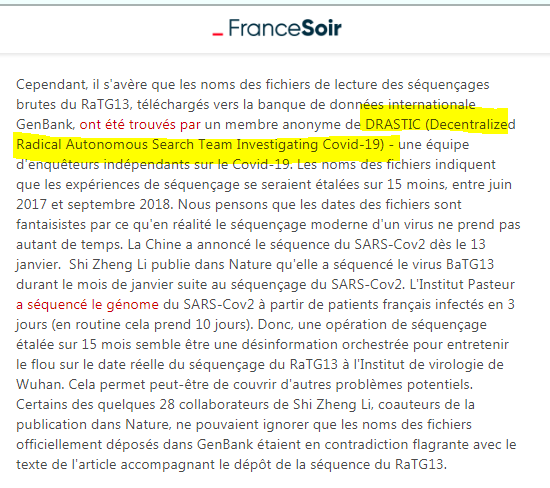
We want to collate all references to DRASTIC in academic papers & media articles
Here are a few:
medium article by @emmecola
thorough report by @netpoette
@ColinDavdButler 's Paper
Please add any links to this thread. Tks!

2. More References
Papers by @MonaRahalkar and @BahulikarRahul
Papers by @Rossana38510044 and @ydeigin
Medium articles & papers by
@gdemaneuf & @Rdemaistre
Papers by @flavinkins (Daoyu Zhang)
Papers by "Anon" & "interneperson"
French News - le Monde
Can anyone remember any more?
3. More References
Papers & Blog Posts by @Harvard2H (Sirotkin & Sirotkin)
260 Questions for WHO collated by @billybostickson
If you find mentions of our individual names or "DRASTIC" in Papers or News, please forward here to this thread as links or screenshots.
Histoire du COVID-19 – chapitre 6 - Partie 2 : Pourquoi le séquençage complet du virus RaTG13 n'a pas été communiqué par Shi Zheng Li avant février 2020 ? https://t.co/MYEZZSAzaE
SARS-CoV-2: lab-origin hypothesis gains traction
BY ANNETTE GARTLAND ON OCTOBER 12, 2020
https://t.co/sPs1y8Herg


Inside: Planet Money on HP's myriad ripoffs; Strength in numbers; and more!
Archived at: https://t.co/esjoT3u5Gr
#Pluralistic
1/
On Feb 22, I'm delivering a keynote address for the NISO Plus conference, "The day of the comet: what trustbusting means for digital manipulation."
https://t.co/Z84xicXhGg
2/

Planet Money on HP's myriad ripoffs: Ink-stained wretches of the world, unite!
https://t.co/k5ASdVUrC2
3/
Back in November, I published an article for @EFF about @HP's latest printer-ink ripoff: after offering its customers a free-ink-for-life plan, it unilaterally switched them all to a $1/month-for-life plan.https://t.co/bsc73xPSuo
— Cory Doctorow #BLM (@doctorow) February 18, 2021
1/ pic.twitter.com/tagduPupA5
Strength in numbers: The crisis in accounting.
https://t.co/DjfAfHWpNN
4/
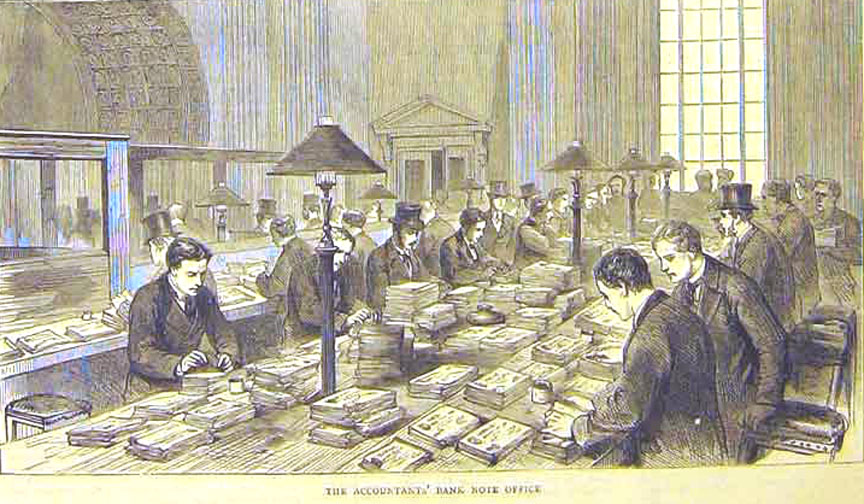
Accountancy is more likely to be mocked than celebrated (or condemned), but accountants, far more than poets, are the unacknowledged legislators of the world.
— Cory Doctorow #BLM (@doctorow) February 18, 2021
1/ pic.twitter.com/FaNQc66gQN
#15yrsago Bad Samaritan family won’t return found expensive camera https://t.co/Rn9E5R1gtV
#10yrsago What does Libyan revolution mean for https://t.co/Jz28qHVhrV? https://t.co/dN1e4MxU4r
5/
You May Also Like

To me, the most important aspect of the 2018 midterms wasn't even about partisan control, but about democracy and voting rights. That's the real battle.
2/The good news: It's now an issue that everyone's talking about, and that everyone cares about.
3/More good news: Florida's proposition to give felons voting rights won. But it didn't just win - it won with substantial support from Republican voters.
That suggests there is still SOME grassroots support for democracy that transcends
4/Yet more good news: Michigan made it easier to vote. Again, by plebiscite, showing broad support for voting rights as an
5/OK, now the bad news.
We seem to have accepted electoral dysfunction in Florida as a permanent thing. The 2000 election has never really
Bad ballot design led to a lot of undervotes for Bill Nelson in Broward Co., possibly even enough to cost him his Senate seat. They do appear to be real undervotes, though, instead of tabulation errors. He doesn't really seem to have a path to victory. https://t.co/utUhY2KTaR
— Nate Silver (@NateSilver538) November 16, 2018