A thread:
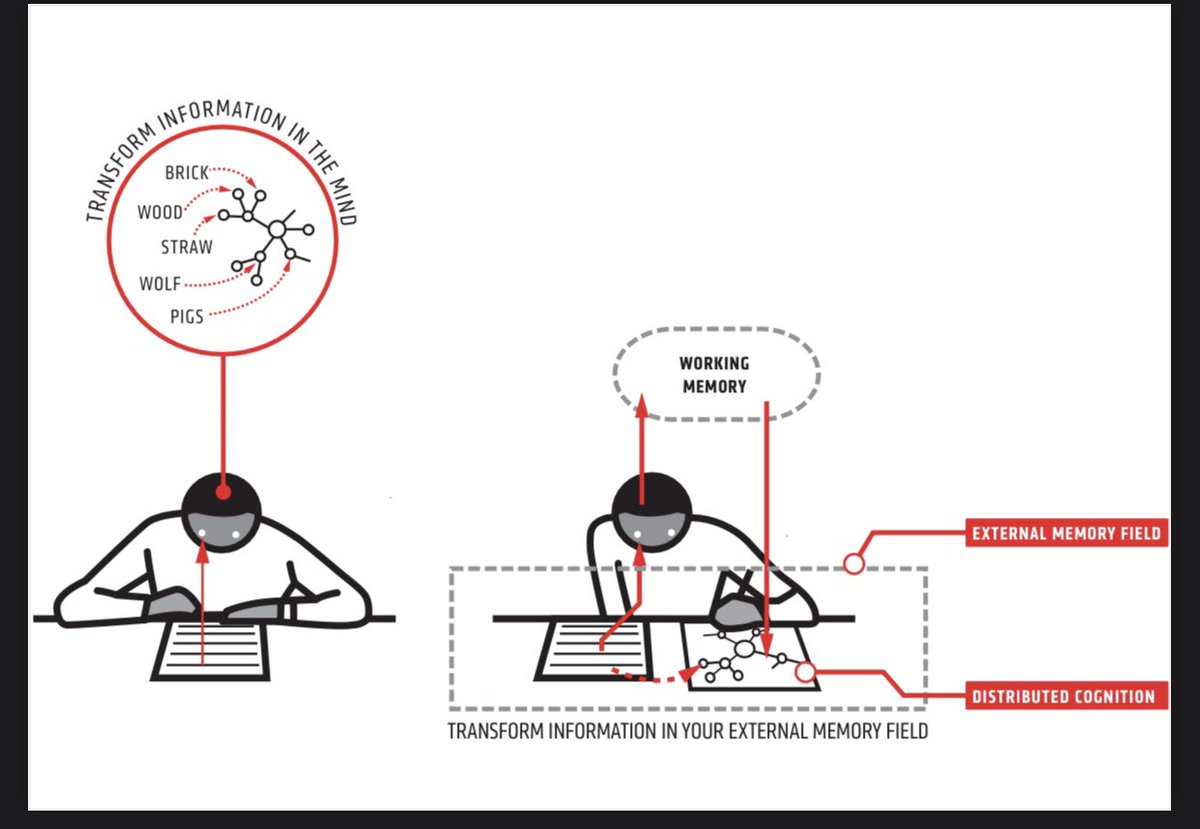
1 GOs don't require the use of images. From my reading, DCT is about the use of images paired with words, to aid retrieval. And as @olivcav has pointed out, Pavio worked with simple ideas and concepts.
More from For later read

Wow, Morgan McSweeney again, Rachel Riley, SFFN, Center for Countering Digital Hate, Imran Ahmed, JLM, BoD, Angela Eagle, Tracy-Ann Oberman, Lisa Nandy, Steve Reed, Jon Cruddas, Trevor Chinn, Martin Taylor, Lord Ian Austin and Mark Lewis. #LabourLeaks #StarmerOut 24 tweet🧵
Morgan McSweeney, Keir Starmer’s chief of staff, launched the organisation that now runs SFFN.
The CEO Imran Ahmed worked closely with a number of Labour figures involved in the campaign to remove Jeremy as leader.
Rachel Riley is listed as patron. https://t.co/nGY5QrwBD0

SFFN claims that it has been “a project of the Center For Countering Digital Hate” since 4 May 2020. The relationship between the two organisations, however, appears to date back far longer. And crucially, CCDH is linked to a number of figures on the Labour right. #LabourLeaks
Center for Countering Digital Hate registered at Companies House on 19 Oct 2018, the organisation’s only director was Morgan McSweeney – Labour leader Keir Starmer’s chief of staff. McSweeney was also the campaign manager for Liz Kendall’s leadership bid. #LabourLeaks #StarmerOut
Sir Keir - along with his chief of staff, Morgan McSweeney - held his first meeting with the Jewish Labour Movement (JLM). Deliberately used the “anti-Semitism” crisis as a pretext to vilify and then expel a leading pro-Corbyn activist in Brighton and Hove
Morgan McSweeney, Keir Starmer’s chief of staff, launched the organisation that now runs SFFN.
The CEO Imran Ahmed worked closely with a number of Labour figures involved in the campaign to remove Jeremy as leader.
Rachel Riley is listed as patron. https://t.co/nGY5QrwBD0
SFFN claims that it has been “a project of the Center For Countering Digital Hate” since 4 May 2020. The relationship between the two organisations, however, appears to date back far longer. And crucially, CCDH is linked to a number of figures on the Labour right. #LabourLeaks
Center for Countering Digital Hate registered at Companies House on 19 Oct 2018, the organisation’s only director was Morgan McSweeney – Labour leader Keir Starmer’s chief of staff. McSweeney was also the campaign manager for Liz Kendall’s leadership bid. #LabourLeaks #StarmerOut
Sir Keir - along with his chief of staff, Morgan McSweeney - held his first meeting with the Jewish Labour Movement (JLM). Deliberately used the “anti-Semitism” crisis as a pretext to vilify and then expel a leading pro-Corbyn activist in Brighton and Hove





I’ve asked Byers to clarify, but as I read this tweet, it seems that Bret Stephens included an unredacted use of the n-word in his column this week to make a point, and the column got spiked—maybe as a result?
Four times. The column used the n-word (in the context of a quote) four times. https://t.co/14vPhQZktB
For context: In 2019, a Times reporter was reprimanded for several incidents of racial insensitivity on a trip with high school students, including one in which he used the n-word in a discussion of racial slurs.
That incident became public late last month, and late last week, after 150 Times employees complained about how it had been handled, the reporter in question resigned.
In the course of all that, the Times' executive editor said that the paper does not "tolerate racist language regardless of intent.” This was the quote that Bret Stephens was pushing back against in his column. (Which, again, was deep-sixed by the paper.)
Stephens goes on in his column (which never saw light of day) to cite famous Lee Atwater quote that uses racial slur, and which NYT has cited \u201cat least seven times.\u201d
— Dylan Byers (@DylanByers) February 11, 2021
"Is this now supposed to be a scandal?\u201d he asks.
...
Four times. The column used the n-word (in the context of a quote) four times. https://t.co/14vPhQZktB
That is correct. In his draft he quotes Atwater using the word (4 times) and he does not redact it.
— Dylan Byers (@DylanByers) February 11, 2021
For context: In 2019, a Times reporter was reprimanded for several incidents of racial insensitivity on a trip with high school students, including one in which he used the n-word in a discussion of racial slurs.
That incident became public late last month, and late last week, after 150 Times employees complained about how it had been handled, the reporter in question resigned.
In the course of all that, the Times' executive editor said that the paper does not "tolerate racist language regardless of intent.” This was the quote that Bret Stephens was pushing back against in his column. (Which, again, was deep-sixed by the paper.)
You May Also Like

"I really want to break into Product Management"
make products.
"If only someone would tell me how I can get a startup to notice me."
Make Products.
"I guess it's impossible and I'll never break into the industry."
MAKE PRODUCTS.
Courtesy of @edbrisson's wonderful thread on breaking into comics – https://t.co/TgNblNSCBj – here is why the same applies to Product Management, too.
There is no better way of learning the craft of product, or proving your potential to employers, than just doing it.
You do not need anybody's permission. We don't have diplomas, nor doctorates. We can barely agree on a single standard of what a Product Manager is supposed to do.
But – there is at least one blindingly obvious industry consensus – a Product Manager makes Products.
And they don't need to be kept at the exact right temperature, given endless resource, or carefully protected in order to do this.
They find their own way.
make products.
"If only someone would tell me how I can get a startup to notice me."
Make Products.
"I guess it's impossible and I'll never break into the industry."
MAKE PRODUCTS.
Courtesy of @edbrisson's wonderful thread on breaking into comics – https://t.co/TgNblNSCBj – here is why the same applies to Product Management, too.
"I really want to break into comics"
— Ed Brisson (@edbrisson) December 4, 2018
make comics.
"If only someone would tell me how I can get an editor to notice me."
Make Comics.
"I guess it's impossible and I'll never break into the industry."
MAKE COMICS.
There is no better way of learning the craft of product, or proving your potential to employers, than just doing it.
You do not need anybody's permission. We don't have diplomas, nor doctorates. We can barely agree on a single standard of what a Product Manager is supposed to do.
But – there is at least one blindingly obvious industry consensus – a Product Manager makes Products.
And they don't need to be kept at the exact right temperature, given endless resource, or carefully protected in order to do this.
They find their own way.