(2/50)
Here is a link if you have not already read it:
https://t.co/lKv0RbyfI2
(3/50)
What I will attempt to do here, is to create an immersive world for you to be placed in to grasp the weight and size of problems from the ground level and then take a grass-roots approach at solving them using #Cardano and its technology.
(4/50)
As an investor and community member of #Cardano, this should be extremely important to you as you have a stake (pun intended) in this.
“You are paid in direct proportion to the difficulty of the problems you solve” -
@elonmusk
(5/50)
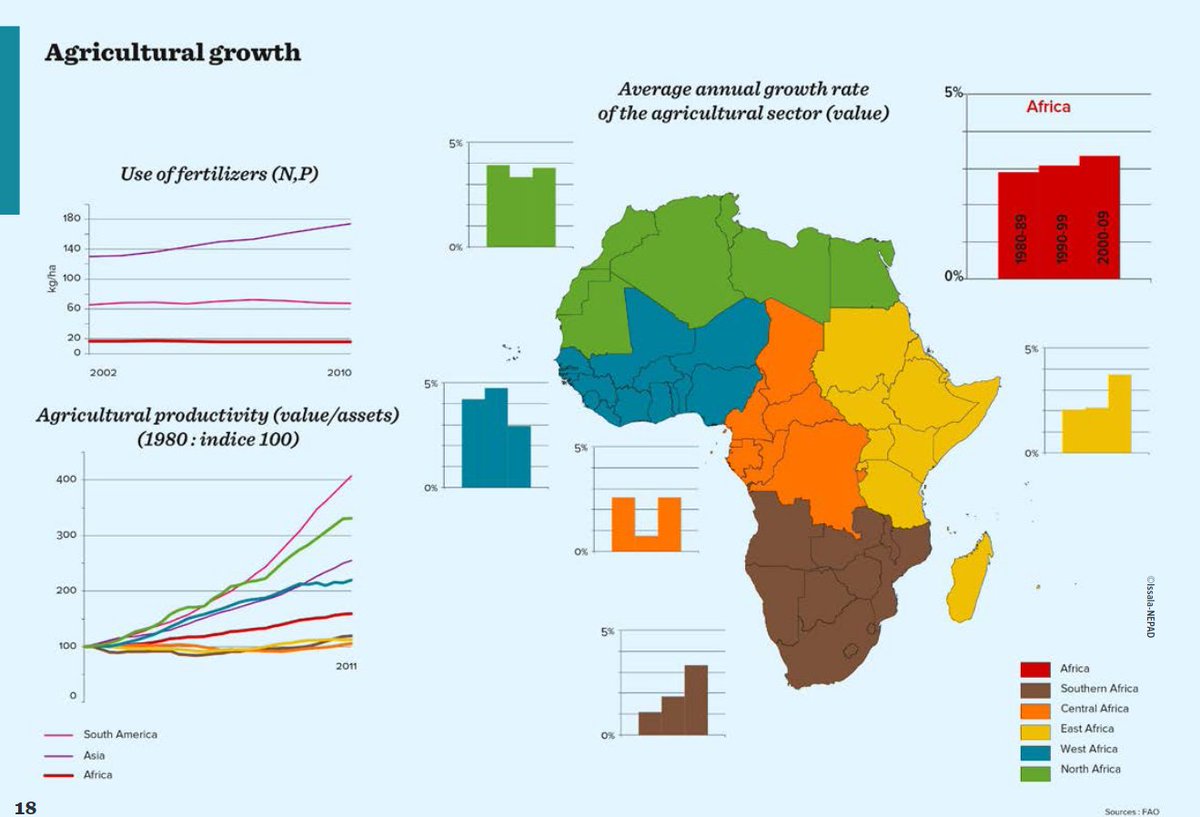
In Africa, agribusiness, more than any other sector, has the potential to reduce poverty and drive economic growth. Agriculture accounts for nearly half of the continent’s gross domestic product and employs 60 percent of the labor force.
(6/50)
Let’s start here:
You are a smallholder farmer, named Kamali, you and your family run a wheat farm in the Woinima village of the Jabi Tehnan district of Ethiopia. You collect irrigation water from an upstream river called Guisa once every 4 to 6 weeks to water your farm
(7/50)
You own 1.75 hectares of land and want to expand, but the amount of water irrigated to you is only enough to support .5 hectares of wheat production and is inconsistent in delivery.
(8/50)
With inconsistent and minimal delivery of water to your farm you find it hard to expand, which is essential for your family.
Let’s take a step back and try to understand how this irrigation process-control can be reformed so that we may solve Kamali’s problem.
(9/50)
Irrigation is the most crucial aspect in the expanding of the agricultural sector in Sub-Saharan Africa and particularly Ethiopa in which irrigation accounts for just 3% of food crop production, the lowest in Africa. Here are reasons why irrigation is hard to implement:
(10/50)
- low input supply (supply of fertilizer/pest control products)
- lack of credit for basic financing
- capital fraud
- lack of post-farming supply chain systems
- access to reliable electricity
(11/50)
Looking at this one can deduce that the lack of access to capital at all levels – local, regional and state – is the main driver of poor irrigation infrastructure. How can this infrastructure thrive if investment capital has high barrier for entry due
(12/50)
to poor state-level policy, regional-level trust, and local-level identity? You secure local-level customers from state-level jurisdiction then restructure from the local-level and watch the solution cascade back upward.
(13/50)
The center of our problem here is financial inclusion, how do we get investment capital to trust that their money will not only yield a return but will not be
(14/50)
defrauded, breached, or stolen in such a loosely regulated, non-secure and high-risk market? The same way you establish trust with anyone, you get to know them.
Enter Atala PRISM.
(15/50)
Atala PRISM is a decentralized identity solution that enables people to own their personal data and interact with organizations seamlessly, privately, and securely built by #Cardano. At the time of writing, many of Atala PRISM’s specific technology is not open-source.
(16/50)
Restructuring how local-level (Kamali) actors interact with important endpoints in a supply chain using Atala PRISM as an identity layer could work like this:
(17/50)
1. Kamali is on-boarded to Atala PRISM via mobile-app which holds secure data, including:
• Her personal information (KYC / AML)
• Credit score
• Occupation
• Type of crop (perishable or non)
• Production yield
• What type of inputs needed
(18/50)
2. Kamali is verified by an Agricultural Extension Officer sent out by the Agriculture Transformation
Agency that the information about her farm is correct
3. Once verified Kamali requests a credit voucher from a financial institution that is also verified by the ATA
(19/50)
1) Kamali must pay back this credit voucher in 12 months
4. Kamali uses that credit voucher to purchase inputs from an agro-dealer (cooperative) – who is also verified by the ATA – at a subsidized rate
(20/50)
5. The agro-dealer checks the verification process and upon confirmation, grants the inputs requested by Kamali
1) Kamali takes the inputs to tend her farm and then procures a yield
(21/50)
6. The agro-dealer takes the voucher and aggregates them with thousands to millions of other vouchers to give back to the financial institution to collect their margin
(22/50)
Now there is a trust-based infrastructure in play that lives on the #Cardano blockchain auditing the life cycle of vouchers, credit, inputs and smallholder farm production is no longer an issue because information is transparent, immutable and non-corruptible.
(23/50)
Well, how do we know the people verifying others will not be corrupt? Incentives.
1. Kamali’s incentive is to receive inputs to produce yield, so she will pay her loans off
2. The agro-dealers incentive is margin on credit vouchers, so they will maintain input supply
(24/50)
3. The ATA incentive is to increase productivity, so they will verify trusted actors in the supply chain
4. The Government of Ethiopia’s incentive is to procure foreign investment, so they will audit the blockchain routinely
(25/50)
With an upgraded supply chain production is increasing, fraud is mitigated, and food scarcity is decreasing. The Government of Ethiopia can more aggressively shop for Foreign Direct Investment (FDI) and can even negotiate better rates.