LEEDS LEADS CLIMATE BREAKDOWN
8 hours and 1000 flawed arguments and biased procedures later, Leeds City Plans Panel voted 9-5 for airport expansion and the false promises of economic growth.
For “what Leeds needs is a premier-league football club and a premier-league airport”
🧵
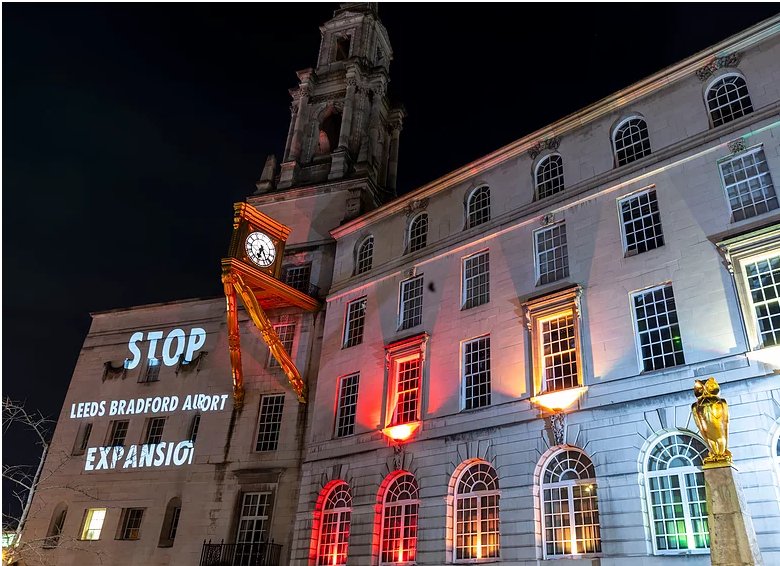
One councillor kindly offered his advice: “the way to less noise is more planes”. Right, Sherlock. Want to try that in your backyard?🤦♂️
Pls share & support https://t.co/GrS5cpQixm
More from For later read

Moderna's mRNA-1273 & Pfizer's BNT162b2 consist of mRNA 3821 nucleotides long encoding *all* 1273 amino acids of the Spike including a 2 Proline-stabilized RBD. This is a plain English Description of the code:
https://t.co/w7koHyMJjL
The article mentions a “10 nucleotide linker” (GCAUAUGACU) in the poly-A tail. This is described in the patent link below (Modification of RNA, producing an increased transcript stability and translation
Here is a link to the full mRNA code if you wish to download it, blast it or make up a batch in your garage
An overview of the encoded spike
Initial mouse
https://t.co/w7koHyMJjL
The article mentions a “10 nucleotide linker” (GCAUAUGACU) in the poly-A tail. This is described in the patent link below (Modification of RNA, producing an increased transcript stability and translation
Here is a link to the full mRNA code if you wish to download it, blast it or make up a batch in your garage
The mRNA sequences used for Moderna mRNA-1273 & Pfizer BNT162b2 mRNA vaccines for COVID-19 (Direct link in Word Format). WHO International Nonproprietary Name Program # 11889 "Messenger RNA encoding the full-length SARS-CoV-2 spike glycoprotein"https://t.co/zTb7B0Apic pic.twitter.com/8tZxAZWI5S
— Roland Baker (@RolandBakerIII) December 24, 2020
An overview of the encoded spike
Moderna's mRNA-1273 & Pfizer's BNT162b2 consist of mRNA 3821 nucleotides long encoding *all* 1273 amino acids of the Spike including a 2 Proline-stabilized RBD and this includes the NTD (blue in monomer, dark gray in trimer attached to antibodies). AA 64, 66, 187, 213, 214 red. pic.twitter.com/4MX1ByAsrR
— Roland Baker (@RolandBakerIII) December 19, 2020
Initial mouse
News: NIH-Moderna investigational COVID-19 vaccine shows promise in mouse studies https://t.co/7JYuUyZT45
— NIH (@NIH) August 5, 2020



You May Also Like


12 TRADING SETUPS which experts are using.
These setups I found from the following 4 accounts:
1. @Pathik_Trader
2. @sourabhsiso19
3. @ITRADE191
4. @DillikiBiili
Share for the benefit of everyone.
Here are the setups from @Pathik_Trader Sir first.
1. Open Drive (Intraday Setup explained)
Bactesting results of Open Drive
2. Two Price Action setups to get good long side trade for intraday.
1. PDC Acts as Support
2. PDH Acts as
Example of PDC/PDH Setup given
These setups I found from the following 4 accounts:
1. @Pathik_Trader
2. @sourabhsiso19
3. @ITRADE191
4. @DillikiBiili
Share for the benefit of everyone.
Here are the setups from @Pathik_Trader Sir first.
1. Open Drive (Intraday Setup explained)
#OpenDrive#intradaySetup
— Pathik (@Pathik_Trader) April 16, 2019
Sharing one high probability trending setup for intraday.
Few conditions needs to be met
1. Opening should be above/below previous day high/low for buy/sell setup.
2. Open=low (for buy)
Open=high (for sell)
(1/n)
Bactesting results of Open Drive
Already explained strategy of #opendrive
— Pathik (@Pathik_Trader) May 27, 2020
Backtested results in 30 stocks and nifty, banknifty.
Success ratio : approx 40-45%
RR average 1:2
Entry as per strategy
Stoploss = Open level
Exit 3:15 PM Or SL
39 months 14 months -ve, 25 +ve
Yearly all 4 years +ve performance. pic.twitter.com/nGqhzMKGVy
2. Two Price Action setups to get good long side trade for intraday.
1. PDC Acts as Support
2. PDH Acts as
So today we will discuss two more price action setups to get good long side trade for intraday.
— Pathik (@Pathik_Trader) June 20, 2020
1. PDC Acts as Support
2. PDH Acts as Support
Example of PDC/PDH Setup given
#nifty
— Pathik (@Pathik_Trader) June 23, 2020
This is how it created long setup by taking support at PDC.
hopefully shared setup on last weekend helped. pic.twitter.com/2mduSUpMn5

“We don’t negotiate salaries” is a negotiation tactic.
Always. No, your company is not an exception.
A tactic I don’t appreciate at all because of how unfairly it penalizes low-leverage, junior employees, and those loyal enough not to question it, but that’s negotiation for you after all. Weaponized information asymmetry.
Listen to Aditya
And by the way, you should never be worried that an offer would be withdrawn if you politely negotiate.
I have seen this happen *extremely* rarely, mostly to women, and anyway is a giant red flag. It suggests you probably didn’t want to work there.
You wish there was no negotiating so it would all be more fair? I feel you, but it’s not happening.
Instead, negotiate hard, use your privilege, and then go and share numbers with your underrepresented and underpaid colleagues. […]
Always. No, your company is not an exception.
A tactic I don’t appreciate at all because of how unfairly it penalizes low-leverage, junior employees, and those loyal enough not to question it, but that’s negotiation for you after all. Weaponized information asymmetry.
Listen to Aditya
"we don't negotiate salaries" really means "we'd prefer to negotiate massive signing bonuses and equity grants, but we'll negotiate salary if you REALLY insist" https://t.co/80k7nWAMoK
— Aditya Mukerjee, the Otterrific \U0001f3f3\ufe0f\u200d\U0001f308 (@chimeracoder) December 4, 2018
And by the way, you should never be worried that an offer would be withdrawn if you politely negotiate.
I have seen this happen *extremely* rarely, mostly to women, and anyway is a giant red flag. It suggests you probably didn’t want to work there.
You wish there was no negotiating so it would all be more fair? I feel you, but it’s not happening.
Instead, negotiate hard, use your privilege, and then go and share numbers with your underrepresented and underpaid colleagues. […]