Mini Hungarian language lesson: the secret dish.

"What's a dish universally known and eaten in your country but virtually unheard of outside it?" is a question that makes the rounds on Twitter every few months but I can't be bothered waiting for the next one.

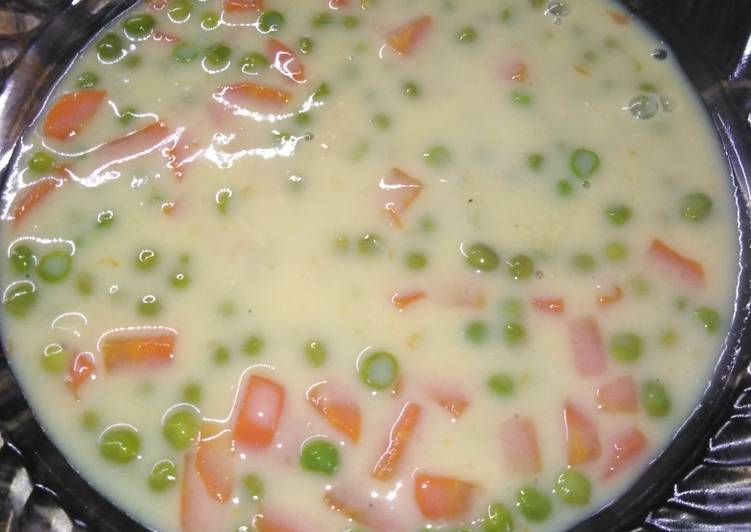
It's "főzelék".

The word itself looks as simple as the dish: "főz" is "to cook" and "-elék" is a suffix roughly meaning "the result of", so "the result of cooking".

Thanks for nothing.

The official definition is "any kind of boiled or parboiled vegetable"; closer, but still a load of bollocks.
So here's mine: "főzelék is made of vegetables and it has a thick sauce".

What kind of vegetables?

Practically any: potato, cabbage, bean, pea, chickpea, spinach, squash, carrot, but usually only one veg at a time.
There is a mixed abomination called "finomfőzelék" but we don't talk about it.

Most of us have been scarred for life by school dinners featuring the pallid little harbingers of death suspended in a beige gel of doom.
In all honesty though, főzelék in general doesn't look very appetising: it has its roots in that old peasant staple of gruel and it has a serious image problem as a result.

Which is why, even in Hungary, you won't see many on restaurant menus, except in specialist outlets.
But in the privacy of their own homes people do enjoy it, like bigots say gays should their gay things.

It's also cheap and simple to make: put vegetable in pot, add water and seasoning, boil, thicken, done.

Ahahah, but what about the thickening? (athketh the thnake)
That's where the real cultural divide lies. You didn't expect a Hungarian topic that doesn't lead to one, did you?

The traditional way is "rántás": heat fat in a pan, mix in flour and brown it to your favourite shade, then dilute it with the water the vegetable is cooking in.
There's also "habarás" (a mixture of sour cream and flour), "hintés" (just chuck some flour in) and as many other ways as you can think of delivering flour into water.

Then there are the "alternative" ways: blend it a bit like a soup or blend potatoes and mix that in, and so on.
Needless to say the war of The One True Way of Thickening Főzelék rages on with no end in sight, despite the fact that obviously not all methods work with all vegetables.

But that's the only contentious issue about főzelék, right?

RIGHT?
Let's talk "feltét".

Literally meaning "that which is put on top", it is an admission that however healthy and tasty your főzelék is, even with the fat in the rántás it's fairly carb-heavy.

So you put something on top of it. Eggs, meatballs ("fasírt"), sauteed onions, anything.
And this is another good way of making enemies through the medium of food: everyone accepts not every feltét goes with every főzelék, but there is bitter disagreement on the exact details.

One bad move and you're toast.
Of course I exaggerated a lot in this thread, none of this should hold you back from trying it, especially because it's one of few of our dishes that can be naturally vegetarian or vegan.

Whatever the road that leads up to it, come winter or summer, főzelék is love.

More from Food

Recent @SushiSwap Youtube AMA Summary Thread.
0/10👇

1/ Bento timeline - New lending solution that focuses on isolated lending pairs, flexible oracles, targeted interest rates, gas optimization and flash loans. Aiming for early to mid Feb. Bento Explainer here:

2/ UI changes - Deprecating and consolidating onto one domain.
https://t.co/tH4BdswQmN. New UI will cover all features. Longer term a Sushi Plugin is planned. Making it easy to incorporate Sushi into an App or website. Will attract new users (Stripe did this very well btw).

3/ Integrations with @tradingview coming. Merging of API with their trading system on Sushi trader . Will enable live Stream of prices.

4/ Collaboration & partnerships with @iearnfinance and others are to ensure they are all pushing in the same direction. Everyone helping eachother, nothing formal. Everyone sharing ideas.

You May Also Like

This is a pretty valiant attempt to defend the "Feminist Glaciology" article, which says conventional wisdom is wrong, and this is a solid piece of scholarship. I'll beg to differ, because I think Jeffery, here, is confusing scholarship with "saying things that seem right".


The article is, at heart, deeply weird, even essentialist. Here, for example, is the claim that proposing climate engineering is a "man" thing. Also a "man" thing: attempting to get distance from a topic, approaching it in a disinterested fashion.


Also a "man" thing—physical courage. (I guess, not quite: physical courage "co-constitutes" masculinist glaciology along with nationalism and colonialism.)


There's criticism of a New York Times article that talks about glaciology adventures, which makes a similar point.


At the heart of this chunk is the claim that glaciology excludes women because of a narrative of scientific objectivity and physical adventure. This is a strong claim! It's not enough to say, hey, sure, sounds good. Is it true?
क्या आप जानते हैं कि क्या है, पितृ पक्ष में कौवे को खाना देने के पीछे का वैज्ञानिक कारण!

श्राद्ध पक्ष में कौओं का बड़ा ही महत्व है। कहते है कौआ यम का प्रतीक है, यदि आपके हाथों दिया गया भोजन ग्रहण कर ले, तो ऐसा माना जाता है कि पितरों की कृपा आपके ऊपर है और वे आपसे ख़ुश है।


कुछ लोग कहते हैं की व्यक्ति मरकर सबसे पहले कौवे के रूप में जन्म लेता है और उसे खाना खिलाने से वह भोजन पितरों को मिलता है

शायद हम सबने अपने घर के किसी बड़े बुज़ुर्ग, किसी पंडित या ज्योतिषाचार्य से ये सुना होगा। वे अनगिनत किस्से सुनाएंगे, कहेंगे बड़े बुज़ुर्ग कह गए इसीलिए ऐसा करना

शायद ही हमें कोई इसके पीछे का वैज्ञानिक कारण बता सके।

हमारे ऋषि मुनि और पौराणिक काल में रहने वाले लोग मुर्ख नहीं थे! कभी सोचियेगा कौवों को पितृ पक्ष में खिलाई खीर हमारे पूर्वजों तक कैसे पहुंचेगी?

हमारे ऋषि मुनि विद्वान थे, वे जो बात करते या कहते थे उसके पीछे कोई न कोई वैज्ञानिक कारण छुपा होता था।

एक बहुत रोचक तथ्य है पितृ पक्ष, भादो( भाद्रपद) प्रकृति और काक के बीच।

एक बात जो कह सकते कि हम सब ने स्वतः उग आये पीपल या बरगद का पेड़/ पौधा किसी न किसी दीवार, पुरानी

इमारत, पर्वत या अट्टालिकाओं पर ज़रूर देखा होगा। देखा है न?

ज़रा सोचिये पीपल या बरगद की बीज कैसे पहुंचे होंगे वहाँ तक? इनके बीज इतने हल्के भी नहीं होते के हवा उन्हें उड़ाके ले जा सके।