
For months, but especially after the new CDC school recs came out, supporters of reopening all schools now have been peddling the idea that schools across the country have been open all year successfully. This argument is used to push for ALL schools to be opened now.
A long 🧵
(Thanks to @eduwonkette_jen @GeoRebekah and @saribethrose for the threads and forums that have helped me meet SO MANY teachers this year).
Here's the list:
▪️no safety protocols at all besides contact cleaning, in some districts
▪️some districts with no mask mandate
▪️classes in windowless rooms, some with full classes of 20-30
▪️no contact tracing or quarantining of close contacts at all
▪️teachers who have to pay for all masks and cleaning supplies for their classrooms because the school/district won't
▪️teachers who are threatened not to tell anyone about cases and spread
▪️teachers who have been asked to come back early from quarantine when sick with covid
▪️ventilation that was condemned decades ago
teachers who have been threatened with retaliation for asking for PPE, ventilation and/or physical distancing
▪️administrators shame mask-wearing staff for "fear-mongering"
▪️teachers who got covid at school & brought it home to vulnerable family
▪️teachers who were forced to quit because the school wouldn’t accommodate their medical conditions (including cancer and heart conditions)
▪️teachers who were told not to do anything to memorialize colleagues who died of covid bc it could upset families
School staff vaccinations might be the best answer.
And the fact is, we don't have many options.
https://t.co/99Vlxn8VOK
Vaccinating all teachers and safely reopening schools in April: @JReinerMD posted this tweet earlier in the day on the idea to use the first batch of the Johnson & Johnson vaccine to vaccinate all teachers. Short thread on the numbers and science:https://t.co/o9NvDc4gxy pic.twitter.com/oCEg7vL80z
— Benjy Renton (@bhrenton) February 16, 2021
Teachers are regarded so poorly in this country.
Now we just need a real plan.
More from Education


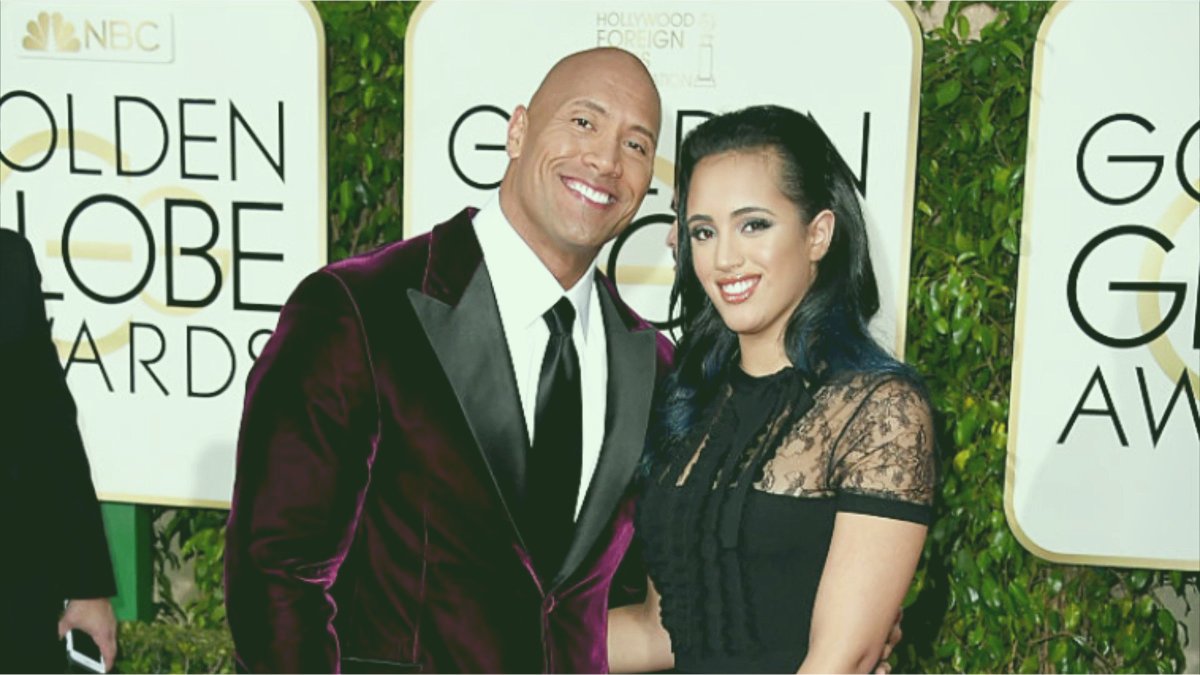
Trending news of The Rock's daughter Simone Johnson's announcing her new Stage Name is breaking our Versus tool because "Wrestling Name" isn't in our database!
Here's the most useful #Factualist comparison pages #Thread 🧵
What is the difference between “pseudonym” and “stage name?”
Pseudonym means “a fictitious name (more literally, a false name), as those used by writers and movie stars,” while stage name is “the pseudonym of an entertainer.”
https://t.co/hT5XPkTepy #english #wiki #wikidiff
People also found this comparison helpful:
Alias #versus Stage Name: What’s the difference?
Alias means “another name; an assumed name,” while stage name means “the pseudonym of an entertainer.”
https://t.co/Kf7uVKekMd #Etymology #words
Another common #question:
What is the difference between “alias” and “pseudonym?”
As nouns alias means “another name; an assumed name,” while pseudonym means “a fictitious name (more literally, a false name), as those used by writers and movie
Here is a very basic #comparison: "Name versus Stage Name"
As #nouns, the difference is that name means “any nounal word or phrase which indicates a particular person, place, class, or thing,” but stage name means “the pseudonym of an
Here's the most useful #Factualist comparison pages #Thread 🧵
What is the difference between “pseudonym” and “stage name?”
Pseudonym means “a fictitious name (more literally, a false name), as those used by writers and movie stars,” while stage name is “the pseudonym of an entertainer.”
https://t.co/hT5XPkTepy #english #wiki #wikidiff
People also found this comparison helpful:
Alias #versus Stage Name: What’s the difference?
Alias means “another name; an assumed name,” while stage name means “the pseudonym of an entertainer.”
https://t.co/Kf7uVKekMd #Etymology #words
Another common #question:
What is the difference between “alias” and “pseudonym?”
As nouns alias means “another name; an assumed name,” while pseudonym means “a fictitious name (more literally, a false name), as those used by writers and movie
Here is a very basic #comparison: "Name versus Stage Name"
As #nouns, the difference is that name means “any nounal word or phrase which indicates a particular person, place, class, or thing,” but stage name means “the pseudonym of an


This seems like a positive base from which to #BuildBackBetter
https://t.co/OwpgNh8mEu
https://t.co/7eOi1Bv3bM
https://t.co/GhxVgLuWJE
https://t.co/ymHp910wrC
Hearing laughter &banter from lessons in the background every day. Yesterday at end of \u201c school\u201d she rushed out for snack, had to be quick as she wanted to join peer zoom doing art... her pals are thinking of doing afterschool yoga/ book club/ gardening, low/no cost ideas
— Ruth knight (@ruth_rmknig) January 29, 2021
https://t.co/OwpgNh8mEu
Helped prepare my teenagers for online life postschoolc. My daughter engaged with a health professional on teams this week with no input from me. They are well prepared for workplaces where online learning and e-learning are increasingly the norm. Life skills
— Sughra Nazir \U0001f499 (@Care_excellence) January 29, 2021
https://t.co/7eOi1Bv3bM
I have reconnected with my children as we have never had this time together before. We have had time to talk without the hustle and bustle of work, car journeys etc. No hassling over uniform washing has been a bonus too. \U0001f600
— Sughra Nazir \U0001f499 (@Care_excellence) January 29, 2021
https://t.co/GhxVgLuWJE
Prompted to try to have a day of positive talk about our children and young people today.
— Little Hoppy Saul \U0001f499#SafeEdForAll (@HoppySaul) January 29, 2021
Let\u2019s stop the alarmist headlines of LOST LEARNING
DAMAGE OF SCHOOL \u2018CLOSURES\u2019
Let\u2019s look at the opportunities and positives of temporary remote education & hope for a long-term strategy https://t.co/ODBqdZzSw2
https://t.co/ymHp910wrC
Like I say, I\u2019m a shy student and I always have been! I\u2019ve loved not having that pressure on top of me and I agree that it\u2019s helped us flourish!
— Hear Our Voices (@HearTheStudent) January 29, 2021
You May Also Like







Keep dwelling on this:
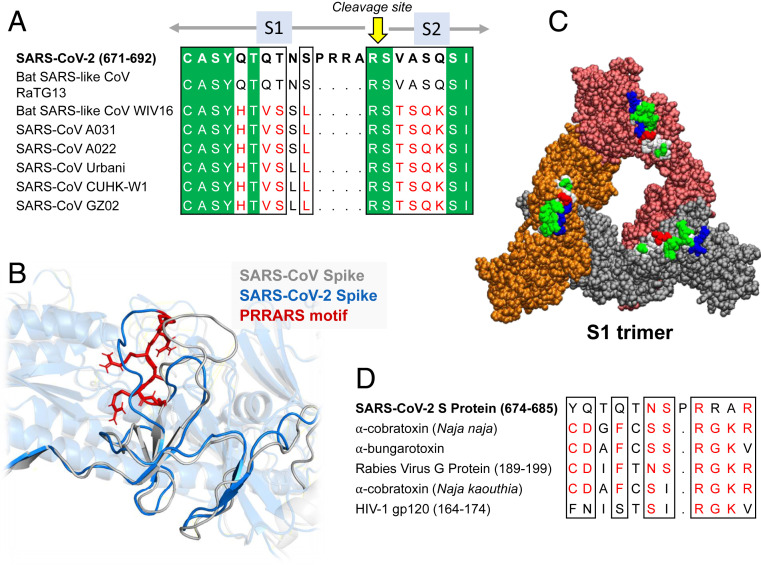
Further Examination of the Motif near PRRA Reveals Close Structural Similarity to the SEB Superantigen as well as Sequence Similarities to Neurotoxins and a Viral SAg.
The insertion PRRA together with 7 sequentially preceding residues & succeeding R685 (conserved in β-CoVs) form a motif, Y674QTQTNSPRRAR685, homologous to those of neurotoxins from Ophiophagus (cobra) and Bungarus genera, as well as neurotoxin-like regions from three RABV strains
(20) (Fig. 2D). We further noticed that the same segment bears close similarity to the HIV-1 glycoprotein gp120 SAg motif F164 to V174.
https://t.co/EwwJOSa8RK
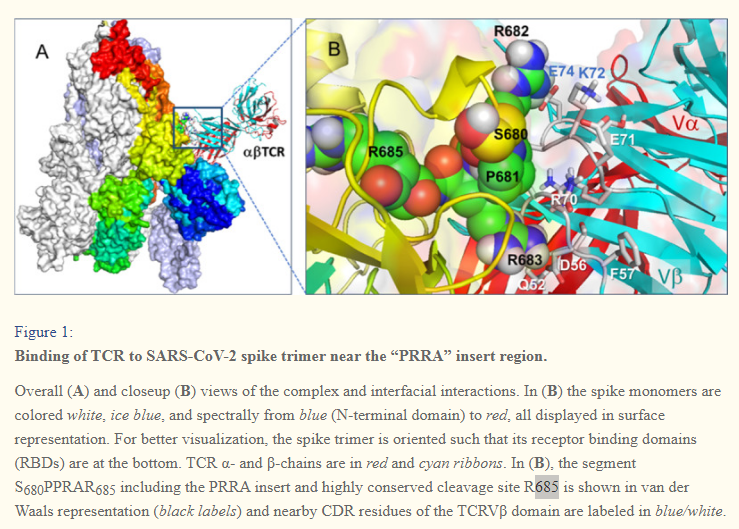
In (B), the segment S680PPRAR685 including the PRRA insert and highly conserved cleavage site *R685* is shown in van der Waals representation (black labels) and nearby CDR residues of the TCRVβ domain are labeled in blue/white
https://t.co/BsY8BAIzDa
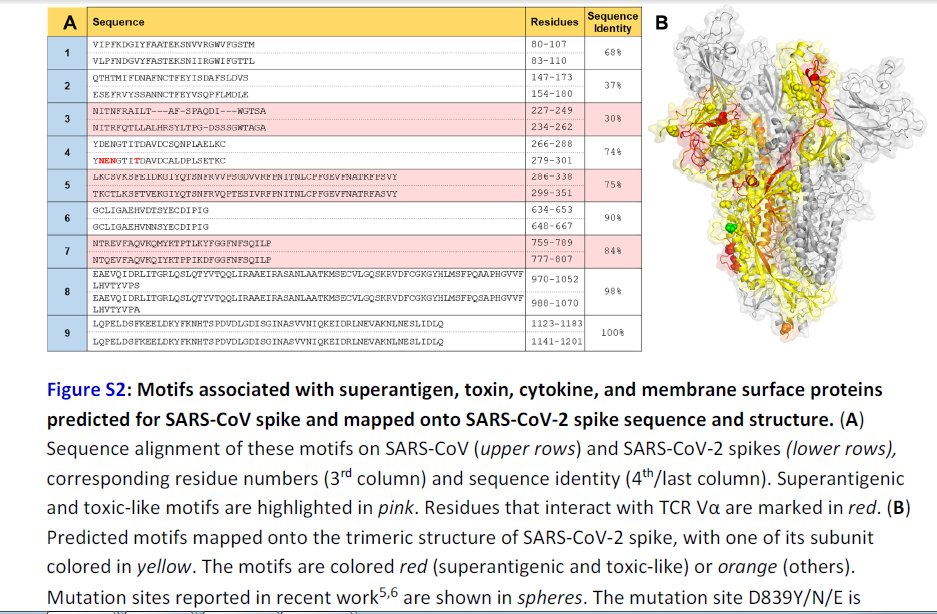
Sequence Identity %
https://t.co/BsY8BAIzDa
Y674 - QTQTNSPRRA - R685
Similar to neurotoxins from Ophiophagus (cobra) & Bungarus genera & neurotoxin-like regions from three RABV strains
T678 - NSPRRA- R685
Superantigenic core, consistently aligned against bacterial or viral SAgs
Further Examination of the Motif near PRRA Reveals Close Structural Similarity to the SEB Superantigen as well as Sequence Similarities to Neurotoxins and a Viral SAg.
The insertion PRRA together with 7 sequentially preceding residues & succeeding R685 (conserved in β-CoVs) form a motif, Y674QTQTNSPRRAR685, homologous to those of neurotoxins from Ophiophagus (cobra) and Bungarus genera, as well as neurotoxin-like regions from three RABV strains
(20) (Fig. 2D). We further noticed that the same segment bears close similarity to the HIV-1 glycoprotein gp120 SAg motif F164 to V174.
https://t.co/EwwJOSa8RK
In (B), the segment S680PPRAR685 including the PRRA insert and highly conserved cleavage site *R685* is shown in van der Waals representation (black labels) and nearby CDR residues of the TCRVβ domain are labeled in blue/white
https://t.co/BsY8BAIzDa
Sequence Identity %
https://t.co/BsY8BAIzDa
Y674 - QTQTNSPRRA - R685
Similar to neurotoxins from Ophiophagus (cobra) & Bungarus genera & neurotoxin-like regions from three RABV strains
T678 - NSPRRA- R685
Superantigenic core, consistently aligned against bacterial or viral SAgs

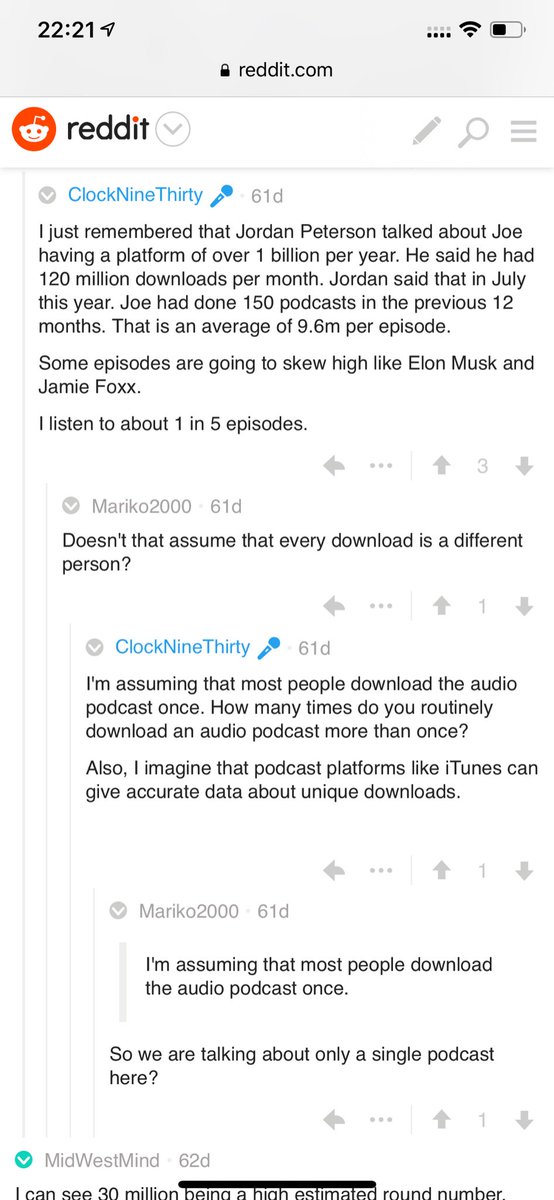
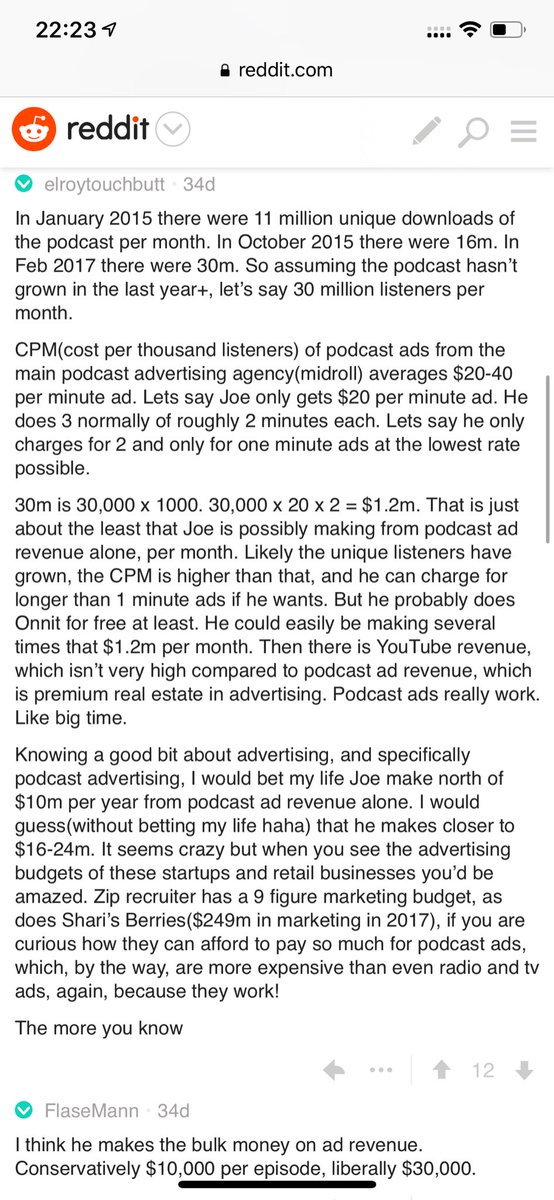
Joe Rogan's podcast is now is listened to 1.5+ billion times per year at around $50-100M/year revenue.
Independent and 100% owned by Joe, no networks, no middle men and a 100M+ people audience.
👏
https://t.co/RywAiBxA3s
Joe is the #1 / #2 podcast (depends per week) of all podcasts
120 million plays per month source https://t.co/k7L1LfDdcM
https://t.co/aGcYnVDpMu
Independent and 100% owned by Joe, no networks, no middle men and a 100M+ people audience.
👏
https://t.co/RywAiBxA3s
Joe is the #1 / #2 podcast (depends per week) of all podcasts
120 million plays per month source https://t.co/k7L1LfDdcM
https://t.co/aGcYnVDpMu
