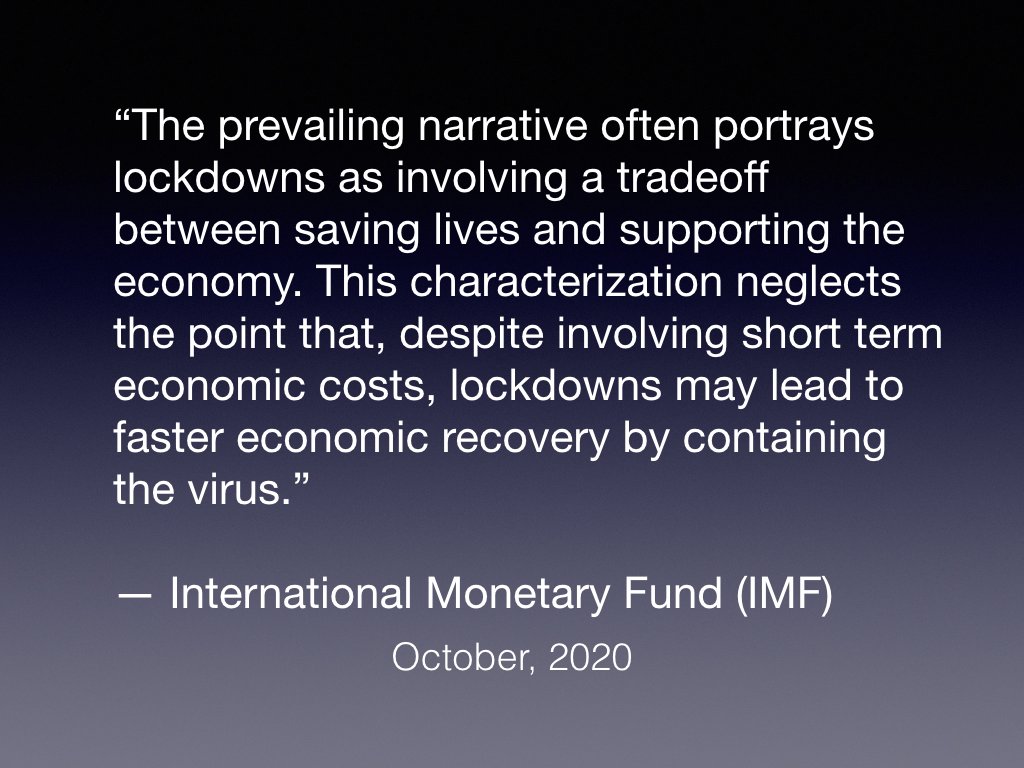
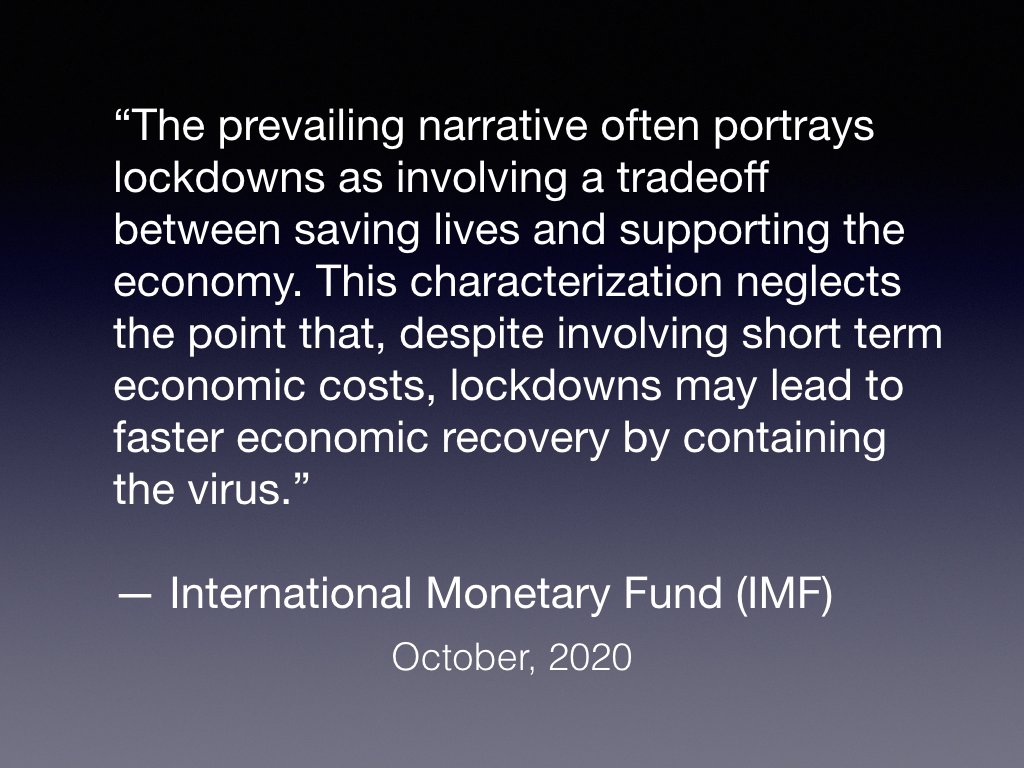
The International Monetary Fund (IMF) is analyzing damage due to COVID and projecting further severe consequences if current policies persist. They state “despite involving short term economic costs, lockdowns may lead to faster economic recovery by containing the virus”

1/

Note: This report doesn’t do a dynamic analysis that makes things much clearer, but it does a thoughtful statistical analysis based upon increasingly available data.

https://t.co/5Xmt8y7lCL

A few more quotes:

2/
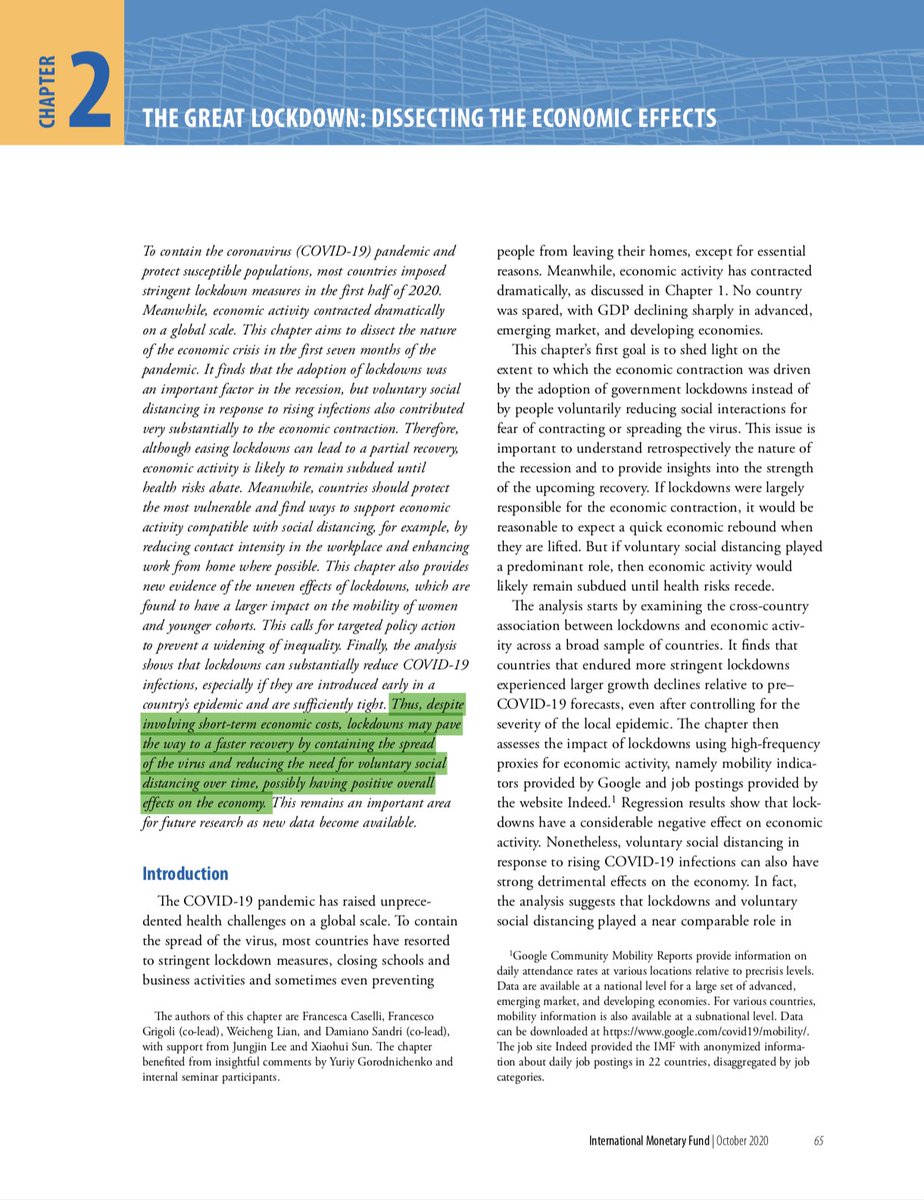
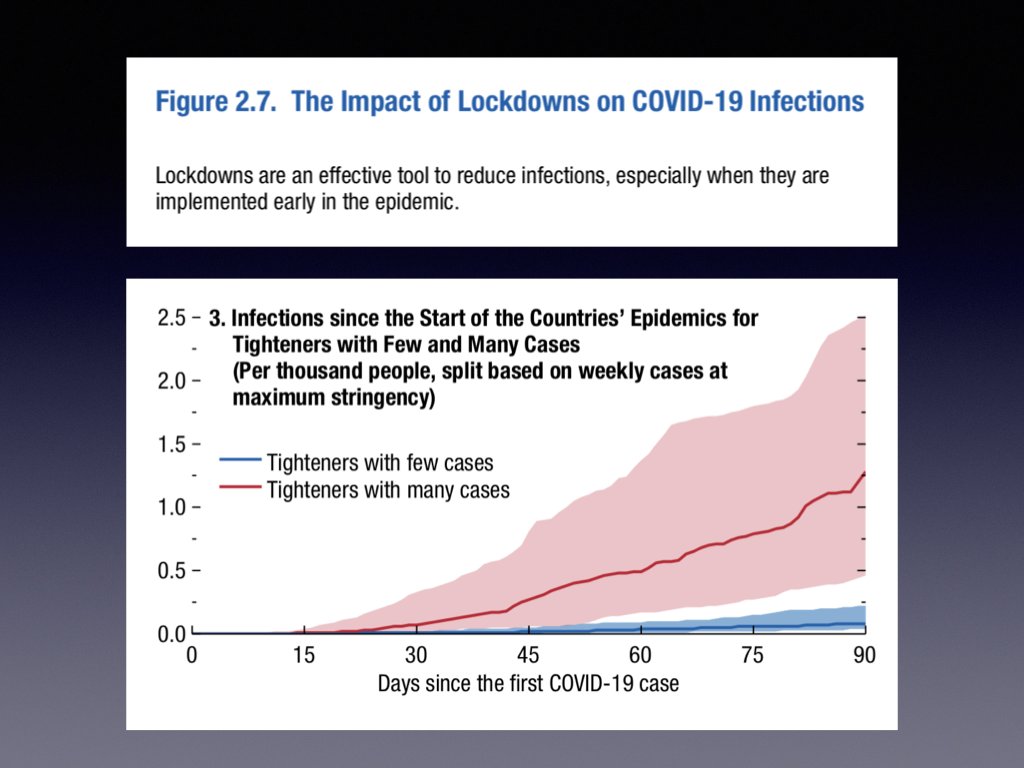
“The analysis also finds that lockdowns are powerful instruments to reduce infections, especially when they are introduced early in a country’s epidemic and when they are sufficiently stringent.”

3/
“lockdowns become progressively more effective in reducing COVID-19 cases when they become sufficiently stringent. Mild lockdowns appear instead ineffective at curbing infections.”

4/
“The results suggest that to achieve a given reduction in infections, policymakers may want to opt for stringent lockdowns over a shorter period rather than prolonged mild lockdowns...

5/
..Based upon past experience, tighter lockdowns appear indeed to entail only modest additional costs while leading to a considerably stronger decline in infections.”

6/
“The analysis also suggests that lockdowns must be sufficiently stringent to reduce infections significantly.”

7/
“The effectiveness of lockdowns in reducing infections suggests that lockdowns may pave the way to a faster economic recovery if they succeed in containing the epidemic and thus limit the extent of voluntary social distancing...

8/
..Therefore the short-term economic costs of lockdowns could be compensated by stronger medium-term growth, possibly leading to positive overall effects on the economy.”

9/
“These findings suggest that economies will continue to operate below potential while health risks persist, even if lockdowns are lifted.”

“Therefore, policymakers should refrain from withdrawing policy support too quickly and preserve spending on social safety nets.”

10/
“The prevailing narrative often portrays lockdowns as involving a tradeoff between saving lives and supporting the economy. This characterization neglects the point that, despite involving short term economic costs, lockdowns may lead to faster economic recovery..

11/
by containing the virus and reducing voluntary social distancing. These medium term gains may offset the the short-term costs of lockdowns, possibly leading to positive overall effects on the economy.”

12/

More from Economy

One of the hardest problems post-pandemic will be how to revive so-called "left behind" places.

Post-industrial towns, run-down suburbs, coastal communities - these places were already struggling before the crisis and have fared worst in the last year.

What should we do?

Today, @ukonward sets out the beginning of a plan to repair our social fabric. It follows our extensive research over the last year, expertly chaired by @jamesosh, and funded by @jrf_uk, @Shelter and @peoplesbiz.

https://t.co/d3T5uPwG9N


Before I get into recommendations, some findings from previous Onward research.

In 2018, we found 71% of people believe "community has declined in my lifetime"

In 2019, we found 65% would rather live in “a society that focuses on giving people more security” vs 35% for freedom


This was the basis for our identification of 'Workington Man' as the archetypal swing voter in 2019, and led us to predict (correctly) that large numbers of Red Wall seats could fall. A key driver was a desire for security, belonging and pride in place.


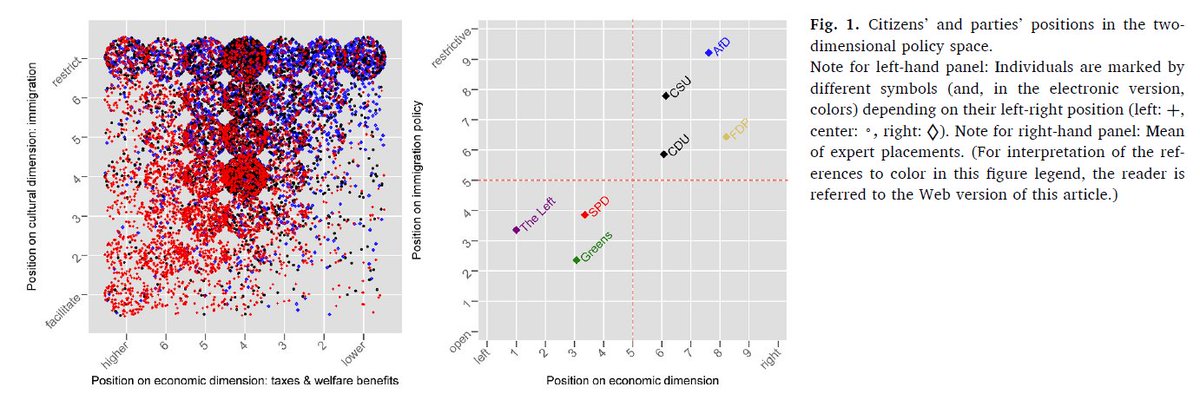
There is also a key regional dimension to this. We also tested people's affinity with the UK's direction of travel, across both cultural and economic dimensions - revealing the extraordinary spread below: London vs. the Rest.
https://t.co/HrorW4xaLp

You May Also Like