If you need to deal with unstructured data (perceptual tasks): Keras or PyTorch.
The two main machine learning techniques used in the industry today:
1. Gradient Boosted Trees
2. Deep Learning
Focus your time learning Scikit-Learn, XGBoost, and a Deep Learning library like Keras or PyTorch and you'll get the most for your time.
If you need to deal with unstructured data (perceptual tasks): Keras or PyTorch.
More from Santiago
12 machine learning YouTube videos.
On libraries, algorithms, tools, and theory.
↓
1. Jupyter Notebooks: https://t.co/HqE9yt8TkB
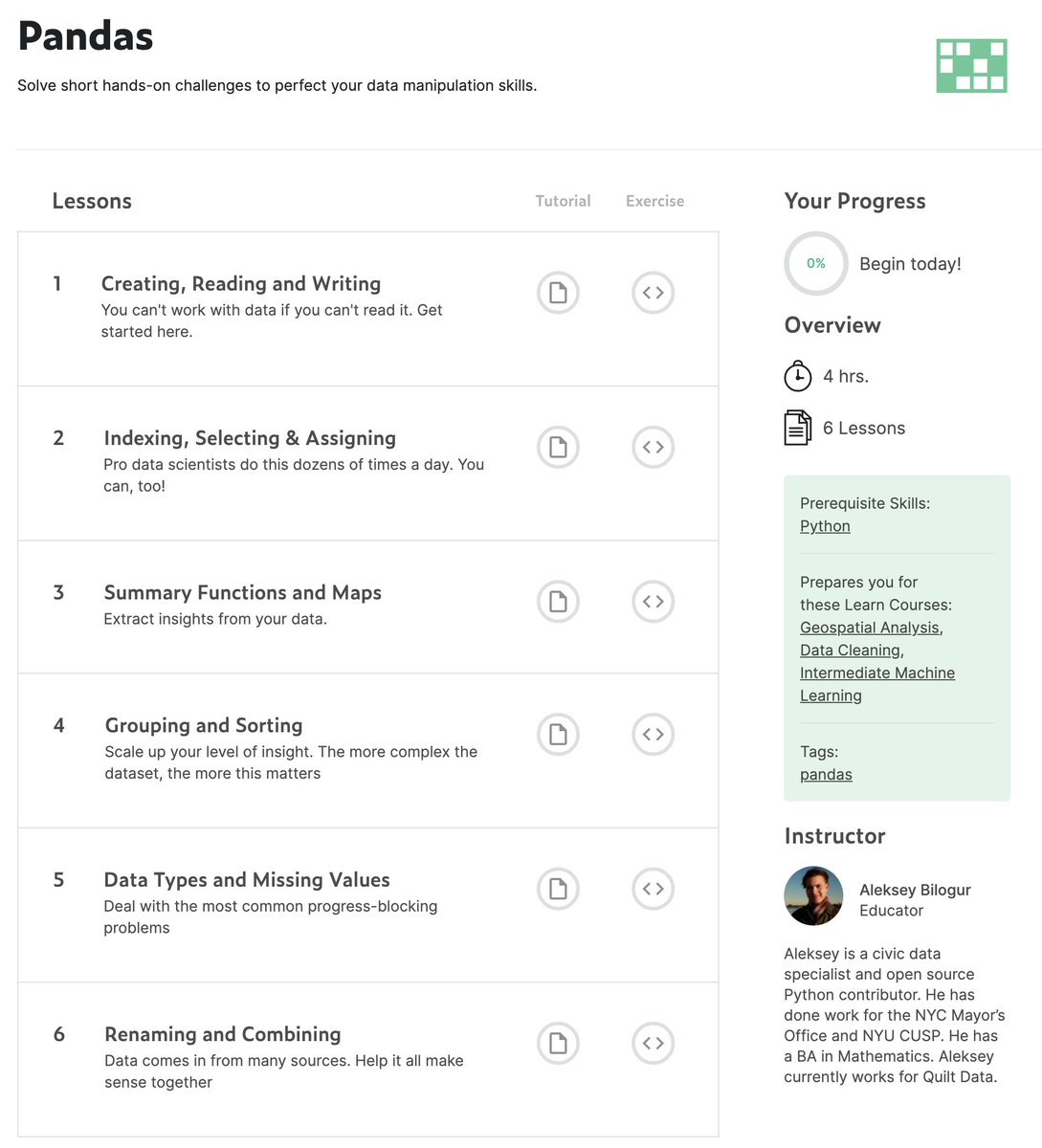
2. Pandas: https://t.co/aOLh0dcGF5
3. Matplotlib: https://t.co/tKADpmihkh
4. Seaborn: https://t.co/s8EUxh6x1f
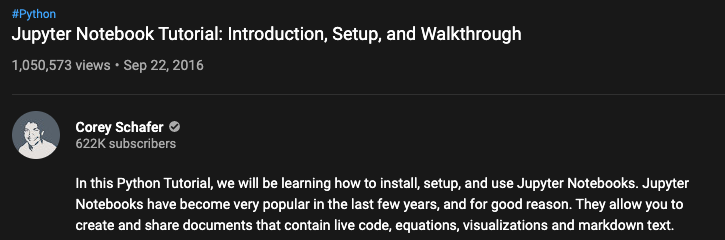
5. Numpy: https://t.co/pJoc0Lfjwm
6. Decision Trees: https://t.co/tKtUpO1K3l
7. Neural Networks: https://t.co/bc7emyjc9q
8. Scikit-Learn: https://t.co/LrKG7cMxRq
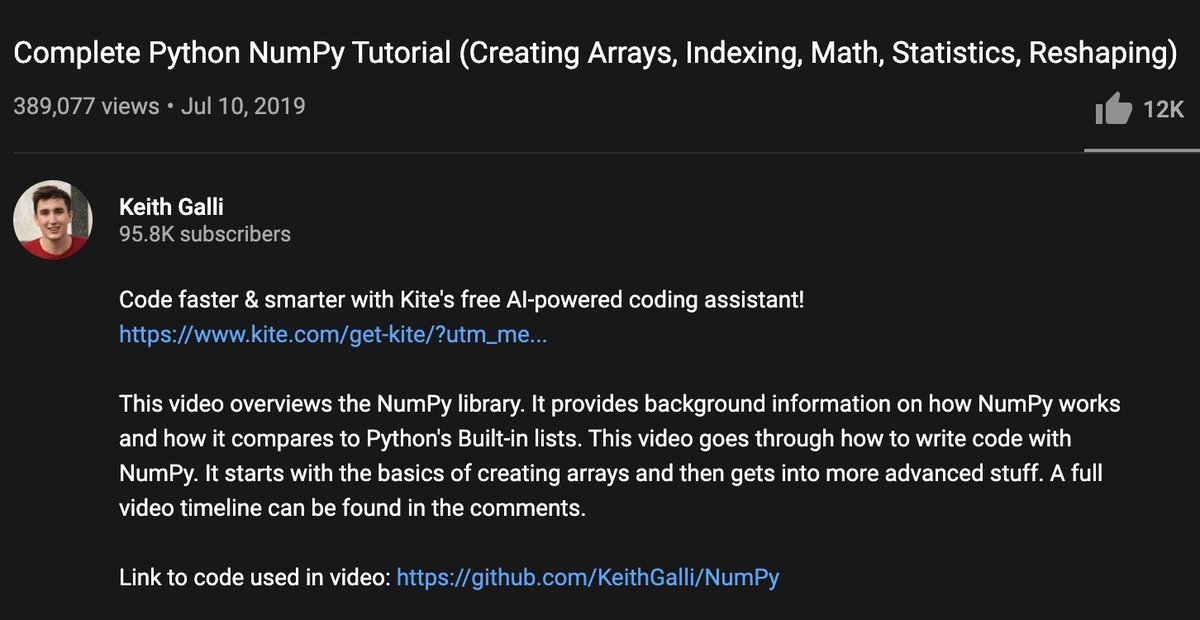
9. TensorFlow: https://t.co/fhO6T9sblU
10. PyTorch: https://t.co/5w9mJxijdd
11. Essense of Linear Algebra: https://t.co/o3kOnxl90i
12. Essense of Calculus: https://t.co/rfo7v0cpR4
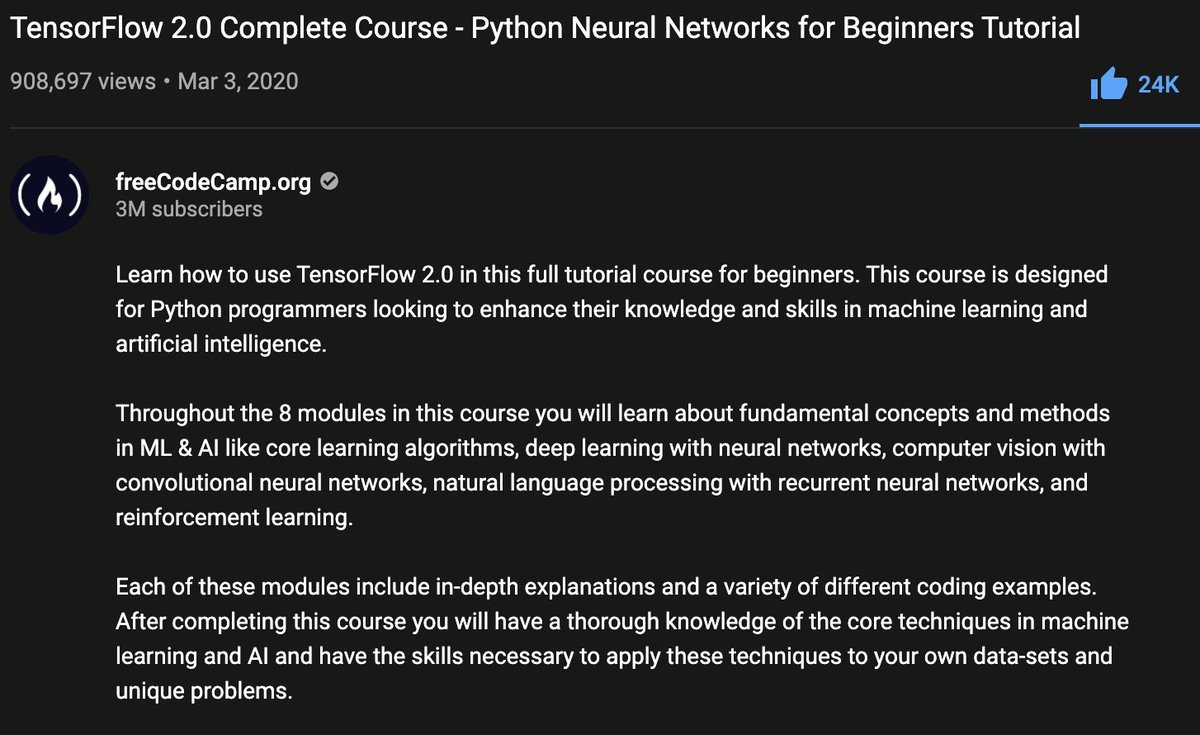
On libraries, algorithms, tools, and theory.
↓
1. Jupyter Notebooks: https://t.co/HqE9yt8TkB
2. Pandas: https://t.co/aOLh0dcGF5
3. Matplotlib: https://t.co/tKADpmihkh
4. Seaborn: https://t.co/s8EUxh6x1f
5. Numpy: https://t.co/pJoc0Lfjwm
6. Decision Trees: https://t.co/tKtUpO1K3l
7. Neural Networks: https://t.co/bc7emyjc9q
8. Scikit-Learn: https://t.co/LrKG7cMxRq
9. TensorFlow: https://t.co/fhO6T9sblU
10. PyTorch: https://t.co/5w9mJxijdd
11. Essense of Linear Algebra: https://t.co/o3kOnxl90i
12. Essense of Calculus: https://t.co/rfo7v0cpR4


More from Ds

1/
Get a cup of coffee.
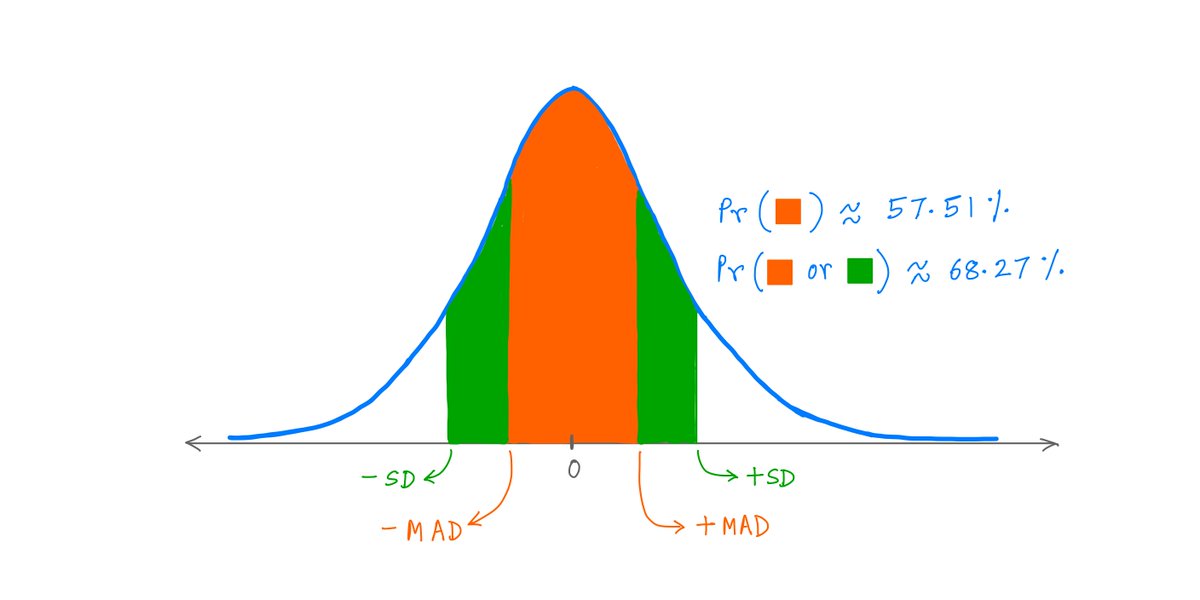
In this thread, I'll walk you through 2 probability concepts: Standard Deviation (SD) and Mean Absolute Deviation (MAD).
This will give you insight into Fat Tails -- which are super useful in investing and in many other fields.
2/
Recently, I watched 2 probability "mini-lectures" on YouTube by Nassim Taleb.
One ~10 min lecture covered SD and MAD. The other ~6 min lecture covered Fat Tails.
In these ~16 mins, @nntaleb shared so many useful nuggets that I had to write this thread to unpack them.
3/
For those curious, here are the YouTube links to the lectures:
SD and MAD (~10 min): https://t.co/0TwubymdE6
Fat Tails (~6 min):
4/
The first thing to understand is the concept of a Random Variable.
In essence, a Random Variable is a number that depends on a random event.
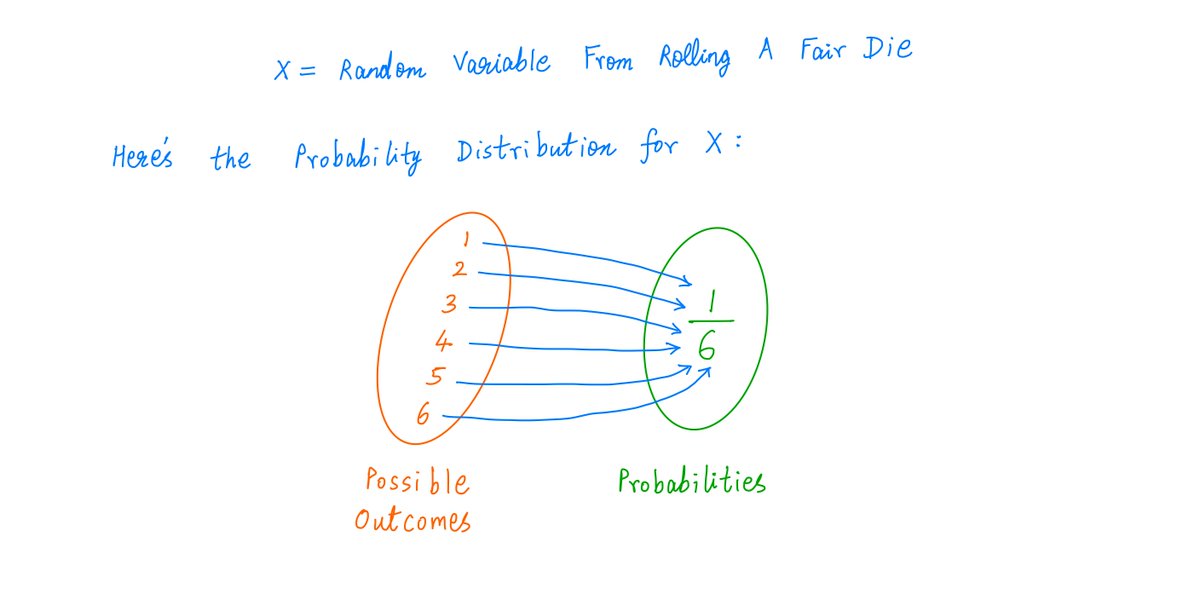
For example, when we roll a die, we get a Random Variable -- a number from the set {1, 2, 3, 4, 5, 6}.
5/
Every Random Variable has a Probability Distribution.
This tells us all the possible values the Random Variable can take, and their respective probabilities.
For example, when we roll a fair die, we get a Random Variable with this Probability Distribution:
Get a cup of coffee.
In this thread, I'll walk you through 2 probability concepts: Standard Deviation (SD) and Mean Absolute Deviation (MAD).
This will give you insight into Fat Tails -- which are super useful in investing and in many other fields.
2/
Recently, I watched 2 probability "mini-lectures" on YouTube by Nassim Taleb.
One ~10 min lecture covered SD and MAD. The other ~6 min lecture covered Fat Tails.
In these ~16 mins, @nntaleb shared so many useful nuggets that I had to write this thread to unpack them.
3/
For those curious, here are the YouTube links to the lectures:
SD and MAD (~10 min): https://t.co/0TwubymdE6
Fat Tails (~6 min):
4/
The first thing to understand is the concept of a Random Variable.
In essence, a Random Variable is a number that depends on a random event.
For example, when we roll a die, we get a Random Variable -- a number from the set {1, 2, 3, 4, 5, 6}.
5/
Every Random Variable has a Probability Distribution.
This tells us all the possible values the Random Variable can take, and their respective probabilities.
For example, when we roll a fair die, we get a Random Variable with this Probability Distribution: