https://t.co/hMRH45G1cY
@ianrowley677 @chimera414 @BrknMan @ancistroneura @sueytonius @swcrisis @eloarefab @BailFund_Brawl @IngersolRobert @OscarsWild1 @RuleByLogic @KCTaz @Kenneth72712993 @alshalloway @ClimatePatriot @joetheatheistp @insane_voice @TheDisproof @Ceist8 @BradPKeyes @Fauntleroy1934 @DawnTJ90 @Jamz129 @JsharkJill @Tangomitteckel @joedieseldodge @BadgersNo @fknsavages27 @SimonPearson961 @JoeTheAtheist @CMorrisonEsq @maya_phd @CymaticWave @Schtickery @ClimateDepot @stevenmosher @Willard1951 @Tokyo_Tom @jc_Craze @DanCady @PolAnimalAus @ZombiePiano @SimonMaxfield8 @CrangusShish @Gladfly1 @AtomsksSanakan @leonardjcohen @FrankWi74044551 [1/14] It is very sad that @NatGeo is now publishing such disinformation. The article is lies.
The Earth is greening, thanks to elevated CO2 -- especially in arid
https://t.co/hMRH45G1cY
https://t.co/skFrhlN78Q
https://t.co/PeTJ747Q2q
https://t.co/Ts9tEegTr7
Rising CO2 levels mitigate drought impacts. Elevated CO2 (eCO2) helps plants use water more efficiently, by improving CO2 stomatal conductance relative to transpiration. It's especially helpful in arid regions & during drought. Here's a paper about corn:https://t.co/lZ0wL4Gnvn
— Dave Burton \u274c (@ncdave4life) August 19, 2020
https://t.co/0WLLhr49BS
https://t.co/uBBKitKhlp
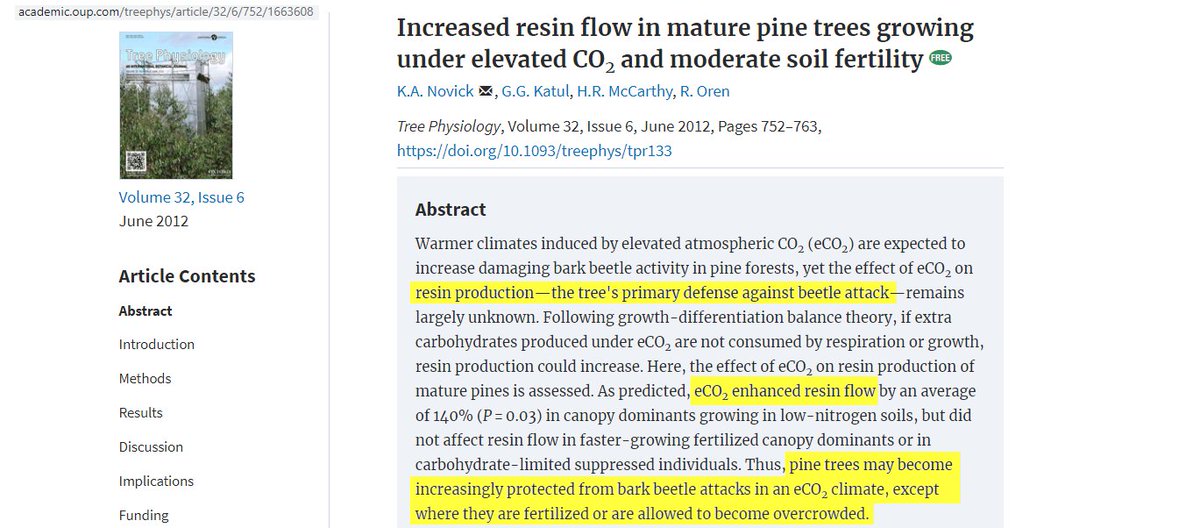
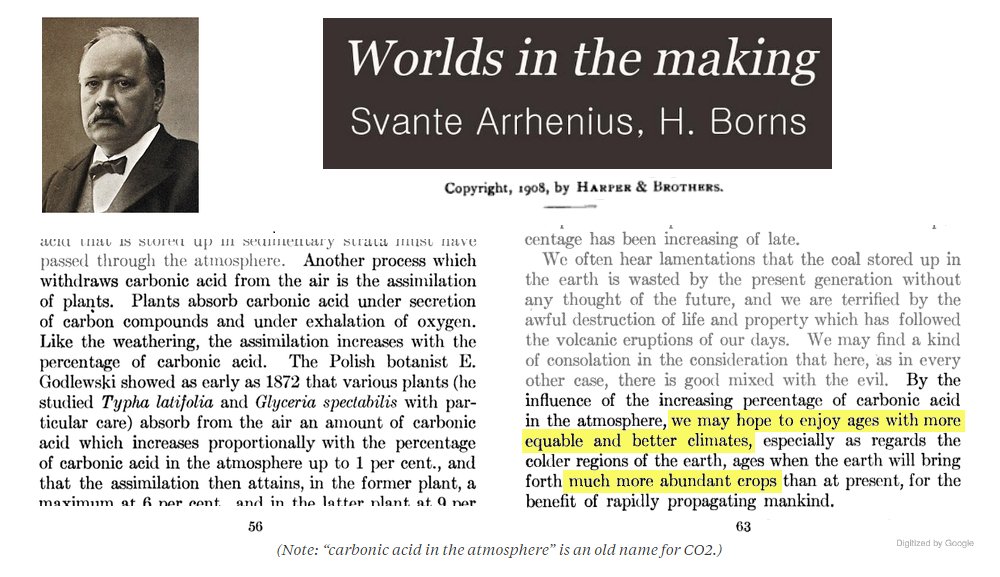
Plus, elevated CO2 is VERY beneficial for agriculture — a fact known to science for >100 years.
https://t.co/R6kXDd1yLX
https://t.co/fcijxLkG2U
https://t.co/Ew49yJznQy
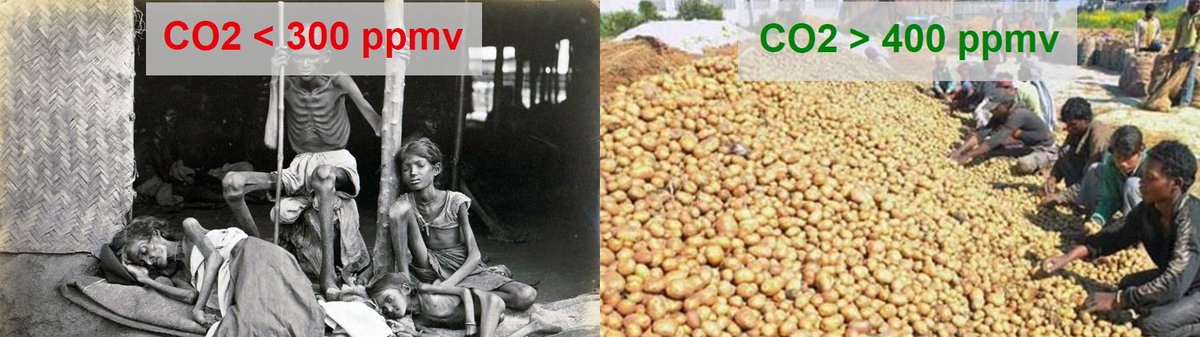
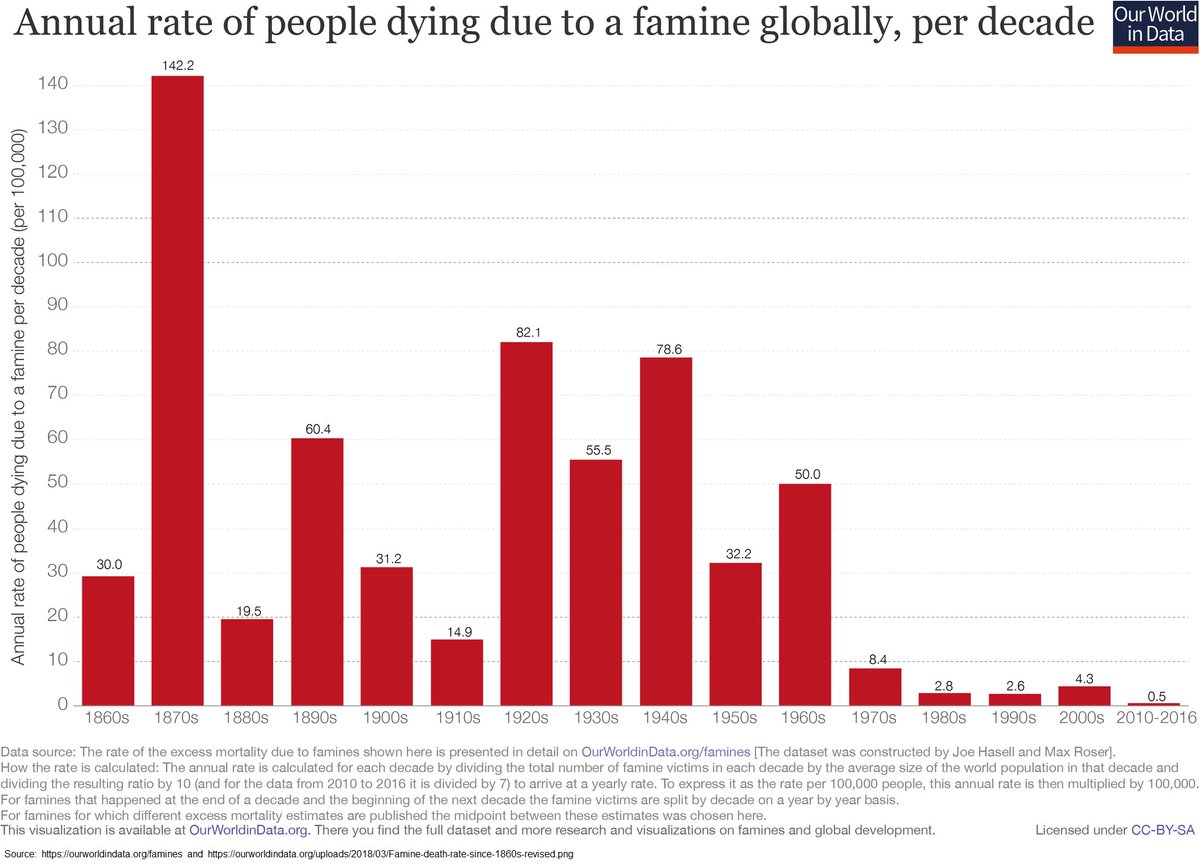
Ending famine is a VERY Big Deal, comparable to ending war and disease. Compare:
— Dave Burton \u274c (@ncdave4life) December 18, 2019
\u25cf 1918 flu pandemic killed 2% of world population.
\u25cf WWII killed 2.7% of world population.
\u25cf The global drought & famine of 1876-78 killed 3.7% of world population.
https://t.co/DxW7nb4P5i
The imagined major harms of manmade climate change simply are not happening. For instance, sea-level trends haven't changed significantly since the 1920s.https://t.co/cUTnRhnLnQ
— Dave Burton \u274c (@ncdave4life) November 25, 2020
https://t.co/cUTnRhnLnQ
https://t.co/qsb2jLJFbS
https://t.co/TyJybmvO8B
https://t.co/PRWOdlM0YU
The major harms are all merely hypothetical (& mostly implausible). The benefits are real, measured & very large.
https://t.co/OFwigReQge
To learn about #ClimateChange see:https://t.co/bDDNCzj9VC
— Dave Burton \u274c (@ncdave4life) January 9, 2020
It has:
\u25cf accurate intro climatology info
\u25cf in-depth science from BOTH skeptics & alarmists
\u25cf links to balanced debates between experts on BOTH sides
\u25cf info about climate impacts
\u25cf links to best blogs on BOTH sides
More from Climate change


So What Really Went Down During The Flood In High River Alberta ? Was Something Else Going On ~ DUMB Question? The High River Flood 5 Years Ago - Heartland
What’s The Big Business In Town ~ High River Ab?
https://t.co/TiqRwudadP

Interesting ....And Then We Have That Fundraiser ~ Tom Jackson

Tom Has A Big Heart ♥️ Great Read ~ The People Connected https://t.co/T5Xf5yJM59

Stay With Me And Let’s See Where This Leads Us Q Patriots!
Look Here 👇 What’s #yyc & #yql ?

What’s The Big Business In Town ~ High River Ab?
https://t.co/TiqRwudadP
Interesting ....And Then We Have That Fundraiser ~ Tom Jackson
Tom Has A Big Heart ♥️ Great Read ~ The People Connected https://t.co/T5Xf5yJM59
Stay With Me And Let’s See Where This Leads Us Q Patriots!
Look Here 👇 What’s #yyc & #yql ?



You May Also Like

1/“What would need to be true for you to….X”
Why is this the most powerful question you can ask when attempting to reach an agreement with another human being or organization?
A thread, co-written by @deanmbrody:
2/ First, “X” could be lots of things. Examples: What would need to be true for you to
- “Feel it's in our best interest for me to be CMO"
- “Feel that we’re in a good place as a company”
- “Feel that we’re on the same page”
- “Feel that we both got what we wanted from this deal
3/ Normally, we aren’t that direct. Example from startup/VC land:
Founders leave VC meetings thinking that every VC will invest, but they rarely do.
Worse over, the founders don’t know what they need to do in order to be fundable.
4/ So why should you ask the magic Q?
To get clarity.
You want to know where you stand, and what it takes to get what you want in a way that also gets them what they want.
It also holds them (mentally) accountable once the thing they need becomes true.
5/ Staying in the context of soliciting investors, the question is “what would need to be true for you to want to invest (or partner with us on this journey, etc)?”
Multiple responses to this question are likely to deliver a positive result.
Why is this the most powerful question you can ask when attempting to reach an agreement with another human being or organization?
A thread, co-written by @deanmbrody:
Next level tactic when closing a sale, candidate, or investment:
— Erik Torenberg (@eriktorenberg) February 27, 2018
Ask: \u201cWhat needs to be true for you to be all in?\u201d
You'll usually get an explicit answer that you might not get otherwise. It also holds them accountable once the thing they need becomes true.
2/ First, “X” could be lots of things. Examples: What would need to be true for you to
- “Feel it's in our best interest for me to be CMO"
- “Feel that we’re in a good place as a company”
- “Feel that we’re on the same page”
- “Feel that we both got what we wanted from this deal
3/ Normally, we aren’t that direct. Example from startup/VC land:
Founders leave VC meetings thinking that every VC will invest, but they rarely do.
Worse over, the founders don’t know what they need to do in order to be fundable.
4/ So why should you ask the magic Q?
To get clarity.
You want to know where you stand, and what it takes to get what you want in a way that also gets them what they want.
It also holds them (mentally) accountable once the thing they need becomes true.
5/ Staying in the context of soliciting investors, the question is “what would need to be true for you to want to invest (or partner with us on this journey, etc)?”
Multiple responses to this question are likely to deliver a positive result.