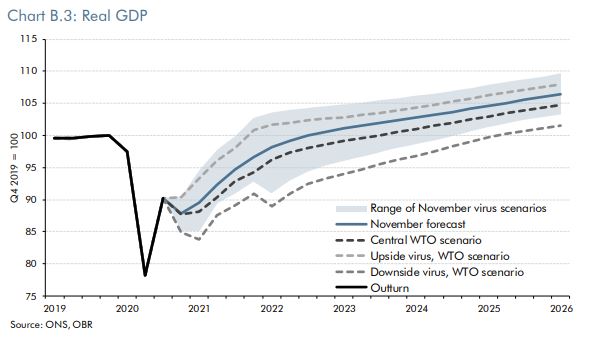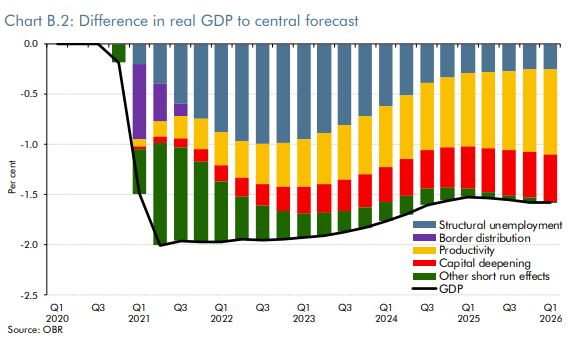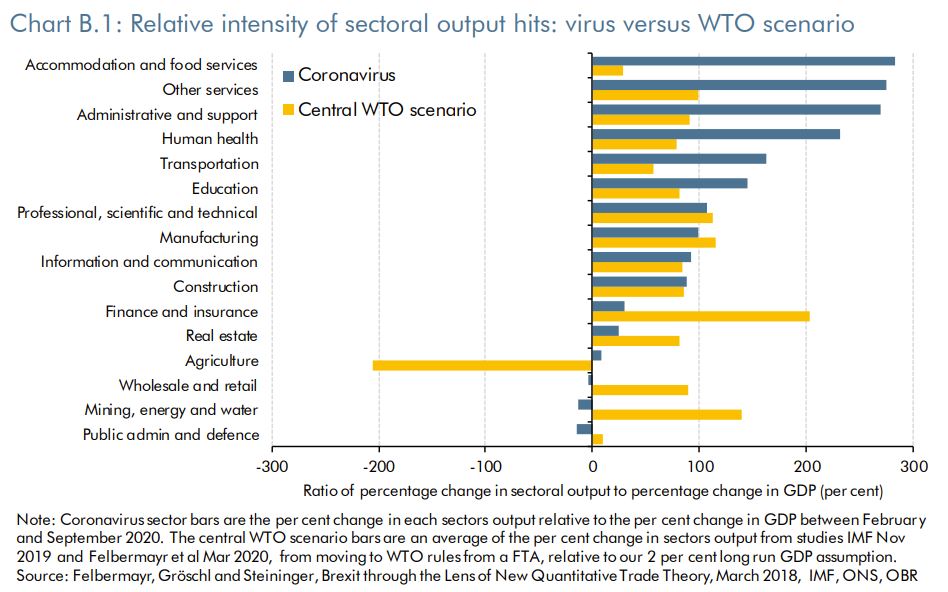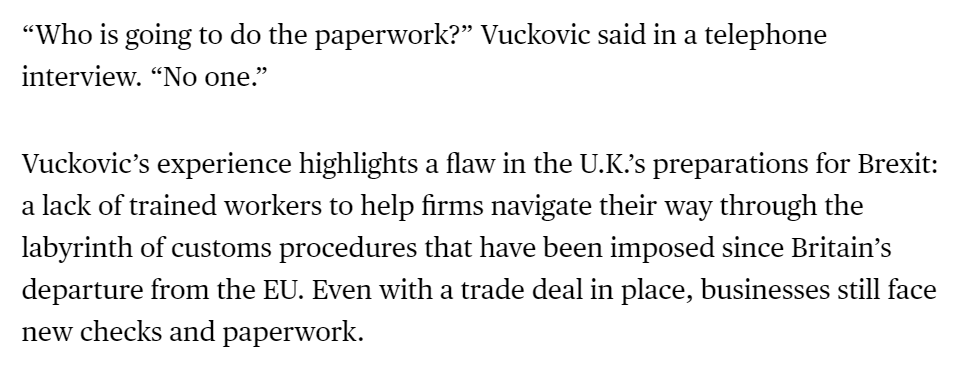
It's been another torrid week at the border - inundated customs agents, goods stuck for days, companies buckling under the paperwork 1/ https://t.co/2A301guhB6 w/ @lizzzburden
`Neither the export agency in the U.K. nor the import agency in the EU know specifically what to do,' he said 6/
`If Jan 4 was the eye of the Brexit storm... it has just been upgraded to a tsunami' ends/ https://t.co/2A301guhB6
More from Brexit
Brexit also brings UK pork sector to standstill. Surprise eh? @RichardAENorth 🙄
UK pork processors are experiencing significant issues in exporting products to the EU, which has already brought part of the industry to a complete standstill, risking knock-on impacts on farm.
The widely seen footage of overzealous Dutch (*my edit: "no they were not"*) inspection officials confiscating ham sandwiches transported by British hauliers is just the tip of the iceberg as far as the UK pig sector is concerned.
The NPA’s processor members have reported that
excessive (*my edit: only for non-EU members*) bureaucracy associated with paperwork requirements are causing delays at Dover, Calais and other ports. With pork being a perishable product, these delays are making UK shipments unattractive to buyers in the EU, forcing processors
to reject shipments and cancel future orders.
Despite the trade deal agreed between the EU & UK just before Christmas, the UK’s formal departure from the EU Customs Union and Single Market was always going to mean additional checks, new labelling and certification requirements
and delays at ports. While the full overall impact of the new rules is yet to be felt, as UK export volumes remain lower than normal for the time of year, the UK pig sector is already feeling the effect. Processors have reported a number of issues, including:
UK pork processors are experiencing significant issues in exporting products to the EU, which has already brought part of the industry to a complete standstill, risking knock-on impacts on farm.
Sector by sector falling overhttps://t.co/6HIXzf8qq8
— Morgan Leahy (@MorganLeahy) January 14, 2021
The widely seen footage of overzealous Dutch (*my edit: "no they were not"*) inspection officials confiscating ham sandwiches transported by British hauliers is just the tip of the iceberg as far as the UK pig sector is concerned.
The NPA’s processor members have reported that
excessive (*my edit: only for non-EU members*) bureaucracy associated with paperwork requirements are causing delays at Dover, Calais and other ports. With pork being a perishable product, these delays are making UK shipments unattractive to buyers in the EU, forcing processors
to reject shipments and cancel future orders.
Despite the trade deal agreed between the EU & UK just before Christmas, the UK’s formal departure from the EU Customs Union and Single Market was always going to mean additional checks, new labelling and certification requirements
and delays at ports. While the full overall impact of the new rules is yet to be felt, as UK export volumes remain lower than normal for the time of year, the UK pig sector is already feeling the effect. Processors have reported a number of issues, including:
You May Also Like
“We don’t negotiate salaries” is a negotiation tactic.
Always. No, your company is not an exception.
A tactic I don’t appreciate at all because of how unfairly it penalizes low-leverage, junior employees, and those loyal enough not to question it, but that’s negotiation for you after all. Weaponized information asymmetry.
Listen to Aditya
And by the way, you should never be worried that an offer would be withdrawn if you politely negotiate.
I have seen this happen *extremely* rarely, mostly to women, and anyway is a giant red flag. It suggests you probably didn’t want to work there.
You wish there was no negotiating so it would all be more fair? I feel you, but it’s not happening.
Instead, negotiate hard, use your privilege, and then go and share numbers with your underrepresented and underpaid colleagues. […]
Always. No, your company is not an exception.
A tactic I don’t appreciate at all because of how unfairly it penalizes low-leverage, junior employees, and those loyal enough not to question it, but that’s negotiation for you after all. Weaponized information asymmetry.
Listen to Aditya
"we don't negotiate salaries" really means "we'd prefer to negotiate massive signing bonuses and equity grants, but we'll negotiate salary if you REALLY insist" https://t.co/80k7nWAMoK
— Aditya Mukerjee, the Otterrific \U0001f3f3\ufe0f\u200d\U0001f308 (@chimeracoder) December 4, 2018
And by the way, you should never be worried that an offer would be withdrawn if you politely negotiate.
I have seen this happen *extremely* rarely, mostly to women, and anyway is a giant red flag. It suggests you probably didn’t want to work there.
You wish there was no negotiating so it would all be more fair? I feel you, but it’s not happening.
Instead, negotiate hard, use your privilege, and then go and share numbers with your underrepresented and underpaid colleagues. […]

The UN just voted to condemn Israel 9 times, and the rest of the world 0.
View the resolutions and voting results here:
The resolution titled "The occupied Syrian Golan," which condemns Israel for "repressive measures" against Syrian citizens in the Golan Heights, was adopted by a vote of 151 - 2 - 14.
Israel and the U.S. voted 'No' https://t.co/HoO7oz0dwr
The resolution titled "Israeli practices affecting the human rights of the Palestinian people..." was adopted by a vote of 153 - 6 - 9.
Australia, Canada, Israel, Marshall Islands, Micronesia, and the U.S. voted 'No' https://t.co/1Ntpi7Vqab
The resolution titled "Israeli settlements in the Occupied Palestinian Territory, including East Jerusalem, and the occupied Syrian Golan" was adopted by a vote of 153 – 5 – 10.
Canada, Israel, Marshall Islands, Micronesia, and the U.S. voted 'No'
https://t.co/REumYgyRuF
The resolution titled "Applicability of the Geneva Convention... to the
Occupied Palestinian Territory..." was adopted by a vote of 154 - 5 - 8.
Canada, Israel, Marshall Islands, Micronesia, and the U.S. voted 'No'
https://t.co/xDAeS9K1kW
View the resolutions and voting results here:
The resolution titled "The occupied Syrian Golan," which condemns Israel for "repressive measures" against Syrian citizens in the Golan Heights, was adopted by a vote of 151 - 2 - 14.
Israel and the U.S. voted 'No' https://t.co/HoO7oz0dwr
The resolution titled "Israeli practices affecting the human rights of the Palestinian people..." was adopted by a vote of 153 - 6 - 9.
Australia, Canada, Israel, Marshall Islands, Micronesia, and the U.S. voted 'No' https://t.co/1Ntpi7Vqab
The resolution titled "Israeli settlements in the Occupied Palestinian Territory, including East Jerusalem, and the occupied Syrian Golan" was adopted by a vote of 153 – 5 – 10.
Canada, Israel, Marshall Islands, Micronesia, and the U.S. voted 'No'
https://t.co/REumYgyRuF
The resolution titled "Applicability of the Geneva Convention... to the
Occupied Palestinian Territory..." was adopted by a vote of 154 - 5 - 8.
Canada, Israel, Marshall Islands, Micronesia, and the U.S. voted 'No'
https://t.co/xDAeS9K1kW
"I lied about my basic beliefs in order to keep a prestigious job. Now that it will be zero-cost to me, I have a few things to say."
We know that elite institutions like the one Flier was in (partial) charge of rely on irrelevant status markers like private school education, whiteness, legacy, and ability to charm an old white guy at an interview.
Harvard's discriminatory policies are becoming increasingly well known, across the political spectrum (see, e.g., the recent lawsuit on discrimination against East Asian applications.)
It's refreshing to hear a senior administrator admits to personally opposing policies that attempt to remedy these basic flaws. These are flaws that harm his institution's ability to do cutting-edge research and to serve the public.
Harvard is being eclipsed by institutions that have different ideas about how to run a 21st Century institution. Stanford, for one; the UC system; the "public Ivys".
As a dean of a major academic institution, I could not have said this. But I will now. Requiring such statements in applications for appointments and promotions is an affront to academic freedom, and diminishes the true value of diversity, equity of inclusion by trivializing it. https://t.co/NfcI5VLODi
— Jeffrey Flier (@jflier) November 10, 2018
We know that elite institutions like the one Flier was in (partial) charge of rely on irrelevant status markers like private school education, whiteness, legacy, and ability to charm an old white guy at an interview.
Harvard's discriminatory policies are becoming increasingly well known, across the political spectrum (see, e.g., the recent lawsuit on discrimination against East Asian applications.)
It's refreshing to hear a senior administrator admits to personally opposing policies that attempt to remedy these basic flaws. These are flaws that harm his institution's ability to do cutting-edge research and to serve the public.
Harvard is being eclipsed by institutions that have different ideas about how to run a 21st Century institution. Stanford, for one; the UC system; the "public Ivys".