Costs from regulatory divergence likely to be at least as important as border costs in the long run, but not immediately 2/
A few thoughts on how Brexit is likely to affect the UK economy in 2021 - with the caveat that much remains uncertain 1/
Costs from regulatory divergence likely to be at least as important as border costs in the long run, but not immediately 2/
However, I do not anticipate shortages of essential goods, as imports can be expedited if needed, e.g. air freight, priority customs processing 3/
- Red tape, e.g. need for customs workers wastes resources & lowers productivity
wasting resources
- Tariffs (if no deal)
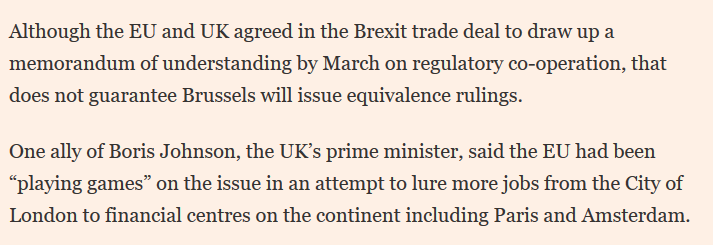
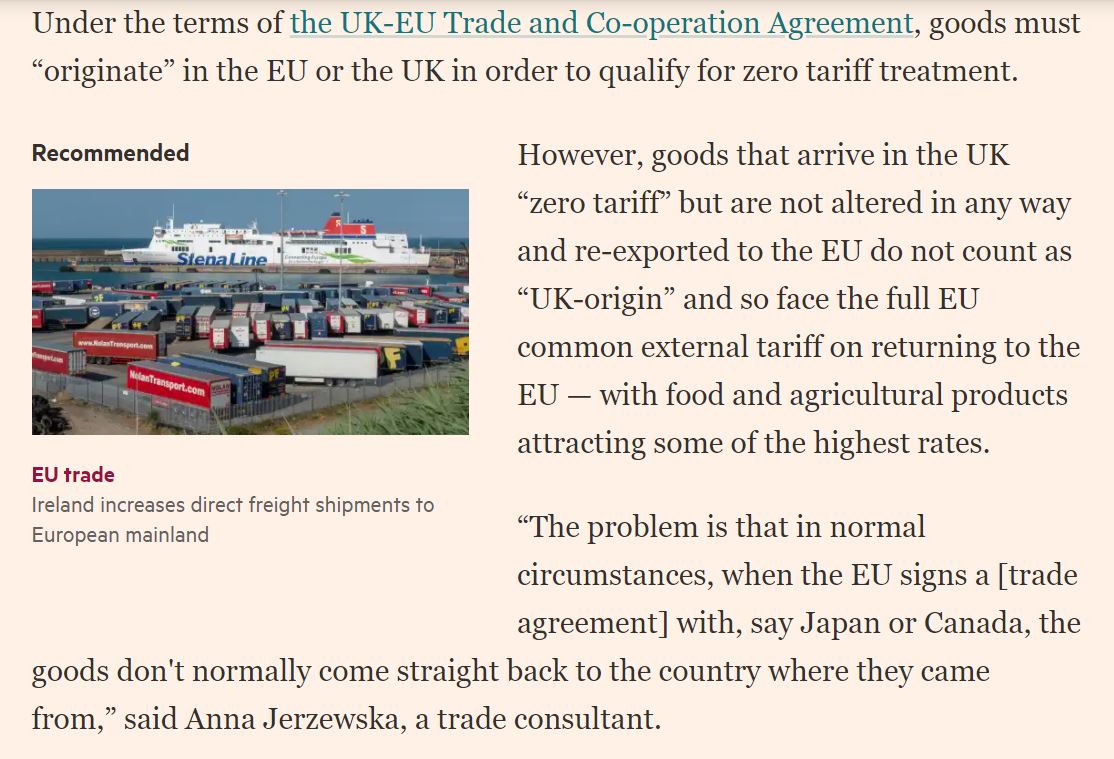
- Rules of origin (if deal)
- Lost market access for services
https://t.co/07wNehNn7z 5/
Fwiw I get told that economics and process considerations (haulage, logistics, manufacturing etc) play limited role in #brexit inner circle decision-making. Belief it\u2019ll be messy but business will adjust. Q is more short term political embarrassment. 2/2
— Peter Foster (@pmdfoster) December 13, 2020
Consumer price rises likely to be moderate (low single digits?) but will gradually erode living standards similar to post-referendum https://t.co/l7Zyegk7MZ 6/
Cost of living
— Thomas Sampson (@thom_sampson) June 22, 2020
Leave vote caused sterling to fall by around 10% raising import costs & consumer prices
Breinlich, Leromain, @DennisNovy & I estimate depreciation increased cost of living by 2.9% by Q2 2018, costing average household \xa3870 per yearhttps://t.co/FsI5enlGfk 4/
https://t.co/d2r6M1GlvB 7/
Which industries are most exposed to EU tariffs under no deal?
— Thomas Sampson (@thom_sampson) December 7, 2020
12 sectors (HS 4 digit) have exports to the EU above \xa3350 million & would face an average EU tariff (ad-valorem equivalent) of at least 10% under no deal
Motor vehicles, clothing, meat & dairy feature prominently
time passes. 8/
And, as the Bank of England has noted, monetary policy cannot offset the impact of a permanent negative supply shock 10/
costs to tax payers rather than solving underlying problem of higher trade costs 11/
https://t.co/2ZULlcIotu
Excellent @UKandEU report on implications of new deal. @anandMenon1 @jdportes @jillongovt: https://t.co/OV0XXk5ypk
Interesting @JohnSpringford @tomashirstecon piece on interactions between Brexit & Covid:
https://t.co/pgasjQHwzw
More from Brexit






You May Also Like

So friends here is the thread on the recommended pathway for new entrants in the stock market.
Here I will share what I believe are essentials for anybody who is interested in stock markets and the resources to learn them, its from my experience and by no means exhaustive..
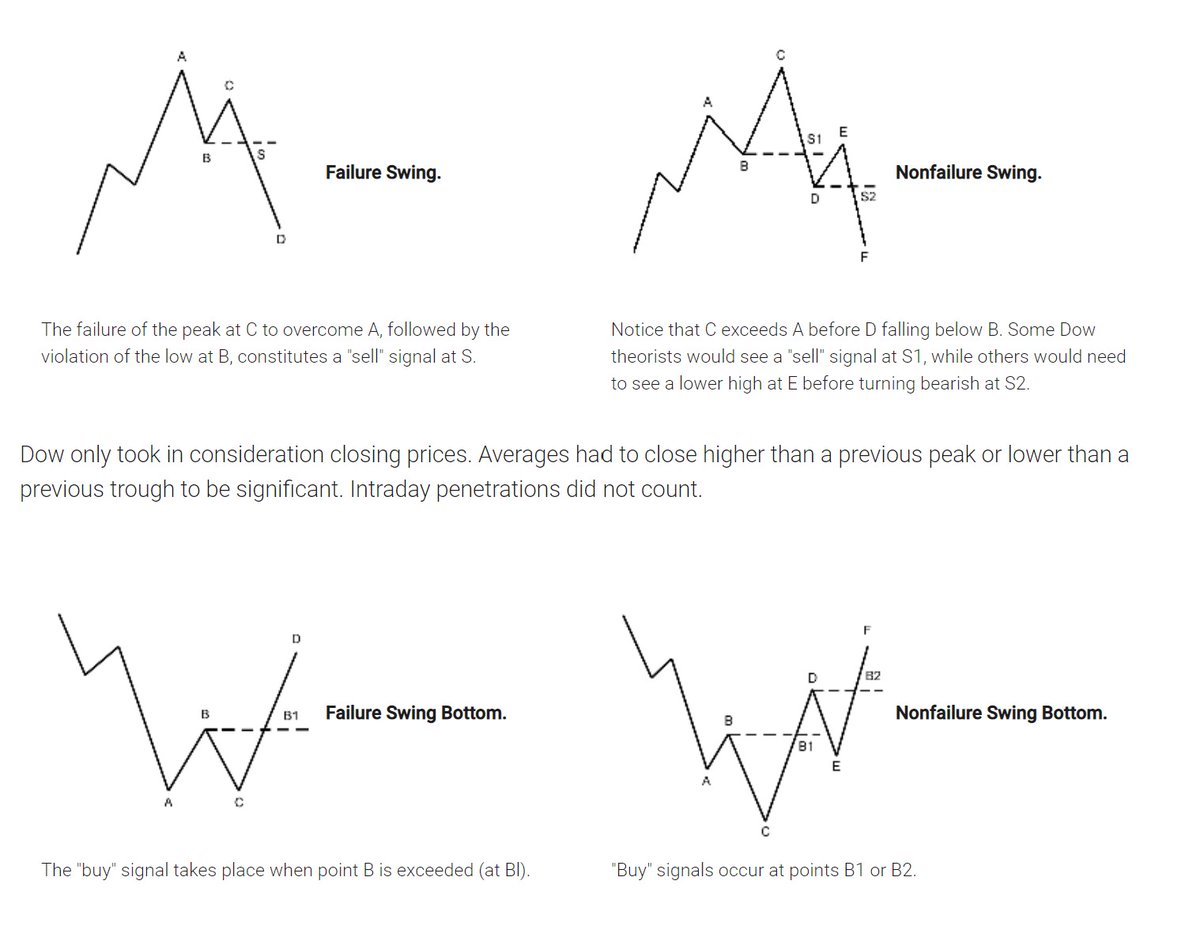
First the very basic : The Dow theory, Everybody must have basic understanding of it and must learn to observe High Highs, Higher Lows, Lower Highs and Lowers lows on charts and their
Even those who are more inclined towards fundamental side can also benefit from Dow theory, as it can hint start & end of Bull/Bear runs thereby indication entry and exits.
Next basic is Wyckoff's Theory. It tells how accumulation and distribution happens with regularity and how the market actually
Dow theory is old but
Here I will share what I believe are essentials for anybody who is interested in stock markets and the resources to learn them, its from my experience and by no means exhaustive..
First the very basic : The Dow theory, Everybody must have basic understanding of it and must learn to observe High Highs, Higher Lows, Lower Highs and Lowers lows on charts and their
Even those who are more inclined towards fundamental side can also benefit from Dow theory, as it can hint start & end of Bull/Bear runs thereby indication entry and exits.
Next basic is Wyckoff's Theory. It tells how accumulation and distribution happens with regularity and how the market actually
Dow theory is old but
Old is Gold....
— Professor (@DillikiBiili) January 23, 2020
this Bharti Airtel chart is a true copy of the Wyckoff Pattern propounded in 1931....... pic.twitter.com/tQ1PNebq7d